
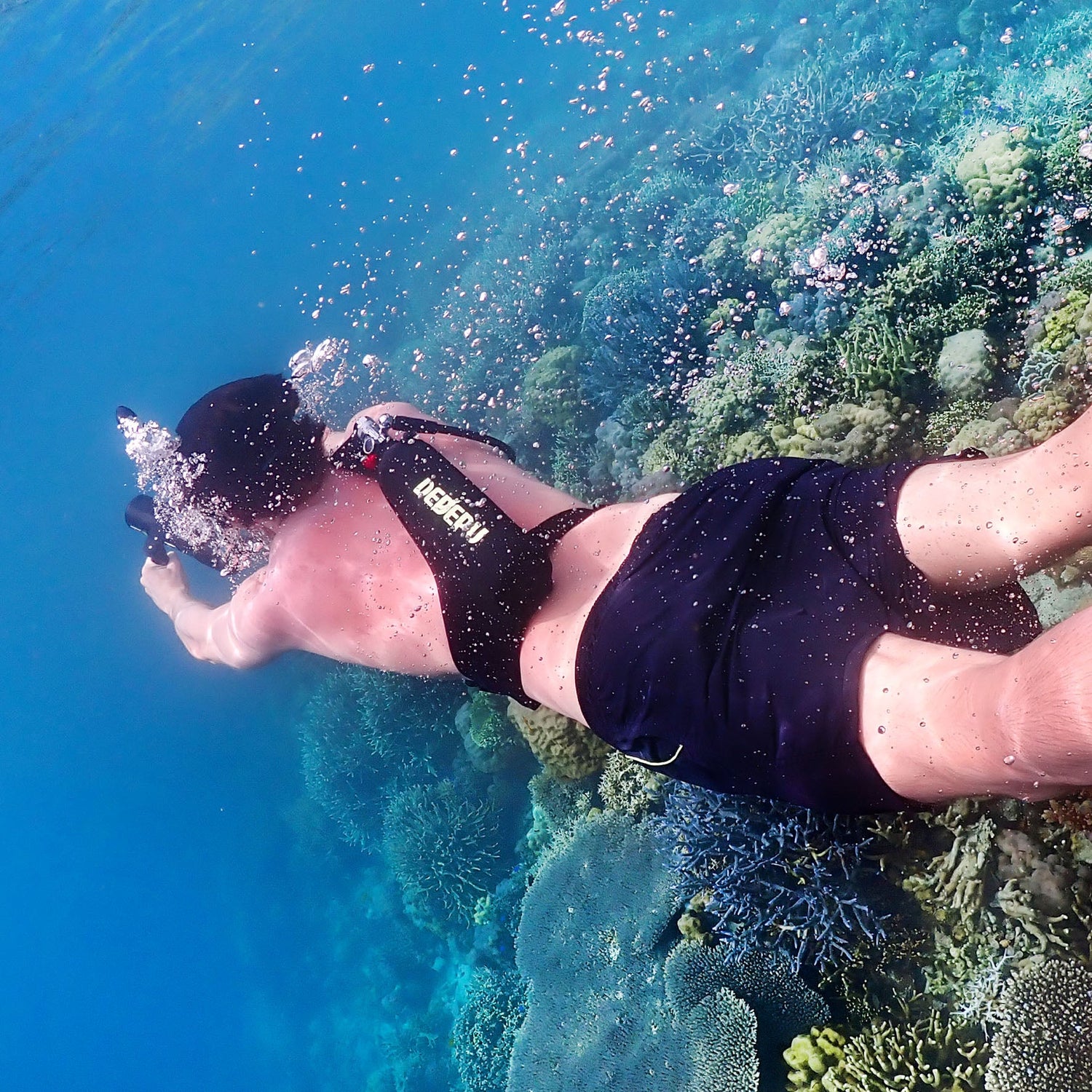
Small cylinders of 0.5L to 1L in shallow water (3-5 meters) typically only maintain a breathing duration of 5-15 minutes, and actual air consumption will decrease sharply as underwater exercise intensity increases.
Shallow diving is equally lethal! Breath-holding is strictly prohibited underwater, and the ascent rate must be strictly controlled within 9 meters per minute to prevent pulmonary barotrauma. It is recommended that users possess basic diving knowledge.
Following TSA aviation safety regulations, the cylinder must be completely emptied to 0 psi before being brought onto an aircraft, and the cylinder valve must be disassembled and separated so that security personnel can clearly see the open state of the interior before it can be checked or carried on.

Capacity vs. Expectation
The nominal pressure of mini cylinders from 0.5L to 2L is usually 3000 PSI (207 Bar). Taking a 0.5L cylinder as an example, its total compressed air volume is approximately 100 liters. At a surface breathing rate of 15L/min, it is theoretically usable for 6.6 minutes.
However, at 10 meters depth (2 ATA), the consumption per breath doubles, and the effective time is reduced to 3.3 minutes. If a reserve safety pressure of 50 Bar is deducted, the actual usable air volume is only 75 liters. Under high-frequency kicking, underwater operation time is usually less than 2 minutes.
Physique & Air Consumption
The Surface Air Consumption (SAC) of an adult male typically fluctuates between 12 liters and 18 liters per minute, a value determined by height, weight, and muscle Calculating the Tank Data
0.5L tank at 3000 PSI
density. In an ideal state of complete rest, an adult weighing 80 kg inhales approximately 0.5 liters to 0.8 liters of air per minute, but the actual Respiratory Minute Volume (RMV) underwater is much higher.
Users with larger lung capacities exchange more gas in a single breath, which causes the internal pressure of small cylinders to drop about 15% faster than those with smaller lung capacities. People with higher muscle mass require more oxygen during exercise, and their metabolic rate during underwater operations can be more than 20% higher than those with average physiques.
Individuals who frequently engage in aerobic exercise have a higher maximum oxygen uptake (VO2 Max), making their circulatory system more efficient at delivering oxygen and removing carbon dioxide. This physiological advantage allows an athlete to maintain air consumption at around 20 liters per minute at a depth of 5 meters.
-
Resting state air consumption: approx. 12-15 L/min
-
Moderate activity (slow swimming): approx. 25-30 L/min
-
High-intensity work (against currents): approx. 50 L/min or more
-
Extreme stress or panic state: can instantaneously reach 80-100 L/min
-
Larger body size (95kg+) baseline increase: consumes 25% more than average
The accumulation of carbon dioxide concentration in the blood is the primary trigger for the brain's urge to breathe. Inexperienced users often experience breath-holding or shallow, rapid breathing; this irregular rhythm leads to carbon dioxide retention in the lungs. For every 1% increase in carbon dioxide concentration, the body's breathing rate increases significantly, shortening the usage limit of a 0.5 liter cylinder from 5 minutes to less than 3 minutes.
The rate of heat loss from the human body in water is 25 times faster than in air. When the water temperature is below 24°C (75°F), the body will begin involuntary shivering to maintain a body temperature of 37°C. This thermogenic response forces the lungs to increase ventilation, and air consumption when diving in cold water is typically 30% to 50% faster than in warm water.
-
Air consumption increase for a 3mm wetsuit in 22°C water: approx. 20%
-
Air consumption increase for a 5mm wetsuit in 18°C water: approx. 40%
-
Without thermal protection in waters below 25°C: air consumption may double within 10 minutes
-
Respiratory volume during muscle shivering: can soar to over 40 L/min
The impact of age on breathing efficiency cannot be ignored. As age increases, lung tissue elasticity gradually decreases and Residual Volume (RV) increases. A 60-year-old diver's baseline air consumption at the same depth is often about 10% higher than at 20 years old. This physiological decline requires older users to reserve more safety pressure when carrying micro cylinders.
Psychological stress is reflected in the excitation of the sympathetic nervous system. When a user feels nervous, a surge in adrenaline causes the heart rate to rise from 70 beats per minute to 130 beats. The increase in heart rate almost simultaneously drives an increase in breathing rate. Even in shallow water at 3 meters, this emotional stress can cause the endurance of a 1 liter cylinder to plummet from 10 minutes to about 4 minutes.
-
Moderate anxiety state: breathing rate rises from 12 breaths/min to 24 breaths/min
-
Hyperventilation triggered by mild panic: tidal volume drops to 1.5 liters, frequency rises to 30 breaths/min
-
Task overloading (simultaneous photography and boat repair): air consumption increases by 25%-35%
-
Depth perception stress (diving beyond 6 meters): beginners' breathing rate naturally increases by 15%
Developing breathing habits can significantly optimize gas utilization. Experienced freedivers or scuba divers typically adopt deep abdominal breathing, exchanging about 2.5 liters of air per breath. This pattern effectively reduces Dead Space gas residue in the respiratory tract. Dead space gas accounts for about 150 ml of each breath; for small cylinders, frequent shallow breathing causes significant gas waste.
| User Type | Average SAC (L/min) | 0.5L Cylinder (3000 PSI) Shallow Endurance |
|---|---|---|
| Professional/Regular Exerciser | 12 - 14 | 7 - 8 minutes |
| Average Healthy Adult | 15 - 18 | 5 - 6 minutes |
| High BMI/Sedentary | 20 - 25 | 3 - 4 minutes |
| Minor (Small Lung Capacity) | 10 - 12 | 8 - 10 minutes |
Tobacco intake or a long history of respiratory issues reduces gas exchange efficiency in the alveoli. The ability of hemoglobin to bind oxygen decreases, forcing the body to compensate for the oxygen deficiency by increasing the breathing rate. Regular smokers typically have an underwater air demand 10% to 15% higher than non-smokers.
During high-intensity physical activity underwater, such as swimming against a current exceeding 0.5 knots, the body enters the anaerobic threshold. The lactic acid produced at this time requires a large amount of oxygen for oxidative decomposition, leading to an "oxygen debt." Breathing in this state is explosive, and a 2-liter cylinder may be consumed below the 50 Bar warning line in less than 5 minutes.
When using small cylinders in high-altitude areas such as alpine lakes, although the ambient pressure is lower, the breathing rate will increase compensatorily due to the decrease in oxygen partial pressure. In this specific environment, physiological air consumption will be about 5% to 8% higher than at sea level.
Actual Usable Air Volume
The 0.5L or 1L on mini cylinder packaging only represents the geometric volume (water volume) of the cylinder. At a rated working pressure of 3000 PSI (207 Bar), the total compressed air in a 0.5L cylinder is 103.5 liters. For an adult with a lung capacity of 3.5 liters, this is equivalent to fewer than 30 full surface breaths.
Actual usable air is not equal to the total volume. Scuba industry standards suggest reserving 500 PSI (34 Bar) of safety pressure to prevent moisture from entering the cylinder and causing internal wall oxidation. For a 0.5L bottle, 17 liters of air must be reserved; the actual breathable volume is only 86.5 liters.
At a depth of 10 meters (33 feet), because the ambient pressure is 2 ATA, these 86.5 liters of usable air will instantly halve in physical volume. The effective breathing volume a user can extract underwater is actually only 43.25 liters.
Pressure gauge readings are drastically affected by temperature. During the high-pressure manual pump filling process, piston friction and gas compression generate heat, causing the cylinder to warm up to 45°C (113°F). According to Charles's Law, when the cylinder cools in 20°C (68°F) seawater, the internal pressure will drop from 3000 PSI to approximately 2700 PSI.
This pressure drop caused by thermal contraction reduces the effective gas storage by about 10%. For a 1L specification cylinder, the loss due to cooling is as high as 20 liters of compressed air. This is enough to support a diver on the surface for an extra 1.5 minutes, but in an actual diving mission, this is a reserve amount that vanishes into thin air.
-
Minute leaks at the connection between the fill valve and regulator: loss of approx. 0.2-0.5 liters of gas per minute.
-
Pressing the Purge Button to test the regulator before entering the water: single use consumes 2-4 liters of compressed air.
-
Internal piston operation of the first stage regulator: occupies a constant intermediate pressure space of approx. 135 PSI (9.3 Bar).
-
Residue inside the high-pressure hose (SPG): occupies approx. 0.5-1.0 liter of gas space.
There is approximately 150 ml of dead space in the mouthpiece and air chamber of the second stage regulator. With each breath, this portion of exhaust gas circulates in the respiratory tract. For a micro cylinder with a total capacity of only 100 liters, the presence of dead space gas reduces fresh oxygen exchange efficiency by about 5%.
Cylinder materials (such as 6061-T6 aluminum alloy) undergo micron-level elastic expansion of the cylinder volume under the extreme pressure of 3000 PSI. Although this physical deformation affects less than 0.1% of the capacity, it remains a minor variable in gas volume reduction when precisely calculating endurance time.
Combining safety reserve pressure, cooling pressure drop, and physical loss, the amount of air that can actually support work for a nominally 0.5L cylinder before a dive is usually reduced from 103.5 liters to around 75 liters, a reduction of about 27% from the estimate.
At 200 Bar pressure, the compression factor (Z-factor) of air is approximately 1.03. This results in the actual number of molecules stored in the bottle being 3% fewer than in an ideal state. For a small 2L cylinder, this physical deviation leads to a reduction of approximately 12 liters in actual usable air.
-
0.5L bottle practical use: 70-75 liters (approx. 72% of theoretical value).
-
1L bottle practical use: 145-155 liters (approx. 75% of theoretical value).
-
2L bottle practical use: 300-320 liters (approx. 78% of theoretical value).
-
Remaining pressure below 50 Bar: regulator breathing resistance increases by 15%, causing the inhalation to feel "harder."
The efficiency of the filling equipment determines the saturation of the initial capacity. If a portable high-pressure compressor lacks an efficient condensation filter, excessively high humidity in the inhaled air will occupy space inside the bottle. Although the volume occupied by water vapor at 3000 PSI is small, it accelerates internal oxidation and causes a 1% deviation in pressure gauge readings.
The regulator's Cracking Effort setting also disturbs gas consumption. A regulator set at 1.2 inches of water column pressure is more gas-efficient than one set at 0.8 inches. If a regulator undergoes a slight "Free-flow," the loss can reach 1 liter per second, which would completely empty a 0.5L cylinder in 80 seconds.
The "devouring" of remaining gas by depth is exponential. At 20 meters (3 ATA), even for a 1L cylinder, the remaining 150 liters of usable gas is only enough for about 10 breaths (assuming a 5-liter expanded volume per breath). This requires users to use the lowest available value as the diving baseline when calculating capacity.
-
Surface Bubble Check: consumes about 2% of total gas.
-
Equalization during descent: consumes about 0.5-1.5 liters of gas.
-
Exhaust control during ascent: 10 Bar of pressure must be reserved to ensure the smoothness of the final breath.
-
Buoyancy compensation (BCD/manual adjustment): if height is frequently adjusted via breathing or inflation, gas loss increases by 15%.
The accuracy error of a pressure gauge is typically within ±5%. When the dial shows 500 PSI, there may only be 350 PSI left in the bottle. For a large cylinder, this does not affect survival, but for equipment with a volume of only 0.5L, this 150 PSI error is equivalent to losing a 45-second safety opportunity to stay at 3 meters depth.
According to Boyle's Law, for every 1 atmosphere (1 ATA/14.7 PSI) increase in pressure, the volume of a gas shrinks to 1/n of its original size.
| Depth (m/ft) | Ambient Pressure (ATA) | 0.5L Cylinder Usable Time (min) | 1L Cylinder Usable Time (min) |
|---|---|---|---|
| 0m / 0ft (Surface) | 1 ATA | approx. 6.5 min | approx. 13 min |
| 3m / 10ft | 1.3 ATA | approx. 5 min | approx. 10 min |
| 6m / 20ft | 1.6 ATA | approx. 4 min | approx. 8 min |
| 10m / 33ft | 2 ATA | approx. 3 min | approx. 6.5 min |
Note: The above data are calculated based on an average surface air consumption (SAC rate) of 15 liters (0.53 cu ft) per minute.
Differences in wall thickness between different brands of cylinders will slightly adjust their internal geometric volume. Some aluminum cylinders certified by DOT-3AL may have a measured internal volume of 0.48L rather than the standard 0.5L. This 4% loss in original volume represents a reduction of 8 liters of surface air reserve at 200 Bar pressure.
Considering multiple losses, when performing moderate-intensity work at a depth of 5 meters (16 feet), the "15 minutes" labeled on 1L cylinder packaging often shortens to a safe and effective working time of 6-7 minutes in reality.
The structure of the Scuba Refill Adapter also causes gas waste. Every time inflation from a large cylinder to a small cylinder is completed and the adapter is disassembled, the high-pressure air remaining in the hose and connector is discharged; this pressure relief volume is about 3-5 liters, a loss that cannot be ignored under high pressure.
The amount of gas that can ultimately enter the lungs is limited by the anatomical efficiency of the second stage. High-performance regulators can have a Flow Rate of up to 2000 liters per minute, but this conflicts with the small-diameter valve of micro cylinders. Limited by the valve bore, inhalation resistance increases by 5% under high pressure.
Safety First
As a user, diving with a small 0.5L to 2L cylinder in shallow water (within 10m/33ft) requires compliance with Boyle's Law. At a depth of 10 meters, the ambient pressure is 2 ATA (Absolute Atmospheres), at which point the volume of compressed air inhaled by the lungs is twice that at the surface.
If one holds their breath while ascending from a depth of only 1.2 meters (4 feet), the expansion rate of lung gas will reach 12%, causing Pulmonary Barotrauma. Before use, individuals need to hold a PADI or SSI Open Water Diver (OWD) certification or complete a targeted shallow water compressed air breathing course.
Shallow Water Pressure Changes
Seawater density is 1.025 kg/L, and the diving process is accompanied by linearly increasing hydrostatic pressure. At sea level, absolute ambient pressure is 1 ATA (14.7 PSI). When descending to a depth of 10 meters (33 feet), the water column generates 1 atmosphere of pressure, and the total ambient pressure reaches 2 ATA (29.4 PSI).
According to Boyle's Law, gas volume is inversely proportional to absolute ambient pressure. Descending from the surface to 10 meters, the ambient pressure increases from 1 ATA to 2 ATA, and the volume of gas at that depth shrinks by 50%. In the shallow water range of 0 to 10 meters, the pressure change gradient reaches 0.1 ATA per meter, and the ratio of gas expansion and compression is at its highest peak.
The average Total Lung Capacity (TLC) of an adult male is approximately 6.0 liters. Inhaling 2 ATA of compressed air through a regulator at 10 meters depth fills the lungs with 6.0 liters of gas. During ascent, the gas in the lungs begins to expand; if the glottis remains closed, the gas exerts outward physical tension on the alveolar walls.
-
0 m (1 ATA): Pressure 14.7 PSI
-
1 m (1.1 ATA): Pressure 16.1 PSI
-
5 m (1.5 ATA): Pressure 22.0 PSI
-
10 m (2.0 ATA): Pressure 29.4 PSI
-
Alveolar rupture pressure differential threshold: 80 mmHg (0.1 ATA)
When performing yacht hull maintenance at a depth of 3 meters (10 feet), the ambient pressure is 1.3 ATA. Ascending to the surface requires discharging the corresponding proportion of expanded air. Holding one's breath while ascending at only 1.2 meters (4 feet) creates an intrapulmonary pressure of approximately 90 mmHg due to the 0.12 ATA pressure difference. Lung tissue anatomical limits only allow for a 10% to 15% increase in volume.
Pulmonary Barotrauma caused by minor pressure differences is accompanied by physical damage. Alveolar rupture forces air bubbles into the pulmonary capillaries, forming Arterial Gas Embolism (AGE). Tiny bubbles with a diameter of 20 microns can enter the cerebral circulation through the carotid artery. Symptoms usually manifest within 10 minutes after exiting the water.
-
Ascent rate upper limit: 9 meters/minute (30 feet/minute)
-
Exhalation frequency requirement: Emit an "ah" sound for every 0.5 meters of ascent
-
Depth gauge refresh rate: Electronic dial delay less than 1 second
-
Safety stop standard: Stay at 4.5 meters (15 feet) for 3 minutes
Mechanical Submersible Pressure Gauges (SPG) equipped on small cylinders use a 1.5-inch analog dial. The dial scale interval is 10 Bar (145 PSI), and the reading accuracy error is within ±5%. Breathing normally at a depth of 3 meters, the cylinder pressure drops by approximately 12 Bar per minute. The rate at which the pressure gauge needle drops accelerates exponentially with increasing depth.
Equalization of ear cavities (Valsalva maneuver) needs to begin during the entry phase. Descending from 0 meters to 2 meters (6.6 feet) requires equalizing middle ear pressure every 0.6 meters (2 feet). The Eustachian tubes require an internal pressure difference of 20 mmHg to open. Forcibly equalizing after reaching 2 meters depth will cause water pressure to force the eardrums inward by 2 to 3 mm.
Neoprene wetsuits undergo compression under water pressure. A 3 mm thick wetsuit will lose 30% of its volume and buoyancy at 10 meters depth. Ascending from 10 meters, the decrease in water pressure causes the rubber to re-expand, increasing positive buoyancy. If air in the Buoyancy Control Device (BCD) is not vented, the ascent rate will accelerate from 9 meters/minute to over 15 meters/minute.
-
Mask squeeze relief: Discharge 50 ml of gas from the nose for every 2 meters of descent
-
Weight calculation: An extra 2.5% of body weight in lead weights is required in seawater
-
Cylinder buoyancy change: The cylinder becomes 120 grams lighter after consuming 100 liters of air
-
Regulator supply setting: First stage intermediate pressure output is set at 135-145 PSI
Standard compressed air consists of 21% oxygen and 79% nitrogen. At 10 meters (2 ATA) depth, the Partial Pressure of Oxygen (PO2) is 0.42 ATA, well below the 1.4 ATA oxygen toxicity threshold set by NOAA. The partial pressure of nitrogen reaches 1.58 ATA, which at this shallow depth will not trigger the neurological dullness of Nitrogen Narcosis.
Gay-Lussac's Law affects the pressure readings of aluminum alloy cylinders. A cylinder is filled to 3000 PSI in a dive shop at 25°C (77°F). When the cylinder is brought into 15°C (59°F) seawater, the internal pressure drops by 50 PSI for every 1°C drop in temperature. At the moment of entry, the pressure gauge reading will fall back to around 2500 PSI.
Pre-dive Inspection
The body of small diving cylinders must be stamped with DOT-3AL (US Department of Transportation standard) or CE (European standard). For cylinders made of 6061-T6 aluminum alloy, the working pressure is set at 3000 PSI (207 Bar). Inspectors need to verify the Hydro Test date stamped on the neck; the mandatory inspection cycle for aluminum cylinders is 60 months.
If the stamp date is more than 5 years old, hydrogen embrittlement may have occurred inside the cylinder due to oxidation. Visually inspect the surface of the cylinder body; scratches or pits deeper than 0.5 mm will lead to local stress concentration. Under high pressure of 200 Bar, the structural strength of the damaged metal area will drop by 15% to 20%, posing a risk of rupture upon impact.
Shift focus from the cylinder body to the cylinder valve. For Yoke or DIN interfaces commonly used for small cylinders, the Burst Disk component must be checked. The rated burst pressure of the burst disk is usually set at 1.4 to 1.5 times the working pressure, i.e., approximately 4500 PSI. If there are white salt deposits at the base of the burst disk, it indicates a slow leak in the internal copper disc.
-
Use a 10x magnifying glass to observe the surface of the cylinder O-ring for cracks with a diameter of 0.1 mm or more.
-
Replace deformed nitrile rubber rings with Viton O-rings of hardness 70 or 90.
-
Confirm that the cylinder valve handwheel rotates smoothly without more than 5% resistance or sticking.
-
Check the threads of the DIN interface for signs of wear or stripping exceeding 2 turns.
-
Apply soapy water to the valve junction and observe whether bubbles larger than 2 mm in diameter are produced within 10 seconds.
-
Confirm that the Sintered Filter inside the valve does not show a green or brown oxidized color.
The first stage is responsible for reducing the 3000 PSI high pressure in the cylinder to an Intermediate Pressure of 135-145 PSI. Check with an intermediate pressure gauge; if the needle slowly drifts upward (Creep) when not inhaling, it indicates that the High Pressure Seat inside the first stage is not sealing tightly.
The silicone thickness of the mouthpiece of the Second Stage regulator is typically 1.5 mm to 2 mm; if bite marks deeper than half the thickness are found, it may lead to air leaks or water ingress underwater. Press the Purge Button; the airflow should be released within 0.2 seconds without sharp metallic friction sounds.
-
Inhalation resistance setting: The regulator opening pressure should be between 0.8 and 1.4 inches of water column.
-
Low-pressure inflator hose: Manually stretch the hose and check for gaps of 0.5 mm or more at the connection with the fitting.
-
Second stage exhaust valve: Gently blow backward to confirm that air cannot flow back into the second stage.
-
Hose outer braided mesh: If nylon braided hoses are used, confirm there are no more than 3 areas of snagging or pilling.
-
Dust cap status: The first stage inlet must be dry; residual water drops will cause the internal spring to begin corroding within 48 hours.
The Submersible Pressure Gauge (SPG) is the physical instrument for monitoring remaining air. When opening the cylinder valve, point the dial away from the body to prevent the high-pressure glass tube from bursting under extreme failure. The needle should point steadily to the 3000 PSI or 200 Bar mark. If the needle oscillates left and right by more than 50 PSI after opening the valve, it indicates impurities clogging the high-pressure channel.
The internal diameter of a High Pressure (HP) Hose is only about 0.5 mm, but it bears the highest pressure. Check the entire length of the hose for bulging; any protrusion exceeding 1.2 times the hose diameter indicates that the inner rubber layer is damaged. For every 10 meters of depth increase underwater, the reading accuracy of the dial will be subject to minor physical interference from ambient pressure.
If small cylinders are filled using a Hand Pump, the dry filtration system must be checked. The molecular sieve and activated carbon filter at the bottom of the manual pump need to be dried after every 3 to 5 fills of a 1L cylinder. If the filter element is saturated, moisture in the compressed air will exceed 50 mg/m³, leading to visible rust spots on the internal wall of the cylinder within 6 months.
The final step before entering the water is to perform an "S-Drill" (safety drill) check. After the diver has put on the equipment, take two deep breaths and observe the pressure gauge needle. If the needle drops by more than 200 PSI during inhalation and slowly recovers after inhalation stops, it indicates the cylinder valve is not fully open. Ensure the valve is turned all the way to the open position, then turned back 1/4 turn to prevent the valve core from jamming.
Gas Quality
The Grade E standard established by the Compressed Gas Association (CGA) requires that the oxygen concentration must be between 20% and 22%. The European region follows the EN 12021 specification. Ordinary industrial workshop air compressors have a maximum output pressure of only 150 PSI, whereas diving cylinders need to be filled to 3000 PSI (200 Bar).
Industrial compressors use regular machine oil for lubrication; when ordinary models pressurize air, vaporized industrial lubricant will mix into the airflow. Inhaling air containing traces of machine oil vapor will trigger Lipoid Pneumonia within 24 hours. The upper limit for condensed oil and hydrocarbons in diving-grade air is strictly limited to within 5 mg/m³.
If the compressor air intake is near a gasoline engine exhaust pipe, CO will be inhaled and concentrated. The ability of CO to bind with hemoglobin in human red blood cells is 200 to 250 times that of oxygen. Even if the cylinder contains only 50 ppm of CO, under an ambient pressure of 1.5 ATA underwater, the toxicity will be magnified proportionally.
A diver inhaling compressed air with more than 30 ppm of carbon monoxide underwater will typically experience symptoms of cyanosis of the lips and narrowing of the visual field within 10 to 15 minutes, followed by a potential loss of consciousness without warning.
CGA Grade E standards stipulate that CO2 content in the air must not exceed 1000 ppm. Under physical conditions where breathing resistance increases underwater, high concentrations of carbon dioxide will trigger Hypercapnia. The user's breathing frequency will soar from a normal 15 times per minute to over 30 times, accelerating air consumption.
Breathing air standards stipulate that water vapor content at 200 Bar pressure must not exceed 50 mg/m³ (dew point must be below -28°C). Excessive humidity will produce visible white aluminum oxide powder on the internal walls of 6061-T6 aluminum alloy cylinders.
When high-pressure air expands through the first stage reduction valve, if the air humidity in the cylinder exceeds 50 mg/m³, moisture inside the first stage will freeze below 0°C. Ice crystals will jam the high-pressure valve seat, causing the regulator to fail with a Free-flow leak within 3 to 5 minutes.
Diving high-pressure compressors must be equipped with multi-stage filtration and purification systems (Filter Cartridge), with filtering materials mainly containing the following three components:
-
Molecular Sieve: Usually accounts for 40%, responsible for absorbing 99% of moisture in the air and lowering the dew point to safety standards.
-
Activated Carbon: Filling amount accounts for about 40%, relying on the microporous structure to adsorb hydrocarbons, oil vapors, and odors in the air.
-
Hopcalite: Accounts for about 20%, serving as a catalyst to convert highly toxic carbon monoxide into relatively safe carbon dioxide.
A portable high-pressure compressor with a displacement of 100 liters per minute (L/min) running in a 20°C environment can typically only process about 3200 liters of free air per filter element. Calculated for a small 1L capacity cylinder, after continuous filling 15 to 20 times, the molecular sieve of the filter element will reach adsorption saturation.
Due to volume limitations, manual high-pressure pumps (Hand Pump) paired with small cylinders on the market are only equipped with micro oil-water filters about 10 cm long. Users need to press continuously 600 to 800 times to fill a 0.5L cylinder to 3000 PSI.
More than 85% of hand pump micro-filters cannot reach the CGA Grade E dehumidification standard; the humidity of the filled air often exceeds 150 mg/m³, and long-term use is highly likely to cause green copper rust inside the cylinder valve.
Formal Dive Centers need to conduct an Air Quality Test quarterly. Technicians will extract a 100-liter sample of compressed air from the fill panel and send it to an independent laboratory for chromatographic analysis. Carbon monoxide monitors will also be hung in the compressor room, with the alarm threshold typically set at 10 ppm.
As a user, one can initially judge air quality through simple physical senses before entering the water. Press the Purge Button of the second stage for 1 to 2 seconds and bring the blown airflow close to the nose to smell it. Qualified compressed air should be completely colorless and odorless. If you smell something similar to car exhaust, garlic, or burnt machine oil, it indicates that the hydrocarbon content is seriously exceeded.
Travel and Airline Portability
Boarding an aircraft with a micro diving cylinder of 0.5L to 2.0L completely complies with TSA (Transportation Security Administration) and IATA (International Air Transport Association) transport standards.
Taking a common 1L aluminum alloy cylinder as an example, the empty weight is usually between 1.8 and 2.5 kilograms, with a length of about 35 cm, allowing it to be tucked into a standard 20-inch carry-on suitcase.
Before boarding, the internal compressed gas must be emptied (0 PSI), and a wrench must be used to physically separate the valve from the cylinder body. Security personnel need to look directly inside the cylinder body; un-disassembled pressurized cylinders will be detained.
International Aviation Security
TSA regulation 175.10 explicitly stipulates that high-pressure metal containers brought on board must have an internal pressure of 0 PSI (pounds per square inch). Chapter 2.3 of the IATA Dangerous Goods Regulations stipulates that for portable diving cylinders with a volume between 0.5L and 2.0L, the valve device must be completely physically removed.
Before entering the check-in hall at Miami or Frankfurt airports, divers must manually perform a thorough pressure relief procedure. Continuously press the silicone Purge Button on the front of the regulator's second stage, holding each press for 15 to 20 seconds until the airflow hiss stops. For a 1L aluminum cylinder fully loaded at 3000 PSI, completely emptying the internal compressed air requires about 3 to 5 minutes of continuous operation.
After the pressure relief operation is complete, the fluorescent needle on the dial must stop precisely at the 0 Bar position at the bottom of the scale, with zero tolerance. Even if the dial shows a slight residual pressure of 50 PSI, when the cargo hold pressure of a commercial aircraft drops to 8 pounds per square inch at high altitude, the gas inside the bottle will still undergo volume expansion.
After confirming the zero-pressure state, use a 5/8-inch or 16 mm open-end adjustable wrench to grip the hexagonal nut base of the brass valve. Hold the 85 mm outer diameter aluminum alloy cylinder body tightly with the left hand, and apply a torque of approximately 15 to 20 Newton-meters in a counter-clockwise direction with the right hand to slowly unscrew the connected metal sealing threads.
The moment the valve separates from the body will be accompanied by a slight "pop" sound, which is a normal physical phenomenon of residual internal sealed air balancing with the external 1 standard atmosphere. At this point, the 18 mm diameter bottle mouth is completely open, exposing the internal cavity. Place the removed valve components separately into a clear Ziploc bag with a zipper; the total weight of the components is about 600 grams.
Before passing through the TSA X-ray baggage scanning lane, the open cylinder body needs to be placed separately in a gray plastic security tray. The Transportation Security Officer (TSO) will wear nitrile gloves to pick up the cylinder body and use a tactical LED flashlight with a lumen output exceeding 500 to shine vertically into the bottle mouth. They must visually confirm that no unidentified powder or liquid residue is attached to the 1.5 mm thick metal inner wall.
Major international airlines have clear numerical requirements for weight limits for carry-on and checked baggage for disassembled cylinders:
| Airline Entity | Baggage Placement Requirements | Size/Weight Limit Data | Inspection Requirements |
|---|---|---|---|
| Delta Air Lines | Checked only | Single piece not exceeding 50 lbs (23 kg) | Valve removed, opening unobstructed |
| Lufthansa | Carry-on or Checked | Carry-on weight limit 8 kg | Complete "Diving Equipment Waiver" |
| Emirates | Must be checked | Included in 30 kg total allowance | Security scan shows open outline |
| TSA (Federal Security) | At checkpoint discretion | Standard carry-on 22x14x9 inches | Visual inspection of internal cavity |
To speed up the visual verification process for security officers, use a marker to write on a 3x5 inch bright yellow sticker on the outside of the cylinder body. Clearly label it in bold English: "EMPTY CYLINDER - VALVE REMOVED". Transport data records from Los Angeles International Airport (LAX) show that for cylinders without valves and with clear English labels, manual re-inspection time shortened on average from 8 minutes to less than 2 minutes.
The bottom of some cylinders with DOT-3AL stamps is equipped with grooves for fixing rubber bases. Security personnel will use a specialized Explosive Trace Detection (ETD) swab to rub the bottom groove of the bottle for about 3 to 5 seconds. The swab is placed in an Ion Mobility Spectrometer, yielding a test reading with no nitrate components within 10 seconds.
In the aviation transportation network, it is strictly forbidden to reassemble equipment inside terminals during transfers from the departure airport to the final destination. If waiting for a connecting flight as long as 4 hours at Atlanta airport, screwing the valve back onto the cylinder will still lead to confiscation during the second boarding security check, even in an uninflated state.
Confiscation records at Honolulu International Airport in Hawaii show that errors leading to the detention of micro diving cylinders are concentrated in the following four data points:
-
Failure to carry a suitable wrench, making it impossible to apply a force greater than 20 Newton-meters to disassemble the valve at the security checkpoint (41%).
-
Only pressing the vent button to release pressure while still having the valve screwed tightly on the cylinder (35%).
-
Using duct tape to seal the bottle mouth, preventing flashlight light from penetrating for internal inspection (18%).
-
Residual fresh water from cleaning exceeding 50 ml inside the cylinder, triggering liquid carrying volume limits (6%).
After the flight lands at Male Airport in the Maldives, customs X-ray machines during clearance will perform a secondary scan of checked baggage. A 1L empty metal tubular object placed at the bottom of a suitcase will appear as a highlighted blue image. Presenting a PADI diving certificate (C-Card) and the original CE certification invoice from the time of purchase to local customs can prove the metal cylinder is legal recreational water sports equipment.
Before leaving the airport terminal, check the transparent sealed bag containing the valve components for any missed metal debris. Cargo hold temperatures as low as -15 degrees Celsius during flight will freeze residual moisture. Upon arrival at a tropical island, use a dry absorbent paper towel to wipe off trace condensation on the M18 threads to ensure subsequent assembly steps do not produce metal corrosion.
Baggage Packing
The checked baggage limit for economy class on international flights such as United Airlines or Delta is usually 23 kg (50 lbs). A disassembled 1L aluminum micro cylinder has a net weight of about 2.1 kg and occupies a space 35 cm long and 8.5 cm in diameter. Placing it at the bottom of a 28-inch polycarbonate (PC) hard-shell suitcase near the wheels can use the cylinder's center of gravity to reduce the probability of the suitcase tipping over.
The cylinder body is made of 6061-T6 aviation-grade aluminum; while the outer wall can withstand some physical bumps, the M18x1.5 fine threads at the bottle mouth are extremely susceptible to damage from impact. After removing the valve, immediately use a PVC soft plastic cap with an internal diameter of 18 mm to completely cover the threaded mouth. If a specialized protective cap is not available, wrapping 3 to 5 turns of medical breathable tape can also block fabric fibers generated during transit from falling into the cylinder cavity.
Cargo hold temperatures on aircraft such as the Boeing 777 are typically lower at cruising altitude (35,000 feet); high-altitude environments easily trigger condensation on metal surfaces. Placing a small 5-gram packet of silica gel desiccant at the opening before sealing can effectively absorb trace water vapor remaining in the cylinder cavity. Desiccants prevent the aluminum inner wall from undergoing minor oxidation reactions during transoceanic flights as long as 10 to 15 hours.
High-pressure regulators (first and second stages) contain precise mechanical structures, such as high-pressure valve seats, stainless steel springs, and various specifications of Viton fluoroelastomer O-rings. The regulator assembly has a total weight of about 0.8 kg and is similar in volume to two 330 ml soda cans. Placing it in a carry-on suitcase limited to 22x14x9 inches can avoid the physical collisions of up to 40G of impact force on baggage conveyor belts.
The interior of the pressure gauge is filled with liquid silicone oil for shock and pressure resistance, and the surface is covered with a burst-proof acrylic lens. Cabin air pressure is artificially maintained at a standard equivalent to 8,000 feet above sea level, with temperature constant at 20°C to 24°C. Wrapping the regulator with the gauge in a neoprene computer bag and placing it in a carry-on backpack prevents O-rings from cold-contracting and hardening due to sudden temperature drops in the cargo hold.
Steps for carry-on regulator dust and shock protection:
-
Wrap the first stage inlet filter with transparent cling film.
-
Cover the second stage mouthpiece with its matching silicone dust cap.
-
Keep the hose coiling diameter above 15 cm to prevent the rubber outer hose from breaking.
-
Place the dial facing the inside of the backpack, away from the outer zipper edges.
The scuba adapter used to connect to large cylinders is about 15 cm long, weighs 250 g, and is primarily made of chrome-plated brass. The pressure relief screw knob and DIN port thread protrusions of the adapter can easily scratch clothing fabrics. Pack the adapter into a separate mesh equipment bag and place it next to the toiletry bag at the very top of the checked suitcase.
When carrying a portable high-pressure manual pump, the storage length is usually 60 cm and the weight is about 2.5 kg. The outside of the triple-stage compression pump tube is coated with liquid silicone oil for lubrication. The pump base needs to be disassembled with a hex wrench and laid flat, and the tube body should be covered with a long waterproof bag made of 600D Oxford cloth. Oxford cloth can block silicone oil from leaking in low-pressure environments and contaminating surrounding clothing.
To shorten the unpacking inspection time for US TSA security personnel, pack as follows:
-
Do not cover the cylinder body with any clothing; place it on the outermost side of the checked suitcase's zipper mesh cover.
-
Attach a 2x3 inch English label to the side of the cylinder stating "Empty Tank - Valve Removed".
-
Place the 5/8-inch open-end wrench used for disassembly in the same mesh bag for inspection.
-
Turn the equipment's English manual to the internal structure diagram page and place it under the cylinder.
The micro cylinder dedicated repair kit (Save-A-Dive Kit) is about the size of a deck of cards and weighs less than 50 g. It contains 3 to 5 spare polyurethane O-rings of different inner diameters, a 5 ml tube of food-grade silicone grease, and a spare Burst Disk. Tucking the spare kit into a waterproof interlayer on the side of the checked suitcase can address the accelerated aging of rubber parts brought about by 30°C heat in tropical regions like the Bahamas.
The Metric Allen Keys set required for assembly includes sizes from 3mm to 8mm. The specific shapes of metal tools will appear as high-density black shadows under airport X-ray machines. Store wrenches and the diving flashlight together in a transparent EVA plastic storage box. During X-ray scanning, the operator can clearly distinguish the outlines of the objects, reducing the probability of the suitcase being diverted to a secondary manual inspection lane.
After a long-haul flight and transfer of more than 10 hours, the integrity of the bottle mouth threads must be checked immediately at the hotel after retrieving baggage. Before assembling at a dive shop in Cancun, use a microfiber cloth dampened with a little fresh water to wipe the M18 threads on the outside of the cylinder body. Before screwing the valve back in, only apply about 0.2 g (rice-grain size) of silicone grease to the O-ring; excessive application will attract sand and dust and increase the risk of air leaks during inflation.


Leave a comment
All comments are moderated before being published.
This site is protected by hCaptcha and the hCaptcha Privacy Policy and Terms of Service apply.