
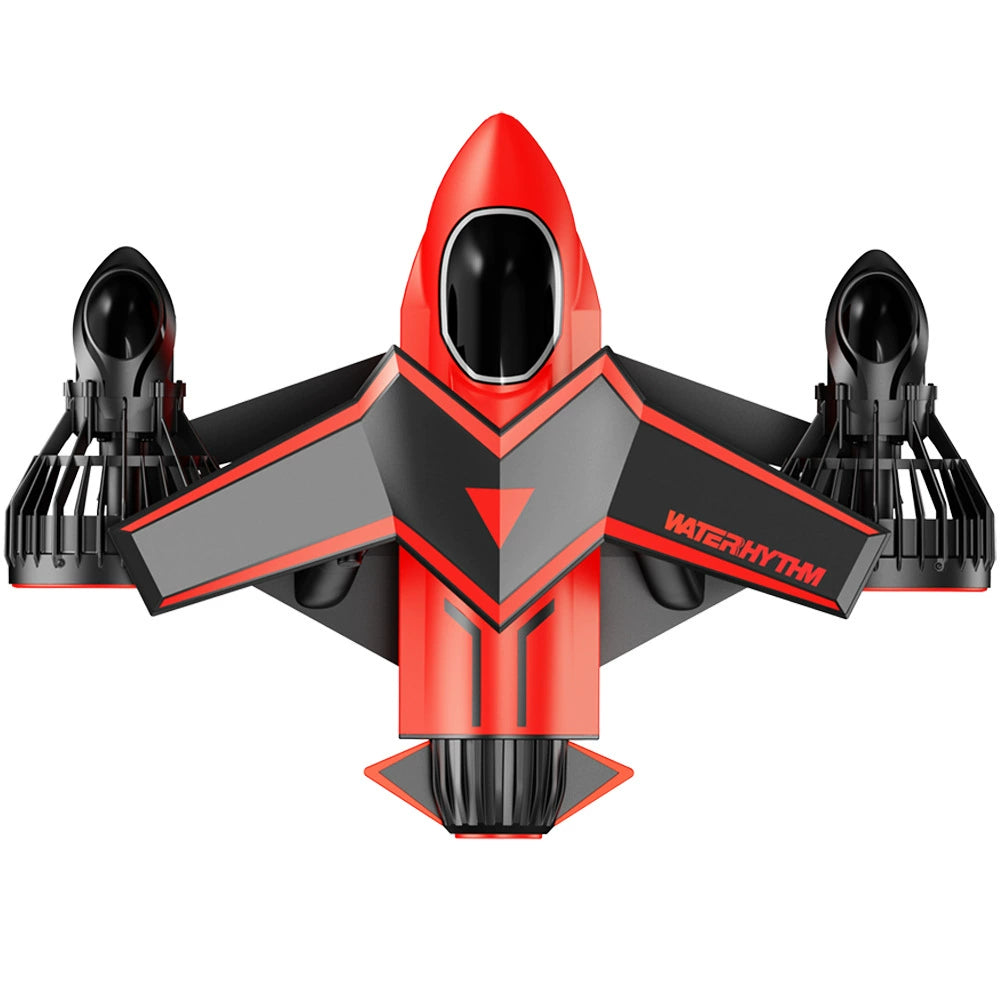

A 0.5L mini scuba tank, even when fully filled to around 200–300 bar, generally lasts only 5–10 minutes, so the usable time is quite limited. Its main advantage is that it is compact and lightweight—usually around 1 kilogram—making it easy to carry and suitable for emergency use. The downsides are equally clear: it is not intended for longer dives, it requires specialized equipment to refill, and improper use carries real safety risks.

Pros
Golden Rescue Window
When someone suddenly cannot breathe at a depth of 15 meters, panic hits in an instant. The lungs may hold 4 to 6 liters of air, but the surrounding water pressure is already 2.5 times what it is on land. Seawater compresses the chest so hard that someone who can hold their breath for a full minute on land may not last even 20 seconds underwater. A 0.5L mini tank is designed to bridge exactly that life-or-death gap.
Even in a pool only one meter deep, the moment someone inhales water, the muscles around the throat can clamp shut within 0.5 seconds. The body’s instinctive response is to lock the remaining oxygen inside the alveoli, while the person starts thrashing in panic.
Pull the mouthpiece from the chest pouch, put it in your mouth, and press the coin-sized purge button with your thumb. The cylinder is filled with 3000 PSI of compressed air, which rushes through the hose straight into your mouth. At a depth of 10 meters, a 0.5L tank can supply an adult with roughly 50 to 80 breaths at a normal rhythm.
- The first 5 breaths can bring the heart rate down from 150 bpm to below 100
- Another 10 breaths can buy enough time to free a fin caught in an old fishing net
- The remaining 30 to 40 breaths are enough to let you rise calmly to the surface
- At 5 meters, it can even support a 1-minute safety stop
If you hold your breath and bolt upward, the air in your chest expands as water pressure drops. From 10 meters, a single breath can double in volume by the time you reach the surface. The wall of an alveolus is only about 0.2 microns thick and cannot withstand that outward force for even a moment.
Experienced divers all know one rule by heart: your ascent rate should never exceed 18 meters per minute. You watch your exhaled bubbles rise, and you make sure you ascend more slowly than those bubbles.
The 3 to 5 minutes of air from a mini tank are just enough for a slow, controlled ascent. Coming up from 15 meters at a safe speed of 9 meters per minute takes close to 2 minutes. With a small aluminum cylinder holding about 100 liters of air at atmospheric pressure, you avoid the risk of rupturing your lungs by rushing.
Imagine snorkeling on an island in a 3 mm wetsuit, breathing through a 30 cm plastic snorkel. You duck down 3 meters to look at coral, your torso touches the reef, and the back of your rash guard gets snagged on a 2 cm dead coral branch. After holding your breath for 40 seconds, your air is nearly gone and your limbs start flailing.
- Reach back and grab the 34 cm mini tank clipped to your belt
- Take 3 to 4 deep breaths from air pressurized to 200 bar
- Turn and clearly see the 2 cm coral spike hooked into the fabric
- Grab the shirt and yank downward to free yourself
Even a standard 15 kg primary scuba cylinder can fail. The black O-ring on the high-pressure connector is under 2 mm thick. Once aged rubber is exposed to water and the force of 200 times atmospheric pressure, it can blow out with a pop. The valve then vents white gas like a pressure washer, and a 12L main cylinder can empty in under 90 seconds.
At that point, asking a buddy for alternate air may take too long. Their 90 cm yellow octopus hose could be trapped under their arm. A 0.5L mini tank carried on your own chest is completely independent. The high-pressure air inside it has nothing to do with the leaking main tank on your back. You do not need to grab anyone else’s regulator to survive.
Bite down on it, point upward to signal ascent, and both divers can fin upward slowly and safely until they break the surface and climb back onto the boat.
In a current running at 2 meters per second, a diver can become totally disoriented. The main tank drains rapidly under heavy breathing, and the pressure gauge needle can plunge into the red zone at 500 PSI. Air that would normally last 45 minutes can be gone in 20 minutes if the diver is struggling.
Switching to the mini tank’s silicone mouthpiece delivers clean, dry air with every breath. There is no need to keep biting down on the heavy 300 g primary second stage, and no need to wrestle with bulky hoses.
With those few dozen high-pressure breaths, you can let the current carry you upward more calmly. Drop your finning rate to around 30 kicks per minute, ease the panic, and simply keep moving upward until your head breaks the surface and you spot the white speedboat waiting 50 meters away.
During a night dive, you may descend into complete darkness with a 1000-lumen dive torch in hand. If you accidentally kick up a whole patch of silty bottom, visibility can turn instantly into muddy soup. Suddenly you cannot tell where the bottom is or where the surface is, and you cannot even read the 5 cm screen of the dive computer on your wrist.
In that kind of zero-visibility chaos, random movement doubles oxygen consumption. If you pull out the mini tank clipped at your side and breathe from it, those full 100 liters of reserve air can keep you motionless for several minutes, even if you simply stay put in the silt cloud. That gives the suspended sediment time to settle, visibility time to recover to 3 meters, and you enough time to reorient and ascend calmly.
Portability
A standard scuba setup with a full-size tank, BCD, and weights usually weighs 18 to 22 kilograms. The shoulder marks can take hours to fade. A 0.5L mini tank, by contrast, weighs only about 0.85 kg when empty. Filled to 3000 PSI, the total weight rises only to around 1.05 kg.
Its size is comparable to a 750 ml sports bottle in a mountain bike cage. The cylindrical metal body is about 34 to 36 cm long and 6 cm in diameter. A hand can wrap comfortably around the anti-slip center section. The shell is made from 6061-T6 aerospace-grade aluminum, finished with a 40-micron anti-corrosion coating.
When carried underwater, it creates almost no noticeable drag. A traditional 19 to 30 cu ft pony bottle slung at the side adds 1.5 to 2.5 kg of off-balance weight, forcing the diver to keep compensating. A 0.5L mini tank in a nylon chest pouch attaches to the BCD shoulder straps with two 2.5 cm webbing straps.
- The clip is a 316 stainless steel double-ended bolt snap
- The snap opening is 15 mm wide
- The nylon webbing is rated to hold 200 kg
- The exterior is wrapped in 3 mm neoprene-style insulating material
When flying to an island destination, it is easier to bring through airport security than most people expect. The TSA is strict about pressure vessels. With a 22 mm wrench, you can loosen the regulator assembly by turning it counterclockwise a few times until the breathing unit separates from the aluminum cylinder.
The empty metal cylinder can then travel open, with the regulator packed separately in your luggage. On the X-ray, security can clearly see that no compressed gas remains inside. A plastic cap goes over the fine threads to protect the 1.5 mm thread pitch from being damaged by zippers or hard edges.
- Once disassembled, the cylinder length drops to about 25 cm
- The mouthpiece-and-regulator assembly weighs only 350 g
- It fits easily into the mesh side pocket of a 20L backpack
- A spare fluororubber O-ring takes up only about 1 cm²
Inside wrecks or narrow coral passages, every extra hose is another snag hazard. Traditional alternate air sources use a 90 cm bright yellow intermediate-pressure hose that constantly brushes kelp or rusty metal. A mini tank has no external hose at all and almost no protrusions.
When rolling over underwater or looking upward, there is nothing under your chin to get in the way. Worn against the wetsuit over the ribs, the tank occupies less than 1000 cm³ of space. Even in an opening only 80 cm wide, the little aluminum cylinder will not scrape the sides or hit the long-spined sea urchins growing there.
Even the walk from a hotel room to the dock can be exhausting with a full scuba setup. A waterproof bag holding the mini tank can be carried in one hand. The bag itself weighs under 200 g and is made from 500D reinforced PVC. Even with three fully filled 0.5L tanks inside, the total weight stays below 4 kg.
If a yacht propeller gets tangled in heavy rope while docked, you can throw on fins, grab the mini tank, and jump straight in. There is no need to haul a full 20 kg back-mounted setup or thread four or five 2 kg lead blocks onto a belt. At 2 meters underwater, 15 minutes is enough to cut away a substantial nylon net.
Stored in the trunk of an off-road vehicle, it takes up almost no room. The gap under a pickup’s rear seat or in a corner of the cargo area is often only 10 to 15 cm high. A cylinder with a 6 cm outer diameter slots into that space perfectly. In summer, when the inside of a car reaches 60°C, the pressure in the cylinder can increase by 200 to 300 PSI.
The burst disc is rated to rupture only at around 5000 PSI, so the tank remains safe even in a sun-baked vehicle cabin. When paddleboarding, it can be secured under the front deck bungees and pulled free with one hand. Those bungee cords are about 5 mm thick, stretch up to 150%, and grip the curved aluminum surface firmly.
If another diver runs out of air, handing them the mini tank takes just 2 to 3 seconds. There is no long hose to manage. Release the 15 mm stainless clip at your chest, and the whole breathing unit detaches instantly. Your buddy can grab it one-handed by the smooth 4 cm neck section and put it straight into their mouth.
- Once handed over, each diver continues using a separate air source
- The unit weighs under 1.1 kg, so it is easy to pass with one hand
- The two divers do not need to stay pressed close together
- It eliminates the hazard of both divers pulling on the same hose
Zero Learning Curve
When someone gets into trouble in the water, their heart rate can jump to 140 bpm, and the fine motor skills they normally rely on disappear. A standard scuba alternate air hose is 90 cm long and often trails behind or at the side. This 0.5L mini tank has no such hose. Its small 7.5 cm chrome-plated brass fitting sits right at the bottle neck, clipped to the D-ring on your chest where you can see it the moment you look down.
You can remove it with one hand. The black nylon pouch closes with Velcro. A pull of about 2 kg is enough to rip it open. A 50 cm coiled tether connects the bottle to your gear, which is just long enough to bring it from your chest to your mouth in a smooth arc.
A translucent silicone dust cap covers the top. Flick it aside and it pops open in less than 1 second. There is no need to aim carefully—the whole movement is based on simple muscle memory: grab, lift, and bite.
The mouthpiece is made from medical-grade liquid silicone. The sections bitten between the teeth are 2.5 mm thick, with just the right balance of softness and structure. As soon as you bite down, your index finger naturally rests on the purge button at the front. Pressing it with about 800 g of force opens the spring-loaded valve.
- The mouthpiece is set at a 45-degree angle
- Breathing effort is around 1.2 to 1.5 J/L
- The internal piston components are 316 stainless steel
- The purge cover has 4 drainage grooves molded into the edge
The 3000 PSI air inside the cylinder is reduced into a smooth airflow of about 60 liters per minute. Any seawater that gets into your mouth is blown clear through the one-way drain in about 0.5 seconds.
Standard scuba regulators often have levers and adjustment knobs to fine-tune inhalation effort. This little unit does away with all of that. A PTFE high-pressure seat under the piston keeps the opening precisely controlled. Whether you are at the surface or 15 meters down, the delivered airflow stays the same. There is nothing for you to fumble with underwater.
You also do not need to do any mental math to know how much air is left. A small gauge, only 20 mm across, is built into the body of the cylinder. Instead of electronics, it uses a simple mechanical needle. The gauge window is made from 8 mm tempered glass, strong enough to withstand pressure even at 50 meters.
- The 0 to 1000 PSI zone is marked in red
- The 1000 to 2000 PSI zone is yellow
- The 2000 to 3000 PSI zone is green
- The needle itself is 1.5 mm thick
The dial plate is coated with strontium aluminate luminous paint, so it glows green in dark water. A quick glance is enough to tell whether you still have plenty of air.
Pre-dive checks are minimal. Remove the fill-port cap and inspect the No. 014 fluororubber O-ring for cuts. Screw the regulator on 3.5 turns clockwise until it seats firmly. At the neck sits a 0.15 mm burst disc, factory-set to rupture automatically at 5000 PSI.
Cleaning is equally simple. With no long hoses or multiple fittings, you can drop the cylinder and valve together into a bucket of fresh water for 15 minutes. Water works its way into the gaps and dissolves salt crystals lodged in the 0.3 mm spaces around the spring.
After soaking, press the front purge button twice with your thumb to expel any trapped water. Then leave it in the shade with natural airflow for about 45 minutes. Once dry, it goes back into a backpack, ready for the next beach.
Cons
Extremely Limited Air Supply
A fully charged 0.5L aluminum tank stamped DOT-3AL and filled to 3000 PSI (about 200 bar) contains the equivalent of about 100 liters of breathable air at the surface. A resting adult male typically inhales around 0.5 liters per breath. At 15 breaths per minute, that is 7.5 liters per minute.
The moment you enter the water, however, depth changes everything. At 10 meters, the ambient pressure doubles. Every breath now contains twice the mass of air. What was 7.5 liters per minute at the surface becomes 15 liters per minute at depth. Divide 100 liters by 15, and the maximum theoretical duration is only about 6.6 minutes.
In reality, staying perfectly calm and motionless on the seabed is rare. If your mask floods or your fin gets caught in a net, your heart rate can jump from 80 bpm to 130 within seconds. The body immediately demands much more oxygen.
- A single deep breath can jump to 1.5 to 2 liters
- Breathing rate can spike to 35 to 40 breaths per minute
- Surface-equivalent consumption can rise to 60 liters per minute
- At 10 meters, actual consumption can reach 120 liters per minute
The gauge needle drops frighteningly fast. A full cylinder at 200 bar can fall to 150 bar after just four strong inhalations. In a frightened, panicked state, those 100 liters of air may not last even 45 seconds. The gas delivery simply cannot keep up with lungs that are working at full emergency demand.
Take a simpler task, like scraping barnacles from a boat hull at 5 meters. At that depth, ambient pressure is 1.5 times surface pressure. Physical work drives oxygen consumption sharply upward.
- While scraping, surface-equivalent consumption can rise to 40 liters per minute
- At 5 meters, actual consumption becomes 60 liters per minute
- With only 100 liters available, the tank can be empty in 1.6 minutes
- Once pressure drops below 30 bar, inhalation becomes noticeably harder
Inside the valve is a piston system that relies on remaining cylinder pressure to open the gas pathway. Once the cylinder falls below 10 bar (about 145 PSI), the piston can no longer open properly. So even though the cylinder is rated at 100 liters, the realistically usable volume is only around 90 to 95 liters.
Cold water shortens usable time even further. In 15°C (59°F) water, the moment the cold hits your face, the body may trigger an involuntary cold-shock response.
- One involuntary gasp can waste 3 liters immediately
- Shivering can increase muscular oxygen demand by 300%
- Gas flow may become so rapid that the mouthpiece can ice up internally
- Cold water can cut effective breathing time by 20%
A standard AL80 scuba cylinder holds 11 liters of water and, at 207 bar, contains 2277 liters of air. A 0.5L mini tank, even when full, is only 4.3% of that capacity. Even experienced divers who carry backup bottles usually choose something in the 1.9L to 2.7L range.
Overseas, a 0.5L mini tank is commonly referred to as a 3 cu ft cylinder. If your main regulator fails mid-dive and you immediately switch to it, the first deep breath to calm down can use 3 liters. The second breath, while you turn to look for your buddy, may use another 2.5 liters. The third breath, just before beginning your ascent, can take another 3 liters.
At 10 meters, three heavy breaths consume the equivalent of 17 liters of air at the surface. In only 8 seconds, about 17% of the cylinder is already gone. If you then need to pull out a knife and spend 30 seconds cutting tangled netting, the gauge will already be scraping the bottom.
Risk of Pressure Injury
On land, a deep breath can fill the lungs with around 6 liters of air. Now imagine someone takes a fully charged 0.5L mini tank into a resort pool only 3 meters deep. At that depth, the pressure surrounding the body is about 1.3 times surface pressure. A strong inhalation there can still fully fill the lungs to 6 liters.
Underwater, unexpected events happen fast: mask leakage, sand in the eyes, or a patterned sea snake emerging from the bottom. Anyone who has never received formal scuba training tends to react the same way. They clamp their mouth shut instinctively, hold their breath, and kick hard for the surface.
During that short 3-meter ascent, the external pressure on the chest drops rapidly. The 6 liters of gas compressed at depth begin expanding uncontrollably inside the body. By the moment the diver breaks the surface, that volume has swelled to nearly 7.8 liters.
The lungs simply cannot accommodate the extra 1.8 liters. The body’s tolerance is extremely narrow: if internal lung pressure exceeds outside pressure by just 0.1 atmospheres, the tissue can fail. In medical terms, that is only about 80 to 100 mmHg of pressure difference—enough to tear the fragile alveolar membrane like an overinflated plastic bag.
| Starting Depth | Lung Volume After Inhalation | Pressure Difference at Surface | Expanded Volume at Surface | Physical Damage to the Alveoli |
|---|---|---|---|---|
| 1.2 m underwater | 6.0 L | 0.12 atm | 6.7 L | Extensive tearing and bleeding |
| 3.0 m underwater | 6.0 L | 0.30 atm | 7.8 L | Severe structural trauma |
| 5.0 m underwater | 6.0 L | 0.50 atm | 9.0 L | Complete irreversible rupture |
Once thousands of grape-like alveoli rupture, the trapped air has to go somewhere. Some of it leaks through torn tissue into the pleural cavity, compressing the lung inward—what hospitals call a tension pneumothorax. At the surface, the diver may feel as if the chest has been hit by an 8-pound sledgehammer, while coughing up frothy blood.
An even more dangerous path is when the escaping gas is forced through damaged capillary walls into the bloodstream. Invisible bubbles then race through the circulation, causing arterial gas embolism. If they move through the carotid arteries into the brain, that can happen in under 10 seconds.
- Bubble-laden blood can instantly block capillaries as fine as hair in the brain
- Widespread cerebral oxygen deprivation can trigger violent full-body convulsions within 3 to 5 minutes after surfacing
- If bubbles block the vessels behind the eyes, vision can disappear within seconds
- One side of the body may go numb and limp like a severe stroke
In a formal PADI Open Water course, instructors spend hours drilling one unbreakable rule into beginners, often in shallow water: never hold your breath while breathing from scuba underwater. Someone who buys a 0.5L mini tank online for $200 bypasses at least 3 full days of basic emergency ascent training.
Many island tourists assume that using one in shallow nearshore water—less than 2 meters deep—feels safe enough. But even at just 1.2 meters, if someone takes a breath from the tank and then stands up while holding it, the expanding gas inside the chest can already be enough to rupture fragile alveoli.
- Remote tropical islands are often 200 to 300 km from a hospital with a hyperbaric chamber
- Rescue helicopters climbing in altitude can make gas bubbles expand even further as outside pressure drops
- The emergency window for doctors to intervene may be only a matter of minutes
- Private overseas medical bills can easily climb to $40,000 to $50,000
Not Really “Fill and Go”
The hand pump included in many online kits looks a lot like a mountain bike pump. But to force 3000 PSI (about 200 bar) into a 0.5L cylinder, an adult has to pump it roughly 600 to 800 times.
The first 100 strokes do not feel too bad, and the gauge only creeps up to around 50 bar. Beyond 100 bar, however, the resistance becomes brutal. Every downward stroke requires nearly your full body weight over the handles.
After 300 strokes, heart rate can hit 140 bpm, your shirt is soaked through, and friction heat drives the metal outer tube above 70°C—too hot to touch comfortably.
- The manual says in tiny print that you must stop every 5 minutes to let it cool
- If the tube stays hot, the small internal rubber seal can melt
- Burned rubber fragments can then be forced into the tank
- Breathing air contaminated with that burnt smell can trigger gagging underwater
You can spend around $300 on a portable electric high-pressure pump that clips to a car battery. Turn it on, and it screams at about 90 dB, roughly like an old single-cylinder diesel generator right next to your ear.
Filling one little cylinder takes 15 to 20 minutes of that noise. The pump draws around 30 amps from a 12V car battery. If you run it twice with the engine off beside the beach, the battery voltage can fall below 11V, and the car may not start afterward.
Humidity at the seaside is usually high—often above 80% in the morning. The small active-carbon filter included with most electric pumps is nowhere near enough to stop atmospheric moisture or fine oil mist from the pump mechanism.
That damp, contaminated air gets forced straight into the aluminum cylinder. In 15°C water, the moisture condenses into droplets. When those reach the silicone mouthpiece and mix with oily air, the diver can start coughing violently underwater.
If you walk into a real dive shop with an empty, uncertified mini bottle, the staff will often take one look at the neck and hand it back. What they are looking for are legitimate DOT or CE certification marks stamped into the metal.
A cheap aluminum bottle without those markings is a liability in front of an industrial compressor. At 3000 PSI, the pressure exerted over an area the size of a coin is equivalent to the weight of a 1.3-ton car.
- The shop will check for a current VIP visual inspection sticker with a bright flashlight
- That sticker must be within the past 12 months
- They will also check for a valid hydrostatic test stamp done every 5 years
- Many shops will insist on seeing a valid PADI or SSI scuba certification card
Even if you rent a proper AL80 and use a transfill adapter, the process is limited. A full-size tank at 200 bar is connected via a high-pressure hose to the empty 0.5L cylinder.
As gas rushes from one to the other, it hisses loudly. Once both tanks equalize, flow stops. If the large tank started at 200 bar, it may drop to 190 bar after transferring gas.
That means the mini tank can only be filled to 190 bar, never to its full 200 bar. To top it off completely, you may need to decant from two or three larger tanks in sequence, which makes pre-dive preparation unnecessarily complicated.
How to Choose
Safety & Material
A filled 0.5L mini tank is holding about 3000 PSI of outward pressure. The force is roughly comparable to an adult African elephant standing on a coin-sized area.
No serious manufacturer simply rolls a piece of sheet metal into a cylinder and welds it shut. A proper bottle is made from 6061-T6 aerospace-grade aluminum alloy. A hydraulic forming press shapes a solid aluminum billet into a seamless cylinder, leaving no weld line anywhere on the body.
In one-piece cold extrusion, the wall thickness is tightly controlled between 4.5 mm and 5.2 mm. The base, which sees the greatest stress, is over 8 mm thick. An empty cylinder should weigh around 1.05 to 1.08 kg, with a satisfyingly solid feel in the hand.
Turn the bottle over and inspect the finish. It should have a slightly matte texture. Before leaving the factory, it should have undergone a three-stage hard anodizing treatment.
- External coating thickness should be 40 to 50 microns
- It should pass 120 hours of neutral salt-spray testing
- Surface hardness should exceed HRB 90
- The inner wall should be specially passivated for corrosion resistance
Seawater is intensely corrosive. Unprotected metal exposed to chloride ions can deteriorate quickly. The anodized layer acts like a hard ceramic shell, sealing the aluminum underneath. Scratch it hard with a coin and you should leave only a superficial white mark that wipes away, without exposing bare metal.
At the neck of the cylinder is the threaded opening for the valve. Clean M18 x 1.5 metric threads should be precisely machined. With more than 16 mm of thread engagement, plus a 75A fluororubber O-ring, the valve is able to keep 200 bar of compressed air locked inside a 0.5L space.
Around the shoulder, the metal should be stamped with permanent markings. The surface oxide is removed and the markings are driven into the metal so you can tell immediately whether the cylinder is safe to use.
- DOT-3AL indicates compliance with U.S. Department of Transportation seamless aluminum cylinder standards
- TC-3ALM indicates compliance with Canadian transport requirements
- CE EN250 corresponds to EU breathing equipment standards
- WP 207 BAR identifies a normal working pressure of 207 bar
- A stamp like 08-23 means the cylinder was manufactured in August 2023
Before shipment, a new cylinder should undergo hydrostatic testing in a water jacket, pressurized to 5000 PSI, or about 1.67 times working pressure. Inspectors watch how much the cylinder expands. If it fails to return properly or shows more than 10% permanent deformation, the entire batch is scrapped.
A filled cylinder is especially vulnerable to heat. Left in a hot trunk under direct sun, its internal pressure rises rapidly. Beneath the valve sits a tiny copper disc only 6 mm wide: the burst disc.
The burst disc is set to fail at 4500 to 5000 PSI. If internal pressure crosses that line, the copper ruptures and vents the gas through a side port with a sharp hiss. The cylinder stays intact, and people nearby stay safe.
- After use, soak it in clean fresh water for 30 minutes
- For long-term storage, leave about 200 PSI in the cylinder
- Never store it above 60°C
- Never apply automotive grease to the metal threads
- Have it hydrostatically tested again every 5 years
Evaluate the Filling Method
A 0.5L mini tank often comes with a metal hand pump that looks like a bicycle floor pump. Pull back the stainless quick-connect collar, snap it onto the fill port, and step onto the fold-out footrests. Grip the handles and push down—and the gauge needle barely moves 1 mm.
To compress air to 3000 PSI, you need 600 to 800 pump strokes. The first 200 feel easy enough, but after ten or more minutes the stainless tube climbs above 50°C and feels distinctly hot.
Once the pressure passes 2000 PSI, every stroke becomes punishing. You end up putting nearly your entire body weight—50 to 60 kg—onto the handles. Sweat drips to the ground, and after 30 to 40 minutes of pumping, the needle finally crawls into the green zone.
- The pump uses a three-stage booster piston system
- There is a 2 cm water-oil separator at the base
- After 15 minutes of pumping, it must be stopped to cool
- The piston rod is made from reinforced 304 stainless steel
After just one 5-minute underwater session, you may come back ashore and sit down exhausted for half an hour. Your arms can be so sore that lifting a 500 ml water bottle feels difficult, and the shoulder pain the next day can be worse. Filling three tanks for a family by hand can feel like running most of a half-marathon.
If you already have access to a standard 12L scuba cylinder, a transfer adapter kit is far easier. The bridge adapter is machined from a solid block of aluminum alloy. One side uses a yoke clamp, and the other connects to a small 8 mm high-pressure hose.
Clamp the yoke over the large cylinder’s valve and tighten the plastic knob. Push the brass quick-connect fitting onto the mini tank’s fill nipple and lock it in place. Then slowly open the heavy metal valve on the large tank.
High-pressure air screams through the hose into the mini tank. Watch the shock-protected gauge on the small tank and the needle will spin clockwise like a stopwatch hand. Count 8 to 10 seconds, and it will settle right around 3000 PSI.
| Filling Method | Time Required | Physical Effort | Best Use Case |
|---|---|---|---|
| High-pressure hand pump | 30–40 minutes | Exhausting | Very occasional use |
| Transfilling from a large scuba tank | 8–10 seconds | Almost none | When you can borrow a full-size cylinder |
| Electric high-pressure compressor | 12–15 minutes | Just wait for it | Villa by the beach or onboard a yacht |
Once the fill is done, close the large cylinder valve immediately and press the pea-sized bleed button on the side of the adapter. With a short pop, the pressure in the hose vents instantly, allowing you to disconnect it. Touch the mini tank and the aluminum surface may feel around 40°C from internal heating during the fast fill.
For repeated use by the sea, you will eventually need a proper fill service or your own compressor. It makes little sense to haul a 20 kg large cylinder across the beach. Uncertified tourists usually cannot just walk into a shop and borrow one.
If you want unlimited refill capability at a beach villa or on a yacht, a box-shaped high-pressure electric compressor is one of the best options. A typical unit is about 40 cm long, weighs 18 kg, and houses an 1800W copper-wound motor.
A small automotive inflator tops out at around 40 PSI and is useless here. A proper high-pressure compressor pushes air all the way to 4500 PSI. Plug it into a 220V outlet, hit the red rocker switch, and the noise is enormous—comparable to an old diesel generator on a construction site.
Two transparent silicone tubes carry cooling water into an ice-filled bucket. The pump circulates water around the hot cylinder head to keep it cool. If the housing temperature display exceeds 65°C, a protective chip shuts the unit down automatically.
- The intake uses a composite activated-carbon filter element
- The output hose is covered with a stainless steel anti-burst braid
- The crankcase must be filled with No. 46 anti-wear hydraulic oil
- Operating noise stays around 85 dB
Sit nearby and monitor it for 12 to 15 minutes. Once the gauge reaches the preset 200 bar, the compressor will shut off automatically. Before removing the hose, always open the brass drain valve underneath. Condensed water and traces of oil will spray out.
Smell the air at the freshly filled cylinder opening. If it smells like machine oil, do not breathe from it. The activated carbon and molecular sieve filters must be replaced every 40 hours of operation.
Regulator (Valve) Quality
Inside a cylinder filled to 200 bar, the force is strong enough to blow off a car tire bead. Converting that into something as gentle as a normal breath depends entirely on the heavy brass regulator mounted on top. Inside are a number of tiny pressure-reduction components. Press the front purge button and the airflow should feel as steady and soft as a fan on its lowest setting.
Cheap regulators cut corners by using a simple spring pushing against a plastic seat. With a full tank at 3000 PSI, the air can blast into the mouth too aggressively. Once pressure drops below 500 PSI, the spring may no longer open the valve properly, and breathing starts to feel like sucking the last of a thick milkshake through a straw.
When buying, look for a system explicitly labeled as a balanced constant-pressure valve. Inside the brass body should be a 316 medical-grade stainless steel high-pressure spring and a PTFE seat. Whether the tank is at 1000 PSI or nearing the 300 PSI warning level, inhalation effort should stay fixed between 1.2 and 1.5 J/L.
Before the air reaches the valve seat, it should also pass through a hidden metal filter. At the bottom of the inlet threads there should be an 8 mm sintered bronze filter. Thousands of microscopic bronze particles are fused together into a single porous structure, catching fine dust or water from the filling system.
Use a magnifier and check the details:
- The outer body should be heavy brass with hard chrome plating
- The internal main spring should be 316 corrosion-resistant stainless steel
- The bottom knob should have a 3 mm impact-protection rubber ring
- The inlet O-ring should be pressure-resistant fluororubber at 75A hardness
At just a few meters underwater, you cannot guess how much gas is left. Since a 0.5L cylinder drains in minutes, the regulator must include a fully mechanical waterproof gauge. Avoid electronic systems that rely on Bluetooth apps—by 3 meters underwater, wireless communication becomes unreliable.
Look for a mechanical dial about 2.5 cm across, protected by a 4 mm thick luminous silicone shock guard. If the tank bangs against pool tiles, that soft silicone absorbs much of the impact. The gauge window should be made from explosion-resistant, high-clarity acrylic rather than brittle glass.
A few meters down, the water turns dim and green. The gauge face should be coated with long-duration luminous paint. Expose it to sunlight for 5 minutes before the dive, and it will glow brightly enough in a dark crevice that a 3-second glance tells you exactly which color zone the needle is in.
Check the printed performance specs on the dial:
- IPX8 waterproof rating to withstand pressure at 50 meters
- Green zone from 1000 to 3000 PSI means sufficient gas
- Red zone from 0 to 500 PSI means ascend immediately
- The gauge should be oil-filled with clear silicone fluid to prevent needle flutter underwater
The mouthpiece controls both inhalation and exhalation. Cheap versions are molded from hard plastic and can leave red bite marks on the gums in under 5 minutes. A good mouthpiece is molded from liquid food-grade silicone with a very soft 50A hardness. The bite tabs should seat naturally against the rear molars, so you do not need to clamp down to keep seawater out.
The exhalation outlet sits directly below the tongue. During inhalation, a thin membrane inside collapses downward with lung demand, opening the pathway and filling the mouth instantly with fresh air. During exhalation, the waste gas needs an easy exit. Two exhaust ports at the bottom hold one-way silicone flaps thinner than printer paper.
Exhaled carbon dioxide pushes those flaps open and escapes as bubbles. The angle of those exhaust ports matters a lot. If the bubbles rise straight up, they strike the mask lens and ruin visibility. Good designs angle the flow out to 120 degrees, sending the bubbles off to either side of the face.
Once assembled, the entire breathing system should be tested on a breathing simulator. The machine mimics 25 breaths per minute for 1000 continuous cycles. If any internal part sticks or leaks, the computer flags it immediately. Shake the unit next to your ear—there should be no loose rattle at all.
You can also judge the mouthpiece and exhaust assembly by feel:
- Pinch both bite tabs and release them—they should spring back instantly without creasing
- Press the front purge button—it should move smoothly without sticking
- Shake it hard next to your ear—there should be no rattling or water sloshing
- Any edge the tongue can touch should feel perfectly rounded and smooth
After use, cleaning is precise but simple. Seal the inlet with the supplied thick rubber plug. Soak the entire metal assembly in fresh water for 30 minutes to dissolve the dried salt trapped around the spring. Press the front purge button repeatedly to force any trapped water out of the channels, then leave it to air-dry naturally in a cool, ventilated place.



Leave a comment
All comments are moderated before being published.
This site is protected by hCaptcha and the hCaptcha Privacy Policy and Terms of Service apply.