
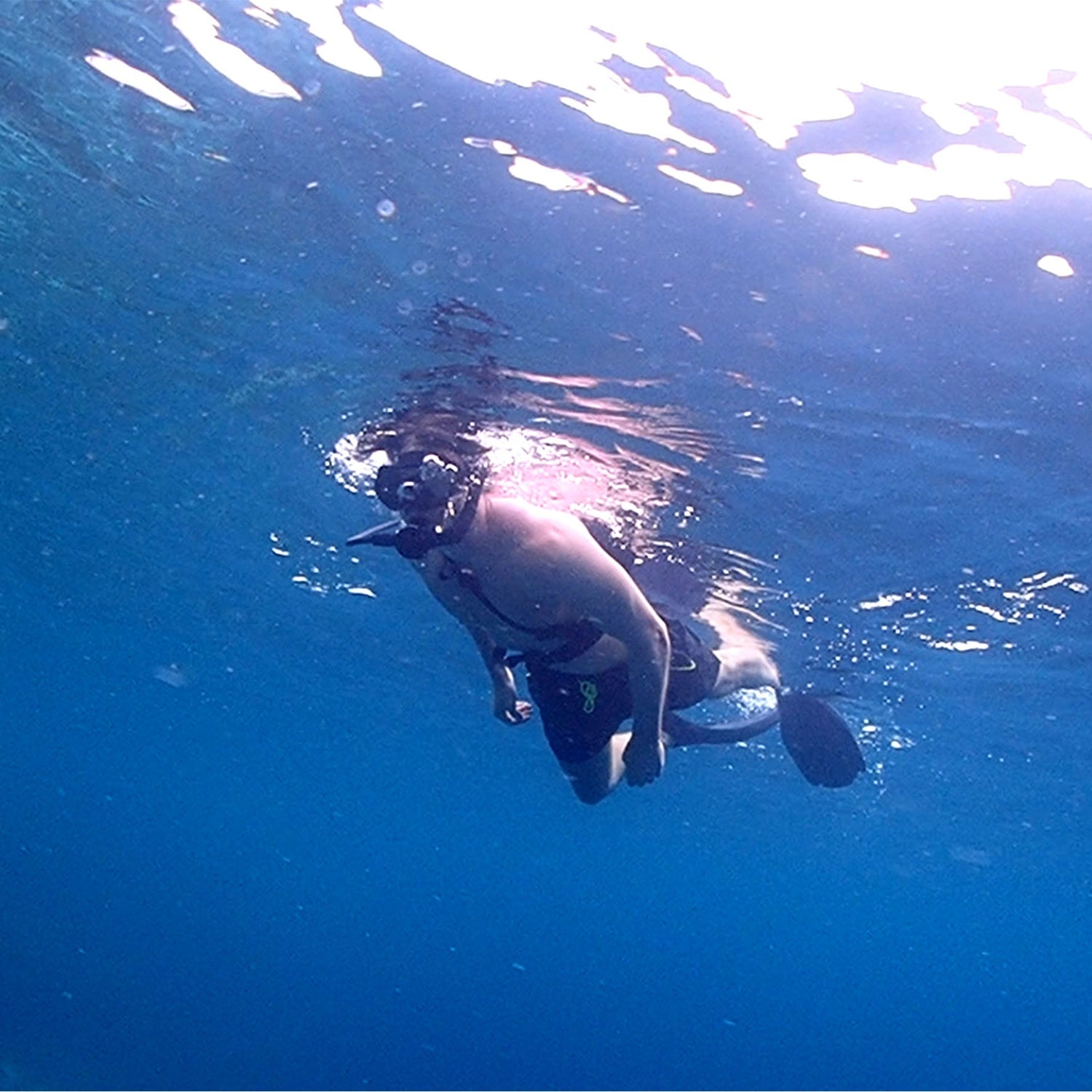
Buying a 0.5L-1L mini scuba tank is a very practical underwater gear choice in 2026. Its five major uses include: snorkeling emergency backup providing 5-10 minutes of breathing time, boat maintenance at depths of 3-5 meters, serving as an independent redundant air source for deep diving, supporting short-duration shallow water photography within 10 meters, and completing pool cleaning tasks without the need for heavy equipment.
It is lightweight, portable, and supports inflation via high-pressure hand pumps, perfectly balancing underwater safety and operational efficiency.

Boat and Pool Maintenance
A 1-liter mini scuba tank provides approximately 15 to 20 minutes of breathing time at depths of 3 to 5 meters. For a 30-foot yacht moored in Florida or along the Mediterranean coast, using it to clear propeller entanglements usually takes only 10 minutes, saving about $200 in diver hire fees per instance.
When maintaining a 20,000-gallon residential pool, diving with a tank to repair cracks eliminates the 48-hour wait time and corresponding water costs required for draining and refilling. The 2.5kg aluminum cylinder is compact and can be stored in a yacht deck locker or a garage corner.
Yacht Underwater Cleaning
A 40-foot fiberglass sailing catamaran moored in Miami, Florida, typically has a draft of 3 to 4 feet. The underwater hull, soaked in warm saltwater long-term, is prone to algae and tiny barnacle growth. Carrying a 1.5-liter aluminum tank pressurized to 3000 PSI allows both hands to be completely free to operate various cleaning tools.
Using 3M industrial-grade scouring pads or wide-edged nylon scrapers, push smoothly from bow to stern following the current. Stripping attachments from the hull restores the smoothness of the antifouling coating, reducing fuel consumption by 10% to 12% at a 15-knot cruising speed. A fully charged tank provides about 20 minutes of underwater breathing time, enough to complete a preliminary scrape of a 15-foot section within 2 feet below the waterline on one side.
- Waterline Algae Scrubbing: Use medium-stiff bristles, sweeping approximately 1 square meter per minute with a push-pull motion.
- Hull Bottom Hard-Shell Barnacle Removal: Switch to a long-handled stainless steel scraper, applying force at a 45-degree angle to the hull.
- Transducer Surface Cleaning: Wipe plastic transducers with a microfiber cloth to prevent scratches on the sensing area.
- Antifouling Paint Integrity Inspection: Record areas where the bottom coating is blistering or peeling, marking bare spots larger than 5 square inches.
The mechanical efficiency of the propulsion system depends on the cleanliness of the propeller and shaft. When sailing through the shallows of the Bahamas, a twin-engine yacht's bronze propellers can easily snag discarded nylon fishing nets or 3/8-inch polyester mooring lines. Foreign objects tightly wound around a 1.5-inch stainless steel main shaft can cause engine RPM drops or forced stalls.
The scuba tank features a standard bite-style second-stage regulator. Descending to the 6-foot deep stern shaft bracket, the line of sight aligns with the propeller blades. Grip the metal bracket with the left hand to stabilize the body's center of gravity, and use the right hand to draw a serrated dive knife to cut through high-strength polyethylene fibers layer by layer against the shaft surface.
Entanglements under high-speed rotation can severely compress the stern shaft's rubber seals. After complete removal, observe closely for abnormal bubbles or water seepage around the bearings. Clearing one propeller usually takes 8 to 10 minutes. A remaining pressure of 1000 PSI on the gauge is sufficient to swim to the other side to check for coin-sized impact nicks on the secondary propeller edges.
High-salinity seawater environments create galvanic reactions, accelerating the corrosion of bronze thrusters. Sacrificial anodes (zinc blocks) installed on stainless steel shafts and brass rudder blades absorb electrochemical corrosion first. When a 2-pound spherical zinc block is consumed by 50% of its original volume, it must be replaced underwater to protect propellers valued at over $3000 from electrolytic erosion.
Carry a 5/8-inch hex wrench and two spare half-ring zinc blocks underwater. The bolts of the old zinc blocks, after four months in seawater, will have significant scaling. Use a fine wire brush to vigorously remove white calcification from the screw surface, then apply about 25 pounds of torque counter-clockwise with the wrench to loosen the fasteners.
- Shaft Spherical Zinc Installation: Fit the two new zinc halves tightly against the shaft and alternately tighten the hex screws on both sides.
- Rudder Flat Disc Zinc Replacement: Unscrew the center fixing nut, remove the remaining metal pieces, and replace with a new 3-inch diameter part.
- Bow Thruster Cone Zinc Cap Installation: Dive into the tunnel under the bow and screw a 0.5-pound conical piece into the plastic blade axis.
- Hydraulic Trim Tab Anode Maintenance: Bolt rectangular anti-corrosion zinc strips to the edges of the metal trim tabs on both sides of the stern.
When anchored, a 150-foot galvanized anchor chain drags on the seabed, filling the links with silt and crushed shells. Before weighing anchor, dive to 4 feet below the surface with the tank, hovering directly under the hawsepipe. Use a stiff nylon brush to scrub each link of the rising 5/8-inch chain.
Stripping silt underwater prevents wet mud, weighing up to 2.5 ounces per pound, from being hauled into the yacht's chain locker. Clean chains entering the locker are less likely to accumulate odors and extend the life of the electric windlass gearbox. Cleaning a 100-foot muddy chain consumes about 800 PSI and takes approximately 6 minutes.
Thru-hull fittings at the bottom of the yacht handle engine cooling water intake and compliant sewage discharge. Moored in the Chesapeake Bay for two weeks, a 2-inch bronze intake grate might be largely blocked by tiny oyster larvae. The independent air supply of a scuba tank allows you to breathe steadily while clearing the pipes.
Using a pipe cleaning brush with stiff brass bristles, insert it into the narrow gaps of the intake grate and pull back and forth 50 times. The cleared opening ensures the diesel engine's raw water pump can smoothly intake over 40 gallons of cooling water per minute, maintaining an operating temperature of 175°F.
The bow thruster tunnel, located 3 feet below the waterline at the front of the hull, is an 8-inch diameter fiberglass tube. When encountering floating plastic trash near docks, polyethylene shopping bags are easily sucked in and stuck between the thruster blades and the inner wall. Under the spotlight of a waterproof flashlight, pull out the plastic film tangled around the blade axis to restore the motor's 250 pounds of lateral thrust.
Pool Repair
Standard backyards in Phoenix, Arizona, often feature 15,000-gallon shotcrete pools. Draining the pool in 100°F summer heat can cause the plaster layer to crack due to dry exposure, leading to thousands of dollars in structural repairs. Using a 1.5-liter mini scuba tank filled to 3000 PSI, maintenance personnel can dive to 8-foot depths with hand tools for underwater repairs.
Wear a mask and bite the second stage, releasing fluorescent yellow leak-detection dye underwater. Using a 30ml plastic syringe, hover 1 inch from a suspected leaking step joint. Slowly inject a 5-inch dye trail; the current will pull the yellow liquid into micro-cracks as narrow as 1/16 inch.
After confirming the leak, the pressure gauge shows 2500 PSI, providing about 12 minutes of stay time. Use a stiff stainless steel wire brush to vigorously scrape algae and loose calcification within 2 inches of both sides of the crack. The exposed rough plaster base increases the adhesive friction for subsequent epoxy repair materials.
Surface to the deck, take equal parts of Resin A and Hardener B, and knead for 2 minutes until it turns a uniform pure white. Cut a golf-ball-sized piece of AB Pool Putty weighing about 2 ounces. Dive back to the 8-foot bottom and press the putty firmly into the 1/8-inch deep gap.
- Inject 30ml fluorescent dye to test leak flow
- Clean 2 inches of algae around the crack with a wire brush
- Knead two-part epoxy resin until pure white
- Fill the crack with 2 ounces of resin and smooth the edges
- Wait 45 minutes for the patch to fully cure underwater
High-end residential pools in California often use 6-inch square ceramic or glass tiles at the waterline. Winter frost or slight soil settlement can cause single tiles to detach and fall into 9-foot deep diving areas. Diving with a small aluminum tank, it takes 5 minutes to retrieve four 1x1 inch glass mosaic fragments from the pool floor.
Back on the deck, use a hydrochloric acid solution diluted 1:4 to clean the 0.5mm thick calcium carbonate scale on the back of the tiles. Apply a 1/4-inch layer of EZ Patch 1 F.S. fast-setting underwater adhesive to the dried tile back. Purge the water from the snorkel and dive to the pool wall at a depth of 4 feet.
Align the adhesive-coated tile with the 6x6 inch gap grid and push it in. Apply about 10 pounds of pressure with both thumbs against the wall, holding still for 60 seconds to squeeze out micro-bubbles. Use a damp sponge to wipe the edges and clean off excess white glue overflowing from the joints.
- Retrieve fallen mosaics from 9-foot deep water
- Clean 0.5mm calcification off the tile back with acid solution
- Apply 1/4-inch thickness of fast-setting underwater adhesive
- Press for 60 seconds to discharge micro-bubbles
- Wipe away excess white glue with a damp sponge
Underwater lighting maintenance also requires ample oxygen support. 500-watt halogen fixtures in a 20,000-gallon pool are installed in stainless steel niches 18 inches below the surface. A 1.5-liter tank mounted on the chest provides neutral buoyancy, allowing you to hover underwater and use a #2 Phillips screwdriver on the brass set screw at the 12 o'clock position of the light ring.
Rotate counter-clockwise to remove the 1-inch brass screw, then pull the 10-inch diameter sealed light housing out of the niche. Connected behind the light is up to 50 feet of 12 AWG waterproof rubber cable. Long-term water flow can cause the coiled cable to become severely tangled in the narrow cavity.
With 15 minutes of breathing time, patiently untie the knots in the rubber cable. Once straightened, safely surface the entire 8-pound brass light assembly onto the concrete deck. Spend $30 to replace the aging silicone O-ring to prevent water from seeping into the 120V high-voltage bulb chamber.
The deepest part of a rectangular pool is located at the twin main drains under the 8-foot mark. Anti-entrapment covers compliant with the Virginia Graeme Baker Act are fixed with #8 stainless steel screws. After 3 years of immersion in water with a free chlorine concentration of 3.0 ppm, metal fasteners may suffer electrochemical corrosion and loosen.
With 1000 PSI remaining, the tank provides a 6-minute operational window at the bottom. Use a T20 Torx manual screwdriver to remove the four 1.5-inch old screws securing the 8-inch domed cover. Continuous underwater breathing allows for steady force, avoiding stripping the brass nuts embedded in the plastic base.
- Remove the 8-inch domed anti-entrapment grate cover
- Clear out autumn leaves accumulated in the 2.5-inch pipe
- Scrub silt and white scale from the base threaded holes
- Replace with 4 brand new #8 stainless steel rust-proof screws
- Manually tighten and test the cover to withstand 20 pounds of pull
Removing the grate cover exposes the 2.5-inch diameter PVC suction pipe. Reach 10 inches into the pipe opening with a neoprene-gloved right hand and pull out a plug of autumn oak leaves and pine needles. Once cleared, the pool pump's suction flow instantly returns to the design standard of 50 gallons per minute.
Observe the pressure gauge on the portable tank drop to the 500 PSI safety red line, then ascend slowly. Re-inflate using a 110V portable high-pressure air compressor in a dry area; the tank pressure returns to 3000 PSI in 15 minutes. Ready for the next task of scrubbing stubborn black algae from the 8-foot deep pool walls.
The "Snorkeling Upgrade"
Small scuba tanks (0.5L to 1L) extend a single snorkeling breath-hold from an average of 45 seconds to 8-15 minutes by providing 3000 PSI (200 Bar) compressed air. These devices, including the regulator, weigh about 1.2 to 1.5 kg—comparable to a standard sports water bottle—reducing weight by about 85% compared to a standard 12L scuba tank. Users can maintain a normal land-based breathing rhythm in shallow waters (3-5m), eliminating the need for frequent surfacing and shifting from surface-down observation to a parallel underwater perspective.
Duration of Stay
The average adult lung capacity is about 4.5L to 5.5L, with a resting breathing rate of 12-20 times per minute at 1 ATM on land. Taking a 0.5L tank as an example, when pressurized to 3000 PSI (approx. 206 Bar), it stores about 100 liters of atmospheric air.
The underwater environment compresses gas volume proportionally. When diving to 5 meters around a Maldivian atoll, ambient pressure increases to 1.5 ATM. A diver's Surface Air Consumption (SAC) rate will increase to 1.5 times the surface rate.
In a 1.5 ATM environment, if a diver's SAC is 15 L/min, their actual consumption at 5 meters will be 22.5 L/min.
Dividing the 100L total air by the 22.5 L/min consumption rate results in a theoretical supply time of 4.4 minutes for a 0.5L tank at 5 meters. Switching to a 1L tank doubles the air to 200L, extending the theoretical time to 8.8 minutes at the same depth.
Scuba diving standards require a safety reserve of at least 500 PSI (approx. 35 Bar) in the tank to prevent seawater from entering and causing corrosion. Subtracting this reserve, a 1L tank provides about 165L of usable gas.
Applying 165L to the formula, a 1L tank offers about 7.3 minutes of actual usable time at 5 meters. Within these 7 minutes, you can complete at least 20 steady framing and focusing actions near a Great Barrier Reef coral head.
Traditional breath-hold snorkeling is limited by the amount of air inhaled in a single breath and the physical accumulation of CO2 in the blood. For an untrained adult, when the partial pressure of CO2 reaches about 45 mmHg, the diaphragm will twitch involuntarily, forcing the person to surface for air.
Descending from the surface to 3 meters usually takes 5 to 8 seconds of swimming, after which lactic acid and CO2 from muscle activity accelerate oxygen depletion. In a 45-second breath-hold dive, the actual window for observing a blacktip reef shark is often only 15 to 20 seconds.
- With a small tank, the oxygen mode shifts from single physical storage to continuous external supply. CO2 can be rhythmically expelled through the one-way exhaust valve of the mouthpiece.
- The user does not suffer the physiological feeling of suffocation caused by a drop in blood pH; the heart rate can gradually drop from 110 bpm during breath-holding to a resting level of about 80 bpm.
Water temperature differences cause significant changes in a diver's SAC rate. In warm 28°C Caribbean waters, body heat loss is slow, and SAC usually stays at the 15 L/min baseline.
If moved to 18°C California waters, the basal metabolic rate rises to maintain a 37°C core temperature. The same diver's SAC could spike to 20-25 L/min in cold water, shortening a 1L tank's duration by about 25%.
Users in cold water should wear 3mm or 5mm neoprene wetsuits to reduce heat loss and keep SAC within 18 L/min to maintain tank performance.
Supply efficiency also depends on the first stage's mechanical structure. As tank pressure drops from 3000 PSI to 1000 PSI, a piston-style first stage can maintain a stable output of over 30 L/min, meeting the deep-breathing needs of a user swimming against a light current.
When the gauge shows pressure below 800 PSI, breathing resistance in some small tanks may increase proportionally. The user must overcome greater regulator spring tension with each breath, slightly increasing energy consumption for respiratory muscles.
Frequent use of small tanks in shallow water requires rate control based on physics. Ascending from 5 meters to the surface reduces ambient pressure from 1.5 ATM to 1 ATM, causing gas in the lungs to expand by about 50%.
During ascent while breathing from the tank, the user must maintain a normal breathing rhythm to let expanding gas escape naturally. Ascent speed is strictly limited to 9 meters per minute to prevent pulmonary barotrauma from over-expansion.
- Refilling a 1L tank relies on 12V portable high-pressure compressors or manual pumps. Using a yacht's 12V power, filling from 500 PSI to 3000 PSI usually takes 12-15 minutes.
- Using a manual pump requires about 600-800 downward strokes. 30 minutes of high-intensity labor can raise the user's heart rate above 130 bpm.
Diving immediately after such exertion will increase initial consumption by about 40%. Before consecutive dives in the Bahamas, one must rest on deck for at least 15 minutes to return cardio-pulmonary functions to normal levels.
Underwater Stabilization
In shallow water 1-5m below sea level, traditional snorkelers are affected by periodic wave surges every 12-15 seconds. In a breath-hold state, the 4-5L of air in the lungs creates about 4.5kg of positive buoyancy. The surface area of the body under surge can generate random displacements of 0.2-0.3g.
Photographers must kick fins 1-2 times per second or use high-frequency arm strokes to counter the physical tendency to float or drift. Constant muscle work results in hand-held camera (e.g., GoPro 12 or Olympus TG-6) amplitudes on the X and Y axes often exceeding 15cm, leading to high-frequency electronic stabilization crop losses.
Wearing a 0.5L or 1L tank and biting the second stage frees both arms completely. Hands can simultaneously grip an 800g aluminum underwater dual-handle tray or steadily operate a large housing with a 400g dome port.
Specific improvements of two-handed operation for underwater photography:
- Z-axis Displacement Reduction: Gripping a dual-handle tray reduces push-pull lens deviation from 15cm to under 3cm.
- Light Source Angle Fixation: Facilitates real-time adjustment of two 3000-lumen video lights at a 75-degree angle.
- Focal Plane Stability: Allows focus ring errors to be kept within 2mm when using macro lenses (e.g., f/2.8).
- Roll Angle Suppression: Wide-spaced hand grips keep physical horizon tilt typically below 5 degrees.
With compressed air from the tank, the diver's breathing cycle enables physical-level micro-hovering. Inhaling gently at 3 meters expands the lungs by about 1.5L, generating 1.5kg of buoyancy and lifting the body 10-15cm.
Slowly exhaling empties the lungs, removing positive buoyancy and causing the body to descend the same distance. When filming a 1.5cm nudibranch in Bonaire, a diver controlling shallow "one-third" breaths can lock vertical displacement error within 1cm.
When used with a small tank, users will thread 1.5-2kg lead blocks onto a weight belt. The negative buoyancy of the lead offsets the natural positive buoyancy of the body and 3mm neoprene wetsuit, establishing a stable Neutral Buoyancy state in shallow layers.
Stable neutral hovering significantly changes the temporal parameters of image acquisition:
- Metering Wait Period: Extends the ambient metering stabilization time from a rushed 5s to 30s.
- Focus Lock Rate: Contrast-detection AF success rate improves from 30% while swimming to over 85%.
- White Balance Calibration: Provides a generous 15s window to use an 18% gray card for custom physical white balance.
- Biological Adaptation Period: Absolutely still hovering for 2 minutes can lead a Red Sea green sea turtle to enter the 1m shooting radius.
Light penetrating to 3 meters depth has about 60% of its red spectrum absorbed, and ambient illumination drops proportionally. For jitter-free 4K 60fps video, camera shutter speeds are often forced above 1/125s.
High-frequency movement in traditional snorkeling plus low light causes severe Motion Blur. The relative stillness provided by the tank allows the photographer to manually lower ISO from 1600 to 400, reducing noise density in shadows by about 70%.
Quick Retrieval and Search
When items (like a GoPro, a $1200 smartphone, or boat keys) fall into docks or coastal waters 3 to 5 meters deep, a 0.5L to 1L mini scuba tank provides a quick response.
No need to wait for a commercial diver (average US fee $250-$500). Using a manual pump or 12V compressor, it can be filled to 3000 PSI in 15 minutes. Once worn, the user gains 5 to 10 minutes of continuous underwater breathing. This turns underwater searching from blind surface groping into clear bottom investigation, increasing retrieval rates from 15% (freediving) to over 80%.
Difference in Search Area
The average male lung capacity is about 6L. Breath-hold diving in a Miami dock takes about 15s to reach the 4m seabed and another 15s to surface. Actual underwater scanning time is compressed to 20-30s. At a normal cruise speed of 0.4 m/s, the maximum linear search distance per dive is 12m.
Visibility in Florida harbors is typically around 1.5m, making the visual sweep width roughly 3m. A standard freedive can cover a maximum of 36 square meters of seabed.
Repeated breath-holds raise blood CO2. The mammalian dive reflex drops the heart rate to 50 bpm, and muscles show hypoxic fatigue after 4-5 consecutive dives. Surface recovery intervals must be passively extended to 3 minutes.
A 0.5L tank filled to 3000 PSI changes the physical parameters of the task. It contains about 100L of compressed air. At 4m depth, ambient pressure is 1.4 ATA.
Assuming a moderate RMV of 15 L/min, actual consumption is 21 L/min. The 0.5L tank provides 4.7 minutes of continuous bottom time.
- U-Pattern Search: Parallel straight lines with 2m lane spacing.
- Expanding Square Search: Spiraling outward from the drop point.
- Circular Search: Drawing circles around a fixed weight.
- Contour Search: Moving equidistantly along a breakwater edge.
Continuous bottom time allows for a standard expanding square search. At estimated GPS coordinates in Lake Tahoe, a searcher can complete 6 outward spiral laps with 1.5m spacing in 4 minutes. A single sweep forms a 150-180 square meter seamless grid. Continuous supply eliminates frequent vertical ascents. The searcher's body can hover stably 0.5m above the silt layer.
In Caribbean waters, vertical kicking kicks up silt, dropping visibility from 2m to under 20cm. Maintaining horizontal constant speed swimming eliminates the large downward kicks required for surface diving.
The visual focal distance is stably controlled at 1-1.5m. The user has ample time to use a 1200-lumen flashlight to probe gaps in concrete pilings. A 12-degree beam can penetrate suspended particles.
- Heart Rate: 70-85 bpm with a tank, up to 110 bpm for freediving.
- SpO2: Stays at 98% with a tank, drops below 90% after multiple breath-holds.
- Lactic Acid: 40% less increase in blood lactate under continuous breathing.
Switching to a 1L tank doubles the air to 200L. Bottom time at 4m extends to over 9.5 minutes. The search grid can expand to a 20m x 20m square. Total coverage reaches 400 square meters. A searcher can sweep a 5m wide strip along a 40m yacht dock walkway. One continuous sweep replaces 25 surface breath-hold dives.
If a ring drops in 5m depth in the Bahamas with a 0.3-knot bottom current, it may drift 1.5m horizontally during its 0.8 m/s descent. Continuous bottom searching allows for calculating the current's offset vector. The searcher dives 2m upstream of the entry point, following the current to match the item's likely trajectory.
- 0.5L Tank Buoyancy: approx. -0.3kg.
- 1L Tank Buoyancy: approx. -0.6kg.
- Surface Drag Increase: Less than 5%.
- Regulator Weight: 150g.
A mini tank strapped to the chest or thigh has extremely low hydrodynamic drag. Combined with 50cm snorkeling fins, a 0.4 m/s cruise speed is maintained. The center of gravity remains in a horizontal, streamlined state.
Executing a U-pattern at this speed allows for a 16 square meter lane check in 20s. In 4 minutes, 12 parallel lanes can be accurately checked.
Cost Comparison
In private marinas in Miami or San Diego, dropping an $1199 iPhone 15 Pro or a $45 brass wrench is common. Water depth is usually 2-5m with a 30cm silt layer. Hiring a certified commercial diver involves high fees. Florida dive companies typically quote a $250 base fee with a mandatory 2-hour minimum. Arrival time averages 1.5-3 hours. Total bills for basic retrieval often climb to the $400-$550 range.
If it occurs on a weekend or holiday, providers add a 1.5x hourly surcharge.
| Billing Category | Commercial Dive Team (Miami, FL) | 0.5L Portable Tank Ownership |
|---|---|---|
| Base Fee/Purchase | $250 (Per instance) | $169 (Permanent buy-out) |
| Labor/Inflation | $125/hr (2hr min) | $0 (Manual high-pressure pump) |
| Weekend/Express Surcharge | 1.5x Hourly Rate | No extra cost |
| Travel/Mileage | $1.5/mile | Stored in cabin, 0m distance |
In contrast, a 0.5L aluminum mini tank retails for $150-$200 on Amazon or at local marine stores. A compatible 4500 PSI manual pump costs about $50. Initial investment for the full kit is under $250. 12V electric compressors sell for $250-$350 and can fill a 0.5L tank from 0 to 200 Bar in 12 minutes.
The replacement cost of a new high-end smartphone exceeds $1000. One successful retrieval saves about $800 in replacement costs and $400 in diver fees.
Every extra hour an item spends in 3.5% salinity seawater increases the probability of internal short-circuiting by 20%. Diving with a tank to retrieve it within 15 minutes avoids expensive official motherboard replacements.
- Night Call-out Surcharge: Add $150 per task.
- Inclement Weather Fee: Waves >1m or wind >15 knots, add $50/hr.
- Professional Metal Detector Rental: $75-$120 per day.
"In Newport Beach, CA, 85% of yacht owners eventually abandon dropped items worth less than $200 due to the $450 average retrieval fee." — West Coast Maritime Service & Yacht Maintenance Annual Report, 2025 Edition
Subsequent maintenance for mini tanks is very low. Replacing the first stage silicone O-rings every 12 months costs only $12 for the kit. A DOT standard hydrostatic test every five years costs about $40. Assuming two drops per year over five years, hardware depreciation and maintenance cost less than $30 per retrieval.
Underwater Content Creation
Mini scuba tanks (0.5L to 1L) broaden the window for underwater B-roll. In shallow reefs of the Bahamas or Hawaii, creators carrying a 1.5kg tank gain 8-12 minutes of steady breathing at 3-5m depth. Compared to the 30s of effective filming in freediving, it amplifies the duration of a single take by over 15 times.
Paired with underwater action cameras, photographers can capture 4K/120fps slow-motion footage while hovering, outputting professional-grade frames free from bubble interference and reducing post-stabilization workload by over 40%.
Image Stabilization
Filming reef ecology at Molokini Crater, Maui, human breath-hold limits quickly trigger muscle tremors. When SpO2 drops below 90% within 45s, the photographer's arms suffer involuntary tremors at 4-6 Hz. With a mini tank, the stay is quantified and extended.
A 0.8L aerospace aluminum tank filled to 3000 PSI provides up to 12 minutes of supply at 4.5m. Heart rate drops from 110 bpm during breath-holding to a steady 65-70 bpm resting zone. Photographers can hover in a sea turtle's path, waiting silently for over 8 minutes.
Breathing rhythm physically regulates vertical Y-axis displacement:
- Inhale 2s: Lungs expand ~1.5L, generating ~1.5kg buoyancy, drifting 3cm up.
- Exhale 4s: Expelled gas reduces volume, generating equivalent negative buoyancy, sinking slowly.
- Hold 0.5s: Lungs stay half-full, achieving absolute neutral buoyancy.
Precise lung volume control replaces fin kicking. Every fin stroke adds up to 0.8N of torque interference to a long-arm housing. Stopping kicks, combined with 3.5kg of lead on a weight belt, keeps the photographer's coordinates fixed in a 0.3 m/s current.
A full-frame mirrorless camera in a 2.2kg aluminum housing with a 16-35mm F2.8 lens totals 3.8kg. Stable hovering compresses physical vibration to within ±2mm, meeting 4K/120fps requirements.
To capture the Tyndall effect in the Red Sea, shutter speeds must be above 1/240s. Rushed movement in breath-hold filming results in motion blur edges up to 15 pixels wide. A photographer with a mini tank performs a horizontal Pan-shot at 0.15 m/s, keeping blur within 2 pixels.
Post-processing gains from physical stabilization are linear. Analyzing a 10s clip with Adobe Premiere Pro's Warp Stabilizer:
| Air Source | Raw Jitter Amplitude | Computing Time | Crop Rate | Usable Output Rate |
|---|---|---|---|---|
| Freediving | ±15% edge | 45s | 18% - 25% | 30% |
| 1L Mini Tank | ±2% edge | 12s | 3% - 5% | 95% |
| Std Scuba (12L) | ±1% edge | 10s | 1% - 3% | 98% |
Crop rates drop off a cliff from 25% to under 5%, preserving over 95% of the 16mm ultra-wide lens's original field of view. A 1L tank at 6m consumes about 18 L/min. For filming at Grand Bahama Bank, each camera operator was equipped with 4 tanks for rotation.
Switching empty tanks underwater takes less than 20s. Spares are clipped to D-rings on the left belt. The operator supports the 4.5kg housing with the right hand to maintain position while blind-swapping the mini tank valve into the mouth with the left.
Recording continues during the swap. According to Sony FX3 metadata, Z-axis displacement during the swap is less than 4cm. Rotating 4 tanks creates a 45-minute seamless window, covering the prime light from 7:30 to 8:15 AM.
International Underwater Photo Equipment Guide: In very shallow water (3-5m), a 12L standard tank causes up to 2.5kg of buoyancy change, requiring frequent BCD venting. A 1L mini tank's weight difference from full to empty is only 0.25kg, barely affecting neutral buoyancy.
Constant buoyancy frees hands from gear adjustments. The operator keeps left fingers on the lens gear focus ring. When filming 3cm nudibranchs, the focal plane is often under 4mm thick.
Resting on sand, the photographer uses the tank's aluminum body as a temporary tripod against the chin or chest. The flat, anodized bottom provides a 60mm diameter contact area. A 100mm macro lens remained in focus throughout a 4-minute recording.
Traditional freedivers dive 30-40 times a day, leading to eardrum fatigue. Using a portable tank concentrates filming into one or two long stays. Equalization frequency drops from 40 times a day to 2-3, reducing the risk of barotrauma.
Seamless Model Shoots
In Mexican Cenotes or Bahamas reefs for fashion shoots, masks and hoses cannot appear in the frame. Models use independent 0.5L tanks weighing 1.5kg. Water is 24°C to 26°C; models wear evening gowns or light fabrics.
Fabric traps air, creating buoyancy. 500g-800g eco-lead blocks are sewn into inner thighs or hidden belts. A 3m chiffon train might need an extra 400g to achieve neutral buoyancy at 3m.
Before the dive, the photographer and safety assistant confirm baseline data:
- Check all mini tanks have 3000 PSI (200 Bar) initial pressure
- Spare tanks placed on fixed steel rings 2m underwater
- Test visibility >15m to ensure light transmission
- Measure natural light color temp at 3m (approx. 7000K)
- Set camera white balance offset to +1500K
Models descend slowly at 0.5 m/s with the 32cm long, 6cm diameter tank, performing Valsalva equalization every meter. At the 3-4m target, they use lung volume to fine-tune height, maintaining upright or horizontal poses.
Before recording, the model prepares with deep breaths through the food-grade silicone mouthpiece. Heart rate drops from 90 to 70 bpm under cold stimulus. The model performs 3-5 deep breaths (4s in, 6s out) to clear CO2 from the lower lungs.
The hand-off between assistant and model follows standard signals:
- Safety assistant hovers in the 45-degree blind spot of the lens
- Model takes a final breath, filling lungs to about 70%
- Model gives the "OK" signal; the hand-off takes 2 seconds
- Everyone waits 3-5s for bubbles to clear the frame
Once bubbles are gone, the camera in its housing starts recording at 4K/120fps. The model controls facial expressions and limbs for 15-20s. To prevent floating out of frame, they slowly release tiny amounts of air through the nose (~50ml/s).
In a maskless state, salt or chlorine irritates eyes. Models limit blinking to once every 10s. The photographer uses a 14-24mm lens at 0.8-1.2m distance. Due to water's refractive index (~1.33), actual focus distance is 25% closer than visual perception.
After the 15s take, the assistant steps in to return the tank. The mini tank has no hoses; the model takes the aluminum body and inserts the mouthpiece.
Recovery follows a strict mechanical sequence:
- Close lips tightly around the silicone mouthpiece flange
- Press the purge button on the front (approx. 0.5s)
- High-pressure air clears water through the one-way exhaust valve
- Inhale the first fresh breath slowly over 3-4s
- Resume a normal rate of 12 breaths per minute
A 0.5L tank provides about 170 breaths at constant pressure. One 15s cycle (prep + recovery) consumes 10-15 breaths. Before the luminous gauge hits the 50 Bar red line, one tank supports 10-12 sets. When the first is empty, the assistant swaps it for a full one underwater in under 30s. The team can work continuously for 40 minutes during the golden hour.
Redundant Air Supply for Scuba Divers
As a completely independent backup, the small "Pony Bottle" physically severs the connection to the main tank. A common 19 cu. ft. (~2.7L) aluminum tank at 200 bar (3000 psi) provides about 540L of backup gas.
In an Out of Air (OOA) event at 30m, at a 20 L/min SAC, this provides a 6-8 minute window. This quantified reserve is enough to ascend at 9 m/min and complete a 3-minute safety stop at 5m.
Managing OOA
At 40m in the Great Blue Hole, ambient pressure is 5 ATA. If a diver's SAC is 15 L/min, actual consumption spikes to 75 L/min. Air in the main tank drains five times faster than at the surface.
In an OOA situation, finding a buddy to share air is standard. In Cozumel drift dives with 30m visibility, currents can pull buddies 5-8m apart.
Sprinting 8m takes at least 16s. At 40m, partial pressure of oxygen in alveoli drops rapidly; 16s of anaerobic exertion spikes CO2, causing severe shortness of breath.
- Identifying Interruption: ~2s to confirm no air from the primary.
- Locating Buddy: ~3-5s to turn and spot buddy.
- Swimming to Backup: 10-15s of high-intensity swimming.
- Acquiring Backup: 3-4s to take the octopus.
- Resuming Cycle: 2s for first breath and purge.
A 19 cu. ft. pony bottle eliminates the 30s displacement. The diver simply draws the backup regulator from the silicone necklace below their chin. Single-user switching takes under 2s. At 40m, 540L is enough to sustain 7.2 minutes of independent breathing at 75 L/min.
Per NAUI/SSI rates (9 m/min), ascending from 40m to a 5m stop takes 3.8 minutes. Ambient pressure drops from 5 ATA to 1.5 ATA. SAC drops linearly. At 20m (3 ATA), consumption is 45 L/min. Calculation shows the 3.8-minute ascent uses ~228L. At 5m, the 19 cu. ft. tank still has 312L.
- 40m Operation: 1 min to calm heart rate, uses 75L.
- 40m to 20m Ascent: 2.2 min, uses ~130L.
- 20m to 5m Ascent: 1.6 min, uses ~70L.
- Arriving at 5m: Exactly ~265L remaining.
At 5m (1.5 ATA), a 15 L/min SAC becomes 22.5 L/min. The remaining 265L supports an 11.7-minute hover. PADI only requires 3 minutes. The 11.7-minute surplus gives plenty of time to deploy an SMB and wait for the boat.
For tech plans, some use 30 cu. ft. (4.3L) tanks. At 3000 psi, it outputs ~850L. On the same curve, it would arrive at 5m with over 500L.
- Ascent Rate: Strictly keep to <9 m/min.
- Deploy SMB: Signal at 15m or 10m.
- Maintain Depth: Stay steady at 5m-6m.
- Stop Duration: Min 3 mins, extend to 5 if air allows.
500L at 1.5 ATA provides over 22 mins of breathing. Florida Keys wreck guides often require 30 cu. ft. tanks for deep gear failures and decompression.
Isolating First Stage Failure
In a standard AL80 tank, the primary first stage connects via Yoke or DIN with a polyurethane O-ring. If a #014 O-ring bursts at 30m, 2200L of gas can erupt in 3 minutes. The octopus shares the same first stage. If the O-ring fails, the octopus fails too.
Mechanical wear or ice in 2°C water (e.g., Silfra) can cause a Free Flow. A free-flowing primary can dump >1500 L/min, emptying an AL80 in 1.5 minutes. At 30m, you can't stop it without closing the only valve, which cuts off all air.
- 200 bar gas leaks from a burst Yoke O-ring.
- Ice at 2°C jams the piston, causing high-pressure leakage.
- Abnormal IP >145 psi forces the second stage valve open.
- High-pressure seat wear prevents the spring from blocking flow.
- Burst disc on the valve ruptures prematurely underwater.
A pony bottle system introduces a physically separate pneumatic circuit, bypassing the single point of failure. A 19 cu. ft. tank has its own valve, handwheel, O-ring, and 5250 psi burst disc. Its own small piston first stage is locked at 140 psi IP. There are no hoses or brass parts connecting the two systems.
| Failure & Impact | Octopus | Pony Bottle |
|---|---|---|
| Main O-ring Failure | Supply stops (no gas) | Normal (keeps 540L) |
| Main First Stage Icing | Air lost (shared source) | Unaffected (independent) |
| Main 2nd Stage Burst | 50cm breathing option | 90cm hose breathing option |
| Main Valve Mis-closed | No air (disconnected) | Normal (own handwheel) |
In Florida caves at 15m, this barrier ensures supply. The pony bottle is clipped to the left chest D-ring. During the 45-minute tour, the pony valve remains closed. This locks the 200 bar air inside, keeping the pony first stage dry and isolated from ice risk even if the main tank free-flows.
The diver takes <2s to switch to the necklace regulator. Simultaneously, the left hand opens the pony valve. The 90cm hose delivers stable 140 psi air, bypassing the failed main system. The diver ignores the leaking AL80 and uses the 540L in the pony to ascend.
- Touch the brass switch of the chest-mounted 2.7L tank.
- Pull the necklace regulator into the mouth.
- Turn the handwheel counter-clockwise to release the 200 bar air.
- Take the first breath to maintain 140 psi IP in the 90cm hose.
- Allow the failed primary to vent without intervention.
At 30m, replacing an O-ring by hand is impossible. The pony bottle uses its own intact O-ring as a parallel life-support mechanism. NSS-CDS reports show 85% of gas loss accidents occur at the valve-to-first-stage interface, not hoses.
Relying on a physically isolated barrier, the diver ignores the failed unit and ascends at 9 m/min using the pony's 540L.
The diver spits out the failed primary and lets it vent. The pony provides an unbroken path to the surface, sharing not a single nut or hose with the damaged gear.



Leave a comment
All comments are moderated before being published.
Este site está protegido pela Política de privacidade da hCaptcha e da hCaptcha e aplicam-se os Termos de serviço das mesmas.