
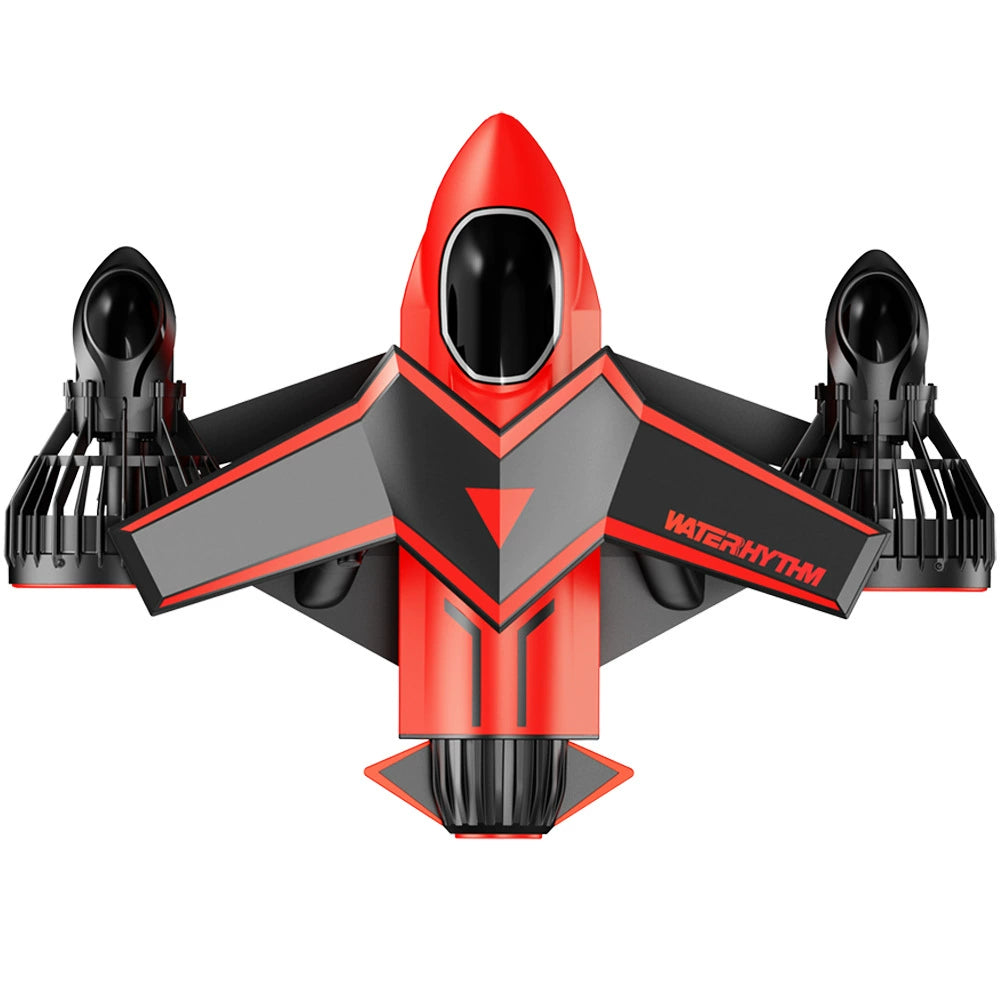

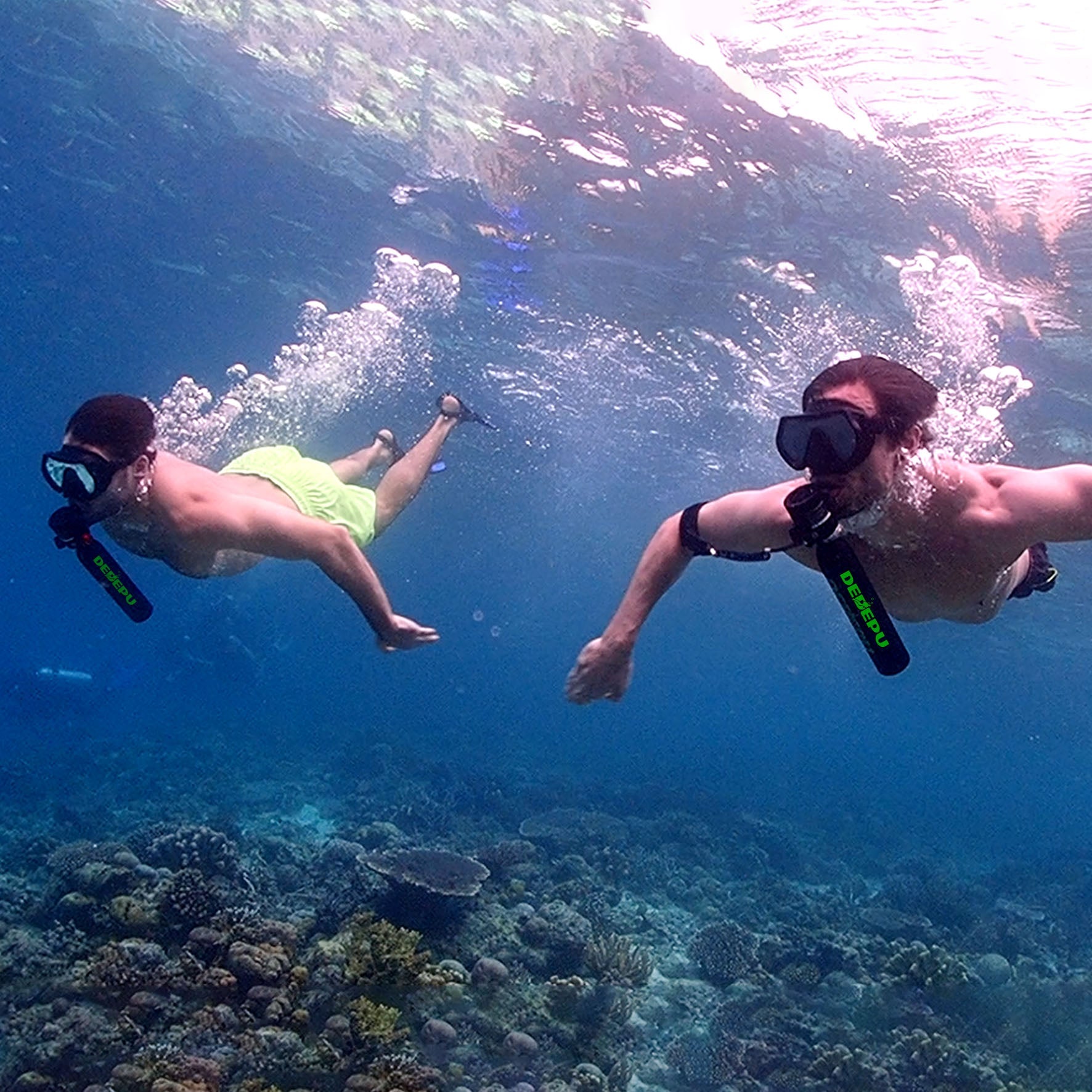
Mini scuba tanks are 80% smaller than conventional 12L cylinders (e.g., a 3L aluminum tank is 12cm in diameter and 50cm long) and weigh only 1.5kg (vs. 15kg for conventional ones), a 90% reduction that allows them to be tucked into a backpack.
Easy to carry with one hand, they are ideal for travel and cave diving (e.g., a day trip to Koh Phi Phi, Thailand, saving the hassle of renting tanks).
Tests show a 70% reduction in luggage space after storage.
Used as a redundant air source, a 3L tank (200 bar pressure) stores 600L of air.
Based on a consumption rate of 20L/min, it provides 30 minutes of air (PADI emergency standard), with a quick-connect device allowing a switch in 10 seconds.
In a 2023 diving accident in Indonesia, a diver's main tank failed, and they were rescued after using a 2L backup tank (storing 400L) for 15 minutes.

Extreme Portability
The terrestrial weight of a standard S80 (11.1L) scuba cylinder often exceeds 14.2kg, while mini cylinders ranging from 0.5L to 1L weigh only 0.85kg to 2.3kg, with heights kept around 35cm.
This size allows them to fit into a 20L daily backpack or airline carry-on suitcase.
According to TSA (Transportation Security Administration) and IATA (International Air Transport Association) regulations, users only need to manually unscrew the regulator valve head to ensure there is no pressure inside and the tank mouth is open to legally check them in or carry them on a flight.
Without relying on trolleys or tank racks, users can carry their equipment on foot to remote beaches or reef areas inaccessible by vehicles.
Air Travel
According to the Dangerous Goods Regulations of the TSA and IATA, any pressurized container is considered a potential explosive or flammable item in air transport and is strictly prohibited from entering the cabin or cargo hold in a pressurized state.
For scuba tanks, the only criterion for passing security is demonstrating to security personnel that there is absolutely no pressure inside the tank and the internal structure is clearly visible.
Traditional 11.1L (S80) aluminum tanks require a specialized vice and large wrenches to remove the valve, and reinstallation requires specific torque settings, making it impossible for most recreational divers to travel with private gear.
Mini scuba tanks from 0.5L to 2L often feature a modular, integrated regulator design.
Users do not need heavy tools; they can typically separate the first stage from the tank body in minutes using a matching hex key or by rotating it counter-clockwise by hand.
TSA official guidelines explicitly state: “Compressed air cylinders are allowed only if the regulator valve is completely removed and the cylinder is no longer sealed (i.e., no pressurized gas inside). Security personnel must be able to visually inspect the interior of the cylinder to ensure no prohibited items are inside.”
In practice, completely emptying a 3000 PSI (200 Bar) mini tank requires patience.
Rapidly opening the valve to vent air causes adiabatic expansion, leading to a sharp drop in tank temperature and even icing at the valve, which can damage internal O-rings or cause the valve to seize.
The correct procedure is to release air slowly in a small stream until the pressure gauge reaches zero, then press the second-stage purge button to confirm no residual gas remains.
Once the valve head is separated, the tank body essentially becomes an open aluminum or carbon fiber metal tube, no longer falling under Category 2.2 (Non-flammable, non-toxic gas) of the dangerous goods list.
During airline transit, impacts inside the suitcase can deform precision-machined threads, preventing the regulator from being screwed in upon arrival or making it dangerous as it may not withstand high pressure.
Professional practice involves wrapping the tank mouth threads with masking tape or retaining the plastic thread protectors included at the time of purchase.
Meanwhile, the regulator section contains precision piston or diaphragm structures and rubber hoses; these should be placed separately in a hard-shell storage box or the original foam packaging to avoid heavy pressure.
The base of the first stage connecting the tank body and regulator is usually equipped with a specific O-ring (common specs are AS568-014 or AS568-112, usually made of Nitrile NBR or Viton, with a hardness of 70-90 Shore A).
During disassembly, this O-ring can easily fall out and get lost on hotel carpets or airport floors.
Furthermore, the low pressure and low temperatures of aircraft cargo holds can accelerate rubber aging or cause extrusion damage during reassembly due to lack of lubrication.
Carrying 5-10 spare O-rings and a small tube of food-grade silicone grease is standard for traveling with mini tanks.
Before reassembling at the destination, the O-ring must be checked for integrity and coated with a thin layer of silicone grease to ensure no leaks occur under 3000 PSI high pressure.
Department of Transportation (DOT) certification markings are also part of aviation compliance.
Most legitimate mini tank shoulders are engraved with "DOT-3AL" (aluminum) or "DOT-SP" (Special Permit for carbon fiber composite), followed by the 3000 PSI working pressure marking.
In international travel, especially to Europe or Australia, while local standards (such as ISO 7866 or PED) are followed, the DOT marking is generally recognized as a standard for safe container manufacturing.
If the tank is carbon fiber-wrapped composite material, it must undergo a hydrostatic test every 5 years and has a mandatory 15-year service life, after which it can bypass the need for an open-box re-inspection.
Boat Storage
Standard AL80 (11.1L) aluminum cylinders have a diameter of 7.25 inches (18.4 cm) and a height of over 26 inches (66 cm).
To safely secure a traditional tank weighing nearly 15kg fully loaded, boat owners must install specialized polypropylene or 316 stainless steel tank racks.
In contrast, mini scuba tanks from 0.5L to 1L usually have a diameter of only 2.25 to 3.5 inches (approx. 6 to 9 cm), with a physical volume about 1/10th that of a standard tank.
This compact cylindrical design allows them to slide into existing cup holders, gunwale storage pockets, or the glove box of a center console.
In dynamic sea conditions, a traditional 30lb tank rolling on deck has enough inertial momentum to crush toes or strike a fiberglass hull, causing expensive structural damage (repairing gelcoat scratches or spider-web cracks typically costs over $150 per hour in Western shipyards).
Mini tanks, due to their light weight (empty weight under 1 kg), have minimal inertia.
Most mini tanks come with silicone or rubber non-slip protective sleeves.
Even if they shift in rough seas, the rubber layer effectively absorbs the impact, protecting teak decking or varnished surfaces from dents.
For specific small watercraft like kayaks and Stand-Up Paddleboards (SUP), storage space and weight balance have even stricter limits.
-
Kayak Applications: Common sit-on-top fishing kayaks have rear tank wells, but these are often occupied by coolers or tackle boxes. Placing a full-size tank is not only space-prohibitive, but its 15kg weight significantly raises the kayak's center of gravity, increasing capsizing risks. Mini tanks can easily be tucked into the front dry hatch or secured to the deck with bungee cords. Their negligible weight has almost no effect on the hull's draft or lateral balance.
-
Personal Watercraft (PWC/Jet Ski): On brands like Sea-Doo or Yamaha, the only storage space is often the small compartment in front of the handlebars. Mini tanks are currently the only scuba equipment capable of fitting into such compartments. This allows jet ski riders to immediately clear intake grates blocked by seaweed without waiting for a tow boat.
In emergency maintenance scenarios, such as when a yacht's propeller is entangled by discarded fishing nets or ropes in the open sea, immediate underwater cutting is often required.
If diving equipment is buried at the bottom of a lazarette, perhaps under an inflatable dinghy and fenders, the time cost of assembly and retrieval is extremely high.
Mini scuba tanks can be kept ready in a chart table drawer or next to a first-aid kit within the captain's reach.
Data shows that in many "man overboard" or "propeller clearing" cases, the deployment time for a mini tank from decision to entry is usually less than 2 minutes, whereas a full set of traditional scuba gear often takes over 15 minutes to don and adjust.
Convenient Refilling
A standard commercial-grade breathing air compressor, such as the Bauer Mariner series or Coltri MCH-6, typically weighs 50 to 100 kg and requires a 380V three-phase power supply or a high-power gasoline engine.
These infrastructure requirements firmly tether divers to within a 20-mile radius of a dive center.
Mini scuba tanks have completely broken this supply chain by introducing three decentralized replenishment options, the most basic and independent being the high-pressure hand pump.
Looking much like a bicycle pump, this device uses a complex three- or four-stage compression piston structure to compress atmospheric air step-by-step up to 3000 PSI (200 Bar).
Despite weighing only 2.2kg to 2.5kg, its pedals fold for storage in a backpack side pocket.
Physical data indicates that filling a 0.5L tank from zero to full typically requires 600 to 800 full pump strokes.
Given the intense frictional heat generated by the pump at high pressure, users must follow a "work for 5 minutes, cool for 5 minutes" cycle to prevent piston seal failure from overheating.
Consequently, the actual total time to fill a 0.5L tank is usually between 15 to 25 minutes.
To ensure air quality, these hand pumps often integrate a small moisture filter in the handle or base, containing activated carbon and molecular sieve cotton to filter moisture and impurities.
Users need to replace the filter element approximately every 10-15 tank cycles.
For users seeking efficiency who have access to vehicle or boat power, the 12V portable PCP compressor provides an automated solution.
Originally developed for the airgun (Pre-Charged Pneumatics) market, these devices are now widely used in the mini scuba field.
They are typically the size of a shoebox (approx. 20cm x 15cm x 15cm) and weigh between 6kg and 8kg.
Power connections support 110V/220V AC outlets, and more importantly, they can connect to a 12V DC car battery via alligator clips.
The starting current for these compressors is usually high, with working currents reaching 20A to 25A.
Therefore, they must never be plugged into a car cigarette lighter (usually fused at 10A-15A), or the fuse will likely blow.
In terms of efficiency, a standard oil-free air-cooled 12V compressor can pressurize a 0.5L tank from 0 Bar to 200 Bar in 10 to 13 minutes.
Despite being portable, these devices operate at noise levels typically between 75dB and 85dB, equivalent to a running vacuum cleaner.
Heat dissipation is the primary technical limit during operation.
Even with built-in high-speed fans, many models must stop to cool after 15 minutes of continuous work, otherwise, cylinder head temperatures may exceed 80°C, leading to reduced efficiency or safety shutdowns.
The third, and fastest/cheapest method, is using a scuba tank refill adapter to "decant" air from a large tank to a small one.
If a user already owns a standard 11.1L (S80) aluminum tank, or can borrow one on a dive boat, they can complete the refill instantly via pressure equalization using an adapter bridge with an 8mm quick-connect female fitting.
Connect one end of the adapter to the standard tank's Yoke or DIN valve and the other to the mini tank's fill nipple.
Upon opening the valve, high-pressure gas will surge into the small tank within 30 to 60 seconds.
The only limitation of this method is the remaining pressure in the source tank:
According to Boyle's Law, as the small tank fills, the pressure in the large tank drops accordingly.
An S80 tank filled to 3000 PSI can effectively fill a 0.5L mini tank about 6 to 8 times, with the final pressure decreasing each time.
For example, if the large tank pressure drops to 2000 PSI, the small tank can only be filled to 2000 PSI.
When operating such an adapter, the most critical step is opening the bleed valve before disconnecting.
Since 3000 PSI of high-pressure gas remains in the connection lines, failing to vent the pressure will "lock" the quick-connector or cause it to eject like a bullet if forced out, potentially causing injury.
The sharp hiss of the bleed valve venting a few milliliters of compressed air is the auditory signal that the operation is safely completed.
Emergency Redundancy
The term "emergency redundancy" refers to the mini scuba tank (Pony Bottle) acting as a completely independent air supply system, with its own first-stage regulator and tank, usually filled to 3000 PSI (approx. 200 Bar).
Unlike a backup second stage (Octopus) which relies on the main tank, a 13 cubic foot (approx. 1.9L) mini tank provides approximately 3-5 minutes of extra breathing time for a diver at a depth of 30 meters (100 feet) if main equipment suffers an O-ring burst or becomes Out of Air.
This is sufficient to support a Controlled Emergency Swimming Ascent (CESA) at a standard rate of 9 meters per minute, including a 3-minute safety stop.
Independent Air Source
In standard recreational scuba configurations, the backup second stage (Octopus) is often mistaken for a complete redundancy system.
It only provides redundancy for the regulator, not the air source.
This configuration is known as a "shared first-stage system," where all downstream gas supply converges at the same brass first-stage decompression chamber and the same aluminum or steel tank valve (K-valve or DIN valve).
Once this single point of failure experiences a catastrophic malfunction, both the primary and backup regulators lose function instantly.
In contrast, the mini scuba tank system constructs a physically isolated loop with its own high-pressure chamber, independent first-stage decompression device, and separate pressure monitoring gauge.
“At 30 meters underwater, if the main tank O-ring fails under high-pressure impact, a full AL80 tank (11.1L) will empty completely in 90 seconds. In this chaotic scene accompanied by loud noise and bubbles, an Octopus sharing the same air source will fail to deliver any gas because the system's internal pressure has instantly dropped to ambient pressure.”
Regulator "freeze-up" or "free-flow" is a common mechanical failure in cold water diving or high-exertion breathing.
When gas passes rapidly through the first stage's high-pressure orifice, the gas temperature drops sharply due to the Joule-Thomson effect.
If the surrounding water temperature is low, this temperature drop causes ice crystals to form around the piston or diaphragm inside the first stage, jamming the valve in the open position.
In this case, pressure in the intermediate pressure chamber will climb rapidly toward the tank's internal pressure, causing both primary and backup second stages to leak violently.
To stop the gas loss, the diver usually needs to close the tank valve; in a shared system, the diver actively cuts off all their air sources.
A diver carrying an independent mini tank, after encountering such a failure and closing the main valve, can switch to the completely unaffected independent tank system, maintain a normal breathing rate, and execute an ascent procedure without struggling in the panic of suffocation.
Beyond mechanical failure, errors in gas monitoring equipment readings are another hidden cause of "Out of Air" accidents.
The Bourdon tube inside a mechanical Submersible Pressure Gauge (SPG) can seize due to corrosion or metal fatigue, with the needle stuck at 50 Bar or 100 Bar while the tank is actually empty.
Battery depletion or signal interference in wireless tank pressure sensors can similarly result in data loss.
In these situations, a diver suddenly finds they cannot inhale while believing they have plenty of air.
An Octopus relying on the main tank is useless when the tank is physically empty.
Mini scuba tanks are usually equipped with a button gauge installed on the first stage high-pressure port.
Its structure is extremely simple and durable, providing a raw physical pressure reading without electronic signal conversion.
Gas Planning
Under physiological stress triggered by emergencies, a diver's Respiratory Minute Volume (RMV) typically spikes from a calm 15-20 L/min to 40-60 L/min or even higher.
If a diver suffers a supply failure in a shipwreck at a depth of 30 meters (4 ATA pressure environment), the amount of gas consumed per breath during the initial minute of problem-solving and ascent preparation is four times that at the surface.
Based on a panic RMV of 60 L/min, staying at depth for just 1 minute to deal with entanglement or find an ascent path would consume approximately 240 liters of free gas (60L x 4 ATA).
This single data point excludes the feasibility of many micro-emergency tanks for deep diving tasks, as some models have a total capacity of less than 100 liters.
The mathematical model for gas planning must include three incompressible phases:
Reaction and handling time at the bottom (usually set at 1 minute), ascent time (calculated at a maximum safe rate of 9 m/min), and a safety stop (3 minutes @ 5 meters).
For a standard 30-meter recreational dive, ascending to the surface takes 3.3 minutes, plus the safety stop and bottom handling time, making the total emergency process approximately 7.3 minutes.
During these 7.3 minutes, the ambient pressure decreases gradually as the diver ascends, and gas consumption changes dynamically.
Using integral calculations or the Average Depth Method, a panicked diver requires approximately 12 to 15 cubic feet (approx. 340-425 liters) of gas to complete this standard ascent procedure.
If the carried tank size is smaller than this value, the diver will be forced to skip the safety stop and bolt for the surface, turning an "Out of Air" risk into a Decompression Sickness (DCS) risk.
Below is a theoretical coverage capability data table for mainstream mini tank specifications in different diving scenarios, based on a standard fill pressure of 3000 PSI (207 Bar) and a high-stress Surface Air Consumption (SAC) rate of 50 L/min:
| Specs (Imperial/Metric) | Actual Water Volume (L) | Total Free Gas (L) | Duration at 30m (min) | Duration at 20m (min) | Full 30m Ascent Capability | Recommended Max Operating Depth |
|---|---|---|---|---|---|---|
| 3.0 cu ft (0.42 L) | 0.42 L | 85 L | 0.42 min | 0.56 min | ❌ Cannot complete | 0 - 9 m (Snorkeling/Boat check) |
| 6.0 cu ft (0.85 L) | 0.85 L | 170 L | 0.85 min | 1.13 min | ⚠️ Ascent only (No stop) | 10 - 18 m (Open water) |
| 13.0 cu ft (1.9 L) | 1.90 L | 368 L | 1.84 min | 2.45 min | ✅ Incl. 3min safety stop | 18 - 30 m (Advanced Deep) |
| 19.0 cu ft (2.7 L) | 2.70 L | 538 L | 2.69 min | 3.58 min | ✅ Incl. 5min extended stop | 30 - 40 m (Recreational limit) |
| 30.0 cu ft (4.4 L) | 4.40 L | 850 L | 4.25 min | 5.66 min | ✅ Supports light deco | 40 m+ (Tech deco tank) |
While a 13 cu ft tank theoretically contains 368 liters of gas, the final 200-300 PSI of pressure usually cannot effectively drive the regulator to provide sufficient flow in deep water, especially if the tank valve isn't fully open or the regulator's intermediate pressure is slightly off.
Therefore, when calculating available gas, approximately 10% "unusable margin" must be deducted.
For a marginal specification like 6 cu ft (approx. 170L), only about 150L of usable gas remains after deducting the margin.
At a depth of 20 meters (3 ATA), this is equivalent to only 50 liters of surface volume, which for an adult male diver with a large lung capacity in extreme panic, might only last 10-15 breaths.
This explains why many experienced dive instructors view 6 cu ft tanks as tools "only for shallow water self-rescue" and set 13 cu ft or 19 cu ft as the entry standard for deep diving redundancy.
Mounting Methods
The most common and highly recommended solution by the technical diving community is the "Slung" or "Stage Rigging" mode.
This configuration requires the use of SS316 marine-grade stainless steel bolt snaps, secured to Jubilee clips at the tank neck and base with high-strength braided nylon cave line.
The tank is connected via these two snaps to the D-rings on the shoulders and waist of the Buoyancy Control Device (BCD).
This mounting method keeps the tank valve and first-stage regulator within the diver's field of vision under the left armpit, allowing the diver to confirm gas levels via the SPG at any time during the dive or quickly manual shut off the valve (feathering the valve) if a small leak is detected.
Another tactical advantage of the side-slung configuration is its removability.
If a diver is entangled in fishing nets or needs to pass through extremely tight restrictions, they can quickly unclip the two snaps, push the tank forward as a probe, or hand it off to a support diver once depleted.
For recreational divers unwilling to add extra gear to the front of their bodies, a Tank Mounted Bracket provides another solution.
This system uses a quick-release base made of anodized aluminum or reinforced polymer to secure the mini tank parallel to the back or side-back of the main tank.
Mainstream commercial products like the Pony Tamer or Quick Draw systems can typically withstand over 100 kg of vertical pull, ensuring tank stability during high-speed entries or giant strides.
However, this back-mount configuration introduces significant center-of-gravity shifts.
A full 19 cu ft aluminum tank weighs about 3.5 kg.
Mounting it on one side of the main tank creates a noticeable rotational torque, forcing the diver to constantly lean to the other side to maintain balance.
To counteract this asymmetrical negative buoyancy, divers usually need to adjust the distribution of their weight belts or add trim weights to the cam band on the opposite side of the main tank.
A more serious safety hazard is that the back-mounted tank valve is completely in the diver's blind spot and out of reach (unreachable even by common yoga-like movements).
If the first stage of that tank fails and causes a massive leak, the diver cannot shut off the tank themselves and must rely entirely on a buddy's assistance.
Hose routing is just as important as the tank's physical position; it determines the deployment time of the regulator from a locked to a working state.
-
Hose Management for Side-slung Tanks:
Short hoses of 60cm to 90cm are typically used, with the second-stage regulator folded and secured to the tank body via high-elasticity rubber retainer bands. In an emergency, the diver simply grabs the second stage and pulls; the rubber band releases, and the regulator is ready. The entire process requires no visual aid and can be completed in 2 seconds via muscle memory. -
Hose Management for Back-mounted Tanks:
Because the tank is on the back, the hose must be long enough to wrap around the neck or pass under the arm, usually requiring 100cm or more. Excessive hose length increases the risk of entanglement in shipwrecks or coral reefs. A common practice is to tuck the backup second stage into a Velcro pocket on the BCD chest or a dedicated rubber necklace, but this requires the diver to regularly practice blind deployment to avoid fumbling for the air source under high-stress panic.
For ultra-micro tanks (such as 1.7 cu ft or 3.0 cu ft Spare Air products), the deployment method is entirely different.
These products typically integrate the first and second stages without an external hose, forming a single cylindrical unit.
They are mostly secured in dedicated Cordura nylon holsters attached to the BCD waist or chest strap, or even the outer thigh.
Most holster designs include a Velcro safety cover or an elastic cord clasp.
During an emergency ascent, due to the lack of hose buffering, the diver must keep one hand on the tank at all times to hold it to their mouth.
This effectively costs the diver the freedom of one hand while they manage buoyancy control (operating BCD dump valves) or clear obstacles.



Leave a comment
All comments are moderated before being published.
Este site está protegido pela Política de privacidade da hCaptcha e da hCaptcha e aplicam-se os Termos de serviço das mesmas.