
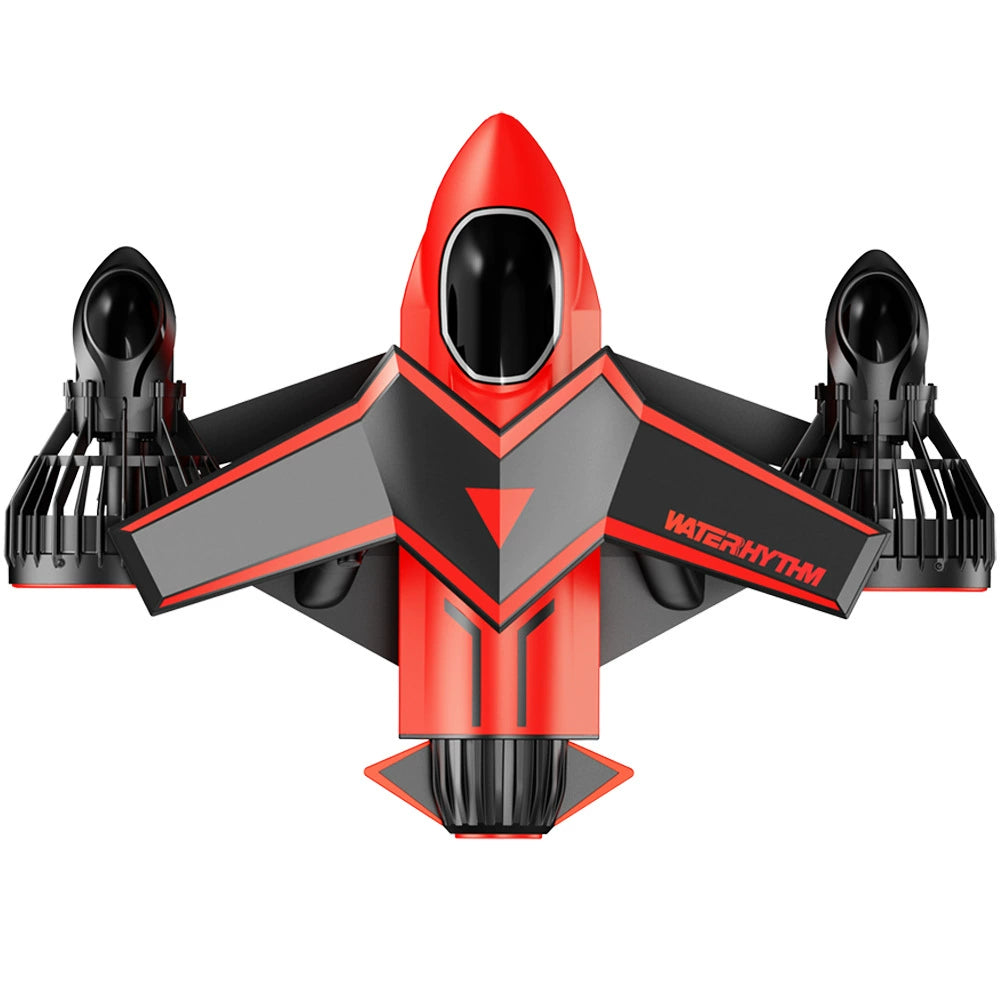
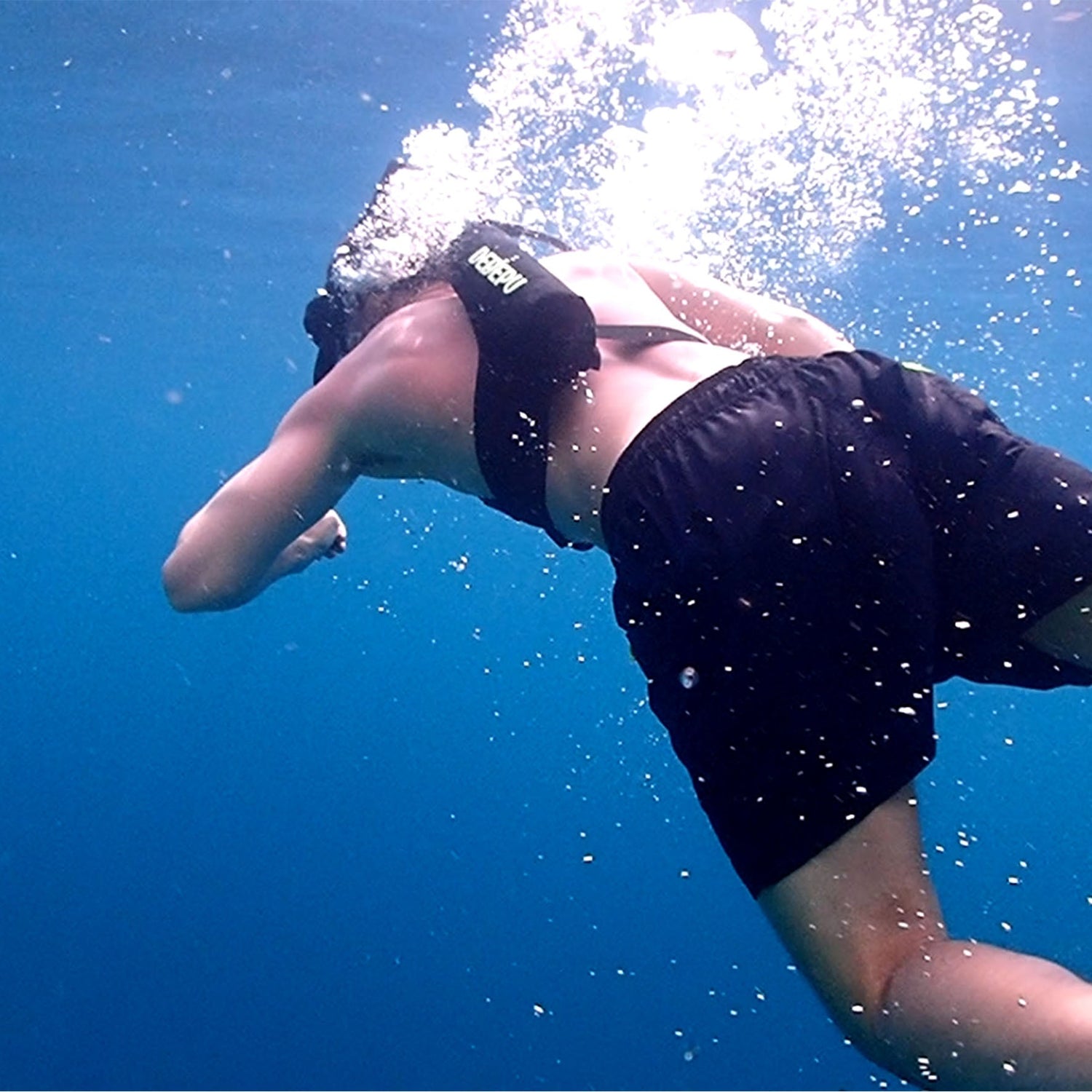
Portable scuba cylinders are usually only 0.5–1L in size, which means they generally support just 5–15 minutes of diving at a depth of about 3–5 meters. Snorkeling, by contrast, can easily last 30–60 minutes or more, requires virtually no training, and is much safer. For most tourists, snorkeling is simply the more practical choice.

The Experience
Snorkeling
At 10 a.m., under equatorial sun shining onto 28°C seawater, you step into waist-deep water about 50 meters off the beach, wearing a 1.5 mm wetsuit top. Beneath your feet, the 1 mm fine sand gradually gives way to broken coral, and your toes start to feel the rough, uneven rocks below.
You place 3 drops of anti-fog solution inside the clear mask, press it firmly onto your face, and tighten the 2 cm-wide straps on both sides until the edges seal tightly against your forehead and cheeks. Then you open your mouth and bite down on the 42 cm snorkel, with your teeth resting neatly on the 0.3 mm silicone bite tabs.
The mask creates a sealed space of about 150 ml around your eyes. Suddenly, the sound of the sea breeze grows louder, a low buzzing in your ears. As you lie face-down on the surface, the fact that the human body is 65% water, combined with the 5 pounds of buoyancy from the wetsuit, keeps you floating steadily on the tops of the waves.
Looking through the 4 mm tempered-glass lens, you can clearly make out the sand on the seabed. The water is especially clear today—visibility reaches a full 20 meters.
- A 2-meter-wide brain coral lies 12 meters away, glowing a muted violet.
- Hundreds or even thousands of tiny fish, each about 5 cm long, dart around just half a meter below the surface.
- At noon, sunlight paints a shimmering lattice of light more than 10 meters long across the white sand at a depth of 4 meters.
- A 70 cm blacktip reef shark cruises slowly along the dark blue edge of deeper water, about 30 meters away.
Now you can breathe only through your mouth. Every inhale pulls air through the 2.5 cm-wide plastic tube, producing a loud, hollow rasp beside your ears. In 26°C seawater, your heart rate stays relaxed at around 85 beats per minute. A breeze of 4 meters per second sweeps across the surface.
The wind kicks up 30 cm waves that slap against the splash guard at the top of the snorkel. Inside it, a small 1.5 cm plastic float rises in 0.1 seconds, sealing the opening and blocking the 5 ml of seawater that would otherwise surge in. Your jaw muscles stay slightly tense the whole time, subconsciously guarding against the snorkel being tugged away by the water.
You want a closer look at a large shell wedged between rocks at 2.5 meters below. You take a deep breath and hold about 2.5 liters of air in your lungs, bend at the waist, tip your head down, and raise both legs straight up out of the water.
Your 45 cm fins slice hard through the sea. Thighs and calves work together, each kick generating about 3 kilograms of downward force that drives you deeper. Water pressure presses the mask skirt inward, tightening it around the skin surrounding your eyes.
- The 2.5 liters of air in your lungs compress to about 80% of their surface volume.
- Your ears feel the pressure of about 1.2 atmospheres, creating a mild fullness and discomfort.
- The water around your chest is suddenly about 1.5°C cooler than the surface.
- In those few seconds of descent, your pulse slows to around 60 beats per minute.
You pause at about 1.5 meters underwater, with your face less than 40 cm from a giant clam patterned in blue-violet spots. The moment the water shifts, its two thick shells—each over 30 cm long—snap shut in less than half a second. To your right, in a 50 cm-wide patch of coral, five black sea urchin spines about 20 cm long stand upright like needles.
By now you have held your breath for nearly 45 seconds. Your chest begins to twitch with the urge to breathe again. You kick twice per second, and the buoyancy from the roughly 3 liters of air still in your lungs carries you back to the surface in about 5 seconds. The moment your mouth clears the water, you forcefully exhale.
That burst of air—moving at roughly 15 meters per second—blasts the 10 ml of seawater that slipped into the base of the snorkel straight back out. You float on the surface like this for a full 45 minutes. The UV index 11 sun beats down on the unprotected back of your neck until it starts to sting. Seawater is 780 times denser than air, and your calves burn with lactic acid from constant kicking.
- You cover about 850 meters in total.
- Your average speed on the surface is around 0.3 meters per second.
- The oxygen you use is roughly equivalent to 20 minutes of walking at 5 km/h on land.
- Your watch shows a total energy burn of about 380 kcal.
When you finally remove the mask, a 1 cm-wide ring-shaped red mark is left across your forehead and cheeks. After breathing only through your mouth for 45 minutes, your mouth feels dry and coated with a salty crust. Even swallowing feels abrasive, like rubbing your throat against sandpaper.
The Portable Scuba Tank
Now imagine holding a bright yellow 0.5L aviation-aluminum scuba cylinder in your hand. It feels solid and heavy, weighing about 1.1 kg. Just moments ago, you had to pump it by hand on the beach nearly 160 times with a high-pressure manual pump to push the needle on the 3 cm mechanical pressure gauge into the green zone at 200 bar. A 5 mm black nylon lanyard hangs from your neck.
The aluminum cylinder rests cold against the chest of your wetsuit, carrying that unmistakable metallic chill. You wade into chest-deep water—about 1.2 meters—and bite down on the black silicone second stage attached to the top of the cylinder. Your teeth clamp firmly onto the two support tabs, each about 1.5 cm long, while your lips seal completely around the mouthpiece like a suction cup. Then you duck under.
Your whole body sinks to about 0.5 meters below the surface. The first time you inhale, the quiet underwater world is instantly broken by a loud hiss of gas. The 3000 PSI high-pressure air in the cylinder passes through the brass regulator and enters your throat at exactly the same pressure as the surrounding water. Exhaling is even louder.
A string of clear bubbles, each about 2 to 3 cm in diameter, rolls upward from both sides of your face and bursts beside your ears. You swim down the slope of the white sandy bottom to about 1.5 meters, and your ears begin to feel blocked. With your right hand, you pinch the soft silicone nose pocket of the mask, close your mouth, and gently blow into your nose.
A soft pop sounds in your ears as the pressure equalizes against the 1.15 atmospheres of surrounding water. The uncomfortable tightness disappears instantly.
- The water temperature stays at 26°C, completely shielding you from the cooling effect of the sea breeze.
- Nearly 80% of your 70 kg body weight is offset by the surrounding water’s buoyancy.
- Without the distortion caused by surface chop, underwater clarity improves dramatically.
- The air you inhale carries a faint smell from the inner walls of the rubber hose.
You angle down another meter along the seabed and hover at 2.5 meters. Now your line of sight is level with the marine life itself. The staghorn coral that looked distant from the surface now stands less than 40 cm from your mask. You can clearly see the tiny polyps, less than 2 mm wide, swaying along the branches.
A school of translucent glassfish, each about 3 cm long, gathers to your left and glides around the yellow cylinder. Hovering above the sand, you kick only twice a minute, staying suspended about 20 cm above the bottom without rising or sinking.
As you settle into the rhythm, your breathing slows to about 12 breaths per minute. Each inhale takes around 3 seconds, and each exhale about 4 seconds. Compressed air is extremely dry. After only a dozen breaths, your tongue and the inside of your mouth feel as though they have been dried out by a sponge. Swallowing becomes harder.
You take one deep breath, filling your lungs with nearly 2.5 liters of air, and your chest expands like a balloon. The added buoyancy lifts your body upward by about 30 cm. When you exhale slowly and empty your lungs, gravity pulls you back down by around 20 cm.
- Your watch shows a fully submerged time of exactly 6 minutes.
- The luminous pressure gauge has dropped into the red warning zone at 80 bar.
- Your dive computer records a maximum depth of 2.8 meters.
- Your resting underwater heart rate stays calm at about 72 beats per minute.
- Each breath moves about 2.2 liters of air, surface-equivalent.
Now it is time to surface. You keep your eyes fixed on the shimmering line of light above and kick gently at about once per second. You continue exhaling the whole way up—absolutely no breath-holding. As the water pressure decreases, the expanding air leaves your lungs in a trail of small bubbles.
Two seconds later, your head breaks the surface. You spit out the second stage and take a huge breath of humid natural air, rich with the smell of the sea. The tank hanging around your neck has already used almost 60 liters of compressed air. It is now about 80 grams lighter and begins to float very slightly at the surface.
You walk back toward shore over crushed shell fragments, pushing against the force of the waves. After removing the mask, the skin around your lips feels numb and pale from gripping the mouthpiece for so long. The muscles around your shoulder blades ache slightly from stabilizing both the cylinder and your body position.
You glance down at the tank hanging against your chest. The gauge is still resting at 40 bar. In a total underwater time of 8 minutes, you have already used around 70% of the gas reserve.
Which Experience Suits You Better?
Stand on the white sand of Kata Beach, Phuket, where the sand is 30°C. In your right hand is a plastic mask weighing about 300 grams. In your left is a small aluminum cylinder filled to 200 bar, weighing a full 1.5 kg. The waves wash over your ankles about 15 times per minute, and the shallow water around your feet is about 20 cm deep.
Renting a mask, snorkel, and fins from a beach hut costs at most 200 baht. You can walk into the sea with them and be fully geared up in under 45 seconds. Almost immediately, you can lie face-down on the 28°C water and spend the whole afternoon staring at the sand and reef below.
That bright yellow micro scuba tank, by contrast, costs roughly $300 to buy and demands far more effort before you even get into the water. Either you pay a few dollars at a dive shop and have it filled in 3 minutes, or you stand under a 35°C tropical sun and pump it manually 800 times.
After half an hour of pumping, your arms will be aching badly enough that you can barely lift them. And after all that effort, once the 0.5L tank is full, it still gives you less than 10 minutes of breathing time underwater.
- Float on the surface with a snorkel for 40 minutes, and your back absorbs about 8000 joules of UV exposure
- Carry a 1.5 kg tank down to 3 meters, and you can burn through 15 liters of dry air per minute
- Kick continuously in fins for 30 minutes, and the front of your thighs can accumulate about 2 mmol of lactic acid
- Pumping the tank to 3000 PSI by hand can push your heart rate above 130 bpm
If you are traveling with a 5-year-old child or a 60-year-old adult, floating at the surface is clearly the more sensible option. As long as you can stand in 1.2 meters of water and wear a foam life vest that provides 7.5 kg of buoyancy, even someone who cannot swim can lie safely on the surface.
Once you get used to breathing with your mouth open, you can simply put your face into the 150 ml mask. The 2.5 cm-wide snorkel keeps a continuous link to fresh air at the surface. A sea turtle may be swimming 5 meters below, but you can still watch it clearly from above through 3 meters of water.
If you want to reach out and touch a purple-striped rock at 2.5 meters, that changes everything. You need to descend while breathing from the regulator. Water pressure will compress your ears by about 1 mm, and you must pinch the silicone nose pocket tightly and blow hard enough to counter an extra 0.25 atmospheres.
| Activity | Floating on the Surface | Diving with a 0.5L Tank |
|---|---|---|
| How long you can stay in the water | Depends on stamina, usually 45+ minutes | Around 6–10 minutes |
| Preparation before entering the water | Just put on the mask, about 45 seconds | Manual pumping takes 30–40 minutes |
| What you can see | Looking down at depths of 5–15 meters | Looking straight ahead at 0.5–3 meters |
| What gets tired first | Thighs and calves | Core and chest muscles |
For beginners, enclosed underwater space often triggers anxiety. At 3 meters, seawater has already absorbed about 15% of the available light. If panic makes you open your mouth, 26°C seawater can pour into your throat in half a second and trigger a violent coughing fit.
With a portable scuba tank, you have to consciously slow your breathing. Each inhale of cold, dry air has to be stretched to more than 3 seconds. You fill your lungs with about 2 liters, then spend 4 seconds exhaling a stream of bubbles about 2 cm in size.
Every 1 meter you ascend, the pressure decreases and the air in your lungs expands by about 10%. On the way up, you must keep exhaling continuously, almost like whistling through your lips. Even holding your breath for 2 seconds can cause the expanding gas to rupture the delicate walls of the alveoli.
Safety & Training
Snorkeling Requires Very Little Training
You do not even need to know how to swim. A rental foam life vest from a beach stand can provide about 15 to 20 pounds of upward lift. Put it on a 75 kg adult, and even if they stay completely still, their head will remain safely more than 10 cm above the surface. Their heart rate can still stay relaxed at around 70 bpm.
You pull the glass mask with the silicone skirt onto your face and tighten the head strap. The band should sit about 2 cm above the ears. If you inhale gently through your nose and the mask seals to your face for 3 to 5 seconds without falling off, it will not leak in the water. The whole check takes about 20 seconds.
- Put your face in the water
- Breathe only through your mouth
- Let your arms rest naturally at your sides
Most people are used to breathing through their nose, but now all the breathing happens through a plastic tube about 35 cm long. Its top stays above water, and the bottom ends in a soft silicone mouthpiece. You keep a 2 to 3 mm gap between your upper and lower teeth, bite gently, and close your lips around it. At the surface, water pressure is still just 1 atmosphere, exactly the same as on land.
Stand in water about 80 cm deep—roughly thigh-deep—for 2 to 3 minutes. Bend forward and place your whole face into the 28°C seawater. Count the rhythm in your head: inhale deeply through your mouth, then exhale slowly. An adult breath of about 500 ml is enough to flush the stale air out of the snorkel tube.
If a small wave sends a little saltwater into the snorkel, the purge valve at the bottom handles it easily. It is about the size of a coin and contains a thin one-way silicone flap. Exhale sharply, like blowing out birthday candles, and a pressure equivalent to about 10 cm of water column is enough to clear the water in a fraction of a second.
- Lift your head slightly out of the water
- Blow out hard
- Return to calm breathing
On your feet are soft plastic fins about 40 cm long. You engage the front of the thighs just slightly, keeping the knees bent only 10 to 15 degrees, and kick gently up and down. It does not have to look like competitive swimming. At a relaxed rhythm of about 30 kicks per minute, you can drift forward at roughly 1 km/h.
The refraction of light underwater creates visual distortion. Through 2 to 3 mm of tempered glass, a reef at 3 meters may look as if it is less than 2 meters away. A clownfish that is really 20 cm long can appear closer to 25 cm. The visual system usually adapts in no more than 30 seconds.
Before entering the water, put a little baby shampoo on your fingertip and spread it evenly over the inside of the lens. The shampoo contains a tiny amount of surfactant, which turns warm exhaled moisture into a transparent film only a few microns thick. Rinse it lightly with a few milliliters of seawater, and once the mask is on, clarity can stay above 98% without fogging.
Sunscreen on the face should stay away from the strip about one finger wide along the forehead and outer cheeks. That is where the silicone skirt seals to the skin, and even a thin layer of lotion can let seawater creep through a 0.5 mm gap. If your hair is long, tie it back and keep every strand clear of the seal.
- Dab a little shampoo on your fingertip
- Spread it across the inside of the lens
- Rinse lightly with seawater
Everything happens at the surface, where the ears are under the same pressure as they would be standing on the beach. There is no need to learn pressure equalization. The pressure difference across the eardrum stays at zero, so there is no pain at all. If you do dive briefly to pick up a shell, it is usually only to 1.5 or 2 meters, and a single breath-hold is enough.
While floating at the surface and kicking lightly, the body uses about 15 ml of oxygen per kilogram per minute. After 40 or 50 minutes, once your thighs start to feel slightly tired, you can simply roll over onto your back. The life vest supports you, and you can breathe fresh air without effort.
You can stand up from a beach chair, walk into waist-deep water, put the snorkel in your mouth, and float face-down. Someone with no formal breathing or swimming training does not need a book or an exam. If an instructor watches for 10 minutes and confirms you are not inhaling through your nose, that is essentially all the learning required.
Portable Scuba Tanks Require Much More Training
Buying a little aluminum cylinder online, filling it with air, and taking it underwater may look easy in promotional videos. The product is only about the size of a thermos, and the ads make it seem as though there is no skill barrier at all. But a full 0.5L mini scuba tank contains air compressed to 3000 PSI.
A normal car tire is inflated to only about 35 PSI. The pressure inside that little cylinder is nearly 85 times higher. And the wall thickness is usually only 4 to 5 mm. What it delivers is highly compressed gas forced into a very small space.
At 5 meters underwater, surrounding pressure rises to 1.5 atmospheres. The air you breathe through the regulator becomes 1.5 times denser than at the surface. A healthy adult man taking a deep breath at that depth can fill his lungs with about 4 liters of compressed gas.
- Learn how to recover a dropped mouthpiece underwater
- Learn what it feels like when the tank runs low
- Learn how to maintain a slow, controlled breathing rhythm
If seawater gets into your nose, the instinctive human response is always the same: clamp your breath shut and kick hard for the surface. As you ascend with those 4 liters of compressed gas in your lungs, the surrounding pressure falls rapidly. Boyle’s law takes over inside the body, and the gas expands.
By the time you are only 1 meter from the surface, the air in your lungs has expanded to nearly 6 liters. Human alveoli are not flexible enough to absorb that extra volume. The fragile lung tissue can tear apart like an overinflated balloon.
Air then escapes into the pleural cavity or enters the bloodstream. It can compress the heart or travel to the brain and block cerebral blood vessels. Formal scuba courses spend days overriding the natural panic response that makes people hold their breath and rush upward.
The second stage in your mouth is not just a mouthpiece—it is a precision mechanical breathing device. The first stage attached to the tank drops pressure from 200 bar down to about 9.5 bar of intermediate pressure. The silicone diaphragm in the second stage senses the surrounding water pressure, and only when your inhale creates a slight negative pressure—just a few centimeters of water column—does the valve open.
The air delivered into your mouth always matches the ambient pressure at depth. Water is nearly 800 times heavier than air, so even dropping just 1 or 2 meters causes the eardrum to be pushed inward by the surrounding water. At that point, the inner ear experiences a pressure difference of about 0.15 atmospheres, and pain begins.
You must deliberately pinch your nose, keep your mouth closed, and gently blow into your nasal passages to force the Eustachian tubes open. These are cartilage-lined tubes about 35 mm long and only 2 to 3 mm wide at their narrowest point.
- Pinch your nose and blow gently
- Keep watching the depth reading on your dive computer
- Control your ascent rate by following your bubbles
In daily life, swallowing opens the Eustachian tubes for only a fraction of a second. Underwater, you have to do it manually. A 0.5L cylinder holds only about 100 liters of air at surface pressure. An inexperienced user can easily reach a breathing rate of 25 to 30 liters per minute underwater.
At 3 meters, ambient pressure is about 1.3 atmospheres. Those 100 liters disappear in less than 2.5 minutes. Once the gauge drops into the red at 50 bar, breathing resistance increases sharply, and the sensation of not getting enough air can trigger instant panic.
A standard Open Water Diver certification usually takes 3 to 4 days. Students spend at least 12 hours in a calm pool, repeating dozens of survival drills. The instructor may have them kneel on the bottom in 2 to 3 meters of water and then rip off their mask without warning.
The 24°C water stings the eyes and nasal passages instantly. Heart rate can spike to 130 bpm in seconds. Students must keep their eyes closed, suppress the urge to inhale through the nose, and continue breathing only through the regulator.
They are trained to inhale for 4 seconds, exhale for 6 seconds, and slowly bring the heart rate back down toward 80 bpm. Then they retrieve the mask, replace it, tilt their head back, and clear it by exhaling into it. They also have to learn to share air with a buddy underwater.
- BCD inflation and deflation drills
- Weight calculation and lead selection
- Reading and checking the pressure gauge manually
Students practice handing off a backup second stage—usually a bright yellow hose about 100 cm long—to a partner. The two divers hold onto each other’s BCD shoulder straps and ascend together at no more than 9 meters per minute, the internationally accepted safe ascent rate.
The BCD contains expanding air as the diver rises. On the way up, the diver must keep raising the inflator hose and venting gas. If they hesitate even slightly, they can rocket to the surface out of control.
Without that repetitive, sometimes tedious muscle-memory training, taking a mini scuba tank into open water is extremely dangerous. In an emergency, an untrained person may not even be able to locate the weight belt release, let alone know which direction to pull it.
Portability & Logistics
Snorkeling Is Truly Grab-and-Go
Budget airlines are strict. Most only allow 15 to 20 kg of luggage. Take a 35-liter backpack, put in a mask, snorkel, and a pair of short travel fins, and the total comes to only about 1.2 kg. Walk up to the counter with that on your back, and the staff hardly give it a second look.
A modern 4 mm CE-certified tempered-glass mask has an internal volume of less than 180 ml. The face skirt is made from food-grade liquid silicone, and when pressed flat it is only 3.5 cm thick. Even if you cram it into a full 20-inch suitcase under pressure for 10 hours, it springs back into shape in seconds.
Packing it into a cabin-size bag takes almost no effort:
- The soft silicone mask uses up virtually no dead space
- The snorkel can be rolled and tucked into the opening of a shoe
- A pair of short fins lies flat and takes up about the thickness of two T-shirts
- A 20 ml bottle of anti-fog solution goes into the clear security bag
- Altogether, even with the black mesh bag, the full setup weighs only about 1250 g
A dry-top snorkel with a splash guard is about 40 to 45 cm long when straight. A pure silicone snorkel can coil like a snail shell into a disk less than 10 cm wide. Its inner diameter is about 2.5 cm, enough to support breathing rates up to 50 liters per minute, which is more than enough for an adult in shallow water.
Inside the splash guard is a 1.5 cm floating ball. If a wave breaks over the snorkel or your head dips underwater, that ball rises in 0.1 seconds and seals the opening. The purge valve beneath the nose uses a silicone flap less than 1 mm thick, so a single exhale easily clears out the CO鈧?and any water.
Even people who wear glasses can get proper prescription lenses for snorkeling:
- Tempered-glass lenses can be made for prescriptions from -1.50 to -8.00
- Interpupillary distance is usually fixed at 62 to 65 mm
- Astigmatism can be customized based on axis data
- Underwater, objects appear 33% larger and 25% closer
Professional freediving fins can be over 60 cm long and usually have to be checked in a long fin bag. For tropical vacations, short fins of 35 to 40 cm are usually enough. A pair typically weighs 600 to 800 g, and the length fits neatly across the diagonal of a standard 55 cm carry-on suitcase.
The blades are usually made from a blend of thermoplastic rubber and polypropylene. The curved guide channels are engineered so that one kick barefoot can generate 3 to 5 pounds of thrust. The foot pocket is soft and leaves about 5 mm of room for the toes, so even after 45 minutes of swimming, the heel is unlikely to blister.
Rental gear from beach shops, on the other hand, often comes with all the usual problems:
- The clear silicone skirt has already yellowed and hardened
- The glass is covered in scratches from sand abrasion
- The mouthpiece edges have been chewed through by previous users
- A semi-dry snorkel still floods with saltwater in small chop
- Fins in the wrong size will raise blisters around the ankles
When you land in Cancún, grab your luggage, take a taxi to the beach, unzip your backpack, and pull out the mask and snorkel. There is no metal assembly to put together and no need to spend the afternoon hunting for a dive shop that can fill a cylinder to 200 bar.
One drop of baby shampoo on the lens for anti-fog, a quick rinse with seawater, and the soft silicone mouthpiece goes straight in. The entire pre-water routine takes less than 30 seconds. Sunlight filtering through 2 meters of seawater lets you duck down on a 15-second breath-hold and spot a 40 cm green sea turtle tucked between the rocks.
Seawater salinity can reach 3.5%, and dried salt crystals will slowly damage rubber if ignored. But snorkel gear does not need any specialized maintenance room. A 2-minute rinse under the beach shower is enough to flush sand from the edges and purge valve.
Back at the hotel, you can leave the gear soaking in the bathtub for 15 minutes. That dissolves the salt completely. Hang it on a shaded balcony, and at 28°C, the surface will be dry in about 1.5 hours. Once fully dry, it goes back into the mesh bag and into the back of the rental Jeep.
Spend $80 to $120 on a good mid-range set with UV-resistant frame materials, take 7-day vacations to the Caribbean every year, swim twice a day, and it can easily last 150 uses without failing.
When the trip is over, just carry the bag back to the airport. No dangerous-goods form, no customs explanation, no special declaration. The X-ray machine spits out the backpack, and you walk straight to the gate for your next Boeing 777 flight.
Portable Scuba Tanks
Online, it looks cool: someone holding a thermos-sized metal cylinder in their mouth while diving down to touch a starfish. You buy a 0.5L mini tank and have it shipped home. Once it arrives, you place the empty aluminum bottle and the yellow breathing unit on a kitchen scale. The number reads 1.8 kg.
Then you try packing it into a 24-inch suitcase for a flight to Hawaii—and that is where the trouble starts. International airline rules are clear: pressurized metal cylinders are not allowed on aircraft. Before going to the airport, you must empty the bottle completely and watch the gauge needle drop all the way into the red.
Even that is not enough. Security wants to see that the inside is truly empty. That means digging out a 22 mm wrench and removing the brass valve and breathing unit from the aluminum neck. The white sealing tape on the threads is ruined the moment you take it apart.
Once you arrive at the hotel on the island, reassembling the empty tank is a frustrating job. You need to replace 3 new black O-rings, wrap the threads again with sealing tape, and tighten the valve with a torque wrench. Even being off by a few N·m can cause bubbling leaks once the tank is under pressure in the water.
Now you have to fill it. The included high-pressure hand pump stands about 60 cm tall when planted in the sand. You connect the hose, brace it with both feet, and throw your body weight onto the metal handles.
The first 50 strokes feel manageable. Then you glance at the gauge, and the needle has moved only 1 mm. To fully fill the 0.5L bottle, a 75 kg adult has to pump continuously 600 to 800 times. Under a 32°C island sun, half an hour of pumping leaves your rash guard soaked through with sweat.
After all that work, the underwater time is still painfully short. Bite down on the regulator and descend to 3 to 5 meters near a coral reef. The moment you feel tense, your breathing speeds up. In 5 to 8 minutes, the gauge drops below the red 50 bar line, and you have to kick back to the surface immediately.
If manual pumping feels unbearable, sellers will happily recommend a portable electric high-pressure compressor. It usually comes in a blue metal box measuring around 30 × 20 × 15 cm. Put that into your luggage and you add 8.5 kg instantly—enough to trigger hefty excess-baggage fees.
Finding power on a beach is another challenge. It needs 110V electricity or a connection to a rental car’s 12V battery. While compressing air, it gets extremely hot, which is why it comes with a long cooling hose that must sit in a bucket of water while a pump circulates coolant through the system.
The travel burden becomes obvious the moment you list everything:
| Item | Size | Actual Weight |
|---|---|---|
| 0.5L empty aluminum cylinder | 35 cm long, 6 cm wide | 1.1 kg |
| Regulator / mouthpiece assembly | about the size of an adult fist | 0.7 kg |
| High-pressure manual pump | 62 cm long | 2.5 kg |
| Portable electric compressor | 30 × 20 cm footprint | 8.5 kg |
| Water pump and cooling hose | about half a shoebox | 0.8 kg |
If that much weight feels unreasonable, you might think of just taking the empty bottle to a local dive shop and paying for a fill. In reality, most reputable dive shops will refuse immediately. They have strict requirements before they even consider filling a small bottle like that:
- The cylinder must have a valid DOT certification stamp
- It must have a current annual internal inspection sticker
- It must have a valid 5-year hydro test record
- If you cannot show an advanced diver certification, many shops will refuse even if you offer to pay
A professional compressor can fill a standard 12L scuba cylinder in 5 minutes. Shop staff are not willing to connect one of those systems to a mini cylinder bought online, especially when the material quality and thread precision are unclear. If that bottle ruptures at 150 bar, it becomes a serious injury risk.
These devices also become surprisingly delicate after use in saltwater. If seawater gets into the regulator, the spring inside the breathing unit can start developing green copper corrosion in less than 24 hours. If fine beach sand jams the purge valve, your next inhale may bring saltwater and bitter grit straight into your throat.
At the end of a 7-day vacation, the whole process has to be reversed. You dig out the 22 mm wrench again, remove the valve, vent the remaining air, strip out the distorted O-rings, and repack the 8.5 kg compressor into its box—hoping the airline scale does not hand you another overweight fee.


Leave a comment
All comments are moderated before being published.
Situs ini dilindungi oleh hCaptcha dan berlaku Kebijakan Privasi serta Ketentuan Layanan hCaptcha.