
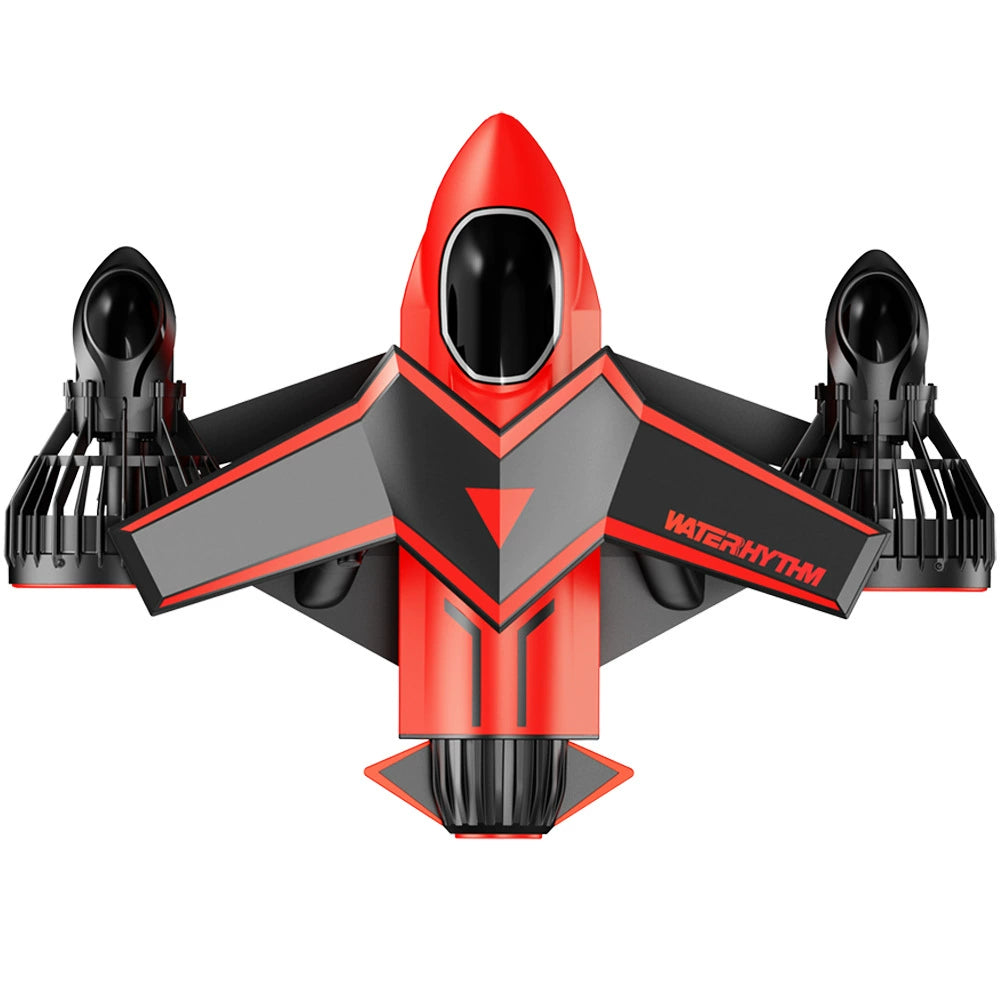
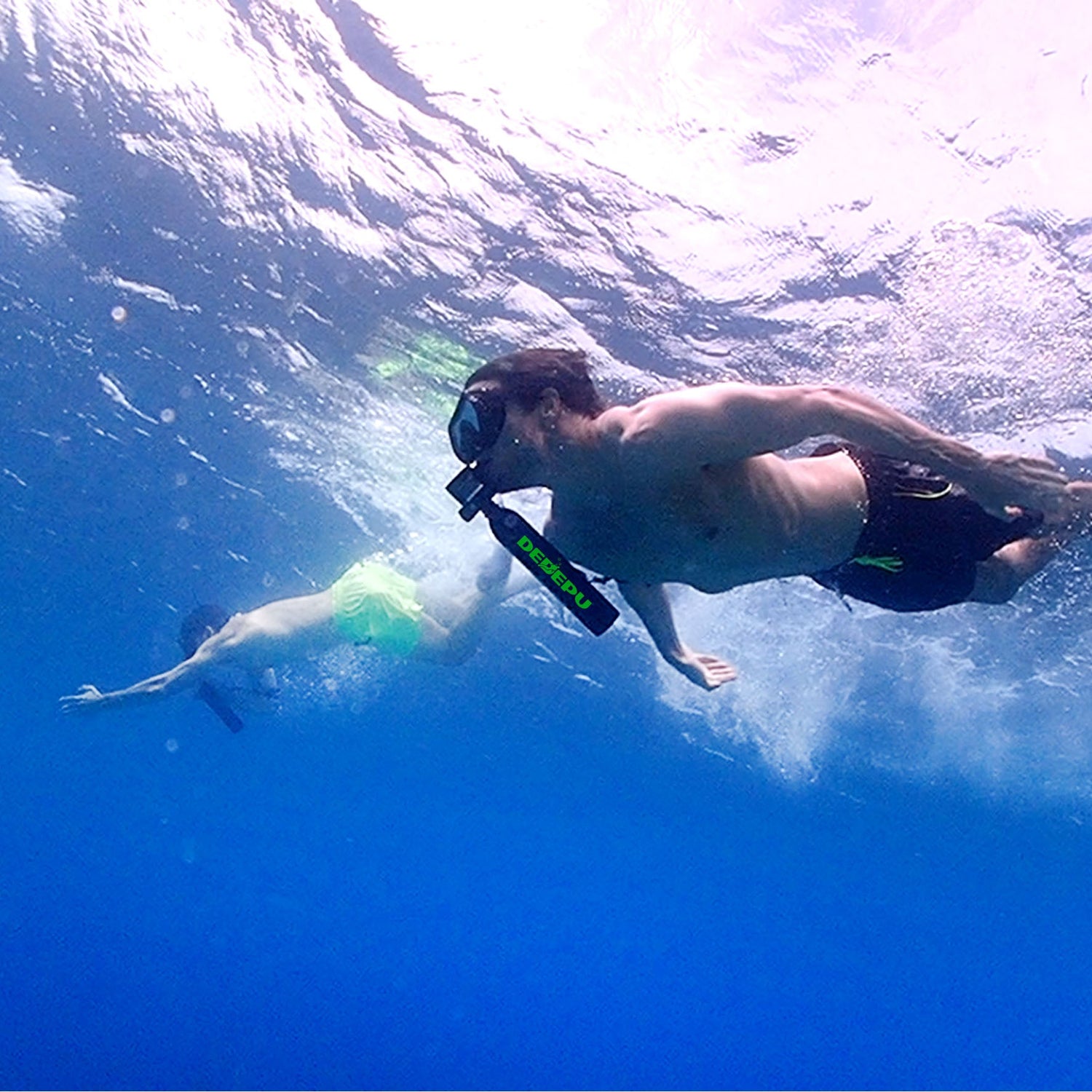
Mini scuba cylinders typically hold 0.5–1 L, weigh about 1–2 kg, and are filled to 200–300 bar, providing roughly 5–10 minutes of breathing time. They need to be refilled with a high-pressure pump or at a dive shop, making them suitable for emergency use rather than extended dives.

Weight
Weight on Land
Carrying a 0.5 L aluminum cylinder across the beach feels about like holding a standard bottle of sports drink, with an empty weight of 950 g. This size typically has a 60 mm diameter and a length of 245 mm, so it fits easily into a regular 20 L backpack. A 1 L aluminum cylinder jumps to 1.95 kg, and because the body extends to 285 mm, the shifted center of gravity creates roughly $20N$ of pulling force when carried by hand.
With 23 kg being the standard airline checked-baggage limit, the cylinder’s empty weight is only the starting point if you are packing a full dive setup. The table below compares the on-land weight of different materials:
| Capacity | 6061 Aluminum Weight (kg) | Carbon Fiber Wrapped Weight (kg) | Cylinder Diameter (mm) | Weight Added When Filled (kg) |
|---|---|---|---|---|
| 0.5 L | 0.95 | 0.58 | 60 | 0.14 |
| 1.0 L | 1.95 | 1.15 | 85 | 0.28 |
| 2.0 L | 3.60 | 2.10 | 115 | 0.56 |
The breathing assembly on top of the cylinder adds significant weight. A chrome-plated brass first-stage regulator weighs 0.72 kg and contains an internal spring-and-piston mechanism. The attached second stage and 90 cm medium-pressure hose add another 0.38 kg. Installing a Yoke adapter adds 0.45 kg more, bringing the total on-land weight of the breathing system to 1.55 kg.
A compact 0.12 kg pressure gauge in a stainless steel housing connects to the first stage via a slim high-pressure hose. This is easy to overlook when packing, but once you combine the breathing assembly with a 1 L aluminum cylinder, the total is already 3.5 kg. A carbon fiber cylinder saves 0.8 kg, but that difference is often offset by the extra dive weights required underwater.
-
Spare O-ring kit: 0.02 kg
-
15 mm open-end wrench: 0.25 kg (for valve removal)
-
Silicone protective boot: 0.15 kg (to protect the cylinder base)
-
8 mm quick-connect fitting: 0.045 kg
A manual high-pressure pump is the usual refill option if you do not want to rely on a dive shop. A three-stage stainless steel hand pump weighs about 2.6 kg and folds down to 58 cm. In your luggage, it takes up about the same weight allowance as a 1.5 L aluminum cylinder. A 6.5 kg 12V portable electric compressor is much easier to use, but it also consumes nearly 30% of a standard checked-baggage allowance.
Packed into a 20-inch suitcase weighing 3.2 kg empty, a 1 L aluminum cylinder, full breathing assembly, hand pump, and basic mask-and-fins set come to about 8.5 kg. Add a 1.5 kg 3 mm wetsuit, and the total dive gear weight reaches 10 kg. That still leaves 13 kg for clothes and toiletries, enough for a one-week international trip.
-
1 L aluminum cylinder system: 3.5 kg
-
Three-stage hand pump: 2.6 kg
-
Basic snorkeling set (mask/snorkel/fins): 1.8 kg
-
Dive computer and flashlight: 0.6 kg
The air inside the cylinder has weight too. When a 1 L cylinder is filled to 3000 PSI (about 200 bar), the compressed air itself weighs around 0.28 kg. On land, a full cylinder feels noticeably heavier than an empty one. Since airlines require the pressure gauge to read zero before transport, that 0.28 kg of gas must be fully released before check-in.
The lightness of carbon fiber cylinders comes from the wrapped outer layer, which has a density of about $1.6g/cm^3$. A 2 L carbon fiber cylinder weighs 2.1 kg, making it 1.5 kg lighter than an equivalent aluminum model. But the surface is more vulnerable to sharp damage, so for land transport it usually needs a heavier-duty nylon protective sleeve weighing around 0.3 kg. That reduces the real travel weight advantage to about 1.2 kg.
-
Carbon fiber wrap thickness: 3.5–5.0 mm
-
Inner aluminum liner wall thickness: about 2.0 mm
-
Neck thread specification: M18 x 1.5
-
Fill pressure limit: 300 bar (4350 PSI)
Carrying a 3.6 kg 2 L cylinder by hand for long periods quickly fatigues the forearm muscles. A simple 0.42 kg backpack-style support frame that holds the cylinder vertically along the spine can shift the load onto the pelvis. Made from 50 mm nylon webbing and stainless steel buckles, this setup feels about 30% lighter on land than using a bulky BC.
At airport security, a 0.25 kg valve-removal wrench is essential. Under ICAO rules, the cylinder valve must be removed before the cylinder can be treated as an ordinary metal container. With the valve removed, the empty 1 L aluminum shell weighs 1.9 kg and can be visually checked to confirm the inside is dry and rust-free. The valve itself should be wrapped in about 0.1 kg of bubble padding and packed in the center of the suitcase to protect it from impact.
Every extra gram of weight on land translates into more physical effort while traveling. A 0.5 L system can usually be kept under 3 kg in total, making it suitable for hiking. A 2 L system comes close to 8 kg and is much better suited to dive sites with vehicle access. For most travelers, the 1.95 kg 1 L aluminum cylinder is the most balanced choice between air volume and physical burden.
On a 1 L aluminum cylinder, the center of gravity sits around the lower third of the body. When you lift it one-handed, the 0.72 kg regulator mounted on top creates a noticeable lever effect. Converting that uneven load into a backpack carry makes the walk from the dock to the entry point much more manageable.
-
M18x1.5 valve: 0.55 kg
-
DIN-to-Yoke adapter: 0.45 kg
-
Fill extension hose: 0.18 kg
-
Empty weight belt: 0.35 kg
If you are traveling in high-temperature destinations such as Southeast Asia, the pressure inside the cylinder will fluctuate as ambient temperature rises. For a 2 L aluminum cylinder stored on land, every $10^\circ C$ increase in temperature raises internal pressure by about $10 Bar$. The weight does not change, but for safety reasons, cylinders are usually kept below 500 PSI during land transport, which reduces the gas load by roughly 0.2 kg.
Do not forget the 0.65 kg fins when calculating luggage weight. They may provide buoyancy underwater, but on the airport baggage scale they weigh about as much as half a cylinder. Switching from a hard-shell equipment box weighing 0.8 kg to a lightweight nylon gear bag can free up more allowance for the cylinder system.
Weight Underwater
Underwater, the behavior of a 1 L 6061-T6 aluminum cylinder is mainly determined by displacement. The empty cylinder weighs 1.95 kg and displaces about 1.32 L of water. In seawater with a density of 1.025 kg/L, that gives it approximately 1.35 kg of upward buoyancy.
At the moment you enter the water, the cylinder’s 1.95 kg dry weight minus 1.35 kg of buoyancy gives it about 0.6 kg of negative buoyancy. Filled to 3000 PSI, the compressed air inside weighs about 0.28 kg, bringing the total downward force underwater to around 0.88 kg.
-
Aluminum alloy cylinder density: 2.70 g/cm³
-
Mass of 3000 PSI air: about 0.28 kg in a 1 L cylinder
-
Seawater buoyancy factor: 1.025 kg/L
-
Initial downward force of a 1 L cylinder: about 8.6 N
At a depth of 5 meters, as you breathe, the cylinder pressure drops by about 200 PSI per minute. By the time it reaches the red zone at 500 PSI (about 34 bar), the air consumed has reduced the cylinder’s weight by about 0.23 kg. The original downward force falls to around 0.65 kg.
A 0.5 L mini cylinder displaces only 0.65 L. Its 0.95 kg dry weight creates 0.67 kg of buoyancy in seawater. When full, it delivers about 0.41 kg of negative buoyancy. By the time the air is almost gone, that drops to about 0.28 kg, which is barely noticeable in the water.
-
0.5 L aluminum cylinder displacement: 0.65 L
-
0.5 L aluminum cylinder total full weight: 1.08 kg
-
Air consumption at 5 m depth: about 1.4 L per minute
-
End-of-dive negative buoyancy for a 0.5 L cylinder: 0.28 kg
Carbon fiber cylinders behave very differently underwater. A 1 L carbon fiber cylinder weighs 1.15 kg, but because of the wrapped outer layer, its volume increases and its displacement reaches 1.5 L. In seawater, that produces 1.54 kg of buoyancy. Its own dry weight is not enough to offset that, so when empty it has 0.39 kg of positive buoyancy.
Even filled to 3000 PSI, its total weight of 1.43 kg is still less than the 1.54 kg of buoyancy. That means it still floats upward with about 0.11 kg of positive buoyancy in the water. To compensate, divers usually need to add 1.5 to 2 kg of lead weights with a density of 11.3 g/cm³ around the waist.
-
Carbon fiber wrap density: about 1.6 g/cm³
-
Positive buoyancy of a 1 L carbon fiber cylinder: 0.11 kg (full)
-
Positive buoyancy of a 2 L carbon fiber cylinder: about 0.25 kg (full)
-
Recommended ballast: at least 1.5 kg of lead
Once a 0.75 kg brass regulator is attached to the valve, the center of gravity shifts toward the head end. With a 1.95 kg aluminum cylinder, the combined 1.35 kg of negative buoyancy helps maintain a horizontal trim at about 3 meters. With a carbon fiber cylinder, that offset becomes much harder to control.
Freshwater lakes have a density of only 1.00 kg/L, about 2.5% lower than seawater. In freshwater, the buoyancy of a 1 L aluminum cylinder drops to 1.32 kg, increasing its downward force to 0.63 kg. That difference affects kick rhythm, and breathing rate may vary by 3% to 5% as a result.
-
Freshwater density: 1.000 kg/L
-
Seawater density: 1.025 kg/L
-
Difference in aluminum-cylinder buoyancy between freshwater and seawater: about 0.033 kg
-
Wetsuit buoyancy loss: about 20% per 10 m of depth
A 2 L aluminum cylinder is the heavyweight option in the portable range. The 3.6 kg cylinder body displaces 2.5 L, giving it 2.56 kg of buoyancy in seawater. Its initial negative buoyancy is 1.04 kg. Add another 0.5 kg for the compressed air, and the early-dive downward pull of 1.54 kg is very noticeable on the diver’s back.
The average adult male has a lung capacity of 3.5 to 4.5 L. Inhalation expands the chest enough to create about 4 kg of additional buoyancy, which disappears again on exhalation. The steady 1.5 kg downward pull of a 2 L aluminum cylinder helps offset that breathing-related fluctuation, making the diver more stable underwater instead of bobbing up and down like a cork.
-
Full 2 L aluminum cylinder downward force: 1.54 kg
-
Empty 2 L aluminum cylinder downward force: 1.04 kg
-
Lung-related buoyancy fluctuation: 3.8–4.2 kg
-
Ideal trim range for negative buoyancy: 0.5–1.2 kg
With a 0.5 L cylinder and a 3 mm wetsuit, the wetsuit provides about 2.5 kg of positive buoyancy, so you will usually need 3 kg of lead. Switching to a 1 L aluminum cylinder gives you 0.88 kg of built-in negative buoyancy, reducing the required lead to 2 kg and easing the load on the lower back.
The hose for a manual high-pressure pump weighs about 0.2 kg, and when filling on shore, the intake air typically contains around 0.01% residual moisture. That added weight is negligible, but if moisture gradually accumulates at the bottom of the cylinder over time, it can shift the center of gravity by about 0.05 kg and also promote internal oxidation.
-
Buoyancy of a 3 mm wetsuit: about 2.2–2.8 kg
-
Buoyancy of a 5 mm wetsuit: about 4.5–5.5 kg
-
Standard lead block units: 1 kg or 2 kg
-
Total negative buoyancy of a 1 L aluminum cylinder system: about 1.6 kg (including regulator)
A 0.18 kg tempered-glass mask is close to neutral buoyancy in the water. If you use a carbon fiber cylinder without enough ballast, the weight of the first stage at the head end can tip you forward. Keeping the cylinder aligned with the spine and letting the aluminum cylinder sit naturally against your back can reduce drag from water flow by about 0.12 kg of force.
At 10 meters, the surrounding pressure is 2 atmospheres, so air density doubles. That increases breathing resistance at the second stage. With a 2 L aluminum cylinder, the stable downward pull helps offset the chest expansion caused by deep breathing, keeping vertical deviation in the swim path within about 0.3 m.
-
Ambient pressure at 10 m: 2 bar
-
Ambient pressure at 20 m: 3 bar
-
Air consumption increase: 100% for every additional 10 m
-
Breathing time for a 2 L cylinder at 10 m: 12–15 minutes
When calculating underwater weight, you also need to account for the 0.08 kg dive computer and 0.6 kg fins. The fins have slight negative buoyancy underwater, helping balance the lift created by the cylinder on the torso. The complete system generally stays around 1.5 kg of negative buoyancy underwater, which is a comfortable setup for solo travel diving.
Travel Load
With 23 kg as the standard checked-baggage limit, the 1.95 kg empty weight of a 1 L aluminum cylinder is only the starting point when packing a full dive kit. Once filled to 3000 PSI, the compressed air itself weighs about 0.28 kg, bringing the total weight of the full cylinder to 2.23 kg.
Many people focus only on the cylinder and overlook the 0.75 kg chrome-plated brass first stage. Add the 36-inch medium-pressure hose and the second-stage regulator, and the full breathing assembly uses up another 1.15 kg of your luggage allowance. The 0.15 kg compact pressure gauge, connected by a braided high-pressure hose, may be small, but its weight still matters on the baggage scale.
-
First-stage regulator: 0.75 kg
-
Second stage and medium-pressure hose: 0.4 kg
-
Compact submersible pressure gauge: 0.15 kg
-
Second-stage protector: 0.05 kg
This roughly 2.5 kg set of components takes up about as much suitcase space as two thick sweatshirts. If you switch to a carbon fiber cylinder to save weight, a 1 L model weighs only 1.15 kg, nearly half the weight of aluminum. But in freshwater, it creates about 0.7 kg of positive buoyancy, forcing you to add around 1.5 kg of lead weights to your belt.
Aluminum cylinder walls are usually between 6.3 mm and 8.1 mm thick, producing around 0.4 kg of negative buoyancy in seawater and giving more stable trim. Carbon fiber cylinders are easier to carry on land, but underwater they increase the ballast requirement. Since lead blocks weigh about 1 kg each, this weight shift does not actually reduce your total travel load.
-
Three-stage high-pressure hand pump: 2.6 kg
-
12V portable electric compressor: 6.5 kg
-
Quick-connect fill hose: 0.2 kg
-
Foldable pump handle: 0.15 kg
A manual pump is about 62 cm long. Its stainless steel build resists corrosion, but it is still heavy and awkward. Filling a 1 L cylinder takes about 500 pumping strokes, and that physical effort undermines the whole point of choosing lightweight gear. Carrying a 6.5 kg electric pump makes checked baggage much heavier, but it can fill the cylinder in 12 minutes and avoids the repetitive work of hand pumping.
The wetsuit choice is another tradeoff in overall travel weight. A full 3 mm wetsuit weighs about 1.2 to 1.5 kg. If your destination water temperature is above 28°C, a 0.3 kg Lycra rash guard can be a workable substitute. That saves about 1.2 kg, enough to carry an extra 2 L backup cylinder and extend your bottom time.
-
Foldable travel long fins: 0.65 kg/pair
-
Tempered-glass mask: 0.22 kg
-
Dive computer: 0.08 kg
-
Nylon mesh gear bag: 0.18 kg
At 40 cm long, travel fins do not deliver the same thrust as full-length fins, but they fit flat at the bottom of a suitcase. The silicone skirt on a mask can deform under pressure, so it should be wrapped in a wetsuit for protection. The dive computer is light, but it is still a precision safety tool for monitoring stops and depth between 3 and 10 meters, and its lithium battery must comply with airline carry-on requirements.
Airline security rules are strict about the physical condition of the cylinder: the valve must be removed so the opening is exposed. An M18x1.5 threaded neck requires the correct wrench, and that metal tool weighs about 0.25 kg. Even after the cylinder has been emptied, as little as 0.05 kg of residual moisture left inside can promote internal oxidation at altitude, creating scale that can later clog the regulator filter.
For protection during transport, a suitcase with 2 cm of internal padding usually weighs about 3.5 kg empty. The cylinder should be placed near the wheel axle to keep the center of gravity low while rolling the case. If you disassemble the hand pump into the main tube and base plate and fit them into the gaps around the edges of the suitcase, you can keep the metal parts from striking the more expensive first stage during travel.
-
Spare fluoroelastomer O-rings: 20 g
-
Yoke adapter: 0.45 kg
-
Silicone lubricant: 15 g
-
8 mm stainless steel quick-connect fitting: 45 g
Including a minimalist 0.4 kg backpack frame, a complete self-supported 1 L aluminum cylinder setup usually weighs about 9.5 to 11 kg on land. That still leaves plenty of room under the 23 kg airline limit, enough for clothing for a two-week trip.
Refills
Scuba T-Adapter
A standard 11.1 L (S80) aluminum tank is the most stable air source for refilling 0.5 L to 1 L mini cylinders. Transfer adapters of this kind are usually machined from 316 stainless steel or anodized 6061-T6 aluminum. One end connects to the large tank through a Yoke or DIN valve, while the other end attaches through an 8 mm quick-connect fitting.
The fill hose is typically rated to at least 630 bar (about 9135 PSI), well above the usual 200 bar used in diving. A DIN fitting must match the G5/8-inch thread standard, and this metal-to-metal threaded connection is more secure than a Yoke clamp. A Yoke connection, by contrast, depends on a size 014 nitrile O-ring for face sealing.
When the 11.1 L main tank is at 200 bar, filling an empty 0.5 L mini cylinder causes gas transfer from the large cylinder to the small one. Because the main tank volume is 22 times larger, the initial pressure loss after equalization is only about 9 bar. As you repeat the process, the main tank pressure drops linearly, and filling efficiency decreases accordingly.
A full S80 tank can usually provide about 15 to 18 full fills for a 0.5 L mini cylinder. Once the main tank drops below 160 bar, the mini cylinder can no longer be filled to its rated 200 bar. Underwater time then shortens, and the user needs to switch to another source more often.
-
The adapter body wall is usually more than 5 mm thick, allowing it to handle sudden high-pressure shocks.
-
Pressure gauges are typically 25 mm or 40 mm in diameter, often silicone oil-filled to damp needle vibration.
-
The bleed valve usually uses a control knob with a precise thread pitch for controlled venting.
-
The quick-connect fitting contains 12 stainless steel locking balls to prevent it from disconnecting under high pressure.
The fill rate should be kept between 300 and 500 PSI per minute. Opening the valve too quickly causes gas friction and heat buildup. Based on gas behavior, every 3°C rise in temperature creates about a 1% false pressure increase. Thermal expansion and contraction like this can make the gauge reading misleading.
If the cylinder feels noticeably hot after filling, once it cools back down to an ambient 20°C, the pressure may fall from 3000 PSI to around 2600 PSI. That missing 400 PSI directly cuts usable gas by about 20%, reducing underwater breathing time accordingly.
At a depth of 10 meters, where the ambient pressure is 2 ATA, breathing uses about 20 liters of surface-equivalent air per minute. A 0.5 L cylinder at 200 bar contains 100 liters of air, which is only enough for about 5 minutes. Losing 400 PSI cuts that time by nearly 1 minute.
-
Seals should be Shore 90 hardness, with fluoroelastomer (Viton) recommended for oxidation resistance.
-
The inner layer of the high-pressure hose includes Kevlar braid to resist fatigue cracking from repeated bending.
-
The bleed port is set to 1.5 mm, and the venting sound usually reaches about 100 dB.
-
The handwheel has an anti-slip textured surface so it can be turned easily while wearing 3 mm wetsuit gloves.
After filling, the large tank valve must be closed first, and only then should the bleed screw be opened to vent the remaining gas in the hose. The quick-connect collar can only slide back once the hose pressure is fully released. Disconnecting under pressure can make the hose whip violently, with enough force to damage the check valve pin in the mini cylinder.
A copper burst disc is mounted on the side of the mini cylinder valve. It is typically rated to rupture between 4500 and 5000 PSI, or about 1.5 times working pressure. If the cylinder is overfilled, the burst disc will rupture first and vent the pressure, preventing structural failure of the cylinder itself.
Replacing a burst disc requires a torque wrench, with tightening torque usually set between 5 and 7 N·m. Too much torque can fatigue the copper disc prematurely, while too little can cause leakage. For a 1 L cylinder, it is best to fill in two stages with a 2-minute cooling pause in between.
-
Before filling, check the large cylinder valve outlet for salt crystals so particles do not enter the mini cylinder.
-
Inspect the seal in the adapter quick-connect fitting, since deformation can cause a high-pitched high-pressure leak.
-
Never use petroleum-based lubricants in environments with oxygen concentrations above 40%.
-
The adapter hose should undergo annual hydrostatic spot checks at 1.5 times working pressure.
A transfer adapter is much more practical for air travel than an electric compressor. A stainless steel adapter weighs only about 500 g, while portable refill compressors usually weigh more than 15 kg. On tropical resort islands, 3000 PSI aluminum tanks are widely available for rent and can serve as a mobile air source.
High-Pressure Electric Compressor
Portable high-pressure compressors typically run on 12V DC power or on 110V/220V AC through a built-in rectifier. The motor output usually ranges from 350W to 600W, with a crankshaft speed of about 2800 RPM. Using a two-stage or three-stage reciprocating piston design, the unit compresses ambient air to 3000 PSI (about 200 bar).
Filling a 0.5 L mini cylinder usually takes 10 to 12 minutes. If the ambient temperature rises above 30°C, thermal expansion in the piston rings reduces efficiency and the fill time increases by about 15%. Most units have a 1.5-inch analog pressure gauge on the side, scaled to 6000 PSI, for monitoring live pressure.
A 12V DC compressor typically draws 30A to 45A at full load. When running from a vehicle battery, the engine should be left idling so the voltage does not drop below 11.8V and trigger overload protection. The auto shutoff system works through either a built-in mechanical pressure switch or a digital sensor.
-
Piston stroke is usually controlled between 12 mm and 16 mm, and the second-stage compression chamber may reach 800 PSI.
-
The cylinder head usually uses a finned extruded aluminum design to increase cooling surface area.
-
The exhaust tube is typically about 6 mm in outer diameter and made from stainless steel or copper to assist with heat dissipation.
-
The motor brushes last about 300 hours, and wear eventually leads to speed fluctuations.
-
Four 20 mm anti-vibration rubber feet under the unit help reduce its 85 dB operating vibration.
Breathing air must pass through a three-stage physical filtration system. The first stage uses a stainless steel mesh to catch liquid condensate, the second uses activated carbon to absorb oil mist, and the third uses a 13X molecular sieve to remove trace moisture. The synthetic filter cartridge, usually around 100 mm long, needs to be replaced after every 20 fills of a 0.5 L cylinder.
There is usually a 1.2 mm manual bleed port at the high-pressure outlet. After filling, the knob should be opened quickly so the 3000 PSI back pressure blows moisture out of the filter chamber. This helps reduce electrochemical corrosion on the inside of the metal filter housing and keeps the system dry.
The piston rings are commonly made from PTFE-based composite materials. After around 50 hours of operation, wear usually shows up as slower fill speed. Replacing the piston rings requires removing the four M6 hex bolts above the cylinder head.
The cooling fan needs to run at about 3500 RPM to keep the heat sink below 70°C. After 15 minutes of continuous operation, the discharge tube temperature rises significantly. At that point, the compressor should be shut down for 8 minutes to allow the aluminum cylinder body to cool fully and prevent thermal degradation of the internal rubber seals.
-
The intake uses either a foam filter or a sintered metal screen and should be cleaned every two weeks.
-
If it is an oil-lubricated model, the compressor oil reservoir usually holds about 250 mL and should use ISO VG100 synthetic oil formulated for diving compressors.
-
The high-viscosity silicone oil inside the gauge helps damp needle movement and keeps pressure-reading accuracy within 1%.
-
The 8 mm male quick-connect fitting is typically made from 304 stainless steel with a locking-ball mechanism.
-
The relief valve is usually set to 4500 PSI, and its spring compresses to release excess gas if the pressure rises too high.
Breathing air for diving must contain less than 10 ppm of carbon monoxide. High-quality compressors must never use mineral-based lubricants internally. Lubrication on the piston linkage is usually done with food-grade silicone grease, which has a flash point above 260°C and remains stable under high pressure without producing harmful vapors.
In 110V AC mode, the rectifier stabilizes current at a peak of 50A. If the supply voltage fluctuates by more than 10%, the control circuit will cut power output. For long-distance transport, any water-cooling circuit must be drained to prevent coolant from leaking into the gas path.
For every 10 liters of surface air compressed, the process produces about 0.2 mL of condensate. If the oil-water separator fails, moisture entering a 0.5 L mini cylinder can cause internal oxidation under pressure. That oxidation can then clog the 0.1 mm metal filter in the first stage regulator.
-
The fill hose uses Kevlar reinforcement, with a burst pressure rated to 12000 PSI.
-
The bleed-valve thread pitch is 1.0 mm, allowing smooth, linear venting without a sharp pressure shock.
-
The adapter handwheel has an anti-slip knurled surface for tightening in wet conditions.
-
The complete unit is usually kept under 15 kg, which meets the checked-baggage allowance of most airlines.
This electronic refill method performs reliably on remote coastlines far from dive centers. It removes the need for a large source cylinder and only requires a 12V 40Ah deep-cycle battery to support a full day of shallow snorkeling refills.
The circuit board is coated with a protective conformal layer to resist corrosion from salt mist. The DC motor rotor uses pure copper windings so it can still deliver enough starting torque against the 3000 PSI back pressure.
The piston rod and crankshaft connection usually uses needle bearings to reduce friction during the 2800 reciprocating cycles per minute. If the grease in the bearing dries out, the pump will begin making a harsh metallic knocking sound and should be stopped immediately.
Most high-pressure hoses on these pumps are between 50 cm and 100 cm long. They are usually wrapped in a stainless steel spring guard to prevent the hose from rubbing against sharp rocks and rupturing during vibration while filling.
-
The pressure sensor accuracy is typically controlled within ±50 PSI, and the digital display should include backlighting.
-
The cooling fan usually uses dual ball bearings and has a rated service life of more than 50,000 hours.
-
The internal fuse is typically rated at 60A and mounted in a separate compartment for easy replacement.
-
The housing is usually made from ABS engineering plastic or thin stamped steel for basic physical protection.
-
The bleed valve core uses a Viton seal, which tolerates high temperatures without producing odor.
If the ambient humidity rises above 80%, filter life drops by about 40%. It is best to operate the unit in a cool, dry place and add a simple pre-drying filter canister at the intake. If the air coming out has any unusual smell, the activated carbon filter must be replaced immediately and the inside of the cylinder cleaned.
Some compressors use water cooling, circulating coolant with a small pump to keep the operating temperature below 50°C. These models are better suited for filling cylinders larger than 1 L. The cooling line typically uses an 8 mm hose, and the clamps should be checked carefully when connected.
If the compressor has been sitting unused for a long time, let it run unloaded for 2 minutes before filling. That helps redistribute grease along the piston walls and purge stale air from the hose. The power clips should also be checked for oxidation, since poor electrical contact can cause overload and burn the cables.
Portable refill compressors typically produce around 90 dB of noise, so they should be kept away from rest areas while operating. On the beach, the unit should be placed on a platform at least 30 cm above ground level so the motor intake does not draw in fine sand and wear down the cylinder walls.
-
The sealing surface of the bleed screw must be kept clean, since fine grit can prevent the system from holding pressure.
-
Once the cylinder reaches 2500 PSI, compression resistance increases and the motor sound becomes deeper.
-
The power cable should not exceed 3 meters, or the 12V DC line will suffer noticeable voltage drop.
-
After connecting the quick-connect fitting, pull back gently to confirm the locking balls have seated in the groove.
High-Pressure Hand Pump
The main tube of a three-stage high-pressure hand pump is usually made from seamless stainless steel tubing with a 2 mm wall thickness, and the inside is polished to a mirror finish of about 0.8 µm. That smooth surface reduces piston friction during each stroke. The first-stage chamber is typically about 30 mm in diameter and is responsible for drawing in ambient air and performing the initial compression.
As the piston moves downward, the air enters a second-stage chamber with a diameter of about 15 mm, where the pressure rises to roughly 500 PSI. The final third-stage piston rod is only 6 to 8 mm thick. This slender stepped structure takes advantage of the pressure formula $P=F/S$, greatly increasing output pressure without requiring more force at the foot pedal.
When filling a 0.5 L mini cylinder, the first 100 pump strokes feel relatively easy, but resistance rises exponentially as cylinder pressure builds. Once the gauge passes 2000 PSI, each downward stroke requires about 25 kg of vertical force, so the operator has to use body weight rather than arm strength alone.
The purity of the breathing gas depends on the intake filtration system beneath the handle. Every 500 strokes, the filter cotton should be checked for darkening or moisture. If sweat saturates the filter, moisture can pass through the three-stage one-way valves and remain inside the cylinder, where it forms an electrolytic film and promotes localized oxidation.
Because the efficiency of this kind of manual compression is only about 15% to 20%, almost all of the remaining energy is converted into heat. The external aluminum cooling sleeve helps transfer some of that heat away, but after 15 minutes of continuous pumping, the temperature around the seals often exceeds 75°C.
-
The three-stage pump piston rings are usually made from polyimide (PI), offering over 10 times the wear resistance of standard rubber.
-
The base is typically a 4 mm folding carbon steel plate with a deployed width of 260 mm for stable footing.
-
The hollow handle can store a spare 8 mm quick-connect plug and a small bleed wrench.
-
The fill hose uses a four-layer composite structure: nylon inner layer, aramid-fiber braided middle layer, and PU outer layer.
-
Total pump weight is usually between 2.4 kg and 3.0 kg, with a folded length of about 620 mm.
This level of physical effort burns roughly 8 to 10 kcal per minute. In tropical beach conditions, the elevated heart rate can sharply increase air consumption on the following dive, partly undoing the benefit of the air you just worked so hard to pump.
Because there is a small dead space inside the pump, not all compressed air from each stroke actually reaches the cylinder. At high pressure, that efficiency loss can reach 30%. Before use, two drops of 100% pure silicone oil should be applied to the exposed third-stage piston rod for lubrication.
Petroleum-based lubricants must never be used. Under 200 bar pressure and frictional heating, petroleum oils are highly prone to ignition. The one-way valve core usually uses a 316 stainless steel spring with a travel of about 0.5 mm, chosen specifically to prevent corrosion and sticking in salty environments.
The 8 mm quick-connect fitting at the end of the hose uses a locking-ball self-locking design. At 3000 PSI, the seal at that connection is under extreme compression. If you hear a hissing sound at the fitting, it usually means the Shore 90 nitrile O-ring has been cut or deformed under shear and is no longer sealing properly.
Once filling is complete, the bleed valve knob must be loosened immediately. Condensed water that has collected at the bottom of the filter chamber will then be blown out with the remaining pressure. This purge helps prevent rust inside the pump and extends the effective adsorption life of the activated carbon media.
-
After every 3 full cylinder fills, it is advisable to open the secondary hose assembly and remove any aged silicone lubricant residue.
-
The pressure gauge lens is usually at least 3 mm thick and explosion-resistant, with 1000 cSt silicone oil inside for damping.
-
The quick-connect seal should use a dual “face + radial” sealing design to reduce leakage at high pressure.
-
The intake is located beneath the handle, which helps keep windblown sand from being drawn into the compression chamber.
For a 1 L mini cylinder, manual filling is usually best done in three stages with a 10-minute break between each stage. This is not only to control internal pump temperature, but also to let the operator’s muscles recover and prevent poor technique caused by fatigue.
The anti-slip pad under the base is made from wear-resistant synthetic rubber and provides a friction coefficient above 0.6. During high-pressure pumping, the body’s vertical alignment directly affects how evenly the piston rod is loaded. Side loading can cause slight deflection in the 6 mm piston rod and accelerate uneven seal wear.
For long-term use in salty air, the outer coating of the pump should be able to withstand 48 hours of neutral salt spray testing. If the coating peels away, electrochemical corrosion can develop where the stainless steel body contacts the carbon steel base. After every trip, wiping all metal joints with a damp cloth and drying them thoroughly is part of standard maintenance.
-
The check valve core weighs about 1.2 g, and its sensitivity directly affects filling efficiency.
-
The pump threads are generally standardized to M10x1, making them compatible with most high-pressure diving accessories on the market.
-
The built-in secondary water trap can capture more than 70% of visible condensate droplets.
-
The third-stage piston cup seal should be checked for wear after every 50 fills.
The methyl silicone oil inside the pressure gauge has excellent thermal stability, with viscosity changing by less than 5% even at 100°C. The luminous coating on the dial provides about 30 minutes of afterglow in low light, making it easier to refill cylinders at dusk.
The minimum bend radius for the high-pressure hose is 50 mm. If the hose is bent too sharply during filling, the braided reinforcement inside can be permanently deformed, leading to fine leakage under high pressure. The sealing face of the bleed screw usually uses a hard POM washer, which stands up well to repeated tightening and loosening.
Because hand-pump filling is slow, the incoming air spends more time passing through the filter, which helps activated carbon absorb odors more effectively. Ten grams of high-quality activated carbon can typically treat about 200 liters of surface air, which is just enough for two fills of a 0.5 L cylinder.
TSA
Mandatory Compliance Standards
Under federal regulation 49 CFR 175.10(a)(14), scuba cylinders carried by passengers must be completely empty, and the regulator valve must be fully detached from the cylinder body. In other words, a pressure gauge showing 0 PSI is not enough on its own. Security officers must be able to look directly through the cylinder opening and confirm that the inside is visibly hollow.
A common 0.5 L (30 cu in) mini cylinder weighs about 1.1 kg (2.4 lb) when empty. With the first-stage regulator attached, total weight rises to around 1.6 kg. Most cylinder bodies are made from 6061-T6 aerospace-grade aluminum alloy, with wall thickness typically between 5 mm and 8 mm so they can handle a rated working pressure of 3000 PSI (207 bar).
The DOT-3AL 3000 stamp on the cylinder neck is a key technical point during screening. The 3AL identifies the aluminum alloy cylinder standard, while 3000 indicates the service pressure limit. Officers may also check the original hydrostatic test stamp below it, such as 04A26 for April 2026. In some locations, cylinders with a test date older than 5 years may be denied boarding.
-
Slowly vent any remaining gas through the bleed valve to avoid creating heavy condensation inside from rapid pressure release.
-
Use a 12-inch adjustable wrench or a 19 mm socket to remove the first-stage regulator, and never use the wrong tool on the threads.
-
Once removed, the cylinder neck will expose either M18x1.5 or 5/8"-18UNF threads, which should be checked for burrs and oxidation.
-
Remove the AS568-012 standard fluoroelastomer O-ring from the bottom of the valve seat. Its inner diameter should be 9.25 mm, with a cross-section of 1.78 mm.
-
Apply a trace of Christo-Lube MCG 111 silicone grease to the O-ring and store it in a sealed bag so dry cabin conditions do not age the material.
-
Wrap the threaded section of the cylinder in bubble wrap at least 4 mm thick to prevent deformation from impact in checked luggage.
When checking in the bag, the cylinder should be placed at the geometric center of the suitcase with at least 2 cm of clothing packed around it as cushioning. Do not thread the regulator back into the cylinder neck, even by a single turn. TSA may still classify it as a sealed container and send it to Secondary Screening for manual inspection.
On X-ray scanners, dense metal parts show up as dark blue or black masses, which can make surrounding items harder to interpret. Carrying a product specification sheet that lists Internal Volume and Max Pressure can help speed up manual inspection.
If the mini scuba setup includes an electronic pressure monitoring system, the lithium battery rating also needs to be considered. Most dive computers use a CR2450 coin cell or a small lithium-polymer battery. If the battery is rated at 3500mAh and 3.7V, its total energy is about 12.95Wh, well below the 100Wh civil aviation restriction threshold.
A 1 L spare cylinder is typically 250 mm to 300 mm long with an outer diameter of about 80 mm. In a standard 20-inch carry-on, that size takes up about 15% of the available space. Before checking the bag, make sure the rubber protective boot at the base is secure so it does not come off and expose the aluminum bottom to direct impact during baggage handling.
When reassembling the cylinder at your destination, thread the regulator valve in by hand first. Because low-pressure cargo hold conditions, equivalent to about 8000 feet altitude, may affect the viscosity of any residual lubricant, the final installation torque should be kept between 40 and 50 N·m to maintain a static seal rated to 3000 PSI.
| Component | Technical Specification | Material / Standard |
|---|---|---|
| 0.5L cylinder body | 1.1 kg (empty) | 6061-T6 aluminum alloy |
| 1.0L cylinder body | 2.1 kg (empty) | 6061-T6 aluminum alloy |
| Regulator valve connection | M18x1.5 / 5/8"-18UNF | Chrome-plated brass |
| O-ring | AS568-012 | NBR 70 / Viton |
| Burst disc pressure | 5000 PSI (345 bar) | Copper pressure-relief disc |
Fill adapters such as Yoke or DIN fittings are unpressurized metal parts, and their CGA-850 interface dimensions are fixed. These accessories should be packed separately from the cylinder to avoid hard contact that could scratch the regulator sealing surface. If you plan to refill the cylinder at your destination with a manual high-pressure pump, make sure the desiccant in the oxygen-safe filter system has not absorbed moisture within the last 24 hours, or water may condense inside and cause corrosion.
At international transit security checkpoints, some countries follow ICAO Doc 9284, whose requirements for compressed gas cylinders are basically the same as TSA: “empty, visible, and accessible.” It is a good idea to place a clearly visible English label on the cylinder reading Empty Scuba Cylinder - Valve Removed for Inspection, in a font size no smaller than 24 pt.
For divers who travel internationally on a regular basis, it is worth keeping a copy of a valid Visual Inspection (VIP) sticker or certificate from within the last 12 months. TSA does not strictly require a VIP certificate, but dive shops at your destination will check the annual inspection label carefully before filling the cylinder, and cylinders without a current inspection will usually be refused.
Handling Procedure
Press the purge button on the second stage, or use the manual bleed valve, to slowly release any remaining pressure from the cylinder. Make sure the gauge drops fully from 3000 PSI (207 bar) to zero. A controlled vent rate of about 100 PSI per second helps prevent adiabatic cooling from causing condensation on the inner wall.
Once the gauge reads zero, use a 12-inch adjustable wrench to turn the complete first-stage regulator assembly counterclockwise. On a typical 0.5 L cylinder, the original tightening torque between the valve and cylinder body is usually around 40 to 60 N·m. Keep the wrench perpendicular to the cylinder axis during removal to avoid side-loading and damaging the fine M18x1.5 threads.
With the valve removed, the AS568-012 standard O-ring will be visible in the sealing groove. This seal has an inner diameter of 9.25 mm and a cross-section of 1.78 mm. It should be removed with a rigid plastic pick. Never use a steel pin or other metal tool, since even a scratch deeper than 0.05 mm on the aluminum sealing surface can compromise the seal.
-
Inspect the 10 to 15 turns of thread at the cylinder neck for black oxidation or metal debris.
-
Check that the copper burst disc at the bottom is flat, not bulging, and still rated for 5000 PSI.
-
Verify the DOT-3AL stamp on the cylinder and confirm the most recent hydrostatic test date is still within the 5-year validity period.
-
Wipe the inside rim of the opening with a dry cotton swab to make sure there are no salt crystals larger than 0.5 mm.
The valve and cylinder must be packed separately. Do not partly thread the valve back into the cylinder opening just to save space. Security officers need a clear line of sight into the empty cylinder, and any obstruction may cause the bag to be flagged as high-risk. A 15 mm plastic protective cap over the opening helps prevent fine fibers from entering the gas path inside the suitcase.
The cylinder body weighs about 1.1 kg (2.4 lb) and is made from 6061-T6 aerospace-grade aluminum alloy. Wrap it in two layers of bubble wrap, each at least 5 mm thick, and place it at the geometric center of your checked suitcase. Pad it with clothing on all sides so that the cylinder cannot shift more than 3 cm under vibration or impact.
If the cylinder is fitted with an electronic pressure monitor, note that it uses a CR2450 lithium battery. A single cell typically has a capacity of about 620mAh at 3V. Under airline lithium-battery rules, any such electronic component should be removed from the cylinder assembly and packed in your carry-on bag, not in checked luggage.
Once you arrive at your hotel, first inspect the threads for any transport dust. Thread the regulator valve into the cylinder neck by hand until the sealing surfaces make contact, then tighten it only about 1/8 of a turn further with the wrench. Because scuba cylinders seal on the O-ring face, excessive torque can flatten the rubber seal and cause it to extrude sideways under 200 bar pressure.
-
First fill to 500 PSI, then stop and let it sit for 30 seconds while listening for any faint hissing.
-
Use a CGA-850 standard adapter to connect the pump, and keep the fill rate at about 300 PSI per minute.
-
After reassembly, the static leak test should last 10 minutes, and the gauge reading should not fluctuate by more than 50 PSI.
-
Prepare a bottle of 5% neutral soapy water and spray it on the fittings to confirm there are no continuous bubbles.
After use in seawater, the cylinder should be soaked in fresh water for at least 12 hours. In dry conditions above 35°C, salt residues harden quickly. If the neck threads are not cleaned thoroughly, the return-trip disassembly may require up to 100 N·m of breakaway torque, which accelerates metal fatigue in the aluminum alloy.
A 1 L cylinder is about 285 mm tall and 80 mm in outer diameter. In a standard 20-inch carry-on case, it takes up about 12% of the usable space. It is a good idea to tape a copy of the product manual to the outside of the protective wrap and label it Empty Scuba Tank, which can help reduce the time spent on manual inspection.
If your destination is above 1000 meters in elevation, changes in ambient pressure may affect seal performance during reassembly. Before the first dive, do a real breathing test in shallow water at about 1.5 meters. Make sure the first stage delivers smoothly and the pressure gauge responds correctly, confirming that every connection is functioning to spec.
Carry a small tool kit that includes two spare AS568-012 fluoroelastomer O-rings and a small tube of Christo-Lube MCG 111. This specialty lubricant remains physically stable from -50°C to 200°C and helps prevent O-rings from drying out, cracking, or sticking after long flights in low-pressure, low-humidity conditions.
-
The cylinder neck thread must match the regulator valve exactly (M18x1.5 or 5/8"-18UNF).
-
Never wrap the threads with ordinary plumber’s tape, since fragments can enter the regulator chamber.
-
After every disassembly, check the inside of the cylinder for unusual odor, which often signals oil buildup from a failed filter.
-
Store the cylinder dry, since aluminum alloy can develop white aluminum oxide powder in damp enclosed conditions.


Leave a comment
All comments are moderated before being published.
Situs ini dilindungi oleh hCaptcha dan berlaku Kebijakan Privasi serta Ketentuan Layanan hCaptcha.