
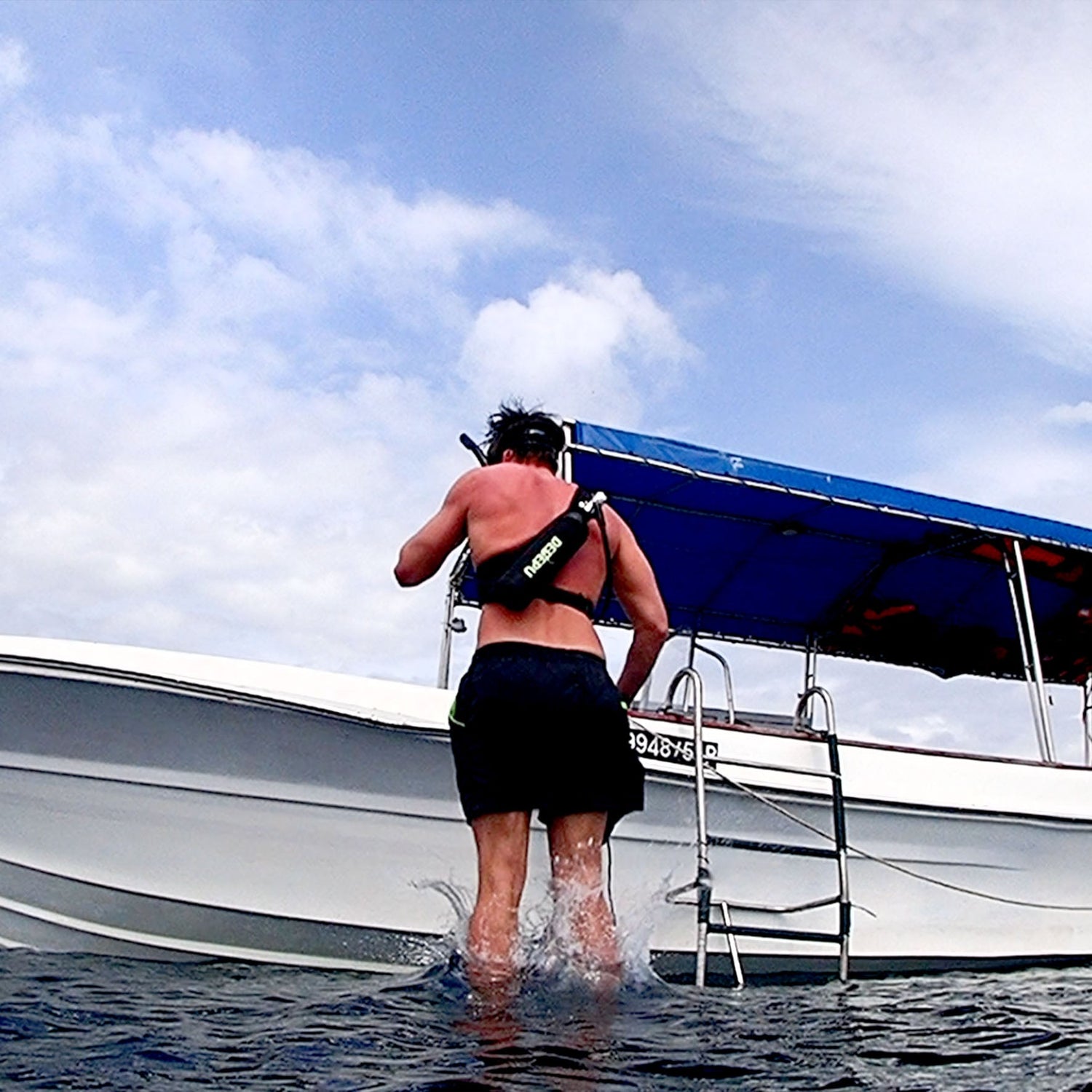
Mini scuba cylinders are positioned as "short-term shallow water" auxiliary tools, with a 0.5L capacity providing approximately 5-10 minutes of air. A depth within 3 meters is recommended, and exceeding 10 meters is strictly prohibited.
Their 5 golden uses include: emergency backup air source, clearing hull entanglements, shallow water photography, pool skill practice, and checking anchors. Although easy to operate, it is not a substitute for professional deep-diving equipment, but rather an auxiliary tool for "short-term, shallow water" use.

Shallow Water Snorkeling
Micro gas cylinders perform best at depths of 3-5 meters. A 0.5L cylinder can provide approximately 6-10 minutes of continuous air supply (based on a breathing rate of 15-20 times/min), while a 2L specification can extend this to 20-25 minutes. The equipment's working pressure is constant at 3000 psi, reducing the pressure to ambient through a first-stage and second-stage regulator. Compared to traditional snorkeling, it adds about 2kg of weight requirement but eliminates the physical exertion caused by frequent surfacing.
Duration Breakthrough
The average Total Lung Capacity (TLC) of a human is approximately 6 liters. At a depth of 3-5 meters underwater, the air volume in the lungs shrinks to about 70% of its original size due to the compression of 1.3 to 1.5 atmospheres. Traditional breath-holding diving relies on an oxygen reserve of about 1-2 minutes provided by a single inhalation. Micro cylinders break this physical volume limit through built-in high-pressure air. Even the smallest 0.5-liter bottle can carry about 100 liters of compressed air at a rated pressure of 3000 psi (200 bar).
Based on this volume, underwater breathing behavior shifts from anaerobic metabolism to continuous aerobic metabolism:
-
Relationship between oxygen consumption and depth: At a depth of 10 feet (3 meters), users breathe air balanced with the ambient pressure. An adult's resting breath volume is about 0.5-0.8 liters/time, and a micro cylinder provides about 125-200 effective breaths.
-
Carbon Dioxide Tolerance: Diaphragmatic twitching from breath-holding stems from carbon dioxide (CO2) buildup. Micro cylinders continuously vent waste gas through a second-stage regulator, maintaining blood oxygen saturation above 95%.
-
Heart Rate Performance: Breath-holding diving triggers the mammalian dive reflex, dropping the heart rate to 40-50 bpm to save oxygen. Using a micro cylinder maintains a normal 60-80 bpm, reducing muscle soreness caused by hypoxia.
Due to this change in air supply, which removes the need for frequent surfacing to breathe, the diver's underwater observation window is extended from less than 1 minute to 10-15 minutes.
| Specifications | 0.5L (S300) | 1.0L (S400) | 2.0L (S500) |
|---|---|---|---|
| Air Capacity Volume | 100 L | 200 L | 400 L |
| 3m Depth Endurance | 6 - 10 minutes | 12 - 18 minutes | 25 - 35 minutes |
| Empty Weight | 0.85 kg | 1.5 kg | 2.8 kg |
| 1st Stage Output Pressure | 140 psi | 145 psi | 145 psi |
At a depth of 33 feet (10 meters), the ambient pressure is 2 atmospheres (2 ATA), meaning the density of each breath a diver takes is twice that at sea level. The corresponding data shows that the air supply time of a 0.5L cylinder at 10 meters will be shortened to 4-6 minutes. Moving from metabolic improvements to physical equipment specifications, the safety of micro cylinders is built on 6061-T6 aviation-grade aluminum alloy. This material can withstand burst pressures exceeding 4500 psi, far higher than the daily 3000 psi limit.
-
Inflation Efficiency: Using a 4500 psi high-pressure manual pump, each stroke provides about 0.2 liters of air. Filling a 0.5-liter bottle requires about 600-800 strokes, taking approximately 15 minutes.
-
Regulator Precision: The cracking pressure of the second-stage regulator is usually set at 1.2-1.5 cm H2O. Divers only need minimal inhalation force to obtain sufficient airflow.
-
Temperature Control: High temperatures generated during the compressed air filling process dissipate quickly through the aluminum body. At a water temperature of 25 degrees Celsius, the pressure inside the bottle remains extremely stable.
Freed from the constraints of physical lung volume, a diver's buoyancy control also changes. In breath-holding diving, buoyancy fluctuates violently with lung exhaust; with micro cylinders, through stable exhalation via the second stage, divers can utilize Lung Volume adjustments to achieve neutral buoyancy.
Micro Cylinder vs. Traditional Freediving
The average Total Lung Capacity (TLC) of a human is around 6 liters; when diving to 10 meters (2 ATA), the lung air is compressed to 3 liters. Micro cylinders typically use volume specifications of 0.5L to 2L. At a 3000 psi (200 bar) rated pressure, a 0.5L bottle can store about 100 liters of breathable compressed air. The gas reserve is instantly expanded by 16 times, breaking the physical upper limit of underwater stay time.
A freediver's stay time is limited by the accumulation of carbon dioxide (CO2) concentration in the blood, usually triggering violent diaphragmatic twitches around 90 seconds. Micro cylinders are equipped with first and second-stage regulators that can reduce high-pressure air to a medium pressure of 140 psi, and then provide smooth airflow based on ambient pressure. By continuously exhausting waste gas through exhalation, the diver's heart rate can stabilize at around 70 bpm, avoiding physical exhaustion caused by hypoxia.
In terms of buoyancy performance, a 1.2kg 0.5L cylinder produces about 0.5kg of negative buoyancy in the water, which requires the diver to offset with a weight belt. In contrast, freedivers have about 2-4kg of positive buoyancy when fully inhaled, consuming a lot of oxygen kicking to overcome resistance in the early stages of a dive. These differences in physical characteristics determine the efficiency of micro cylinders for static observation tasks.
| Technical Metric Dimension | Traditional Freediving | Micro Scuba (0.5L S300) | Micro Scuba (2L S500) |
|---|---|---|---|
| Total Breathable Source | 4.5 - 6.5 L (Lungs) | 100 L (3000 psi) | 400 L (3000 psi) |
| Pressure Output | Compressed with depth | 140 psi Constant | 145 psi Constant |
| Preparation Cycle | Breathing 120-300s | On-demand | On-demand |
| Underwater Net Weight | 0 kg | 0.6 kg (Negative) | 2.1 kg (Negative) |
Staying at a depth of 20 feet in freediving requires constant stroking and balancing, consuming about 8-12 kcal per minute. When using a micro cylinder, the diver can be in a completely resting metabolic state, with oxygen consumption dropping to 0.5-0.8 liters/minute. In waters with a temperature of 26 degrees Celsius, such as Florida or the Bahamas, a low energy consumption state can slow down body heat loss.
At sea level (1 ATA), an adult consumes about 1.5 liters of air per breath. At a depth of 33 feet (10 meters), the ambient pressure doubles, and the molecular weight of gas consumed for the same volume of breath doubles accordingly. The 200 bar reserve of a micro cylinder at this depth can still provide about 5-7 minutes of exploration time, far exceeding the 45-second breath-hold limit of an untrained person.
-
Oxygen Metabolism Maintenance: Blood oxygen saturation is maintained above 98% during breathing, eliminating the feeling of lactic acid buildup at the end of a breath-hold.
-
Cardiovascular Load: Bradycardia caused by the diving reflex is offset, and the heart maintains normal distal blood supply at a frequency of 60-80 bpm.
-
Depth Adaptability: With the help of the second-stage regulator, the diver's lung volume at a depth of 15 feet remains normal, reducing the risk of lung squeeze injury.
-
Operational Continuity: During biological sampling in the Caribbean, continuous air supply supports a single 10-minute fine operation without the need for frequent surfacing.
The main risk of freediving is Shallow Water Blackout (SWB), a sudden loss of consciousness caused by a sharp drop in oxygen partial pressure during ascent. The risk for micro cylinders shifts to pulmonary overexpansion injury; if one holds their breath during ascent, a depth difference of only 0.6 meters is enough to damage the alveoli. Operators must maintain a continuous and slow exhalation rate and must never stop breathing during ascent.
| Operating Costs & Logic | Freediving System | Micro Scuba Kit |
|---|---|---|
| Entry Investment Cost | $60 - $150 (Basic) | $200 - $600 (inc. pump) |
| Refill Time | 15 - 30s (Surface) | 10 - 25 mins (Variable) |
| Depth Endurance | Linear decay with capacity | Limited by 200bar |
| Maintenance Cycle | Freshwater rinse only | Annual O-ring/5-yr Hydro |
Freediving only requires a few deep breaths at the surface to dive again. Micro cylinders rely on external charging; filling a 0.5-liter cylinder with a 4500 psi high-pressure manual pump requires about 600-800 strokes. Using a 12V/110V small portable compressor, it takes about 25 minutes to fill a 2L bottle, which places demands on logistical support for continuous operations.
Emergency Backup
As a redundant air source, a micro cylinder at a full pressure of 3000 psi (207 bar) can provide about 30-50 surface breaths for a 0.5L specification. At a depth of 10 meters (2 absolute atmospheres), affected by breathing rate, its actual air supply time is approximately 3-6 minutes. This window is sufficient to complete a standard ascent rate of 9 meters/minute and includes a short 3-minute safety stop, serving as an independent physical line of defense against primary regulator failure or OOA (Out of Air) situations.
Backup Advantages
After inflating a 0.5-liter micro cylinder to 3000 psi (207 bar), it contains approximately 100 liters of compressed air. At a depth of 10 meters (2 ATA pressure environment), if a diver generates a Respiratory Minute Volume (RMV) of 30 liters/minute due to an emergency, the cylinder can provide approximately 3.3 minutes of continuous air supply. This duration is sufficient to cover an ascent from 10 meters at a standard speed of 9 meters per minute, while reserving air for a 2-minute safety stop at 5 meters.
Traditional alternate air sources (Octopus) share the same first-stage reduction device with the primary second stage. If the first stage high-pressure seat (HP seat) leaks due to wear, or if a piston-type first stage freezes in cold water, all second stages connected to the same system will fail. Micro cylinders use completely independent valve and breathing head structures, bypassing the primary cylinder's lines, establishing physical redundant isolation.
Statistical data shows that approximately 80% of regulator mechanical failures occur at the first stage O-ring or the high-pressure hose interface. Because micro cylinders do not have complex long hose layouts, their interface sealing points are reduced by more than 50% compared to traditional Pony Bottle systems, lowering the risk of pre-dive leaks caused by too many equipment connection points.
Micro cylinders are typically manufactured from 6061-T6 aviation-grade aluminum alloy with a wall thickness of about 6.5 mm. The 0.5-liter model's weight is kept at around 1 kg, producing about 0.2 kg of positive buoyancy underwater. Compared to traditional 13 cubic foot (approx. 2 liter) side-slung backup cylinders, this lightweight design does not disrupt the diver's Trim, avoiding posture tilting caused by excessive weight on one side of the body.
In simulated OOA (Out of Air) tests, it took divers an average of only 3.5 seconds to switch from discovering a lack of air to a chest-mounted micro cylinder. Compared to the process of finding a buddy and obtaining their alternate second stage (which typically takes 10-15 seconds), micro cylinders shorten the reaction time by about 70%, effectively preventing panic caused by hypoxia.
The cylinder's first stage usually employs a Downstream Valve design. If the internal pressure rises abnormally, the valve will automatically push open a spring to vent pressure, preventing the bottle from exploding. At a room temperature of 20 degrees Celsius, for every 1 degree Celsius increase in inflation temperature, the internal pressure increases by approximately 0.6 bar; this physical characteristic requires the cylinder to be equipped with a Burst Disc.
The valve interfaces for micro cylinders are mostly M18*1.5 international standard threads, compatible with mainstream portable high-pressure compressors. Using a 12V portable pump with a rated power of 300W, it takes about 12-15 minutes to fill a 0.5-liter cylinder. This replenishment efficiency makes it feasible to perform multiple short-duration tasks (such as checking for propeller entanglements) at remote docks or on private yachts without having to travel to a professional dive shop for air.
-
The outer layer of the cylinder is usually treated with hard anodic oxidation with a thickness of 20 microns.
-
Salt spray corrosion resistance has passed tests of over 96 hours.
-
The equipped micro pressure gauge is accurate to 10 bar, facilitating quick underwater readings.
-
The mouthpiece uses food-grade silicone, maintaining good elasticity even in cold water at 5 degrees Celsius.
Regarding Work of Breathing (WOB), test data for qualified micro regulators at a depth of 10 meters is about 1.5 Joules/Liter. While this is slightly higher than high-performance professional regulators (usually below 1.0 J/L), this resistance difference has a negligible impact on a diver's physical exertion during an emergency ascent.
According to Boyle's Law, gas volume is inversely proportional to pressure. At a depth of 20 meters (3 ATA), the equivalent duration of a 0.5-liter cylinder will be reduced to less than 2.2 minutes. Therefore, technical diving associations usually position it as the only backup solution for shallow waters within 12 meters, rather than a deep-water decompression bottle.
A micro cylinder's Refill Adapter allows for air transfer from a standard 12-liter large cylinder. Using the principle of communicating vessels, when the large cylinder pressure is 200 bar, the small empty bottle can be filled to equilibrium pressure in just 30 seconds. This refueling method is highly efficient during liveaboard diving, allowing divers to quickly replenish backup energy between dives.
By performing a visual inspection (VIP) on the cylinder every 2 years, one can effectively observe whether there is aluminum oxide powder accumulation on the inner wall. Aluminum alloy bottles produce almost no internal corrosion in dry environments, but if the air source filtration system fails, moisture brought in will accelerate metal oxidation under high pressure of 3000 psi. Maintaining a residual pressure of at least 20 bar inside the cylinder is standard operating procedure to prevent external moisture from entering.
The burst pressure of this type of cylinder is usually set at 1.5 times the rated working pressure, which is about 4500 psi. This high safety margin is designed to handle extreme physical stresses generated by intense gas expansion inside the bottle when exposed to tropical deck sun.
Current micro scuba systems mostly comply with the EN250 European respirator standard, which specifies the minimum air flow of a regulator at different temperatures and depths. Choosing equipment with this certification ensures that even in an extreme state of panic where the breathing rate reaches 62.5 liters per minute, the regulator's first stage can still provide a stable medium pressure output without "sucking dry."
Test Comparison
At a standard inflation pressure of 3000 psi (207 bar), a 0.5-liter capacity micro cylinder stores approximately 103.5 liters of compressed air. Assuming a diver's Respiratory Minute Volume (RMV) in a resting state at the surface is 15 liters, the cylinder can theoretically provide nearly 7 minutes of air supply. As depth increases, for every 10 meters the ambient pressure drops, it adds one atmosphere (ATA), causing the available number of breaths to decrease exponentially.
The table below shows measured air supply durations for different cylinder volumes at different depths (based on a moderate breathing rate of 20 liters/minute):
| Depth (m) | Ambient Pressure (ATA) | 0.5L Duration | 1.0L Duration | 2.0L Duration |
|---|---|---|---|---|
| 0m (Surface) | 1 ATA | 5.2 mins | 10.4 mins | 20.8 mins |
| 10m | 2 ATA | 2.6 mins | 5.2 mins | 10.4 mins |
| 20m | 3 ATA | 1.7 mins | 3.5 mins | 6.9 mins |
| 30m | 4 ATA | 1.3 mins | 2.6 mins | 5.2 mins |
Respiratory rate (RMV) is greatly affected by a diver's psychological state. In a stress state encountered when the primary air source is exhausted, the human breathing rate can jump from 15 liters/minute to over 50 liters/minute. At this point, the effective air supply time of a 0.5-liter cylinder at a depth of 10 meters will be shortened to about 1 minute. This data emphasizes that when used as a backup system, the primary use of a micro cylinder is to complete a controlled ascent rather than to continue underwater work.
Boyle's Law states that at a constant temperature, gas volume is inversely proportional to pressure. At a depth of 20 meters (3 ATA), the number of molecules a diver exhales with each breath is 3 times that at the surface. Practical tests show that a standard 0.5-liter cylinder can only provide about 25-30 normal deep breaths at a depth of 20 meters.
Cylinder material is mostly 6061-T6 aluminum alloy, which has a density of about 2.7g/cm³. The empty weight of the 0.5-liter model is usually around 1.1 kg, while the total weight after being filled with gas increases by about 130 grams. In a seawater environment (density 1.025g/cm³), the buoyancy generated by the bottle offsets most of its own weight, making the diver feel almost no additional weight burden when carrying it.
A cylinder filled to full pressure in a 35-degree Celsius environment on deck will quickly show a pressure drop of about 150 psi (10 bar) once it enters 20-degree Celsius seawater. Practical tests have found that this pressure drop due to temperature difference is not a gas leak, but rather a pressure reorganization caused by weakened molecular thermal motion; divers should rely on the pressure reading after cooling underwater.
The cylinder valve head integrates a Burst Disc, with its rupture pressure typically set between 3750 psi and 4500 psi. If operational errors during inflation or high ambient temperatures cause the internal pressure to exceed the threshold, this copper gasket will actively rupture to vent pressure. This physical safety mechanism ensures that the bottle body will not undergo structural tearing in extreme environments. Regarding respirator performance metrics, the Work of Breathing (WOB) for micro second stages is between 1.2 and 1.5 Joules/Liter. Regulators complying with the EN250 standard are required to maintain stable air supply even at a depth of 30 meters. Although micro systems are not recommended for such depths, their valve structure can output a peak flow of 500 liters per minute at 207 bar pressure, sufficient to handle panic breathing.
Cylinder wall thickness is usually designed to be 6.5 mm or more to withstand long-term fatigue loads. According to DOT-3AL specifications, aluminum cylinders require a hydrostatic test every 5 years, applying 1.5 times the working pressure (i.e., 4500 psi) to detect their permanent deformation rate. For users who frequently use them in saltwater environments, an annual internal Visual Inspection can prevent aluminum oxidation deposits caused by moisture entry.
Boat Maintenance
Micro diving cylinders are efficient tools for boat owners to handle underwater emergency maintenance. A 1L capacity cylinder usually provides 10-15 minutes of breathing time at a depth of 3 meters. Compared to hiring professional divers with starting fees of $200-$500 per hour, a set of micro scuba equipment (approx. $250-$400) can pay for itself in a single task of clearing a propeller or inspecting the hull. It allows crew members to quickly complete zinc replacement or intake cleaning without having to haul out the boat, significantly reducing vessel operating costs.
Propeller Clearances
In nearshore waters in Florida or the Mediterranean, stainless steel drive shafts with a diameter of 25.4mm (1 inch) often get caught in 6mm specification nylon fishing line. Once entangled, engine RPMs will drop instantly, and the gearbox of marine engines like Yanmar or Volvo Penta will bear reverse torque pressure exceeding 400 Nm.
Relying on freediving breath-holding to handle such a failure usually only allows for 40-60 seconds of underwater stay time, which makes it difficult to complete complex cutting actions. Using a 1L capacity micro diving cylinder with an inflation pressure of 3000 psi (207 bar) provides about 12 minutes of steady breathing at a depth of 2 meters.
-
Ropes usually accumulate in the narrow gap between the propeller hub and the bracket.
-
Friction from high-speed rotation melts plastic fibers, forming a hard plastic sleeve on the shaft diameter.
-
Zinc anodes installed on the drive shaft often loosen or fall off due to the violent impact of the rope.
-
If the rope thickness exceeds 15mm, powerful tension can even change the pitch of the propeller blades.
-
Excessive load can compress PSS mechanical seals, leading to seepage at the hull shaft seal.
On a 4-blade fixed propeller, the gaps between blades are often less than 10cm, requiring the operator to have stable buoyancy control to reach the shaft center. Micro cylinders allow you to maintain a horizontal Trim, using a titanium alloy serrated knife to cut high-strength Dyneema cable.
Even if a boat is equipped with rope cutters from brands like Spurs or Ambassador, they may fail when faced with thick dock lines over 12mm. The work time provided by micro cylinders is sufficient to support you in using a hook knife to forcibly pull the entanglement out of the cutter's edge, restoring the system's cutting function.
Underwater visibility in marina areas is often less than 1.5 meters. Wearing a mask with a 300-lumen underwater flashlight allows you to see the status of the cotter pin on the propeller nut. In environments with restricted visibility, continuous air supply prevents psychological stress from blocked operations, ensuring the breathing rate remains at about 15 times per minute.
If plastic fibers have melted and bonded to the shaft due to high temperatures, cleaning with a chisel and hand hammer is required. This high-exertion action pushes the breathing rate up to 25-30 times per minute. Under such high-intensity work, a 0.5L cylinder might only last 4-6 minutes, while a 1L version provides a more generous time window.
-
A 10cm long fully serrated blade is suitable for cutting fibrous thick cables.
-
Heavy-duty pliers are used for dealing with multi-strand steel wires mixed in fishing nets.
-
Underwater lighting equipment with IPX8 rating is essential for identifying bearing wear.
-
2mm neoprene gloves or Level 5 cut-resistant gloves prevent barnacle shells from cutting fingers.
-
Prepare a mesh bag to collect cleared waste, preventing it from re-entangling the propeller.
In yachting hubs like Fort Lauderdale or the Hamble River, the starting fee for hiring professional divers is usually over $250. Purchasing a set of micro scuba equipment for about $300 can offset the equipment cost in the very first self-handled propeller clearing task. This avoids the trouble of paying expensive dock crane fees (approx. $800-$1500) to haul the boat ashore.
Water temperatures in the North Sea or Atlantic often drop below 12°C, necessitating the use of 5mm thick wet suits. Low temperatures increase the body's oxygen consumption, and the constant pressure output of micro cylinders ensures smooth air even in cold water.
Zinc Anode Replacement
In highly conductive electrolyte like seawater, the potential of aluminum propellers or stainless steel drive shafts is usually around -0.6V, while the potential of zinc anodes as protectors is about -1.05V. According to Mil-Spec A-18001K standards, zinc anodes will oxidize preferentially to the vessel's expensive metal parts, preventing structural damage to the propulsion system through their own consumption.
When the volume loss of these anodes exceeds 50%, the protective current density they provide drops significantly. A 40-foot sailboat typically has 4 to 8 zinc anodes of various sizes distributed on the drive shaft, rudder post, and hull. If one waits until annual dry-dock maintenance for replacement, the insufficient protection efficiency in the later stages may have already resulted in pitting as deep as 0.5mm on the drive bearing surface.
Using a 1L capacity micro diving cylinder with an inflation pressure of 3000 psi, boat owners can obtain about 12 minutes of operating time underwater. This is sufficient to complete the removal and installation of two standard 70mm shaft anodes. Compared to the inefficiency of only being able to turn a screw 2-3 times per dive while freediving, continuous air supply makes underwater repairs as precise and controllable as working on deck.
-
Prepare a set of 316 stainless steel Allen keys or ratchet sockets to prevent tools from rusting quickly in seawater.
-
Use a nylon lanyard to secure tools to your wrist, preventing a 1/2 inch nut from falling into seabed silt up to 30cm thick.
-
Before removing old anodes, clean the metal oxide layer on the contact surface with a wire brush to ensure contact resistance is below 0.2 ohms.
-
Check the installation tightening torque of new anodes; typically, M8 specification bolts need to reach 15-20 Nm.
-
Apply an appropriate amount of underwater-specific anti-seize agent to the bolt threads to prevent electrolytic bonding that makes future removal difficult.
In crowded marinas, a stray current of 100mA can consume a brand new 1.5kg zinc anode in just 3 months. Routine quarterly inspections using micro cylinders allow real-time monitoring of anode consumption, catching signals of poor grounding in the boat's electrical system early.
| Maintenance Method | Response Time | Cost (USD) | Operational Limits |
|---|---|---|---|
| Hire Pro Diver | 2-5 day booking | $250 - $500 | Subject to their schedule |
| Haul-out | 1-2 days | $800 - $1800 | Lifting/docking fees |
| Micro Cylinder DIY | 15 minutes | $15 (Materials) | Anytime, anywhere |
During the replacement process, if there is 1mm of old anti-fouling paint or biofouling at the installation site, the anode will fail to form a closed circuit with the hull metal, resulting in a total loss of its protective function. The steady breathing provided by micro cylinders allows you to free up your hands underwater to use a scraper to clear a pure metal contact area of at least 20 square centimeters.
For vessels navigating in brackish water transition zones, using aluminum alloy anodes (potential approx. -1.10V) is often more effective than pure zinc. The charge capacity per unit weight of aluminum anodes is about 3 times that of zinc. When diving to inspect with a micro cylinder, if you find the zinc anode surface covered with a dense grayish-white oxide film and it is no longer being consumed, it indicates the anode has "passivated," and it must be replaced immediately with a more adaptable aluminum-based material.
-
Confirm that the spacing between shaft anodes and the strut is maintained at 25mm or more.
-
Observe rudder anodes for uneven erosion marks, which reflect water flow cavitation effects.
-
Check the "bullet" anode at the tip of the propeller nut for looseness; looseness can cause abnormal vibrations in the thruster.
-
Record data from each replacement to establish a long-term corrosion monitoring log and optimize anode replacement cycles.
-
After completing installation, manually turn the propeller to confirm the anode block does not have physical interference with the fixed bracket.
If a boat is equipped with a twin-engine system, the corrosion on the two drive shafts is often asymmetrical. Anodes closer to the dock's shore power pedestal usually consume faster, with a difference that can reach 20%-30%. The portability of micro cylinders supports quick checks at anchorages during navigation breaks, rather than waiting until returning to the home port only to find a zinc anode has completely disappeared on one side.
By regularly replacing anodes themselves, boat owners can save about $1000 in basic annual maintenance costs. More importantly, this avoids propeller shaft journal corrosion caused by anode failure, the repair cost of which is often upwards of $3000 and requires replacing the entire transmission assembly.
Intake Inspection
A 300 hp diesel engine requires approximately 60-80 liters of seawater circulation per minute for cooling at cruising speeds. If the intake grate is obstructed by barnacles covering 30% of the aperture area, the flow velocity will drop sharply from 2.5 m/s to below 1.8 m/s. Inspecting the intake underwater with a 0.5L pony bottle consumes only about 1500 psi of cylinder pressure. Boat owners can clearly observe if small shellfish 5mm in diameter or drifting nylon film are trapped in the grate gaps.
Biofouling on the hull surface typically begins 72 hours after mooring. In waters with temperatures above 25°C, the growth rate of calcifying organisms can reach 1-2mm per week. These organisms prioritize clustering in areas with the strongest pumping suction, forming hard calcareous layers that hinder the normal opening and closing of valves.
If the external grates of Seacocks accumulate more than 10mm of seaweed, it will cause high-pressure alarms in the air conditioning system's condenser. The 10-12 minutes of air supply provided by a pony bottle allows you to use a long-handled nylon brush to thoroughly clear these obstacles, restoring the system to its standard operating pressure of approximately 15 psi.
-
Use a 1000-lumen narrow-beam underwater flashlight to check the blockage depth inside the grate.
-
Confirm that the Raw Water Intake strainer of the seawater pump has not sucked in gravel or broken impeller blades.
-
Check for carbon soot accumulation of more than 2mm around the exhaust outlet, which increases exhaust back pressure.
-
Observe the SAE 316 stainless steel intake shroud for pitting corrosion caused by electrochemical reactions.
After addressing physical blockages in the hydrodynamic system, the precision of electronic navigation systems relies entirely on the physical cleanliness of sensors. Sonar transducers produced by brands like Airmar rely on 50/200 kHz ultrasonic waves to penetrate the water. Even a slime film only 0.5mm thick can cause signal scattering.
This interference can cause depth sounders to lose lock in waters deeper than 20 meters or display erratic digital jumping on the dashboard. Paddle wheels are extremely sensitive to minute resistance. A barnacle just 3mm in diameter can cause a propeller-style sensor to stop rotating entirely, resulting in invalid data across the NMEA 2000 network.
When the voyage data recorder cannot obtain accurate water speed, the error between the true wind speed and apparent wind speed calculated by the onboard computer will exceed 15%. Diving with a pony bottle allows you to use a discarded credit card or a piece of hard plastic to gently scrape off attachments from the sensor surface without damaging the expensive ceramic probe.
During the underwater inspection process, a 1L capacity pony bottle can maintain approximately 15 minutes of operation at a depth of 4 meters. Compared to bulky standard cylinders, it poses no collision risk in narrow keel areas. You can easily swim close to the bottom to observe if the anti-fouling coating on the sensor surface has peeled off.
-
Clean the transducer surface to ensure the 200 kHz high-frequency signal can precisely detect shoals within 1 meter.
-
Confirm that the flow meter impeller can rotate freely for more than 3 seconds when toggled manually.
-
Check the sealant around the sensor for hairline cracks at the 0.1mm level.
-
Regular cleaning prevents high-temperature wear of Jabsco pump impellers due to dry running.
Once the ECM detects insufficient cooling water flow, it typically limits the speed to below 1200 RPM to protect engine components. Self-cleaning with a pony bottle costs only a few cents in air, while the professional repair bill for an overheating failure often exceeds $1200. In marinas in Florida or the Mediterranean, the wait time for hiring a professional diver service is usually over 48 hours. Carrying your own pony bottle allows you to dive and troubleshoot within 5 minutes of detecting a data anomaly.
-
A 1L cylinder at 3000 psi provides approximately 200 liters of available air.
-
Cleaning a standard intake usually consumes about 30-50 bar of pressure.
-
Using 2mm neoprene gloves helps avoid cuts from sharp shells on the edges of the intake.
-
After completing the sensor inspection, it is recommended to have at least 50 bar of pressure remaining for a safe ascent.
For boat owners pursuing fuel economy, maintaining clean sensors and intakes is an effective means of saving more than 10% in annual operating expenses.
Pool Practice
A 0.5L pony bottle at 3000 PSI can provide approximately 6-10 minutes of continuous breathing (about 60-80 natural breaths) at the bottom of a 1.5-meter deep pool. At a depth of 3 meters, where the ambient pressure increases by 0.3 Bar, its approximately 1kg underwater negative buoyancy can be used for low-cost neutral buoyancy fine-tuning. The electricity or filling cost for a single practice session is typically less than 0.5 USD, making it suitable for equipment break-in before entering open water.
Practice Items
In a 1.5-meter deep flat-bottom pool, a 0.5L cylinder filled to 200 Bar provides about 100 liters of available air. In a resting state, an adult's respiratory volume is about 12 to 15 liters per minute. In a 1.15 ATA (1.5m depth) environment, a single breath consumes about 1.6 liters of compressed air. By continuously observing the Submersible Pressure Gauge (SPG), the pressure typically drops from 200 Bar to around 120 Bar after sitting still for 5 minutes.
| Practice Action | Recommended Depth | Est. Air Consumption (0.5L bottle) | Target Duration |
|---|---|---|---|
| Neutral Buoyancy Hover | 2.0 m | 15 - 18 Bar | Maintain for 60 seconds |
| Partial Mask Clearing | 1.5 m | 4 - 7 Bar | Clear within 3 seconds |
| Regulator Recovery | 2.5 m | 10 - 15 Bar | Recover and breathe within 5s |
| Horizontal 50m Cruise | 3.0 m | 70 - 90 Bar | Complete in 3 - 5 minutes |
Neutral buoyancy practice relies on 1kg to 2kg lead weights for fine-tuning. At the bottom of a 2-meter pool, controlling inhalation increases lung displacement by approximately 3 liters. During this process, as air is consumed, the cylinder will generate about 200g of upward buoyancy. Practitioners need to test the lung reserve required to maintain hover at three pressure points: 150 Bar, 100 Bar, and 50 Bar.
Experimental data shows that the total effective breath count for a 0.5L cylinder at a depth of 3 meters is approximately 65 breaths. If performing mask clearing, a single long exhale can instantaneously consume 3-5 Bar of pressure. Performing 5 consecutive complete clearings will reduce the total cylinder capacity by about 15%, shortening underwater stay time by approximately 90 seconds.
Regulator Recovery practice is divided into the arm sweep method and the reach method. Simulating a regulator fallout at 2.5 meters, a beginner's heart rate in a panicked state typically rises to 125bpm. This physiological response causes a single breath volume to surge to over 3.5 liters. Recording this peak air consumption data in the pool helps users establish a psychological expectation of distance after a low-pressure alarm.
-
SAC Rate Calculation: Swim at 3 meters for 10 minutes and record the pressure drop. If the pressure drops by 150 Bar, the SAC rate is 15 liters per minute.
-
Emergency Ascent Simulation: Ascend from 3 meters at a constant rate of 0.15 meters per second. Maintain a slight exhale; the entire process consumes about 5-8 Bar.
-
Reserve Pressure Warning Practice: When the SPG needle enters the 50 Bar red zone, try to stay still at the bottom. Tests show this pressure can only maintain breathing for about 90-120 seconds.
-
Weight Balance Test: Roll 360 degrees horizontally at the bottom. Observe the shift in center of gravity (approx. 5-10cm) between 200 Bar and 50 Bar states.
| Cylinder Spec | Total Capacity (Full) | 1.5m Depth (Static) | 3m Depth (Neutral Swim) | 5m Depth (Action Limit) |
|---|---|---|---|---|
| 0.5 L | 100 L | Approx. 7.5 mins | Approx. 4.5 mins | Approx. 3.0 mins |
| 1.0 L | 200 L | Approx. 15 mins | Approx. 9.5 mins | Approx. 6.5 mins |
| 2.0 L | 400 L | Approx. 30 mins | Approx. 19 mins | Approx. 13.5 mins |
For 2L specification pony bottles, pool practice focuses on equipment weight distribution. A full 2L cylinder increases in weight by approximately 0.5kg. Practicing a horizontal streamlined posture at 3 meters and reducing large limb movements can lower the air consumption rate by 12%. Recording the pressure drop slope at different swimming speeds helps in planning round-trip routes in open water.
Buddy Breathing practice is extremely challenging with pony bottles. Two adults sharing a 0.5L cylinder at 2 meters depth causes instantaneous air consumption to exceed 40 liters per minute. During the pressure equalization process, the residual pressure can only support about 8-12 alternate breaths, lasting less than 100 seconds in total.
There is a significant temperature difference between an outdoor pool at 20°C and a cylinder body at 45°C immediately after filling. Immerse the cylinder in water and observe the needle drop from 200 Bar to 185 Bar within 3 minutes. This physical contraction data prevents users from having the illusion of an equipment leak due to a sudden pressure drop upon entering the water.
Manually refilling a 1L cylinder from 50 Bar to 200 Bar requires approximately 450 reciprocating strokes. This physical exertion results in a higher initial heart rate when subsequently practicing underwater. It is recommended to let the cylinder sit for 15 minutes after filling until the breathing rate returns to a baseline level of 12 breaths per minute before starting underwater projects.
Using a 12V portable compressor to fill a 0.5L cylinder from 0 to 3000 PSI takes about 12 minutes. During the process, monitor the head temperature with an infrared thermometer and keep it below 70°C. If the ambient humidity exceeds 60%, replace the desiccant every 2 bottles. Observe the filter element color change to ensure the moisture content of the air filled into the cylinder is below 50mg/m³ to prevent internal wall oxidation.
-
O-ring Wear Monitoring: Measure the deformation of the first-stage Yoke interface gasket every 30 charging cycles.
-
Regulator Resistance Adjustment: Adjust the delivery pressure to 0.9 MPa via the knob at the bottom of the pool and test inhalation smoothness at different depths.
-
Burst Disc Inspection: Confirm that the 3500 PSI burst disc has no salt spray corrosion; the 24-hour static pressure drop should be less than 2 Bar.
-
Freshwater Rinse Protocol: Soak the regulator in 25°C fresh water for 15 minutes after practice to remove salt interference from the piston structure.
Through this data-based pool practice, users can control their SAC rate within preset ranges. Once all emergency maneuvers can be completed stably at 3 meters depth with air consumption fluctuations of less than 10%, the practicality of the pony bottle in shallow sea areas will be guaranteed.
Emergency Rescue Readiness
As a Redundant Air System, a 0.5L pony bottle at 3000psi/200bar full pressure can provide approximately 50-60 surface breaths. At a depth of 10 meters, this is equivalent to 3-5 minutes of continuous supply, enough for a diver to complete a safe escape at a standard ascent rate of 9 meters per minute. These devices are typically made of 6061 aluminum alloy, weighing only about 1.1kg, and can be mounted via a D-ring on a jacket-style BC (Buoyancy Control Device) to handle emergencies such as main regulator failure or cylinder O-ring bursts.
Technical Parameter Comparison
The table below compares the physical indicators of three popular aluminum pony bottle specifications at full pressure, based on a standard 15°C (59°F) ambient temperature and 1.225 kg/m³ air density baseline:
| Technical Parameters | 0.5L (S300) | 1.0L (S400) | 2.0L (S500) |
|---|---|---|---|
| Standard Working Pressure | 3000 psi / 207 bar | 3000 psi / 207 bar | 3000 psi / 207 bar |
| Total Compressed Air | 100 L / 3.5 cu ft | 200 L / 7.1 cu ft | 400 L / 14.1 cu ft |
| Cylinder Net Weight (Empty) | 0.85 kg / 1.87 lbs | 1.80 kg / 3.96 lbs | 3.25 kg / 7.16 lbs |
| Full Gas Weight | Approx. 0.12 kg / 0.26 lbs | Approx. 0.24 kg / 0.53 lbs | Approx. 0.49 kg / 1.08 lbs |
| Average Wall Thickness | 6.5 mm - 8.0 mm | 8.0 mm - 10.0 mm | 10.5 mm - 12.0 mm |
| Max Outer Diameter | 60 mm / 2.36 in | 90 mm / 3.54 in | 110 mm / 4.33 in |
The cylinder material is 6061-T6 aviation-grade aluminum alloy, which has high ductility upon impact. According to US DOT-3AL specifications, its minimum design burst pressure is set at 2.5 times the working pressure, approximately 7500psi. This strength is sufficient to resist abnormal collisions during transport.
With a Surface Respiratory Volume (RMV) of 20 L/min, the supply durations at various depths are as follows:
-
5 meters (16.4 ft): Ambient pressure is 1.5 ATA; 0.5L cylinder supports approx. 3.3 minutes.
-
10 meters (32.8 ft): Ambient pressure is 2.0 ATA; 1.0L cylinder supports approx. 5.0 minutes.
-
20 meters (65.6 ft): Ambient pressure is 3.0 ATA; 2.0L cylinder supports approx. 6.6 minutes.
-
Extreme Conditions: If heart rate spikes causing RMV to double to 40 L/min, the above durations will be halved instantaneously.
The integrated first-stage regulator uses a balanced piston design to drop the high cylinder pressure to a constant intermediate pressure of 135-145 psi. This output is equipped with a 5/8"-18 UNF thread specification, compatible with most standard manual pumps or filling adapters worldwide. The AS568-014 Viton O-rings inside the regulator provide excellent sealing stability in contact with high-concentration oxygen or high pressure.
According to the Ideal Gas Law $$PV = nRT$$, for every 1°C rise in ambient temperature, the internal pressure increases by approximately 5.4 psi. When a cylinder is left on a sun-drenched deck and the temperature rises from 20°C to 45°C, the internal pressure will increase by about 135 psi. If the pressure exceeds 4500 psi, the burst disc on the valve body will rupture due to the fatigue limit being reached.
To ensure safety during rescue, equipment typically features the following configuration logic:
-
Residual Pressure Prompt: The pressure gauge dial is painted fluorescent red below 500 psi to warn that the air source is almost exhausted.
-
Second Stage Adjustment: Equipped with an adjustable exhalation resistance knob to prevent free-flow icing when used in cold water (below 10°C).
-
Single-Stage Single Piston: Manual pumps generate heat during the compression stroke; the water-cooling jacket requires water replacement every 5 minutes.
-
Mouthpiece Spec: Made of medical-grade liquid silicone with a hardness typically between Shore A 40-50 to reduce jaw fatigue.
-
One-Way Valve Dust Protection: The filling port features an 8mm quick-connect with an internal grate precision of 40 microns to block airborne particles.
When empty, a 1.0L aluminum bottle exhibits about 0.3kg of positive buoyancy in seawater. When full, the added 240 grams of air mass turns it to near neutral or slightly negative buoyancy. If a user does not adjust weights during ascent, this increase in buoyancy can cause an uncontrolled ascent rate.
If not used for a long time, a residual pressure of 300-500 psi should be kept in the bottle to prevent external moisture from entering and causing white aluminum oxide powder to form on the inner walls. This powder, usually 2-5 microns in diameter, can easily block the tiny pilot valve holes inside the second-stage regulator, causing breathing difficulties.
Operating Limitations
Underwater breathing equipment is governed by Boyle's Law. At 10 meters depth, the ambient pressure is 2 Atmospheres (ATA), and the density of air inhaled into the lungs is twice that at the surface. If a user holds their breath during ascent, the volume of air in the lung sacs will expand rapidly as pressure decreases. Ascending from 10 meters to the surface, 0.5 liters of compressed air will expand to 1.0 liter in the lungs; if not continuously exhaled, the alveolar walls will tear when their elastic limit is exceeded.
To mitigate this physical risk, the following basic operating guidelines must be followed:
-
Maintain continuous, slow, small exhales during ascent; any form of breath-holding is strictly prohibited.
-
Control the ascent rate within 9 meters (30 feet) per minute, which is slower than the smallest bubbles produced by breathing.
-
Perform a 3-minute safety stop at 5 meters (15 feet) to allow dissolved nitrogen in the blood to be eliminated smoothly.
-
Check the residual pressure gauge before diving to ensure it is at the rated full capacity of 3000psi/200bar.
-
Perform 3 deep breathing tests before entering the water to confirm the first and second stages provide air smoothly and without odor.
The endurance of a pony bottle is limited by its physical volume. For a 0.5L spec, it provides about 100 liters of available air at the surface (Formula: $0.5L \times 200bar = 100L$). An adult's resting minute ventilation is about 15-20 liters; underwater, due to cold or exertion, the breathing rate increases. At 10 meters, since ambient pressure doubles the air consumed per breath, the actual breathing duration will shorten to 3-5 minutes.
The air source must be filled with compressed air meeting CGA Grade E standards. This requires oxygen content between 20%-22%, Carbon Dioxide (CO2) below 1000ppm, and Carbon Monoxide (CO) below 10ppm. Non-professional compressors may discharge air containing condensation, oil mist, or high CO concentrations. Oil mist in the lungs causes lipoid pneumonia, while the toxicity of CO increases with pressure, potentially causing the user to lose consciousness without warning.
Regarding the hardware specifications, users should be aware of the following technical details:
-
Cylinder Material: Uses 6061-T6 aviation aluminum alloy with a yield strength typically between 240-280 MPa, providing good resistance to seawater corrosion.
-
Safety Valve: The valve body features a Burst Disc; if internal pressure accidentally exceeds 4500-5000psi, the metal diaphragm will rupture to release pressure.
-
Dust Protection: The fill port must always be capped to prevent salt crystals from entering the one-way valve and causing leaks.
-
Operating Temperature: Recommended for use in waters between 5°C and 40°C. In extremely cold environments, the first stage may freeze due to the low temperatures generated by adiabatic expansion.
-
Manual Pump Limits: Filling a 0.5L cylinder with a manual high-pressure pump requires 600-800 strokes, with pauses every 50 strokes to cool down and prevent seal failure.
According to US Department of Transportation (DOT-3AL) and similar international standards, aluminum high-pressure cylinders require a Hydrostatic Test every 5 years. A load of 1.5 times the working pressure is applied to measure permanent expansion; if this exceeds 10%, the cylinder must be decommissioned. Additionally, a Visual Internal Inspection (VIP) should be performed annually to check for aluminum oxide powder or moisture residue.
In waters with a flow rate exceeding 0.5 knots (approx. 0.25 m/s), the physical exertion to maintain position can surge air consumption to over 3 times normal values. While the small volume of the cylinder reduces drag, it also limits the redundancy for dealing with complex undercurrents. In low visibility, users can easily ignore SPG readings and fail to initiate ascent before the air source is exhausted.
If the silicone mouthpiece of the second stage develops fine cracks, it can introduce seawater during inhalation, causing choking and inducing panic. If the one-way exhaust valve inside the second stage sticks or deforms, it increases exhalation resistance, leading to CO2 accumulation (CO2 retention), resulting in headaches or dizziness. After each use in seawater, the regulator must be rinsed repeatedly with fresh water, and the purge button pressed to clear residual salt.
For users planning to fill their own cylinders, the water-oil filter of a manual high-pressure pump is a consumable. Filter materials usually consist of activated carbon and 13X molecular sieves, whose adsorption capacity drops significantly after filling about 5-10 bottles (0.5L each). If the filter is saturated, liquid water from compression will enter the cylinder, causing internal corrosion. Internal corrosion in aluminum cylinders appears as white powder; if this enters the first-stage regulator, it can block orifices only a few microns in diameter, leading to a sudden air cutoff.
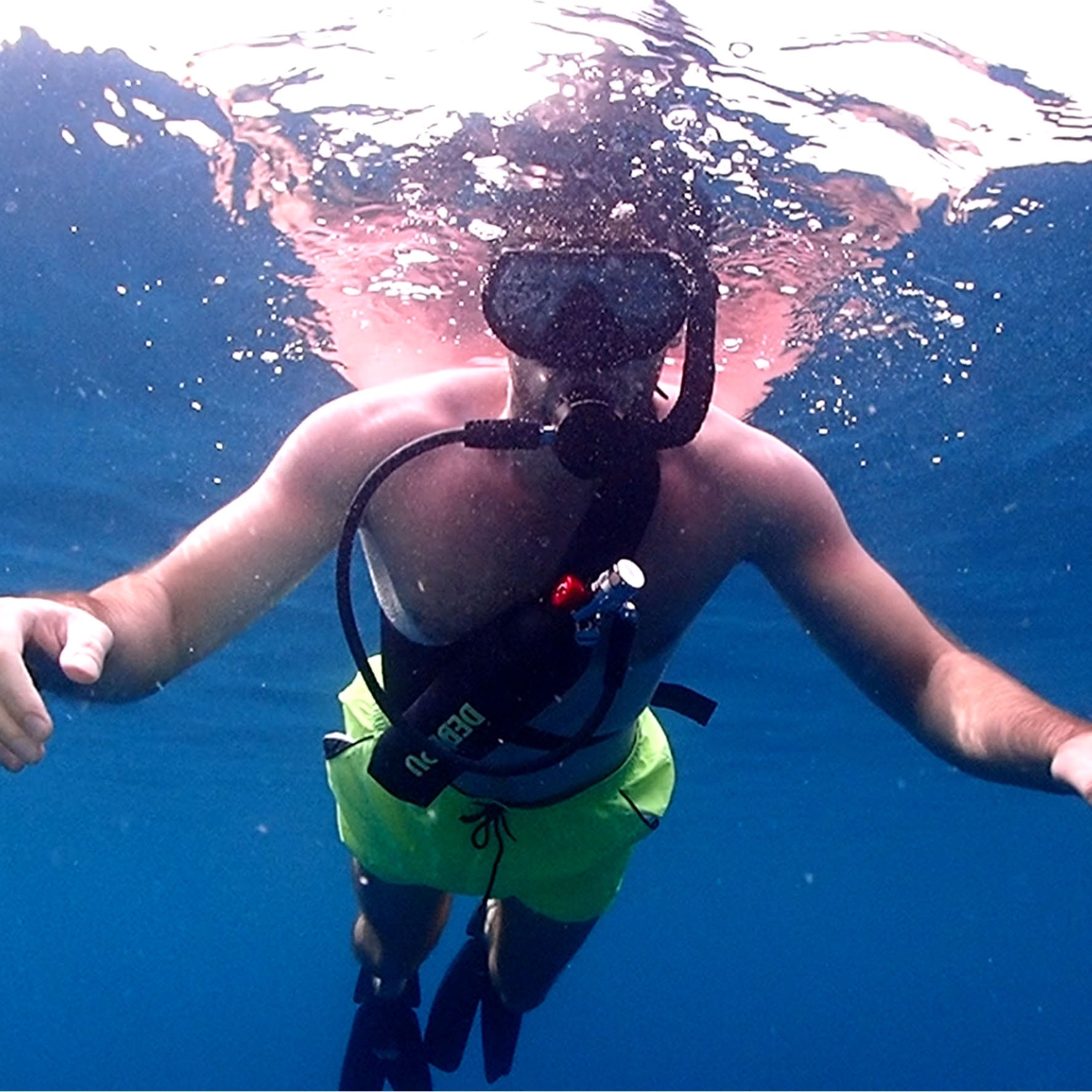
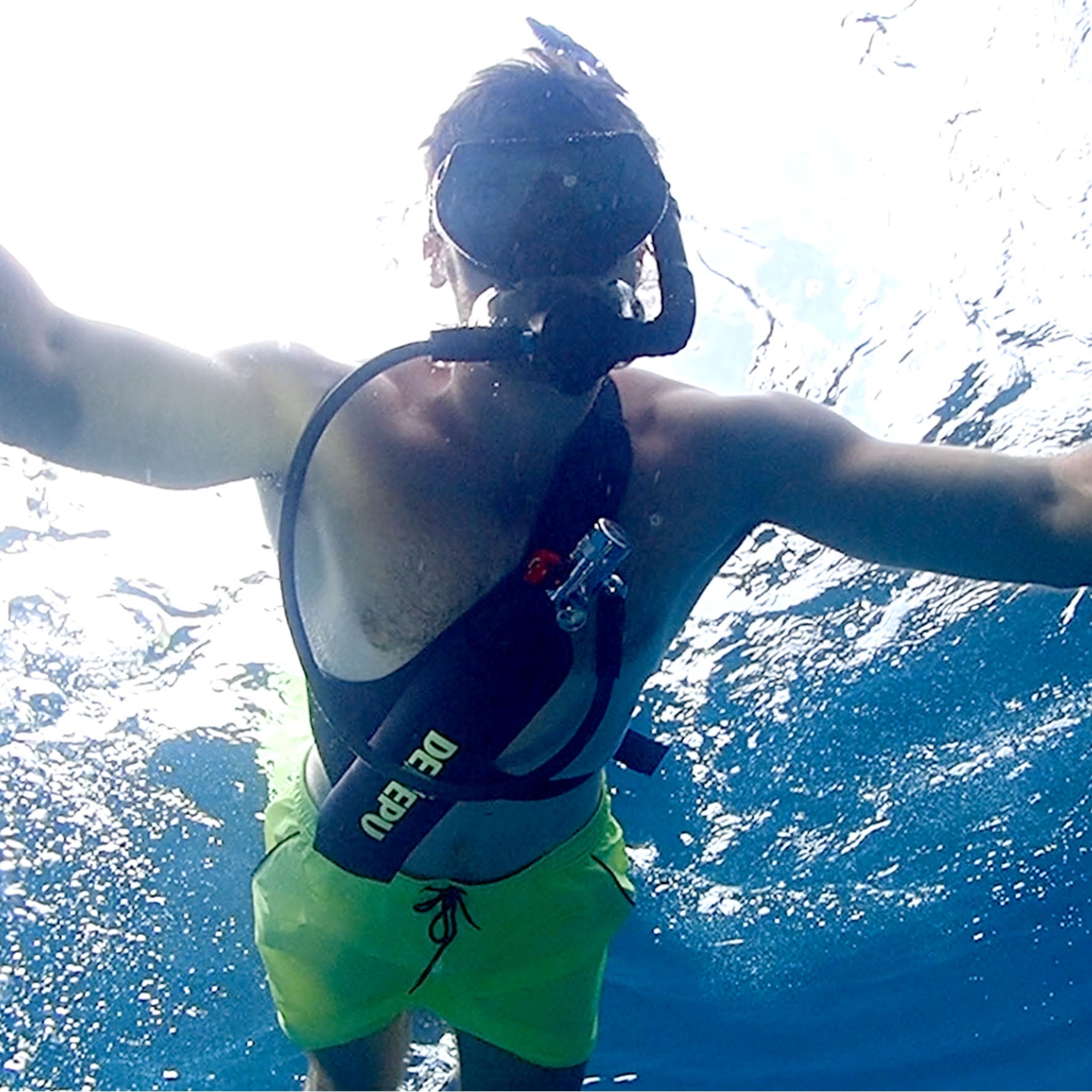
Pony bottles are not suitable as a primary air source for deep diving. At depths exceeding 15 meters, the air provided cannot even meet standard decompression ascent requirements. The equipment is designed as an emergency backup for 3-10 meter shallow waters or as a tool for short-duration obstruction clearing.


Leave a comment
All comments are moderated before being published.
Situs ini dilindungi oleh hCaptcha dan berlaku Kebijakan Privasi serta Ketentuan Layanan hCaptcha.