
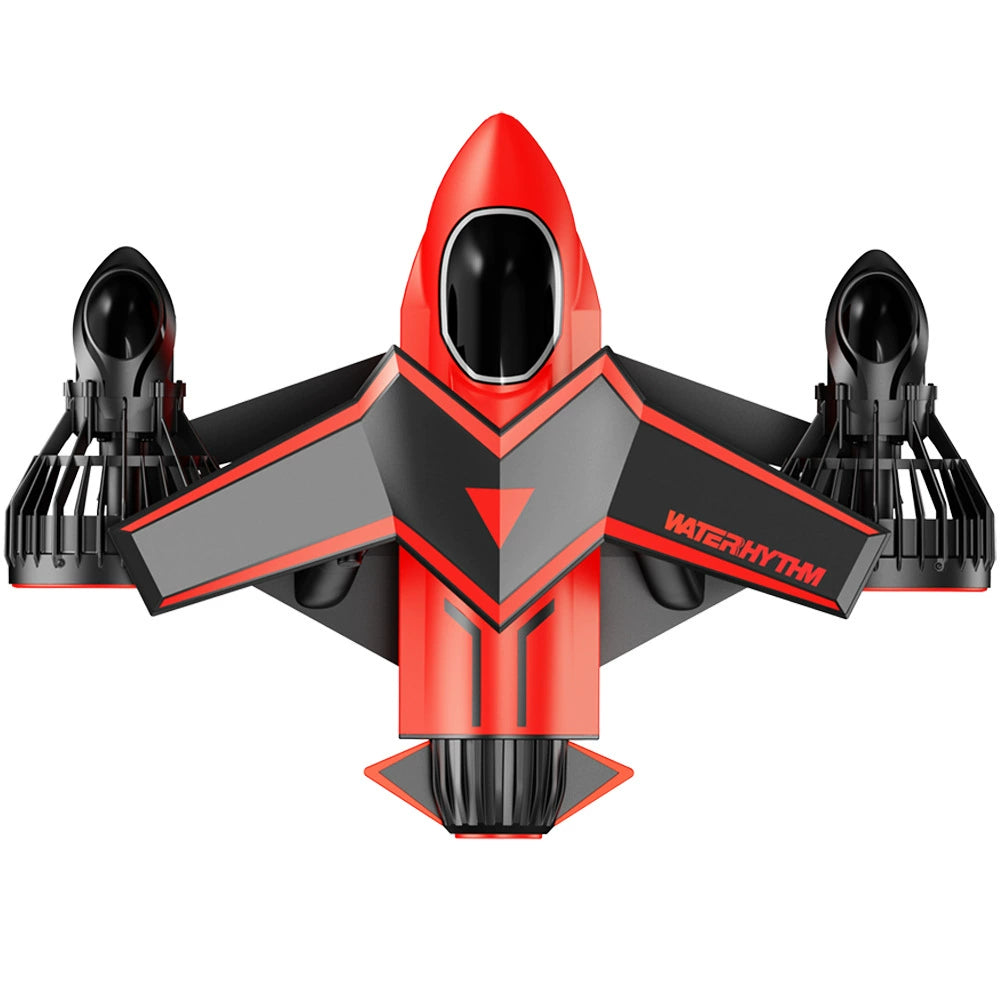

The advantage of choosing a Mini Tank lies in its ultimate portability (1.0-2.5kg) and inflation flexibility, supporting manual pumps, compressors, or transfilling from large tanks.
It is primarily used for shallow water operations within 10 meters, such as propeller maintenance, shallow-water photography, or as an emergency backup air source.
Its small 0.5L capacity limits endurance;
it only lasts about 5-10 minutes at a depth of 5 meters.
Additionally, manual inflation requires hundreds of strokes, which is physically demanding.
During operation, ensure the pressure reaches 3000 PSI/200 Bar, and press the purge button to clear water before entering the sea;
It is vital to maintain normal breathing during ascent; never hold your breath to prevent lung injury;
Rinse with fresh water after use to prevent salt corrosion.

Pros
Mini scuba tanks usually have a capacity of 0.5L to 2.0L. Under a working pressure of 3000psi/200bar, they can provide a breathing duration of 5 to 15 minutes.
The device weighs only 1kg to 2.2kg, meeting TSA (Transportation Security Administration) checked baggage standards (once depressurized).
Compared to a standard 12L aluminum tank weighing 12kg to 15kg, its portability is improved by more than 80%, making it a lightweight choice for shallow water tasks, hull cleaning, and backup air sources.
Specifications
The length of the mainstream 0.5 liter (L) mini scuba tanks on the market is usually fixed between 295 mm (mm) and 300 mm (mm), with an outer diameter of approximately 60 mm (mm).
The empty weight of this specification is around 1.08 kg (kg).
Even with the integrated regulator assembly, the total weight remains around 1.5 kg (kg).
In contrast, the 1.0 liter (L) model increases in length to about 360 mm (mm), with the diameter expanding to 90 mm (mm), and the empty weight rising to 2.1 kg (kg).
For the 2.0 liter (L) version pursuing longer underwater time, its length is about 440 mm (mm), and the weight reaches over 3.5 kg (kg).
The tank material is commonly 6061-T6 aviation-grade aluminum alloy.
This material undergoes T6 heat treatment, achieving a yield strength of over 35,000 psi, sufficient to support a rated working pressure of 3000 psi (207 bar).
The wall thickness is usually designed between 6 mm (mm) and 10 mm (mm), aiming to balance pressure safety with structural weight.
| Model/Spec | Tank Length (mm) | Tank Diameter (mm) | Full Weight (kg) | Internal Volume (L) | Gas Capacity (approx. L) |
|---|---|---|---|---|---|
| 0.5L Aluminum Tank | 295 | 60 | 1.6 | 0.5 | 100 |
| 1.0L Aluminum Tank | 360 | 90 | 2.8 | 1.0 | 200 |
| 2.0L Aluminum Tank | 440 | 110 | 4.2 | 2.0 | 400 |
| Standard 12L Tank | 620-720 | 180-200 | 14.0-16.0 | 11.1-12.2 | 2200-2400 |
During air transport, mini scuba tanks show high physical tolerance. According to TSA and FAA regulations for compressed gas containers, as long as the first-stage regulator is completely unscrewed from the tank body, leaving the interior open and visible (ensuring the internal pressure is 0 psi), it can be transported as checked baggage. The physical dimensions of the 0.5 liter (L) and 1.0 liter (L) models easily fit into a standard 20-inch carry-on suitcase, occupying a volume of about 2.5 liters (L) to 4.5 liters (L), providing great convenience for international island travel. Compared to standard scuba tanks that require overweight fees and are extremely difficult to carry, the logistics cost of mini tanks is nearly zero.
Due to their massive volume, standard 12 liter (L) tanks significantly increase a diver's frontal area when used with a BCD (Buoyancy Control Device), leading to faster physical exhaustion during underwater movement.
The cross-sectional area of a mini tank is only 15% to 25% of a standard tank, generating extremely low hydrodynamic resistance while maintaining a streamlined posture.
This physical characteristic allows users to fix the tank to the chest or side via elastic straps without wearing complex harness systems.
In shallow reef areas of 3 to 8 meters, this minimalist physical specification allows the wearer to move as flexibly as a freediver through coral reef crevices without being hindered by gear snags.
Buoyancy performance is another important physical indicator. A fully pressurized 1.0 liter (L) aluminum mini tank usually shows negative buoyancy (sinks) in seawater. However, as the compressed air inside is consumed, the overall weight of the tank decreases (about 120 grams of weight lost for every 100 liters of air consumed). When the air is exhausted, the tank tends toward neutral or slightly positive buoyancy (floats). For the 0.5 liter (L) model, this buoyancy fluctuation has a negligible impact on the diver's weighting system. This stable physical state reduces the need for frequent weight adjustments, lowering the operational difficulty.
| Transport/Storage Dimension | 0.5L Model Performance | 1.0L Model Performance | 2.0L Model Performance | Traditional 12L Tank Performance |
|---|---|---|---|---|
| Standard Backpack | Can be placed horizontally/vertically | Must be placed vertically | Occupies 70% of space | Impossible to fit |
| Air Checked Baggage | Fits standard baggage | Fits standard baggage | Requires large suitcase | Requires special oversized baggage application |
| Vehicle Trunk | Negligible space occupied | Negligible space occupied | Occupies small amount of space | Requires dedicated rack to prevent rolling |
| Hand Carry | Single-hand grip | Single-hand pull | Requires handle or strap | Requires both hands or harness |
The regulator interface of mini tanks usually adopts standard M18 x 1.5 or 5/8"-14 DIN thread specifications.
The first-stage regulator integrates a high-pressure Burst Disk.
If the internal pressure exceeds 4500 psi due to high temperature or overfilling, the burst disk will automatically rupture to release pressure, preventing structural failure of the tank.
These safety physical indicators comply with DOT (Department of Transportation) CFFC or 3AL certification standards.
For users performing hull inspections, the 1.5 kg (kg) negative buoyancy produced by a 0.5 liter (L) tank can offset part of the body's buoyancy, helping the user maintain a stable working posture under the hull without wearing heavy lead belts.
Physical advantages in storage are equally significant. The aluminum alloy 6061-T6 material has strong resistance to salt spray corrosion. Even in high-humidity coastal areas, its oxide layer can spontaneously form a protective film to prevent structural thinning. Long-term physical stability allows such equipment to be stored horizontally in a cool, dry place for several months after being filled with over 200 psi of protective pressure without internal deformation or performance decay. Its cylindrical physical structure is optimized via Computer-Aided Design (CAD), ensuring uniform stress distribution, even when encountering external impacts, as the curved surface effectively dissipates force.
Flexible Inflation
Currently, there are three mainstream inflation methods for mini scuba tanks:
Transfilling from a large tank, high-pressure manual pump, and portable electric compressor.
The most common and fastest method is pressure-balanced filling via a standard 12L scuba tank.
This method requires a Refill Adapter equipped with an 8mm quick-disconnect fitting and a bleed valve, connected to the main tank via Yoke or DIN interfaces.
When the main tank valve is opened, high-pressure air flows into the mini tank rapidly within 30 to 60 seconds.
If the main tank pressure is 3000psi/207bar and the 0.5L mini tank is empty, the filled pressure usually reaches 2800psi to 2900psi.
The advantage of this method is that it generates no heat buildup, and the air quality depends entirely on the main tank's Grade E compressed air.
The filter usually uses 80-mesh stainless steel to prevent metal debris from entering the regulator.
A standard 12L aluminum tank (S80) at full pressure can theoretically provide about 15 to 20 effective refills for a 0.5L mini tank. As the main tank pressure drops, the maximum pressure reachable in a single refill decreases linearly. When the main tank pressure is below 1500psi, the endurance of the mini tank will be shortened by about 50%.
High-pressure manual pumps (HPP) usually use a three-stage or four-stage compression design, with a rated working pressure of up to 4500psi/310bar.
The internal structure of the manual pump contains precise one-way valves and 304 stainless steel piston rods to handle heat generated by high-intensity friction.
Filling a 0.5L mini tank to 3000psi requires approximately 600 to 800 pump cycles.
In actual operation, to protect the O-rings from failing due to high temperature, it is recommended to stop every 50 strokes or 2 minutes and continue once the pump body temperature drops below 40 degrees Celsius.
The bottom of the manual pump integrates an oil-water separator, using silica gel particles and molecular sieves for primary filtration.
In environments with humidity over 60%, moisture filtration becomes especially important, as moisture entering the tank can cause internal aluminum oxidation or regulator valve core icing.
Using a manual pump is a heavy physical task. An adult male at a frequency of 60 strokes/min takes about 15 to 25 minutes to fill a 0.5L tank, burning calories equivalent to a 30-minute run. For models above 1.0L, manual inflation is usually not considered a routine supply method, but rather an extreme redundancy plan.
Portable 12V DC electric compressors weigh about 6kg to 9kg, with power output between 250W and 350W, and can be connected to car batteries or portable power stations.
Regarding inflation speed, a standard 12V compressor takes about 12 to 18 minutes to fill a 1.0L tank to 3000psi.
Such devices feature an Auto-stop function; users can leave once the target pressure is preset.
To ensure air safety, these machines are usually equipped with multi-stage filtration systems containing active carbon, molecular sieves, and cotton pads, with a filtration precision that intercepts impurities and aerosol oil droplets larger than 5 microns in diameter.
The cooling efficiency of portable compressors is where their performance limit lies. Most models use a forced air cooling system, with fan speeds needing to stay above 2000rpm. During inflation, the tank wall temperature will rise to 45-55 degrees Celsius. Due to the thermal expansion and contraction effect, the displayed pressure will drop by about 200-300psi after the tank cools to room temperature. This is a normal physical phenomenon, and it is usually recommended to top it off after cooling.
For users pursuing extremely high air quality, taking the equipment to a professional dive shop for inflation using a Stationary Compressor remains the most safety-compliant choice.
These large machines are ISO-certified and feature multi-stage condensation and filtration chains that reduce CO, CO2, and moisture content to extremely low levels.
Although mini tanks are small, dive shop staff will still check the stamps at the bottom of the tank, including the Hydrostatic Test date and Visual Inspection sticker.
In the US or Europe, tanks that have not passed their annual inspection (VIP) will be refused service.
Cons
Mini scuba tanks are limited by a physical volume of 0.5L-1L.
Their rated pressure of 3000 PSI (200 Bar) yields an actual usable air volume of only about 60-100 liters at a depth of 10 meters.
Due to the lack of a BCD (Buoyancy Control Device), users must manage a buoyancy fluctuation of approximately 1.2kg as air is consumed.
Furthermore, manual inflation requires 600-800 cycles of reciprocal operation to reach saturation pressure, and the filtration process must strictly follow the EN12021 standard to prevent oil and water contamination.
Air Supply and Buoyancy
The following table shows the theoretical endurance of a standard 1L tank at different depths (based on an average adult lung capacity of 2.5L/breath and a breathing rate of 20 breaths per minute):
| Depth (m) | Ambient Pressure (ATA) | Total Air Duration (min) | Recommended Safety Stay (min) |
|---|---|---|---|
| 0m (Surface) | 1.0 | 10 - 12 | N/A |
| 5m | 1.5 | 6 - 8 | 4 - 5 |
| 10m | 2.0 | 4 - 5 | 2 - 3 |
| 20m | 3.0 | 2 - 3 | Not Recommended |
The durations above include a 50 Bar safety reserve.
Actual values will be significantly shortened by breathing rate fluctuations (RMV) caused by temperature and personal emotions.
In an underwater physical environment, taking a standard 1L aluminum tank as an example, its empty weight on land is about 1.5kg.
When filled with 200 Bar (3000 PSI) of compressed air, the mass of the internal air increases by about 240g.
Because these devices are usually mounted on the chest or side and lack a volume-adjustable BCD (Buoyancy Control Device), users cannot vent or add air to offset the weight loss caused by air consumption.
Near the end of the dive, when the tank pressure drops below 50 Bar, the entire system generates about 200g of additional positive buoyancy.
This buoyancy change is particularly noticeable in shallow water within 10 meters, where the rate of ambient pressure change is highest.
This leads to an unstable superposition effect between the water displaced by the human lungs and the equipment's buoyancy.
Users often need to maintain depth through continuous fin kicking or higher physical exertion.
Due to the need for constant posture adjustment to prevent accidental ascent, the user's metabolic rate can be 20% to 30% higher than in standard scuba diving.
A high metabolic rate not only shortens the already limited supply time but also increases CO2 buildup in the body.
Regarding mechanical structure, mini scuba tanks usually utilize an unbalanced piston first-stage regulator.
While this structure is compact with fewer parts, its Intermediate Pressure (IP) fluctuates as the residual pressure in the tank decreases.
-
Breathing Resistance Data: When the tank pressure is at a high 200 Bar, the regulator provides smooth air delivery; however, when pressure drops to around 70 Bar, the air delivery resistance of the second stage increases by 0.5 to 1.5 Joules/Liter due to the imbalance between internal spring pressure and high-pressure air thrust. For users untrained in breathing control, this increased resistance can easily trigger hyperventilation.
-
First-Stage Limitations: Most micro tank first-stages are integrated with the tank valve and lack standard DIN or Yoke interfaces. They cannot connect to standard pressure gauges (SPG) or backup second stages. Users generally rely on a micro mechanical pressure gauge (usually only 20mm in diameter) installed on the first stage. In low light or murky water, the accuracy of reading this tiny dial decreases.
-
Burst Disk Standards: Compliant mini tanks must be equipped with a Burst Disc meeting CGA (Compressed Gas Association) standards. The rated pressure of these relief devices is usually set at about 5/3 of the working pressure (around 5000 PSI). If non-original parts are used or if periodic replacement is neglected, the burst disc may rupture unexpectedly during high-temperature exposure (such as in a car trunk) or fast inflation, releasing high-pressure gas with significant impact force.
Mainstream products on the market use 6061-T6 aviation-grade aluminum alloy.
Although this material has good seawater corrosion resistance, its fatigue life is strictly limited by the number of inflation cycles.
-
Certification Standards: All pressure vessels must bear permanent stamps from DOT-3AL (US) or TC-3ALM (Canada), indicating the Working Pressure (WP). Equipment lacking these certifications will be refused service at most regulated fill stations.
-
O-Ring Specifications: Regulator connections usually use 90 Shore A hardness Nitrile or Viton O-rings. During high-pressure inflation, if the rate exceeds 20 Bar per minute, the heat generated by friction can cause O-ring deformation.
-
Periodic Testing: According to internationally recognized Hydrostatic Testing standards, aluminum tanks must undergo a pressure test every 5 years and a VIP (Visual Inspection) annually. Because micro tanks have small neck diameters (usually M18x1.5), standard internal inspection lights are difficult to insert, creating a physical barrier for safety checks.
Additionally, the exhaust valve design of micro second stages is quite short, which can cause exhaled bubbles to enter the user's field of vision or hit the mask when breathing in a sideways or prone position.
The diameter of the one-way silicone diaphragm in the second stage is usually about 30% smaller than standard ones.
In strong current environments, the diaphragm can easily deform under water pressure, leading to micro-seepage of seawater into the breathing chamber.
For users in cold waters (below 10°C), this simple mechanical structure lacks anti-freeze features.
Moisture icing during the decompression process may cause the piston to jam in the open position, leading to a total air discharge in a very short time.
This failure mode requires high emergency handling skills, but with no redundant air source, the user's only option is an immediate emergency ascent.
Maintenance and Expenses
The initial purchase cost of a mini scuba tank is usually between $200 and $500, but the subsequent systemic expenses to keep it running often exceed the price of the device itself.
The most basic supply method is a high-pressure manual pump, designed for 3000 PSI (200 Bar).
To fill a 0.5L air tank, a user needs to complete about 600 to 800 strokes.
To prevent the internal Nitrile O-rings from melting due to heat, users must follow a "50 pumps, 10 minutes cooling" cycle, making the actual time cost to fill a small tank about 45 minutes, in exchange for only 5 to 10 minutes of underwater time.
Consumables for manual pumps are mainly the multi-stage piston seals and dry filter cores. A standard three-stage high-pressure pump repair kit costs about $15 to $25. On average, the pump needs to be disassembled for silicone grease lubrication or O-ring replacement every 30 to 50 fills to maintain compression efficiency.
If switching to electric inflation, entry-level 12V or 110V/220V portable high-pressure compressors are priced between $300 and $800.
Small compressors usually use air cooling and must not work continuously for more than 30 minutes.
Users must regularly change specialized fully synthetic high-pressure compressor oil (ISO VG 100) every 20 running hours, costing about $20 per liter.
Furthermore, if the exhaust air contains more than 500 ppm of CO2 or more than 5 mg/m³ of oil mist, it violates the EN12021 international breathing air standard.
At 10 meters depth, the toxicity of these pollutants doubles with ambient pressure. Users must install external large three-stage filters (containing active carbon, molecular sieves, and cotton cores). The cost of such a high-end filtration retrofit is about $100, and the filter cores must be discarded and replaced every 10 to 15 hours of use.
Filter cores for portable compressors cost about $10 to $15 each. In environments with humidity over 60%, the adsorption capacity of molecular sieves saturates quickly. If not replaced, moisture entering the aluminum tank will cause internal pitting, shortening the tank's structural life.
Besides self-inflation, transfilling from a large tank to a small one requires a transfill adapter with a pressure balance valve and stainless steel braided hose, costing $50 to $90.
According to Boyle's Law, when filling a 0.5L mini bottle from a full 12L standard scuba tank (232 Bar), the mini bottle can never reach its rated 200 Bar full state due to pressure equalization.
Every 3 to 4 fills of the small bottle, the user must pay $10 to $15 at a dive shop to refill the large tank.
In reality, many licensed dive shops in North America and Europe refuse to fill micro tanks without DOT or CE certification stamps due to liability insurance regulations, or even refuse to provide air for non-standard adapters.
When filling at a commercial dive shop, staff will typically check the tank's Visual Inspection (VIP) label. If the mini tank lacks a VIP sticker valid within a year, the shop has the right to refuse service, forcing the user to pay an extra $20 or so for an annual inspection fee.
In long-term maintenance, industry standards dictate a Hydrostatic Test every 5 years, performed at professional pressure vessel testing stations for $40 to $60.
Additionally, an internal Visual Inspection (VIP) is required every 12 months, where technicians use endoscopes to check for neck thread cracks and internal oxide peeling.
Because mini tank neck specs (like M18x1.5) differ from standard tanks, regular dive shops might lack matching endoscope probes or thread gauges, forcing users to ship them to specialized dealers.
The round-trip shipping and labor costs often approach one-third of the original equipment price.
Regarding 6061-T6 aluminum alloy, if the tank is not thoroughly rinsed with fresh water after use in high-salt seawater, electrochemical corrosion at the valve connection will be extremely rapid. Replacing an original integrated valve/regulator assembly costs about $80 to $120, nearly 40% of the total cost of an entry-level micro scuba set.
Because mini tanks involve frequent assembly and different inflation interface conversions, the O-ring wear rate is very high.
A high-quality O-ring kit (sizes like 010, 011, 112) and a small tube of Oxygen Compatible Grease costs about $30.
For users pursuing high-purity gases, if using Nitrox with over 40% oxygen, all maintenance must be performed in a dust-free environment with specialized chemical degreasers, further raising the maintenance threshold and expenses for non-professional users.
Use Cases
Micro scuba tanks are mainly used for shallow water activities within 10 meters.
The 0.5L spec weighs about 1.1kg and provides about 5-8 minutes of air;
The 1L spec weighs 2.3kg and provides 15-20 minutes of air.
The rated pressure is 3000 PSI (200 Bar), meeting DOT or CE safety standards. Empty tanks can be placed in checked airline baggage.
Primary uses include hull maintenance, shallow-water photography, and as auxiliary air devices.
Boat Maintenance
In the daily operation of private yachts or sailboats, vessels moored at docks are highly susceptible to interference from marine organisms or floating debris on propellers, shafts, and water intakes.
For a medium-sized yacht 30 to 50 feet in length, 5mm to 10mm diameter nylon fishing nets or polypropylene ropes tangled in the propeller can instantly increase engine load, cause vibration, and potentially damage the Shaft Seal.
In this case, a 1L capacity mini scuba tank rated at 3000 PSI (200 Bar) provides about 15 minutes of underwater operation time.
This is enough for the operator to carry a serrated stainless steel dive knife and completely clear the entanglement at a depth of about 2 meters.
Compared to wearing over 15kg of standard scuba gear, the 2.3kg mini tank offers extreme flexibility in cramped spaces at the stern, allowing the operator to maneuver between the rudder and propeller.
| Maintenance Item | Recommended Tank | Tools Needed | Est. Duration | Op Depth |
|---|---|---|---|---|
| Propeller Rope Removal | 1.0L / 2.0L | Serrated knife, pliers | 10 - 20 min | 1 - 3 m |
| Replacing Sacrificial Anodes (Zincs) | 0.5L / 1.0L | Ratchet wrench, hex tools | 5 - 12 min | 1 - 2 m |
| Hull Sensor Cleaning | 0.5L | Stiff plastic brush | 3 - 5 min | 0.5 - 1.5 m |
| Inspecting Water Intakes | 0.5L | Waterproof light, hook | 4 - 6 min | 1 - 2 m |
| Cleaning Waterline Fouling | 2.0L | Plastic scraper, long brush | 20 - 25 min | 0 - 2 m |
Regular inspection and replacement of sacrificial anodes (commonly known as zincs) are necessary steps to prevent electrochemical corrosion of metal hulls, shafts, and propellers.
Using a micro tank, the operator can observe the remaining zinc ratio up close and complete the removal and installation of fasteners underwater using a ratchet wrench.
A small 0.5L tank can provide about 7 minutes of stable breathing at 1.5m depth, enough to change one side of the shaft anodes.
Since mini tanks are made of 6061-T6 aviation-grade aluminum alloy, their corrosion resistance in seawater is superior to standard steel tanks. The positive buoyancy generated during the task reduces the strain on the operator to maintain posture, lowering physical exhaustion from repeatedly adjusting their center of gravity.
Statistics show that biofouling on propellers (like barnacles) can increase fuel consumption by 10% to 15% and reduce top speed by about 2 to 4 knots. Micro tanks allow boat owners to perform local scraping during 20-minute gaps between voyages, avoiding thousands of dollars in dry dock hauling fees.
If the intakes of the engine cooling or air conditioning systems are blocked by sea squirts or seaweed, the equipment will automatically shut down due to overheating.
Carrying a mini tank, the operator can use both hands to clear the grates with a long-handled brush or hook, while observing the seals of underwater lights.
At a depth of around 3 meters, the water pressure is about 1.3 ATA, and a person consumes about 15 to 20 liters of air per minute.
A 2L tank can store about 400L of compressed air.
Excluding the safety reserve, the actual usable underwater window is nearly 20 minutes.
| Tank Spec | Empty Weight | Full Air (3000 PSI) | Surface Ref. Duration | 3m Depth Op Duration |
|---|---|---|---|---|
| 0.5 Liter | 1.1 kg | 100 L | 5 - 7 min | 4 - 5 min |
| 1.0 Liter | 2.3 kg | 200 L | 12 - 15 min | 9 - 11 min |
| 2.0 Liter | 3.5 kg | 400 L | 25 - 30 min | 18 - 22 min |
In anchorage areas covered with gravel or seagrass, whether the anchor flukes are fully set determines the boat's stability in night swells.
Operators can dive with a mini tank along the anchor chain after dropping anchor to confirm its position and grip depth.
This operation usually occurs in shallow waters of 5 to 8 meters.
The breathing support from a 1L tank is sufficient for a full 360-degree inspection.
The integrated pressure gauge allows the operator to check remaining air underwater.
Typically, when the needle enters the 500 PSI (35 Bar) red zone, it signals the operator to ascend.
Shallow Water Exploration
Traditional snorkeling is limited by lung capacity; untrained snorkelers can usually only stay submerged for 30 to 60 seconds.
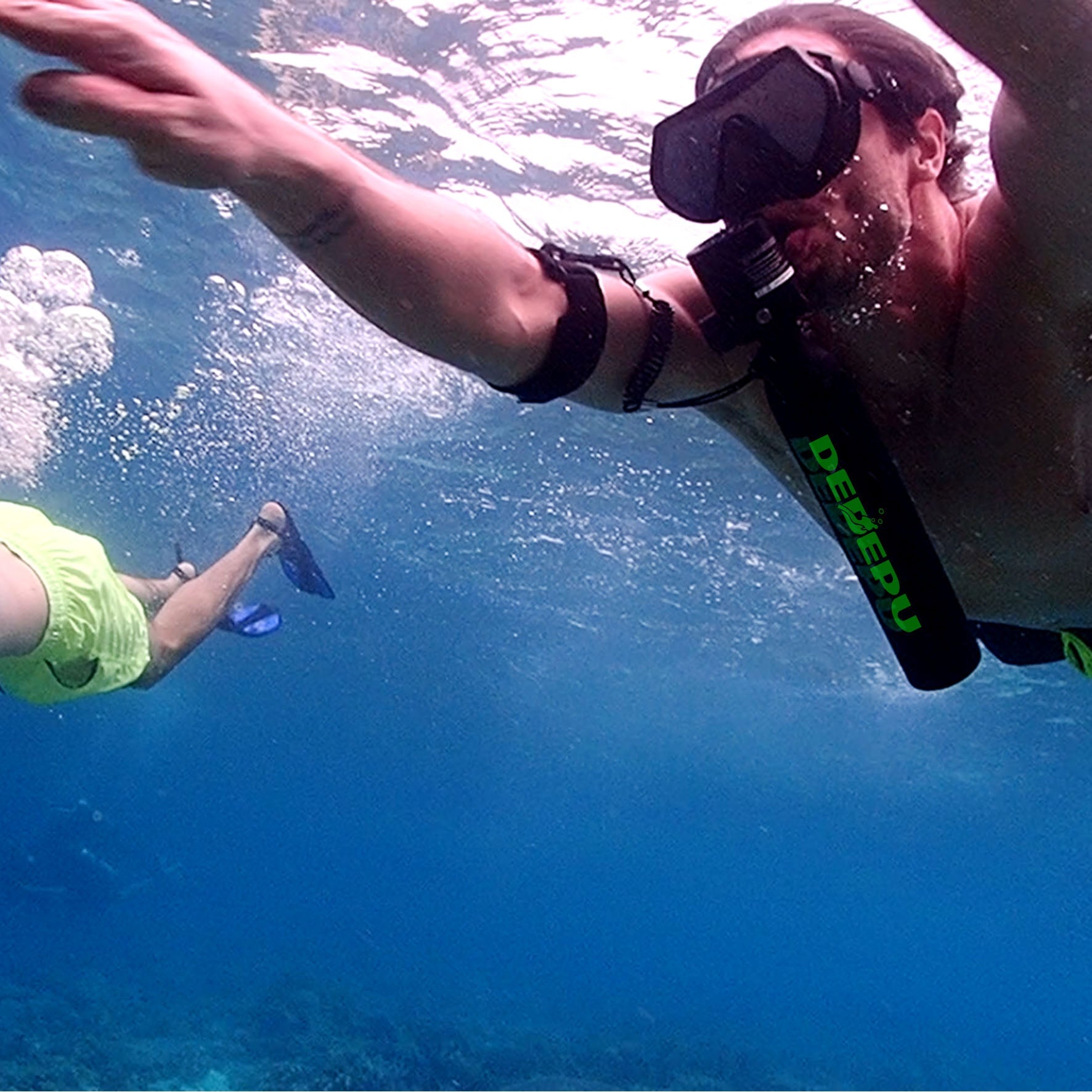
Mini scuba tanks extend this underwater stay to about 10 to 20 minutes by providing a continuous air supply.
In shallow water zones of 3 to 5 meters, water pressure is about 1.3 to 1.5 atmospheres. A 1L capacity tank at 3000 PSI (200 Bar) stores about 200L of compressed air.
In rocky reef areas of the Caribbean or Mediterranean, divers using 0.5L tanks usually get 5-8 minutes of air, while those choosing 2L specs can maintain steady breathing for about 25 minutes at 6 meters. This equipment increases effective exploration time by about 20 times, while total gear weight is kept between 1.5kg and 3.5kg, reducing physical exertion by about 80% compared to standard heavy gear over 15kg.
When upgrading from snorkeling, users don't need complex BCDs or heavy lead belts; usually, a dedicated harness or lightweight dive bag is enough.
For travelers heading to the Florida Keys or the Great Barrier Reef, mini tanks can be placed in TSA-compliant checked baggage by removing the first stage and valve.
Since the tanks are mostly 6061 aviation aluminum, their positive buoyancy characteristics in seawater cause the diver to float slowly if they stop kicking, adding a layer of natural protection.
The second stage is usually integrated with a one-touch purge and real-time gauge. Users can check the dial anytime; when it hits the 500 PSI (35 Bar) red warning area, they should start the ascent procedure. Ascending at 0.3m per second from 5m depth helps avoid discomfort from pressure changes, following PADI or NAUI guidelines.
In actual marine life observation, frequent surface breathing by snorkelers produces noise and bubbles that can scare shy creatures.
Using a mini tank allows divers to remain still underwater for longer, which is better for close-up shots of seahorses, nudibranchs, or colorful reef fish.
For creators using GoPro or similar action cameras, stable breathing support allows for smoother, shake-free long takes.
In well-lit shallow waters, an ISO 100-400 setting is sufficient for high-quality images without bulky external lighting.
Pool Cleaning
In private pool maintenance, traditional cleaning relies on long-pole nets or robots.
However, for checking fasteners on the Main Drain, clearing debris from the Suction Port, or changing underwater lights, manual diving is irreplaceable.
Using a 1L mini scuba tank at 3000 PSI (200 Bar) provides about 15 to 20 minutes of work time at 3m depth.
Compared to a standard S80 aluminum tank weighing over 15kg, the 2.3kg mini tank greatly improves mobility in narrow spaces like pool steps or deep pits.
For residential pools common in Western markets, water capacity is usually between 50,000 and 100,000 liters. Structural damage often occurs in shadows hard to see from the surface. For example, to comply with VGB (Virginia Graeme Baker) pool safety acts, drain covers must be checked for security. Divers with mini tanks can use both hands for pull tests without rushing due to oxygen deprivation, avoiding entrapment risks from poor installation.
-
Light Replacement: Change 12V LED bulbs quickly without draining the pool using 5-8 minutes of air from a 0.5L tank.
-
Tile Repair: Use underwater epoxy to fix loose mosaics, usually taking 3-5 minutes per spot.
-
Filter Grate Check: Inspect floor returns for leaves or stones to prevent pump damage from high vacuum.
-
Winterization: Confirm the seal of Winterizing Plugs before the off-season in cold regions.
At docks, private piers, or beaches, when metal items like phones, car keys, or wedding rings fall into the water, they drift based on current and gravity, often ending up in silt or seagrass.
A mini tank combined with a handheld underwater metal detector turns a random search into a grid-based operation.
With a 2L tank, a diver can perform a 25-minute carpet search at a depth of about 5m near shore.
In private yacht marinas in Florida or California, where visibility is often less than 1m, finding a dropped electronic key fob requires careful touch. Mini tank salvagers can use the "arc search method," defining a 3m radius around a piling. With 3000 PSI, the search is 15 times more efficient than breath-holding. Statistics show the probability of finding small metal targets rises to 80% within 30 minutes.
-
Search Area: A single dive can cover about 50-80 square meters.
-
Equipment Synergy: Check air with the left hand, hold the detector in the right, and use a waist bag for collection.
-
Target Accuracy: Divers can move slowly 10cm above the target without constant surfacing.
-
Emergency Clearing: If a glove snags on a rope, the redundant time ensures a calm escape.
The tank body is made of 6061-T6 aviation-grade aluminum alloy, providing high-pressure capacity and strong seawater corrosion resistance.
The valve integrates the first-stage and second-stage regulator, eliminating complex hoses and reducing the chance of snagging on debris or ropes underwater.
For professional cleaners moving between regions, the tank body meets DOT specs; once pressure is vented and the valve removed, it can be shipped as standard luggage.



Laisser un commentaire
Tous les commentaires sont modérés avant d'être publiés.
Ce site est protégé par hCaptcha, et la Politique de confidentialité et les Conditions de service de hCaptcha s’appliquent.