
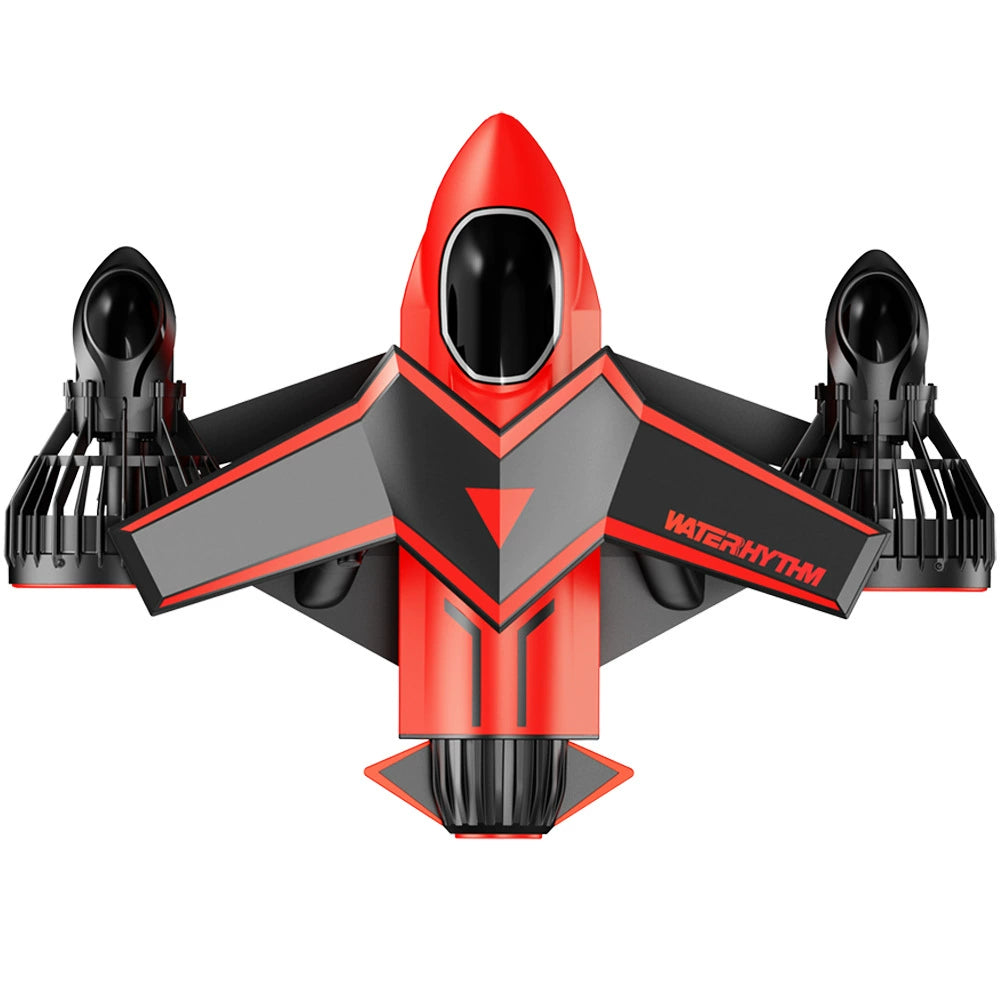

0.5-1L mini tanks can provide about 5-10 minutes of underwater breathing and are best suited for boat owners clearing propellers, pool maintenance, and shallow-water fun. The safe depth limit is 3 meters. They must never be used as a substitute for professional scuba cylinders for deep diving.

Boats
Handling Emergencies
The boat accelerates to 20 knots. Suddenly, the outboard tachometer drops from 4500 RPM to zero. A harsh metallic scraping sound comes from beneath the fiberglass hull. The driveshaft is vibrating badly underwater.
A discarded 16 mm polypropylene rope has wrapped itself tightly around the propeller. Waves hit from the side, throwing the boat off balance by more than ten degrees. Coffee cups on the table crash onto the teak deck.
The seawater is only 60°F. The moment you strip off your jacket and jump in bare-chested, the cold shock sends your heart rate spiking to 130 beats per minute. Underwater, everything is churned up with bubbles and white suspended debris.
Most people can hold their breath for no more than 40 seconds. Stay down too long, and the chest starts to burn. Oxygen deprivation darkens the edges of your vision. Within moments, everything turns blurry.
You pull a 1-liter aluminum mini tank from the stern storage locker. It is only 35 cm long and weighs about 2.1 kg. Inside, it holds compressed air at 200 Bar.
You bite down on the silicone mouthpiece and descend under the hull, pulling yourself along a braided line. Fine bubbles stream from the tank valve. The green needle on the gauge sits steadily at 3000 PSI.
-
Grip the brass rudder plate, slick with algae, with your left hand
-
Hold a 10-inch serrated titanium knife firmly in your right hand
-
Saw the blade back and forth along the gap beside the 2-inch driveshaft
-
Shreds of nylon drift upward with the bubbles from each exhale
The water is 2.5 meters deep. A 1-liter tank gives you roughly 120 calm breaths at that depth. The current is running at 1.5 knots and constantly pushing you off position. You have to keep kicking just to stay steady.
The hull is covered in sharp-shelled barnacles. If you try to do this on a breath-hold and start thrashing around, it is easy to slice several 3 cm cuts into your thighs. The nylon line has heated up from friction in the water, and parts of it have melted into a gummy mass.
The softened plastic is fused tightly to the stainless-steel driveshaft. When the blade strikes the metal tube wall, it gives off a dull thud. The underwater world is otherwise quiet, apart from the steady hiss of the regulator exhaust valve.
You glance down and see the pressure has fallen to 150 Bar. You cut the last section still under load. Then you dig both hands into the knot, which weighs nearly 4 pounds, and wrench it free.
With the propeller released, it turns half a rotation with the current. You let go of the rudder plate, and buoyancy gradually lifts you back toward the surface.
The boat is anchored in a shallow bay about 3 meters deep. A 45-pound galvanized Delta anchor is jammed into a crack in the granite seabed. Fifty feet of 8 mm short-link chain is stretched tight under the pull of the swell.
The windlass motor on deck is making a shrill grinding sound, and within minutes its casing temperature has climbed to 80°C. That ten-minute underwater window is exactly what you need.
With the regulator in your mouth, you follow the taut chain down. Visibility is under 4 meters. Starfish and black-spined sea urchins hide in the cracks between the rocks. Your dive computer reads 3.2 meters. The tank still has 150 Bar left.
-
Plant your dive boots firmly on the kelp-covered side of the reef
-
Wrap both hands around the rough anchor shank and rotate it 15 degrees to the right
-
Wait for the swell to lift the bow just enough to create a little slack
-
Pull the rusted fluke hard out along the rock crevice
-
Straighten out the tangled 8 mm chain
The hull has just scraped across a submerged rock. With a 2000-lumen waterproof flashlight in hand, you scan the fiberglass bottom inch by inch. There are two white gouges in the antifouling paint, each about 40 cm long.
The streamlined plastic housing around the sonar transducer has several mounting screws backed out by roughly 3 mm. You pull an Allen key from the pouch on your belt. The water resistance makes every turn of your wrist feel slow and heavy.
You tighten the three 3/8-inch stainless-steel bolts one by one. The timer shows you have just passed the 8-minute mark underwater. Tank pressure has now dropped into the 50 Bar red warning zone.
-
Keep your eyes on the ascent-rate warning on the dive computer
-
Hold ascent speed firmly below 9 meters per minute
-
Take nearly 20 seconds to rise from 2.5 meters
-
Keep exhaling a steady stream of small bubbles the whole way up
Routine Hull Maintenance
Sunlight flashing off the white fiberglass hull can be blinding. After long exposure to seawater with a salinity of 3.5%, the expensive antifouling coating on the hull is under constant attack from thousands of hard-shelled marine organisms. In less than two months, barnacles about 1 cm across can densely cover the rudder and driveshaft.
The drag caused by marine growth is far from trivial. On a 40-foot sailboat, a hull covered in algae and barnacles can cut cruising speed from 8 knots to 6. To hold the same RPM, fuel consumption typically jumps by about 15%.
Trying to work in the narrow gap beside a dock while wearing 20 kg of twin-tank scuba gear is simply a bad idea. A bulky BCD makes you feel like a clumsy sea turtle, and one careless move can slam you into dock pilings crusted with oyster shells. Swap that out for a 2-liter aluminum mini tank, and the whole setup comes in under 4 kg.
| Maintenance Task | Common Tool | Underwater Time | Estimated Air Use |
|---|---|---|---|
| Scraping barnacles off the hull | 6-inch manganese steel scraper | 12-15 minutes | About 140 Bar |
| Replacing the shaft zinc | 9/16-inch socket wrench | 6-8 minutes | About 80 Bar |
| Cleaning the sonar transducer | Stiff nylon brush | 3 minutes | About 30 Bar |
| Inspecting propeller nicks | 2000-lumen dive light | 5 minutes | About 50 Bar |
Your right hand grips a 6-inch stainless long-handled scraper, while your left braces against the raised ballast keel. You slow your breathing and keep your chest half full of air. That gives you about 3 kg of natural buoyancy, enough to stay steady against the hull.
The blade goes in at a 30-degree angle under the barnacles. Their calcified shells snap off under the impact, exposing the white attachment rings underneath. Stay clear of the plastic intake grilles. If they feed engine cooling water, use a nylon brush to carefully clear any hydroids jammed into the openings.
Electrochemical corrosion is the biggest enemy of underwater metal fittings. The sacrificial anode, a zinc block weighing about 1.5 pounds and mounted at the end of the driveshaft, is a consumable part. Once electrolysis has eaten away more than 50% of its volume, seawater will start attacking the stainless-steel shaft itself if it is not replaced.
-
Dive behind the propeller to the bearing strut
-
Brush aside the sticky seaweed covering the M8 hex bolts
-
Loosen the oxidized, blackened fixing screws on the old zinc by turning counterclockwise
-
Knock the remaining zinc residue off the shaft
-
Fit two new high-purity zinc halves into the semicircular groove
-
Tighten the stainless bolts until the spring washers are fully flattened
A 2-liter mini tank delivers a constant working pressure of 3000 PSI. When working under a hull in less than 2 meters of water, each breath uses about 1.5 liters of air at surface pressure. That ten-minute working window is enough to inspect the propeller blade edges for fine nicks.
Cavitation damage on a blade can be no bigger than a mung bean. When the beam from the flashlight hits the bronze propeller, the bright golden reflection makes even the smallest defects stand out. If you spot a pit deeper than 2 mm on any blade, the dynamic balance is already off, and the boat should be hauled out for repair as soon as possible.
Never use a metal scraper on a sonar transducer. The piezoelectric ceramic surface is delicate and expensive. Use a soft nylon brush and move it in gentle circular strokes, like brushing your teeth. Once the 0.5 mm biofilm is gone, the depth sounder will stop jumping around underway.
-
Keep your body horizontal and close to the fiberglass hull
-
Stay clear of the sharp edges of the propeller blades
-
Check whether the anti-corrosion coating around the discharge outlets has flaked away
-
Use a waterproof flashlight to inspect the stern tube seal for signs of oil seepage
After grounding on a beach or sandbar, the gelcoat on the fiberglass hull may be scratched. Dive down along the topsides and run a fingernail across the white marks. If they are deeper than 1 mm, the fiberglass cloth has been exposed, and epoxy repair will be needed the next time the boat is hauled out.
Recovering Dropped Items
The yacht is tied up tight against a concrete dock. The sonar reads 14.7 feet, or 4.5 meters deep. In your hand is a 12-inch Snap-on adjustable wrench, ready to tighten the loose base of a 316 stainless-steel rail fitting on the gunwale.
Your palm is slick with sweat mixed with about 0.5 mL of clear machine oil. Your fingers slip for a split second. The 1.2-pound wrench hits the edge of the teak deck, bounces once, and drops into the water. A pair of $280 Costa polarized sunglasses sitting nearby goes over with it.
There is a splash. In less than two seconds, both are gone beneath the dark green surface, streaked with a film of oil. Water temperature around the dock stays around 68°F year-round. More than 10 cm of black anaerobic sludge has built up on the bottom.
The average person has a lung capacity of about 4 liters. A breath-hold dive to 4.5 meters and back takes around 30 seconds. Underwater light is blocked by suspended plankton, reducing visibility to less than 0.5 meters. Searching empty-handed is almost hopeless if the items have sunk into the mud.
You take a 0.5-liter carbon-fiber mini tank from the storage compartment below deck. It is about 30 cm long. The empty tank weighs 1.5 kg. The gauge sits at a full 3000 PSI.
You pull out the black silicone second stage. There is no need for a bulky 5 kg BCD. You strap on a weight belt with two 2-pound lead blocks, just enough to offset your buoyancy in shallow water.
-
Put on a defogged dive mask with a double silicone skirt
-
Slip on a pair of short polypropylene fins
-
Bite down on the food-grade silicone mouthpiece
-
Press the purge button on the second stage with your left hand to clear the remaining water
You roll backward into the cold water. Every 1.5 meters down, you pinch your nose and blow gently to equalize the 0.15-atmosphere pressure difference across your eardrums. The mask tightens against your face. The water shifts from bright pale green to a murky deep gray.
Your feet touch the bottom at 4.5 meters. One movement too strong, and a cloud of gray silt erupts from the black mud below. The 0.5-liter tank provides about 6 minutes of calm breathing time.
A 1000-lumen waterproof flashlight is strapped to your wrist. You press the aluminum side switch, and a cold white beam cuts through about 80 cm of dirty water. The high-pressure air inside the cylinder hisses rhythmically as it passes through the first stage.
-
Hover horizontally about 10 cm above the mud
-
Probe repeatedly into the soft silt with the index finger of your right hand
-
Brush your fingertips across the barnacle-covered tread of a discarded tire
-
Maintain 12 slow, deep diaphragmatic breaths per minute
Your fingertips hit something cold and hard. It is the chrome handle of the wrench. You yank it out of 10 cm of soft mud. The gauge has dropped to 2100 PSI. Elapsed time: 2 minutes.
The sunglasses are lighter, and their sinking path is affected by a weak 1.2-knot crosscurrent. The landing point is usually within a 2-meter radius of the center point. Your flashlight beam sweeps across a patch of dark green seagrass.
A faint silver glint flashes in the silt. The carbon-fiber frame of the sunglasses is wedged in a crack beside a piece of discarded brick. You pinch the temple between your fingers, carefully avoiding the grit on the lenses.
Your dive watch shows 4.4 meters. Total dive time has passed 280 seconds. Tank pressure is now back at the edge of the 1000 PSI red warning zone. That ten-minute reserve is more than enough to finish the job.
-
Turn your body slowly 180 degrees toward the dock ladder
-
Raise your left hand above your head to avoid hitting the fiberglass hull
-
Keep your eyes locked on the ascent-rate bar on the computer
-
Exhale steadily to prevent lung overexpansion
Pools
Maintenance
At the bottom of a pool 2.5 meters deep, the water stays at a constant 26°C. You are holding a Phillips screwdriver, facing a 12V underwater LED light housing that has started leaking. On a breath-hold, lung oxygen drops fast, and most people are forced back to the surface in under 45 seconds. Repeated up-and-down trips stir up the fine settled debris on the pool floor, cutting visibility in what was once clear water to less than 1 meter.
Switch to a 0.5L mini scuba tank and bite down on the silicone mouthpiece. The cylinder holds 100 liters of clean compressed air at a rated pressure of 3000 PSI. With a 2 kg environmentally friendly lead weight belt on, you can kneel steadily on the 50x50 mm mosaic tiles. The sound of breathing becomes a steady hiss in your ears as you focus on the rusting 304 stainless screws.
Removing those screws takes controlled, precise force. Working with your arms suspended in water can cost you nearly 40% of your strength, so with a stable air supply, you can brace your legs against the pool wall and create a solid base. The waterproof sealing ring has been soaking for years in pool water with 2.0 ppm residual chlorine, so the rubber has aged and hardened. It has to be peeled free little by little with a nylon pry tool. The whole process takes about 7 to 9 minutes, all without breaking the surface.
-
Remove 4 M4 stainless-steel fixing screws
-
Pry off the 15 cm acrylic light cover
-
Inspect the rubber O-ring for cracks
-
Apply waterproof silicone grease and press it back into place
Loose mosaic tiles are another headache. In winter, falling water temperature causes expansion and contraction, making the corners of 30x30 mm blue tiles lift. Bare feet can be cut easily on those edges. With a steady air supply, you can use a flat scraper to slowly remove the old degraded cement while staying close to the bottom. Move gently to avoid stirring up clouds of sediment. Then take out a small can of underwater two-part adhesive, knead it evenly with your fingers, spread it on the back of the new tile, and press it firmly into the damaged spot. Hold it in place for a full 2 minutes so the adhesive can begin to set.
Your attention shifts to the corner of the pool. A PVC pool liner is sometimes scratched by sharp fallen branches. A crack only 2 mm wide can leak more than 150 liters of heated and chemically treated water a day. From the surface, wave distortion makes it hard to spot. Only when you get within 15 cm of the pool floor can you clearly see the fine lifted edge of the tear.
In your hand is a syringe filled with red food-grade dye. You slowly release 0.5 mL of red liquid, holding it just above the suspected leak. Because the water is still at the bottom, the dye does not immediately disperse. Instead, the pressure difference creates a faint suction that pulls the red thread of dye directly into the nearly invisible crack. Once the leak point is confirmed, it is immediately sealed with underwater epoxy repair putty.
At 26°C, epoxy takes about 45 minutes to cure in pool water. To keep moving water from washing away the uncured material, cut a 7x7 cm clear PVC waterproof patch, peel off the backing, and lay it flat over the repaired crack. Press along the edges repeatedly with your fingers to force out any trapped air, creating a strong double waterproof seal. The entire repair can be completed independently at 3 meters underwater.
You then swim to the pool’s deepest drain outlet. The cover is usually about 20 cm in diameter and is designed to keep leaves and debris out of the circulation pump. When the pump is running, the suction at the drain is strong, making manual cleaning unstable and awkward. Once the pump is off, the remaining 70 Bar in the mini tank gives you plenty of time to pull pine needles from the grille and scrub away the thick layer of slippery algae on the plastic cover.
-
Remove dead leaves left on the drain cover
-
Scrub green algae off the edges with a stiff brush
-
Tighten any loose stainless clips
-
Patch the white cement around the drain opening
An automatic pool cleaner always misses some spots. Dust and skin flakes collect in stair corners and behind metal ladders. If you use a manual vacuum pole from the surface, you inevitably miss small sections. Put on a mask, bite down on the regulator, and descend into 1.2 meters of shallow water. Guide the vacuum head with both hands and move it slowly along the right-angle edge of the steps. Each pass is only about 5 cm, and you can watch the hose swallow up every bit of debris.
By the time the underwater work is done, the tank needle has dropped into the red 50 Bar warning zone. Back on land, open the fill valve on the first stage and connect it to a compact high-pressure electric compressor weighing just 6.8 kg. Plug it into a 110V AC outlet and hit the switch. The air-cooled twin-cylinder compressor starts running, and the gauge climbs fast enough to watch with the naked eye. Filling this 1-liter cylinder takes only 5 minutes.
-
Drain any moisture from the high-pressure hose
-
Check whether the filter element has changed color
-
Set auto shutoff at 200 Bar
-
Release line pressure before unplugging the unit
The tank comes out of the water coated with a thin film of pool water. Residual chlorine is highly corrosive, and if left alone it will leave green copper oxidation on the brass parts inside the regulator. Fill a 30-liter bucket with room-temperature tap water and drop in the entire tank and regulator assembly for 15 minutes. The fresh water dissolves the chemical residue left in the gaps. After drying it with a towel, unscrew the dust cap on the first stage and add two drops of clear liquid silicone oil.
Training and Adaptation
Sitting at the edge of the pool, a 10-year-old stares nervously at a full scuba setup weighing over 15 kg. Swap it for a 1-liter mini tank, and the weight drops to 2.1 kg, light enough to lift with one hand. In shallow water just 1.2 meters deep, that lighter feel removes much of a beginner’s instinctive resistance to the water.
The aluminum cylinder is filled with clean air at 200 Bar. The air is reduced smoothly through the first and second stages, making the breathing feel steady and controlled. The beginner bites down on the silicone mouthpiece and does not have to deal with waves or open water. They simply lower their head into 26°C warm water and begin breathing underwater.
The bulk of a standard scuba cylinder tends to distract beginners, forcing them to focus on balance. A 1-liter mini tank places almost no load on the back, allowing the learner to focus on watching the pressure gauge and controlling breathing rhythm.
-
Check that the purge button on the second stage moves freely
-
Confirm that the 1.5-inch luminous gauge reads 200 Bar
-
Wear a lightweight 1.5 kg weight belt
-
Make sure the mask skirt seals cleanly against the face
-
Practice hand signals for OK and discomfort
At 1.5 meters, middle-ear pressure is about 15% higher than at the surface. Many people feel ear pressure even while swimming. Pinch your nose, close your mouth, and gently blow into the nasal passage. Air moves through the Eustachian tubes into the middle ear. This Valsalva equalization needs to be done frequently by about 2 meters deep, ideally once every 30 cm of descent.
The mini tank provides about 12 to 15 minutes of air. During that time, there is no current and no open-water distraction. The learner can simply focus on a single 10x10 cm tile on the pool floor. Since lung volume is around 3 to 4 liters, a deep inhale naturally lifts the body by 5 to 10 cm. That is how buoyancy control is first felt in the body.
Breathing rate determines how long the tank lasts. A resting adult ventilates about 6 to 10 liters per minute. In a 3-meter pool, where ambient pressure is 1.3 atmospheres, 200 liters of compressed air is enough for a beginner to complete a full regulator-clearing practice session.
Water in the mask is one of the biggest fears for beginners. At 3 meters underwater, place your index finger along the top edge of the mask, tilt your head slightly back, and exhale through your nose into the mask. The air pressure pushes the water out beneath the skirt. That maneuver uses less than 0.5 liters of air. Repeat it five times, and within fifteen minutes, the learner starts to feel genuine control over the gear.
-
Press the purge button on the second stage to clear water from the regulator
-
Pinch the nostrils with thumb and index finger to equalize ear pressure
-
Watch the flow of bubbles leaving from the mask edge
-
Hold a horizontal hover on the bottom for 1 minute
-
Use the gauge to monitor pressure until it reaches the 50 Bar warning zone
If the regulator mouthpiece slips out unexpectedly, beginners tend to panic. A mini tank is only about 30 cm long, and the hose routing is simple. Sweep your right hand back along the cylinder, and you can recover the mouthpiece immediately. That basic recovery motion is much more direct than searching for hoses in a more complex back-mounted setup.
Underwater, the body feels free of gravity. Try doing a forward roll at 2.5 meters, or crawl along the bottom of the pool. Every breath must remain steady, and breath-holding is never allowed. The lungs are elastic air-filled sacs, and even over a depth change of just 2 meters, holding your breath during ascent can overexpand the alveoli.
Water pressure is uniform across the pool floor. For a 65 kg adult, the total pressure at 3 meters underwater is nearly three tons greater than at the surface. But because body fluids are essentially incompressible, only the lungs and ear spaces actually feel this physical change.
Watch the pressure gauge. Once the needle enters the red 50 Bar zone, there are only about 10 to 15 breaths left. That is your safety reserve and the signal to begin a slow ascent. Ascend no faster than 9 meters per minute, which is slightly slower than the rise of your own small exhaled bubbles.
-
Maintain a steady breathing rate of 15 breaths per minute
-
Signal to your buddy that it is time to ascend
-
Rise slowly while keeping your head up and watching the surface
-
As soon as you surface, press the purge valve to blow out any remaining water
Take the gear off and put the 35 cm cylinder back into your bag. This kind of training does not require open water. Two cylinders’ worth of practice in a temperature-controlled pool can build real muscle memory for the underwater environment. That kind of measured physical feedback cannot be replaced by classroom theory.
The filling process is also part of the lesson. Connect the mini fill head to a 12V high-pressure compressor and watch the gauge climb by 40 Bar per minute. The drying filter removes oil mist and moisture from the air, ensuring that the gas entering the cylinder has a dew point below -40°C. Being able to control air quality firsthand builds a basic sense of safety and trust in the system.
-
Connect the 8 mm high-pressure quick coupling
-
Check for collected water in the compressor oil-water separator
-
Turn on the cooling fan and keep the pump head below 70°C
-
Set automatic shutoff pressure to 3000 PSI
Fun
Freedom of Movement
Take a 1.2 kg 0.5L tank into water 3 meters deep, and the crushing weight of traditional gear disappears from your back. A standard SCUBA setup usually weighs more than 22 kg, but this compact system cuts underwater drag area from 0.8 square meters to just 0.15 square meters. With a kick rate of 10 kicks per minute, you can cruise at 0.5 knots.
The cylinder is only 26 cm long and 6 cm in diameter. That compact size means you can roll your body a full 360 degrees underwater without shifting your center of gravity.
-
A 0.5L tank filled to 3000 PSI (200 Bar) holds 100 liters of air.
-
The 1.0L model provides 200 liters of compressed gas and supports about 12 minutes of breathing at 5 meters.
-
The 2.0L version weighs 3.5 kg empty, stores 400 liters of air, and can support about 25 minutes of underwater cruising.
-
The 6061-T6 aerospace aluminum cylinder wall is 6.3 mm thick, with a pressure tolerance far above its rated working pressure.
Because the tank stays close to the body’s centerline, rolling sideways or going inverted feels smooth and natural. Water passing over the aluminum surface creates almost no disruptive turbulence. At 200 Bar, the 1.0L tank produces only about 0.2 kg of neutral-buoyancy deviation, reducing the effort needed just to stay balanced.
Without a bulky buoyancy device, even simple arm strokes are enough to move the 30 cm cylinder cleanly through the water at depths of 3 to 7 meters.
-
A manual high-pressure pump running at 30 strokes per minute takes about 25 minutes to fill a 0.5L tank.
-
A dedicated 12V mini compressor delivers up to 20 MPa and fills a 1.0L tank in 15 minutes.
-
A standard scuba transfer adapter can equalize pressure in 30 seconds.
-
The first stage outputs a constant 145 PSI (10 Bar), with measured breathing resistance below 3.0 kPa.
Air travels through the high-pressure hose into the second stage, where a PTFE-coated valve seat reduces friction. Even in 15°C water, the internal mechanism still delivers smooth airflow. The cylinder neck uses the M18x1.5 thread standard, making it compatible with most fill connections worldwide.
That kind of efficiency saves time otherwise spent waiting in line at a dive shop. When you are cutting tangled fishing line off a yacht’s 24-inch propeller, those few hundred liters of air give you more than 10 minutes of working time.
-
The 25 mm luminous pressure gauge remains easy to read at 10 meters in low light.
-
The burst disc is set to rupture automatically at 4500 PSI to prevent overpressure during filling.
-
The food-grade liquid silicone mouthpiece has a Shore hardness of 45, so it can be bitten comfortably for long periods without gum fatigue.
-
The second-stage housing is made from impact-resistant polycarbonate and will not crack even if dropped on deck.
The 2.0-liter model, with its 400 liters of air, expands your operating range. At 5 meters, it supports about 20 minutes of activity. For underwater photography, it lets you bring the camera lens within 5 cm of cracks in the seabed without worrying about a bulky tank knocking into fragile coral.
Without the shifting center of gravity caused by a back-mounted cylinder, the diver can make smaller, more precise body adjustments and move with far greater control.
-
The internal cylinder coating is 20 microns thick, protecting the aluminum from salt-spray corrosion.
-
Peak breathing flow can reach 60 L/min, enough to meet air demand during movement.
-
The anodized surface hardness reaches 500HV, resisting scratches from contact with reef rock.
-
The one-way check-ball fill valve design remains leak-free even at 30 MPa.
Within the top 10 meters of water, ambient pressure increases by about 0.1 atmosphere for every meter of depth. At 8 meters, a 0.5L tank delivers only about 55% of its surface-available air. That change in pressure means the diver should check the luminous gauge every 2 minutes.
The rubber boot fitted to the bottom of the cylinder adds 150 grams of ballast, helping maintain a slightly head-down trim while cruising.
-
The 0.5L tank weighs 1.1 kg dry and is slightly negatively buoyant underwater.
-
The mouthpiece valve body uses a stainless-steel spring that resists rust through 50 consecutive uses in saltwater.
-
The cylinder is tested to 4500 PSI, while actual working pressure remains at 3000 PSI.
-
The first-stage inlet includes a 5-micron brass filter to remove impurities from compressed air.
Safety Limits
Ten meters is the hard physical limit for mini scuba tanks. At sea level, the body is under 1 atmosphere of pressure. For every 10 meters of descent, ambient pressure increases by another 101.3 kPa. That means that at 10 meters, the air inside the tank behaves as though its usable volume has been cut in half. A 1.0L tank that lets you breathe for 15 minutes at the surface will last less than 7 minutes at 10 meters.
Because of that nonlinear consumption rate, the user must confirm before entering the water that the gauge reads 3000 PSI (200 Bar). The cylinder is made from 6061-T6 aerospace-grade aluminum. Although the factory test pressure is 4500 PSI, routine filling must never exceed the rated 3000 PSI working pressure. The burst disc in the valve is precisely calibrated, and if internal pressure rises abnormally past 4500 PSI, the copper disc will rupture within 2 seconds.
This mechanical protection releases gas before the metal cylinder can be damaged by overpressure. For ordinary divers, ascent management matters even more than descent. The lungs are elastic gas-filled cavities. If you hold your breath and ascend from 5 meters, where pressure is 1.5 atmospheres, the air in your lungs expands by 50% almost instantly. That increase in volume is enough to cause irreversible physical injury to the alveolar walls.
-
0.5L model: Holds 100 liters of air, with about an 8-minute working window at 3 meters.
-
1.0L model: Holds 200 liters of air, with about a 10-minute working window at 5 meters.
-
2.0L model: Holds 400 liters of air, with about a 15-minute working window at 8 meters.
-
Reserve margin: Once the gauge enters the red zone at 500 PSI (35 Bar), ascent toward the surface must begin immediately.
Ascent speed is another non-negotiable limit and should stay below 9 meters per minute. That is roughly the speed at which the small bubbles beside you rise. If you come up too fast, nitrogen dissolved in the blood can form bubbles like shaken soda. Even with a 1.0L mini tank at 10 meters, this slow-ascent rule still applies.
| Dive Depth | Total Ambient Pressure | Usable Air from 1.0L Tank | Recommended Working Time |
|---|---|---|---|
| 0 meters (pool) | 1.0 ATA | 200 liters | 12 - 15 minutes |
| 3 meters (under a boat) | 1.3 ATA | 153 liters | 9 - 11 minutes |
| 6 meters (reef) | 1.6 ATA | 125 liters | 7 - 8 minutes |
| 10 meters (hard limit) | 2.0 ATA | 100 liters | 5 - 6 minutes |
The first-stage inlet contains a 5-micron brass filter designed to trap dust and moisture in compressed air. When filling with a manual high-pressure pump, friction in the piston can heat the pump body to 80°C. If you pump continuously without pause, moisture in the air can condense inside the cylinder. Even though the aluminum interior has a 20-micron anodized coating, standing moisture will still lead to pitting over time.
The cylinder should undergo an internal inspection every 12 months. The seals are made from 75 Shore fluororubber, which remains structurally stable under 200 Bar of pressure. Applying 0.5 grams of medical-grade silicone grease to the seals before use helps prevent cracking in dry conditions. Even a notch only 0.1 mm deep can cause serious leakage at 10 meters.
The effort required for manual filling directly affects underwater oxygen consumption. Filling a 0.5L tank usually takes about 600 pump strokes, enough to raise heart rate above 120 beats per minute. Enter the water in that elevated state, and the usable 100 liters of air may be gone in just 4 minutes. After filling, let the cylinder sit for 15 minutes so it can cool to room temperature. That makes the gauge reading more accurate.
The second-stage mouthpiece is made from food-grade silicone with a Shore hardness of 45. That softness allows continuous use for 20 minutes without causing gum pain. If the second stage develops continuous free flow, a 1.0L cylinder can empty in 60 seconds. In that case, point the mouthpiece downward so water pressure helps hold the valve seat closed, or stop work immediately and return to the surface.
For storage, the tank should be left with 300 to 500 PSI of residual pressure. If it is completely emptied, damp outside air can flow back inside and trigger electrochemical corrosion in the aluminum. Storage temperature should stay below 50°C. Under Charles’s law, pressure in a sealed vessel rises by about 0.3% for every 1°C increase in temperature. A parked car in direct sun can reach 70°C, putting the cylinder at risk of bursting the safety disc.
-
Cylinder coating: 50-80 microns thick, with more than 500 hours of salt-spray resistance.
-
Fill valve seat: M18x1.5 thread, with a screw-in depth of no less than 12 turns.
-
Gauge lens: Polycarbonate face, pressure-rated for testing at 30 meters.
-
Breathing resistance: First-stage constant output at 1.0 MPa, with inhalation resistance below 3.0 kPa.
After use in seawater, the tank must be soaked in fresh water for 15 minutes. Salt crystals are extremely hard, and once dry they can lodge in the silicone pads of the second stage and cause seal failure. Although the spring is made of 316 stainless steel, long-term salt buildup can still reduce its elasticity by about 10%. Routine rinsing with warm water removes these hidden physical risks.
The fatigue life of an aluminum cylinder is usually around 10 years, but it must undergo a hydrostatic test every 5 years. The test facility applies 1.5 times the working pressure, or 4500 PSI, and measures permanent deformation of the cylinder body. If permanent expansion exceeds 10%, the metal structure has been compromised and the cylinder must be retired. This is the basic data that ensures a high-pressure vessel will not fail under extreme conditions.
In shallow water between 5 and 8 meters, a 5°C drop in water temperature can reduce the gauge reading by about 150 PSI due to gas contraction. That is a normal physical effect and not a reason to panic. The best way to make the most of those limited few hundred liters of air is to keep breathing slow and steady, at about 15 breaths per minute.


Dejar un comentario
Todos los comentarios se revisan antes de su publicación.
Este sitio está protegido por hCaptcha y se aplican la Política de privacidad de hCaptcha y los Términos del servicio.