
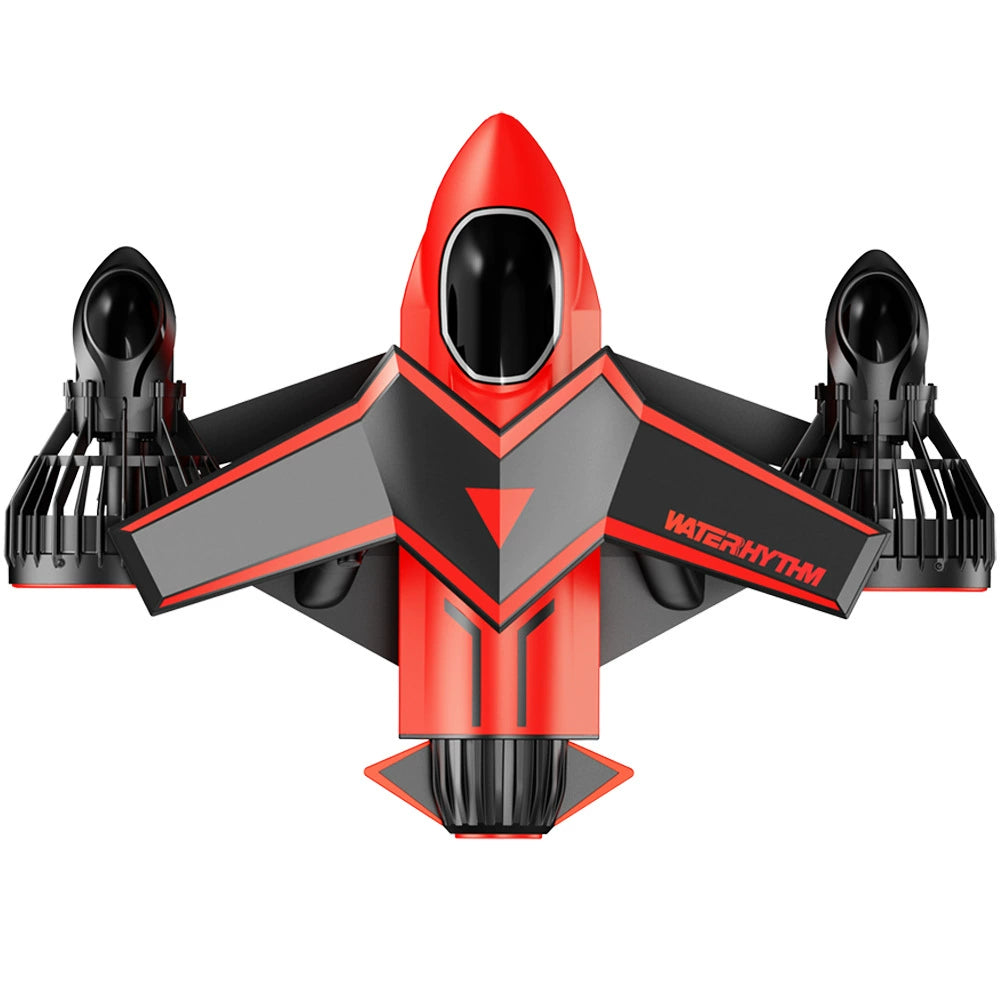
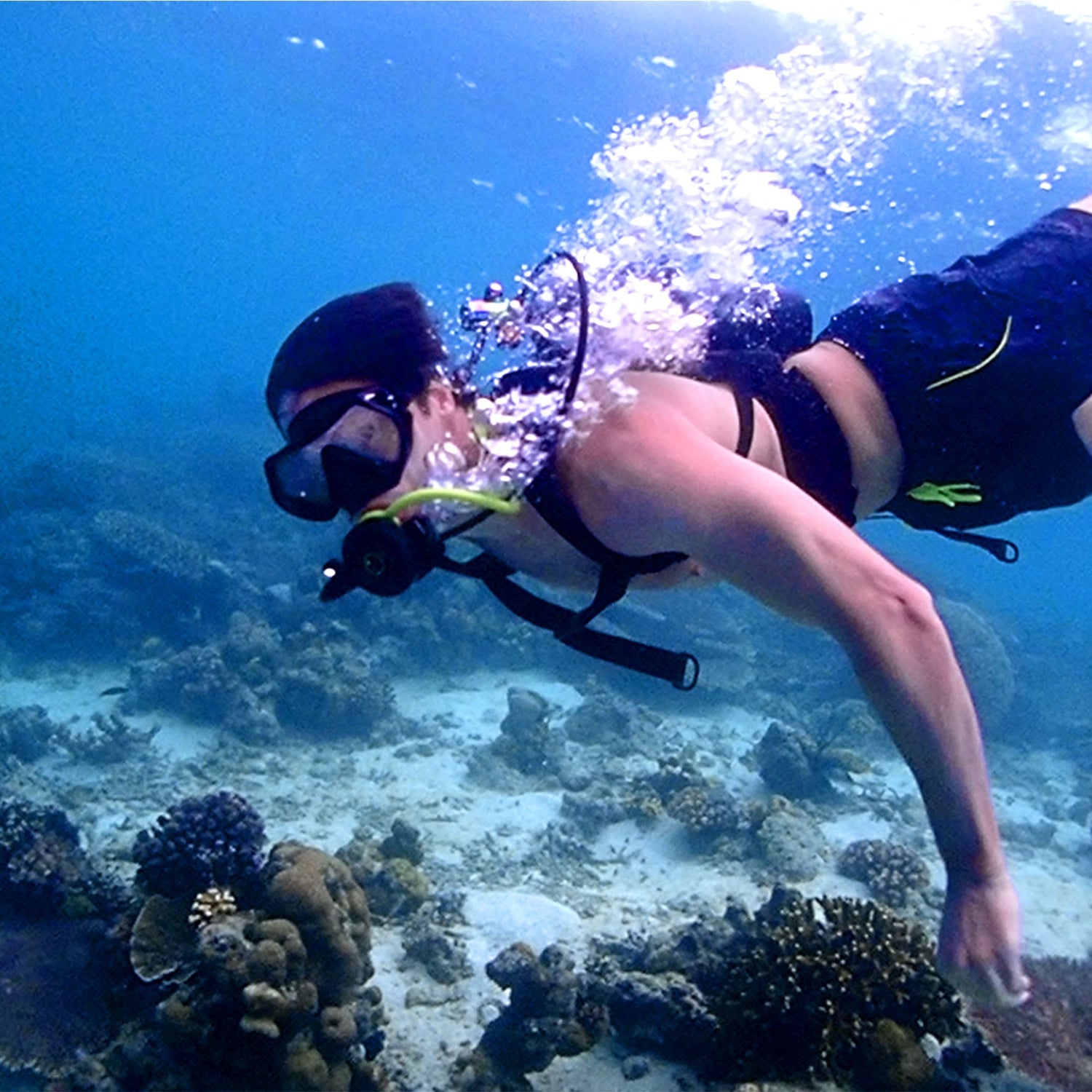
Mini scuba tanks (0.5–1 L) are suitable for pool breathing training, with each practice session lasting 5–10 minutes. The article explains tank assembly, valve adjustment, mask wearing, and common problem handling to ensure safe and efficient practice, suitable for beginners' snorkeling breathing adaptation.

Breathing Practice
Continuous Exhalation
At the bottom of a 2.5-meter deep pool, the water pressure reading is 1.25 ATA. Every breath of compressed air inhaled from a 0.5-liter mini tank is in this state of pressure balance at the moment it enters the lungs. If ascending with air from this depth, for every 1 meter moved toward the surface, the volume of gas in the lungs will expand by about 10% according to Boyle's Law.
Maintaining the behavior of continuous exhalation is not for saving air, but to keep the airway open like a pressure relief valve when pressure drops. The pressure difference limit of the alveolar walls is extremely low; as long as the internal pressure is 0.1 bar higher than the ambient pressure, lung tissue may face stretching risks. During pool training, practitioners need to constantly make a low-frequency “ah” sound.
This vocalization action forces the epiglottis at the bottom of the throat to stay in an open position. At this time, the 1.25 ATA air will follow the body's ascent, turning into strings of bubbles overflowing from the 6,000 ml total lung capacity. This tiny, continuous overflow ensures that the internal lung pressure and water pressure changes remain physically synchronized.
-
Stare at the second-stage exhaust port, keeping the bubble diameter maintained between 3 to 6 mm.
-
During a 120-second cycle test, press fingers against the 0.5-liter tank wall to sense the coldness of the metal under 3,000 psi pressure.
-
Set the inhalation duration to 4 seconds, ensuring that a 500 ml tidal volume can be filled slowly.
-
Enforce a 6-second long exhalation to thoroughly discharge 150 ml of residual carbon dioxide from the airway.
-
Observe the pressure gauge needle at 1.5 meters underwater to confirm a consumption of approximately 15 liters of air per minute.
The carbon dioxide level in the blood determines your heart rate. Shallow and fast breathing will exhaust a 0.5-liter tank in less than 5 minutes. By deep breathing and reducing the breathing frequency to about 7 times per minute, the use efficiency of the 200 bar pressure air storage can be increased by more than 2x. At this time, the lungs are no longer simple respiratory organs, but adjustment weights for 2.5 kg of buoyancy.
When you inhale 500 ml of air, the lift brought by the increase in displacement will cause the body to start floating upward after 1.5 seconds. Conversely, exhalation will lead to a 0.5 kg decrease in displacement, and the body will slowly sink accordingly. Maintaining this tiny vertical displacement at the pool bottom is the prerequisite for mastering underwater posture.
The regulator of a mini tank is usually set with an intermediate pressure of 135 psi. When inhaling, the lungs need to generate a negative pressure of about 1.5 cm of water column to overcome the resistance of the spring inside the second stage. This inhalation resistance is more noticeable in water than on land. This mechanical feedback helps remind practitioners not to stop breathing and not to use excessive force.
-
Adjust the 5 cm wide nylon weight belt to counteract about 1.1 kg of buoyancy generated by the tank.
-
Monitor the process of residual pressure dropping to 50 bar (approx. 725 psi), which is the reserved ascent margin.
-
Test the instantaneous exhaust volume within 0.5 seconds to ensure there is no water accumulation interference inside the regulator.
-
Observe the ascent trajectory of bubbles at 1.5 meters depth; bubbles will become larger as pressure decreases.
-
Check the No. 014 Fluororubber O-ring at the head of the tank to ensure no leakage under 207 bar.
The process of floating from the pool bottom to the water surface needs to be strictly controlled within 9 meters per minute. In a 3-meter deep pool, this means the ascent process must last at least 20 seconds. During these 20 seconds, if no bubbles flow out from the corner of the mouth, the compressed air in the lungs will expand to a volume sufficient to cause discomfort when rising to 1 meter depth.
After being compressed in the tank, air becomes exceptionally dry, with humidity usually lower than 0.1%. After 20 minutes of continuous practice, the moisture of the respiratory tract mucosa will be lost in large quantities. It is recommended to drink 300 ml of room temperature water after each set of practice. A moist throat makes it easier to sense the passage of airflow, letting you judge more keenly whether exhalation is truly continuing.
A 45-degree tilt angle of the body in water affects the speed at which airflow enters the lungs. Keeping the center point of the lungs and the tank valve on the same horizontal line can reduce breathing resistance. Within the usage cycle of 100 liters of available air, you should be able to judge whether you have completely emptied the waste gas through the 2 cm shrinkage sensation of the chest during exhalation.
-
Practice locating the 19 mm diameter inflation valve port with one hand within 3 seconds.
-
Observe the metal texture of the tank's 3,000 psi burst disk to confirm no fine cracks.
-
Execute 5 sets of controlled breathing at 2 meters, recording the precise value of the pressure gauge scale drop.
-
Feel the physiological suppression of breathing frequency by water temperature around 26 degrees Celsius.
The accumulation of carbon dioxide is the main cause of inducing underwater panic. If the breathing frequency is found to exceed 18 times per minute, actions should be stopped immediately, grab the edge of the pool, and execute two deep exhalations lasting as long as 8 seconds. This operation can quickly empty the carbon dioxide in the dead space, bringing the brain's blood oxygen saturation back to a normal level of above 98%.
4-4 Rhythm Practice
When a 0.5-liter mini tank is filled to 200 bar (approx. 3000 psi) pressure, 100 liters of atmospheric air are stored inside. At the bottom of a 2-meter deep pool, the ambient pressure becomes 1.2 ATA. With every breath, the number of air molecules consumed is 20% more than on the water surface.
By dividing the air consumption by time and average pressure, the SAC rate can be calculated. In a resting state, an adult consumes about 15 liters of air per minute. If rapid breathing causes consumption to reach 25 liters per minute, this bottle of 100 liters of air can only last less than 4 minutes at 2 meters depth.
| Action Cycle | Suggested Duration | Body Change | Airflow State |
|---|---|---|---|
| Even Inhalation | 4 seconds | Chest rises 2 cm | 135 psi pressure input |
| Continuous Open | 0 seconds | Airway not closed | Strictly forbid any form of breath-holding |
| Steady Exhalation | 4 seconds | Body sinks 10 cm | Carbon dioxide discharged with bubbles |
The tidal volume of an adult male is about 500 ml. During a 4-second inhalation process, the lungs are like a balloon capable of generating 0.5 kg of buoyancy. Inhaling too fast will break the 1.1 kg sinking force provided by the weight belt, causing the body to suddenly float up after 1.5 seconds, destroying neutral buoyancy.
The partial pressure of carbon dioxide in the blood usually fluctuates around 40 mmHg. Insufficient exhalation time will lead to residual waste gas in the 150 ml dead space of the lungs. When the partial pressure rises to 45 mmHg, the brain will force the shortening of the breathing cycle, reducing the original 8-second cycle rhythm to 3 seconds.
-
Stare at the 25 mm diameter pressure gauge, confirming the drop span of the needle every 30 seconds.
-
Maintain a 5 mm diameter bubble chain evenly overflowing from the side of the regulator.
-
Control the breathing frequency between 7 to 8 times per minute, contrasting with the normal state of 15 times on land.
-
Adjust the position of lead blocks on the 5 cm wide nylon belt to balance the buoyancy brought by the 1-liter tank.
The second-stage regulator is set with an intermediate pressure of 135 psi. When inhaling, the lungs need to generate 1.5 cm of water column negative pressure to open the air supply valve. The 4-4 rhythm can make this mechanical resistance gentle, avoiding large fluctuations in the primary stage supply pressure caused by instantaneous forceful inhalation.
The humidity of the air in the tank is lower than 0.1%, far below the 100% humidity required by the lungs. 15 liters of dry and cold air per minute will take away moisture from the tracheal mucosa. After 15 minutes of continuous practice, it is recommended to go ashore and replenish 300 ml of water to relieve the dry itch caused by respiratory tract dehydration under 1.2 ATA pressure.
The table below lists the endurance changes of a 0.5-liter tank under the 4-4 rhythm at different depths:
| Water Depth (m) | Ambient Pressure (ATA) | Equivalent Air Consumption Per Minute (L) | Estimated Endurance Time (min) |
|---|---|---|---|
| 0 (Surface) | 1.0 | 12 | 8.3 |
| 2 (Bottom) | 1.2 | 14.4 | 6.9 |
| 5 (Deep Water) | 1.5 | 18 | 5.5 |
To exclude waste gas, the 4-second exhalation must be used to empty the 2500 ml functional residual capacity of the lungs. If only shallow breathing is performed, the air utilization rate in the 0.5-liter tank will decrease by more than 30%. Deep and long breathing can maintain blood oxygen saturation at around 98%, preventing headaches.
When hovering at 1.5 meters depth, the 0.5 kg buoyancy added by inhalation will have a 2-second delay sensation. Start exhaling before the body begins to rise 15 cm, using the sinking force generated by exhalation to counteract the lift. This dynamic fine-tuning can save 5 L/min of extra oxygen consumption brought by limb movements.
-
Confirm the 207 bar working pressure stamp engraved on the body of the 0.5-liter tank.
-
Observe the sealing state of the No. 014 Fluororubber O-ring under 3000 psi pressure.
-
Record the pressure loss value within 120 seconds, converting it into an individual's actual SAC rate.
-
Maintain a 45-degree prone posture to reduce the 20 cm hydrostatic pressure difference between the second stage and the lung center.
When the pressure gauge drops to 50 bar (approx. 725 psi), the intermediate pressure output of the first stage will become slightly heavy. This 50 bar of residual gas is a 20-second slow ascent redundancy reserved. The practitioner needs to perceive that the air source is about to run out through the enhancement of inhalation resistance at this time.
Muscle memory requires more than 30 cycles to stabilize. By observing the ascent trajectory of 5 mm bubbles in 2-meter deep water, judge whether the breathing flow is stable. Mastering the 4-4 rhythm, one can obtain the longest and safest underwater stay experience under the physical constraints of 100 liters of air.
Emergency Switch Practice
At the bottom of a 2.5-meter deep pool, the body is under 1.25 ATA of ambient pressure. At the moment when the primary air source simulated failure occurs, the 500 ml tidal volume remaining in the lungs is the only physiological buffer. The right hand needs to grope to the mini tank at the outer thigh or back within 1 second, fingers touching the 19 mm diameter tank valve knob, confirming it is in a fully open state.
Insert the mouthpiece of the 0.5-liter tank's second stage into the mouth; at this time, the respiratory tract is isolated from the outside. Since the mouthpiece accommodates about 30 ml of accumulated water, water must be drained physically before inhaling. Blow air forcefully into the mouthpiece, using the 150 ml of residual gas in the lungs to squeeze the accumulated water out from the one-way drainage valve.
If there is insufficient air in the lungs, the rubber purge button in the center of the regulator can be pressed with the index finger. The 200 bar high-pressure air in the tank is reduced to 135 psi intermediate pressure through the first stage, and instantaneously fills the second-stage chamber within 0.5 seconds, using the pressure difference to force out residual moisture. After completing drainage, the first breath of air inhaled usually carries a slight mechanical dryness.
-
Confirm that the 0.5-liter tank pressure gauge reading is at the 200 bar (3000 psi) full pressure scale.
-
The right hand's thumb and forefinger web should be tight against the tank neck to prevent equipment displacement due to buoyancy fluctuations at 2 meters depth.
-
Feel the 1.5 cm water column cracking pressure, which is the necessary work for the lungs to overcome the second-stage spring resistance.
-
Maintain a surface air consumption rate of 15 liters per minute, avoiding a surge in air consumption to 40 liters due to nervousness.
-
Maintain a cycle of 4 seconds inhalation and 6 seconds exhalation, reducing the air flow velocity in the respiratory tract.
Once the partial pressure of carbon dioxide in the blood exceeds 40mmHg, the brain's medulla oblongata will generate a strong breathing craving. In the 3 to 5-second vacuum interval of switching air sources, the heart rate often soars from 70 bpm to 95 bpm. This physiological fluctuation will shorten the theoretical endurance time of a 0.5-liter tank, causing it to drop from 10 minutes to less than 4 minutes.
Practicing eyes-closed operations can simulate situations where underwater visibility is extremely low. Locate the sealing position of the No. 014 Fluororubber O-ring solely by finger touch, ensuring no fine bubbles overflow under the 207 bar rated pressure. The left hand needs to protect the mask to prevent water from entering the mask due to the 1.2 ATA lateral water flow impact during violent movements.
The 1.1 kg positive buoyancy generated by the mini tank will interfere with the body's neutral buoyancy balance. after switching the air source, the chest position will float slightly upward because of inhaling air compensated at 135 psi. Offset this part of the upward thrust generated by the change in gas volume by adjusting the distribution of lead blocks on the 5 cm wide nylon weight belt.
-
Observe bubbles overflowing from both sides of the second-stage exhaust guiding grooves, with the diameter maintained around 5 mm.
-
Monitor the pressure gauge needle, ensuring a safety margin of 50 bar (725 psi) is retained at the end of the practice.
-
Test the one-way valve of the 19 mm inflation valve port, confirming no abnormal noise under 3000 psi impact.
-
Check the integrity of the 3000 psi burst disk, confirming no obvious oxidation spots on the metal disk surface.
-
Maintain static suspension at 2 meters depth for 1 minute, observing the bars of pressure drop of the 1-liter tank.
When the water temperature is constant at 26 degrees Celsius, the body's heat loss speed is 25 times that of land. Cold will speed up the metabolic rate, making the lung ventilation volume per minute increase by more than 5 liters. Repeatedly plugging and unplugging the breathing head in the 1.5-meter deep shallow water area establishes the muscles' adaptability to the 135 psi intermediate pressure air flow.
After dry air enters the bronchi, moisture on the mucosal surface evaporates rapidly. after 15 minutes of practice, the humidity in the throat area will drop from a normal 95%. This physiological dehydration will increase the frequency of swallowing actions, which in turn affects the biting force to maintain the mouthpiece seal. Between two sets of switching practice, it is necessary to go ashore and replenish 250 ml of pure water.
The ascent procedure should be started at a residual pressure of 50 bar. Float up slowly at a speed of 15 cm per second, ensuring that the 6000 ml total capacity of the lungs exhausts steadily as ambient pressure decreases. Between the 3-meter deep pool bottom and the water surface, a continuous flow of tiny bubbles is the barrier to prevent the 0.1 bar pressure difference from causing lung overexpansion.
Safety
Pre-Dive Check
Carefully rub the black rubber ring inside the tank interface with fingertips; this O-ring, model AS568-011, bears the responsibility of sealing the 200 Bar high-pressure airflow. The material chosen is usually Fluororubber with a hardness of 90 Shore A, which can ensure it is not squeezed out of the groove under high pressure.
If cracks with a depth of 0.1 mm are found on the surface of the ring body, it must be picked out and thrown away immediately, otherwise, tiny air leaks will rapidly evolve into violent jets after entering the water. Smear a tiny bit of Molykote 111 fully synthetic silicone grease on the ring, just enough to make the rubber shine.
Excess grease will act like a magnet to attract fine dust with a diameter of over 10 microns in the pool, causing the valve seat inside the second stage to not close tightly, generating endless fine bubbles. Check the threads of the 6061 aluminum alloy bottle mouth, and use a dry cloth to wipe off salt crystals about 0.05 mm thick on it.
Put the first stage of the breathing regulator on the air valve, and tighten that large bolt by hand until it just touches the back of the valve. At this time, back off half a turn, which is 180 degrees, so as to leave a little room for the metal to expand and contract, to avoid the metal seizing up under 3000 PSI pressure and becoming unable to be moved.
-
The tank strap is fixed on the back, with the bottom edge kept 10 to 15 cm away from the armpit
-
The pressure gauge hose goes around from the left, with the swimming gap kept at around 5 cm
-
Give the yellow mouthpiece of the breathing head a hard tug; it should be able to withstand a pull force of 50 Newtons
-
Stare at the exhaust hole at the bottom of the 1-liter tank; water must not accumulate inside to prevent white rust from growing on the aluminum material
-
The bending radius of the breathing tube must be greater than 10 cm; if it is too narrow, the braided layer inside will break
Slowly turn on the tank valve, staring at that SPG pressure gauge needle. When a 1-liter capacity bottle is filled to 207 Bar, 207 liters of compressed air are hidden inside. If the outside temperature rises by 5°C, the number on the dial will follow and rise by about 7 Bar.
Take a look at whether the needle moves. If the needle drops sharply by 10 Bar when taking a breath and cannot immediately bounce back, it means that the filter element in the bottle is half-blocked by dirty things. This kind of fault will make you feel that inhaling becomes more and more difficult at the bottom of 2-meter deep water, and you might even be unable to suck out air.
Lightly tap the purge button on the second stage with a finger, controlling the time within half a second. Listen to that sound, whether it is like 9 to 10 Bar of pressure spraying out smoothly. If a creaking metal friction sound is heard, it means the piston spring inside has been deformed by more than 10%.
Bring your nose close to the mouthpiece and take a sniff; the air must not have any strange smell. Human olfaction can smell oil mist with a concentration of only 1mg/m³. If a faint metallic or machine oil smell is detected, it means the filter element of the air filling place has not been changed for at least 50 hours, and there must be quite a lot of carbon dioxide inside.
Try taking three breaths against the breathing head to feel the strength. A good regulator only needs 2.5 cm water column of strength to suck out air. If inhaling is too tiring, your breathing frequency per minute will soar from 12 times to 20 times, and a tank that could originally be used for 10 minutes will be out of air in 4 minutes.
| Check Detail | Normal Reading Range | Failure Danger Standard |
|---|---|---|
| Intermediate Pressure Output | 135 to 145 PSI | Exceeding 150 PSI, the breathing head will leak air |
| Sealing Ring Hardness | Viton 90 material | Soft rubber is easy to shatter under high pressure |
| Burst Disk State | 4500 PSI pressure resistance | Tank body scratches deeper than 0.2 mm must be decommissioned |
| Mouthpiece Gel | Medical grade liquid silicone | Hardness higher than 50 will make the jaw sore |
Toggle the Pre-dive switch on the second stage. before entering the water, toggle it to the side that reduces the flow. This way, when the tank falls into the water, it will not trigger an automatic air spray of 5 liters per second due to a large pressure difference, spraying all the precious air into the pool at once.
before putting on the diving goggles, pull the plastic buckles on the side. Take a breath and try it; the lens skirt should generate a slight suction of 0.02 Bar on the face. See if there is a 1 mm small gap at the nose; even if a tiny bit of water enters, it will make you unable to see the pressure gauge clearly at 1.5 meters depth.
Confirm whether the lead blocks on the waist are heavy. A 1-liter aluminum tank will have 1.2 kg of upward buoyancy when it is almost out of air. Hang 2 kg of lead on the front of the belt to move the center of gravity down by 15 cm, so that you can lie very steadily in the water, and the back muscles will not produce lactic acid due to random movements.
-
Breathing frequency stabilizes at 12 to 18 times per minute, so that it can last for 8 minutes
-
Take a look at that thin plate of the exhaust valve; there must not be an upturned deformation of more than 5 degrees
-
Pinch the high-pressure tube; the steel wire braided layer inside must feel very elastic
-
There must not be fog inside the pressure gauge glass; fog means 0.5 ml of water has entered inside
-
The air valve switch from fully closed to fully open usually takes about 2.5 turns
Depth Awareness
When the top of your head is submerged 3 meters underwater, the pressure felt by the body will increase to 1.3 atmospheres. This depth does not sound deep, but as long as descending by 0.5 to 1 meter, the eardrum will produce obvious squeezing pain because of the 0.1 to 0.2 bar pressure difference.
During the descent process, the nose must be pinched to blow air every half a meter. If waiting for pain to occur before doing ear pressure equalization, the Eustachian tube may have already been locked because of the pressure difference. At this time, forcefully blowing air will cause irreversible damage to the inner ear.
Underwater visual effects can be deceptive. Since the refractive index of water is 1.33, the objects you see will be 25% closer than the actual distance, and the volume will also look 33% larger. When you reach out to grab the pool handrail 1 meter away, your hand might miss because of the displacement.
The field of vision in the mask is only about 120 degrees, which is much narrower than the 180 degrees on land. This reduction in visual range will make you ignore obstacles on the side, such as those water inlets or ladder handles protruding 10 cm from the pool wall.
-
The ambient pressure at 3 meters depth is about 1.3 bar
-
Objects underwater look 25% closer than actual distance
-
Pool water at 26 degrees Celsius takes away body temperature at a speed 25 times that of air
-
A person at 3 meters depth consumes 30% more air per minute than at the surface
-
The effective air supply time of a 1-liter tank at 3 meters depth is about 5 to 7 minutes
-
Every 10 meters the body descends, the pressure increases by 1 standard atmosphere
Although the pool water temperature is usually maintained at 26 to 28 degrees Celsius, the thermal conductivity of water is extremely strong. after practicing underwater for 15 minutes continuously, your body's core temperature will begin to drop. even if you don't feel cold, the flexibility of fingers will also decrease due to heat loss.
When you keep breathing, the air in the 1-liter aluminum tank will become less and less. For every 100 liters of air consumed, the weight of the tank will decrease by about 0.12 kg. This means that when the practice is about to end, the tank will produce more than 0.2 kg of extra buoyancy, pulling you toward the water surface.
To counteract this upward pull, you need to hang about 2 kg of lead blocks on the belt. If buoyancy gets out of control, you might suddenly pop out of the water like a cork; this kind of unannounced ascent will cause the air in the lungs to overexpand due to the sudden decrease in pressure.
Don't get too close to the pool's drainage outlet. Large water pumps in commercial pools can pump more than 300 gallons of water per minute. Once the drainage grating is damaged, that hundreds of kilograms of suction will suck your body tightly to the pool bottom, and could even tear off the breathing tube of the mini tank.
-
Keep a distance of more than 1 meter from the bottom drainage outlet
-
Observe whether the pool water pH value is between 7.2 and 7.8
-
Ensure the pool water residual chlorine content is in the range of 1.0 to 3.0 ppm
-
A dive buddy 5 meters away must be visible at all times within the line of sight
-
Breathing resistance at 3 meters underwater is 1.3 times greater than on the surface
-
Ascent must begin when the 1-liter tank pressure drops to 50 bar
Do not crawl into the inside of slides in the pool or any area with a cover. In diving regulations, having an overhead obstruction is called a “closed environment.” A mini tank has only 1 liter volume; once you are stuck in a slide for 2 minutes, the remaining bit of air is simply not enough for you to get out of trouble.
The sound conduction speed underwater is 1480 meters/second, 4.5 times faster than in air. You will hear the humming sound of the circulation pump vibrating, but your brain cannot judge which side the sound is coming from. This lack of directional ability will cause you to have a brief sense of spatial disorientation underwater.
Body movements in water must become slower. Water density is 800 times that of air; the energy you spend waving a hand underwater is enough for you to run several steps on land. If your heart rate increases from 70 to 110 beats per minute, a tank that could originally be used for 10 minutes will be sucked dry in 5 minutes.
If you feel breathing becomes difficult, that is the 30% air density at 3 meters depth increasing the airway resistance. Do not panic and move randomly at this time; you should maintain a 10-degree prone position with the pool bottom, take a few deep and slow breaths, and let the heart rate drop back to the normal range.
| Depth Parameter | Physical Pressure Value | Visual/Auditory Change | Air Consumption Increase Ratio |
|---|---|---|---|
| Surface 0m | 1.0 Bar | Normal vision and sound source | 100% (Baseline) |
| Underwater 1m | 1.1 Bar | Object enlarged by 33% | Increased by about 10% |
| Underwater 2m | 1.2 Bar | Sense of distance shortened by 25% | Increased by about 20% |
| Underwater 3m | 1.3 Bar | Sound direction cannot be identified | Increased by about 30% |
Even in a 2-meter deep shallow water area, as long as you take a breath of compressed air and swim up while holding your breath, there is a danger of alveoli bursting. The ascent speed should be controlled within 18 meters per minute; simply put, your surfacing speed must be slower than those smallest bubbles you exhale.
Chemical components in the pool also affect practice. If the chlorine content exceeds 3.0 ppm, your eyes and respiratory tract will feel a stinging pain. If the pH value deviates from the standard range of 7.2 to 7.8, the rubber diaphragm in the breathing head will become easy to embrittle, and even produce water seepage when breathing.
Stare at the tile lines at the bottom of the pool. If these lines start to shake before your eyes, it means your sense of balance is being interfered with. When practicing a 180-degree turn, if the movement is too fast, the 1.6 kg tank will generate a lateral inertia, flinging the 50 Newton pull force mouthpiece out of your mouth.
-
Perform a Valsalva pressure equalization action every 0.5 meters of descent
-
Ascent speed is slower than 0.3 meters per second
-
The diving goggles skirt maintains a 0.02 bar pressure difference seal with the face
-
Each 1 mm of the tank pressure gauge scale represents about 10 bar of residual pressure
-
Keep breathing frequency between 12 to 15 times per minute
-
Ensure the service life of the 1-liter aluminum bottle does not exceed 60 months
when the practice is about to end, confirm the pressure gauge reading again. When the needle points at 500 PSI (approx. 35 bar), this 1-liter tank has only about 35 liters of available air left. Calculated according to the air consumption of 15 liters per minute, you have less than 2 minutes of breathing time left at this time.
Run your fingers across the tank surface; if a 0.2 mm deep scratch is felt, that means the tank wall is damaged and high pressure cannot be filled.
Slow Ascent
At the bottom of a 2-meter deep pool, the body is under 1.2 Bar of ambient pressure. At this time, the density of compressed air inhaled by the lungs is 20% higher than at the surface. When you start moving upward, the pressure of the surrounding water decreases rapidly. The air in the lungs will be like heated popcorn, and the volume will start to expand.
The thickness of the alveolar wall is only about 0.2 microns, which is extremely easy to be burst by expanding air. If holding breath while ascending, even if there is only 0.5 meters of depth difference, the increased air volume will also cause tiny tears in the lung tissue. This physical damage cannot be immediately detected underwater.
Ascending from the 2-meter deep pool bottom to the surface, the suggested time is no less than 10 seconds. This speed is equivalent to ascending only 20 centimeters per second. If you ascend too fast, exceeding the limit speed of 18 meters per minute, the blood in your body will not have enough time to handle these rapidly expanding tiny bubbles.
Keep the airway in a completely open state. as long as you leave the pool bottom, your mouth must constantly spit out tiny bubbles. For every 1 meter these bubbles rise, the diameter will increase by about 10% because of the pressure decrease. Look at these bubbles, making sure your ascent speed is slower than those smallest bubbles.
-
Ascent speed limit: no more than 18 meters per minute
-
Surfacing time for 2-meter pool depth: ideal value is 12 to 15 seconds
-
Exhaust frequency: discharge 1 set of micro bubbles every 1 second
-
Body posture: head slightly tilted back, looking at the water surface, observing obstacles within 180-degree range
-
Hand movement: left hand raised above head to protect the head from colliding with the pool edge overflow gutter
-
Inhalation control: strictly forbid taking a large gulp during the ascent process, to prevent instantaneous pressure overload of the lungs
as the air in the 1-liter tank is consumed, the bottle will produce about 0.24 kg of extra upward pull. When you rise from 3 meters depth toward 1.5 meters, this increase in buoyancy will make you feel like you are being suddenly yanked up by an invisible hand. If you do not adjust through breathing, it is easy to directly pop out of the water surface within 2 seconds.
To suppress this involuntary acceleration, you have to vent about 30% of the gas in your lungs through the nasal cavity when ascending too fast. This operation can instantly reduce about 1 kg of buoyancy lift. Hook your fingers onto the pool wall steps or edge, using physical friction to control the ascent process for every 10 centimeters.
The eardrum will also experience a pressure contrast during the ascent process. If a stinging pain of poking outward is felt inside the ear, that is a reverse block occurring. This is usually because the 1 mm wide gap in the Eustachian tube is blocked by mucus, and the extra 0.1 Bar pressure cannot be discharged. At this time, stay in place for 5 seconds, waiting for pressure equalization.
In the interval from 1.5 meters to 0.5 meters, the percentage change of pressure is the highest. Air volume will undergo drastic jumps here. Many practitioners will relax their guard at this stage, but in fact, these last 1 meter is the area where the lungs are easy to get injured. Maintaining 60% lung fullness is a relatively safe practice.
-
Pressure jump zone: range from 0.5 meters to 1.5 meters below water surface
-
Eardrum sensitivity: a sense of oppression will occur when the pressure difference reaches 0.05 Bar
-
Weight fluctuation of 1-liter aluminum bottle: generates about 1.2 lbs of positive buoyancy from full bottle to empty bottle
-
Cardiac load: ascending too fast will make the heart rate soar from 80 beats/minute to 120 beats/minute
-
Regulator performance: intermediate pressure output in shallow water area is stable at around 9.5 Bar
-
Water temperature gradient: 0.5-meter water temperature may be 1 to 2 degrees Celsius higher than at 3 meters
Observe the bubbles discharged from the second stage. Large bubbles will have an ascent speed exceeding 1 meter per second because of large buoyancy. What you want to follow are those small bubbles that are like millet grains and rise slowly. This visual reference can help you suppress the surfacing speed to within 0.3 meters per second, ensuring that lung tissue has enough time for elastic contraction.
When almost reaching the water surface, do not hurry to spit out the second stage held in the mouth. Wait until the head has completely left the water surface by 5 centimeters before performing free breathing. At this time, the air pressure in the lungs has dropped back to 1.0 ATA. If choking suddenly occurs at this time, the 3000 PSI compressed air in the second stage is your only barrier.
Check the diving computer watch on your wrist. If it emits a piercing beep of over 80 decibels, that is warning you the surfacing rate is too fast. In this case, you must immediately descend back to the depth just now, and stay for 30 seconds for nitrogen discharge buffering, even if you only stayed in the pool for 5 minutes.
-
Exhaust valve diaphragm: when ascending, ensure no foreign objects over 1 mm are stuck on the valve seat
-
Weight balance: counteract the buoyancy offset at the end of the tank by tightening the abdominal core
-
Ascent path: keep the distance from the pool wall between 0.5 meters to 1 meter to prevent skin abrasions
-
Breathing resistance: unscrew the second-stage adjustment knob by 2 turns when ascending, to reduce inhalation resistance
-
Vision correction: look at the water surface through the mask; because of light refraction, the water surface looks 20% deeper than actual
-
Psychological monitoring: maintain a breathing rhythm of 14 times per minute, preventing rapid breathing due to impatience
Do not perform strenuous exercise within 15 minutes after the practice is over. The body needs time to let the nitrogen partial pressure in the blood stabilize. even in the 2-meter deep area, if 3 bottles of 1-liter air are practiced continuously, the concentration of micro bubbles in the body will also increase. Sit down and drink 200 ml of fresh water, and observe whether the skin has erythema.
Press the palm of your hand against the outer wall of the tank. You will find the aluminum alloy bottle body after filling feels slightly hot at over 35 degrees Celsius. But when ascending underwater, the expanding air will take away heat from the air valve, making the temperature at the valve drop to below 5 degrees Celsius; be careful not to let the ice-cold metal parts frostbite your lips.
Ensure that the first thing after coming ashore is to check the pressure gauge of the 0.5-liter or 1-liter tank. If the reading points to 0, it means you have over-squeezed the equipment. The ideal surfacing end state should be the needle stopping at 500 PSI. These last 35 Bar of air are used to hold up the pressure in the bottle, to prevent pool water from backflowing into the tank.
At the moment of standing up from the water, you will feel the body is 10 times heavier. This is because buoyancy disappears. With a 1.6 kg tank and 2 kg of lead blocks, the weight will be concentrated on the ankles. Stand steadily slowly, giving the body 3 seconds to find back the balance on land.
Stay in the pool's shallow area with a depth of 1.2 meters for 1 minute; this is called a safety stop. Although this is not mandatory in practices within 3 meters, developing this habit can let you learn how to precisely control the body when the air pressure remains at 500 PSI. This buoyancy fine-tuning ability needs to be solidified through more than 20 repeated ascent and descent practices.
Observe the gaps in the drainage outlet grating, making sure no hair or strap threads are sucked in. In the 1-meter deep area, the 0.5 kg per square centimeter suction generated by the water pump is enough to interfere with your ascent rhythm. Maintain a vertical distance of greater than 1.5 meters from the pool bottom until you are completely ready to surface.
-
Shallow stay time: suggested stay at 1.2 meters depth for 60 seconds
-
Remaining air red line: surfacing must be done when the pressure gauge needle enters the red 50 Bar area
-
Breathing depth control: keep the inhalation volume between 50% to 70% of vital capacity during ascent
-
Physical consumption: weight movement during the ascent process will consume 2 liters of air more per minute
-
Mask pressure: when rising to 0.3 meters of water surface, the nasal cavity should vent a small amount to balance the internal pressure of the mask
-
Skin reaction: if localized muscle soreness of grade 1 is felt after ascent, practice duration needs to be recorded
If you find bubbles rise faster than your palm moves, it means you need to exhale significantly to increase negative buoyancy. The 0.24 kg positive buoyancy of a 1-liter tank in an empty bottle state will be concentrated on your back, which will induce your body to tilt forward by 15 degrees. Use the strength of the core muscle group to suppress this upward float force.
Do not try to find lead blocks or accessories dropped at the pool bottom during the ascent process. The action of looking down will compress the trachea, making the breathing resistance instantaneously increase by 0.5 Joules/liter. Keep the neck in a neutral position, eyes looking straight ahead at the pool wall 2 meters away, judging the distance from the water surface through peripheral vision, ensuring a smooth completion of the final 1-meter ascent within 5 seconds.
when disassembling the first stage after coming ashore, if about 0.5 ml of accumulated water is found at the interface, it means the second stage produced backflow during the ascent process. This is usually because the exhaust valve was pressed in shallow water. Use a dry cloth to wipe the 6061 aluminum alloy interface, and refill with 20 Bar of dry air within 30 minutes to expel internal moisture.
Ascent is not only a change in vertical position, but also the re-synchronization of internal body pressure and environmental pressure. Every 10 centimeters of ascent, 70% of the tissue moisture in your body is undergoing subtle physical changes. Respect this last 2-meter journey; it determines the safety of your entire pool practice.
Record the total time for each 1-liter tank to be consumed from 200 Bar to 50 Bar. If your breathing frequency is stable at 12 times per minute, and the surfacing process takes 15 seconds, then your effective practice time should be around 8 minutes. If the time is shortened to 5 minutes, it means you had excessive breathing in the ascent stage due to nervousness, causing air loss to increase by 40%.
Gear Setup
Standard Assembly
Check the 6061-T6 aviation aluminum 0.5-liter or 1-liter bottle body, confirming that the test pressure marked on the bottom stamp is 30MPa. The bottle mouth specification is usually 5/8"-18 UNF thread; internal screw teeth need to be kept dry, and any aluminum chips or oxidized debris with a diameter exceeding 0.1mm will cause high-pressure sealing failure. Press the AS568-014 Nitrile rubber sealing ring with a hardness of 70 degrees into the first-stage connection; its 1.78mm cross-sectional diameter should be kept rounded and without any radial scratches.
Feel the resistance of thread engagement with fingers, and screw in the first stage clockwise until the end-face sealing ring is completely submerged in the slot. Rely on the axial thrust of 200 Bar in the bottle to automatically complete the seal, without the need to use a wrench to force it. At this time, the intermediate pressure chamber inside the first stage will reduce the 3000 PSI high pressure to a constant intermediate pressure value between 9.5 Bar and 10.5 Bar, which is the technical prerequisite for maintaining breathing resistance in the range of 1.2 to 1.5 Joules/liter.
-
The second-stage mouthpiece needs to be fixed with NYLON 66 material cable ties, with the tension threshold set at over 5kg to prevent falling off.
-
The intermediate pressure hose length is set at 55cm to 65cm, and the bending radius must not be less than 40mm to avoid damage to the internal braided layer.
-
For the pressure gauge dial's copper tube linkage mechanism, the indication error needs to be controlled within 2% of the full scale under full pressure.
-
The nominal value of the copper burst disk inside the relief valve is usually 325 Bar; check that there are no signs of loosening of the explosion-proof screw.
-
The opening pressure of the second-stage exhaust valve needs to be adjusted to 1.5 to 2.0 cm water column, to ensure that drainage is completed instantaneously.
The air filling process is the link most likely to produce variables in the entire setting. When using a high-pressure manual pump for about 600 to 800 reciprocating movements, the bottle wall temperature will climb rapidly due to adiabatic compression of the gas. Monitor the bottle surface temperature, keeping it below 40°C. It is suggested to take a rhythm of resting for 3 minutes for every 100 strokes of air compression, which can prevent the moisture in the compressed air from vaporizing due to high temperature and passing through the 5-micron molecular sieve filter cotton.
Stop operation when the pressure gauge needle reaches the 3000 PSI scale line. At this time, the pseudo-high pressure generated by the violent collision of gas molecules will drop by about 10% to 15% after cooling for 15 minutes. This pressure drop caused by physical laws is a normal phenomenon, and a secondary air supplement needs to be performed after the ambient temperature returns to 20°C normal temperature, to obtain a sufficient atmospheric air storage capacity of 100 liters to 200 liters.
Perform three deep breathing tests through the second stage and observe the swing amplitude of the needle. If the needle jumps more than 10 Bar at the moment of inhalation, it means that the sintered bronze filter core inside the first stage has a blockage rate of more than 50%. Check the rebound situation of the rubber plug of the one-way inflation valve port, to ensure that after removing the inflation connector, the check valve can complete mechanical locking within 0.1 seconds by internal spring tension, preventing 20Mpa high-pressure gas from backflowing.
-
Keep the respiratory tract closed for 15 seconds during the negative pressure test; if no airflow seeps in during the period, it proves the seal is intact.
-
The low-pressure alarm whistle (if equipped) should emit a scream of over 80 decibels on time when the residual pressure falls to 50 Bar.
-
The water holes of the first-stage balancing chamber need to be kept transparent; any foreign object over 0.5mm will interfere with the intermediate pressure output stability.
-
The force point of the locking buckle of the spare breathing head should be around 10 Newtons, to ensure it can be released with one hand within 1 second in an emergency state.
Observe the assembled system completely submerged in the shallow water area of the pool for 60 seconds. Bubbles with a diameter greater than 1mm and escaping continuously from the connection part mean that the AS568 series O-ring has experienced extrusion effect or aging. For a mini tank with 1 liter capacity, the average air consumption speed at 3 meters water depth is about 15 liters of atmospheric air per minute, which means an effective practice duration of 13 to 15 minutes is based on a 200 Bar full pressure setting safety boundary.
Wearing
Choose 25mm width PA66 high-strength nylon webbing; this material's elongation after being soaked in a pool for 60 minutes is less than 3%. Tighten the 316 stainless steel adjustment buckle, applying about 5 to 8 kg of tension, to lock the tank's center of gravity 10 cm below the sternal midline. This height can ensure that when swimming horizontally, the second-stage mouthpiece is suspended just within a radius of 5 cm below the jaw.
For a 1-liter capacity, 90mm diameter aluminum bottle, the vertical distance between the top of the bottle valve and the lower jaw should be kept at 15 cm. This distance prevents the breathing head from producing an upward thrust of more than 0.3 kg on the mouth when you look down to observe the pool bottom. The 2mm thick webbing combined with a double slide buckle structure can withstand 200 kg of static pull force, avoiding shaking in high-frequency breathing of 20 times per minute.
-
The symmetry deviation of the left and right shoulder straps needs to be controlled within 5 mm, to prevent the tank from tilting to one side and causing a center of gravity offset of more than 5 degrees.
-
316 stainless steel D-rings should be arranged on both sides of the waist at a 45-degree angle, to facilitate hanging 0.5 kg lead blocks to offset the 0.8 kg positive buoyancy of a 1-liter aluminum bottle.
-
Confirm that the overlap length of the Velcro at the end of the strap reaches 10 cm, ensuring that no displacement of more than 1 cm will occur under the impact of 15 knots of water flow.
-
The adjustment ring position is set at 3 cm below the clavicle, reserving a 2 cm fine-tuning margin for a 3mm thick wet diving suit.
-
The end of the webbing needs to be cut at a 45-degree angle and heat-sealed to prevent fibers from fraying under 0.5 mm of wear.
-
The spring tension at the axis of the buckle should be maintained at 10 Newtons, ensuring that locking can be completed within 0.5 seconds during one-handed operation.
A 55 cm to 65 cm long braided intermediate pressure tube passes over the right shoulder, and its bending radius must not be less than 40 mm. This curvature design can ensure that when turning the head 90 degrees, the traction force of the pipeline on the mouthpiece is lower than 500 grams. Check the surface of the polyurethane sheath; any scratch deeper than 0.2 mm will become a leak hazard in a 10 Bar intermediate pressure environment.
The pressure gauge needs to be fixed at a 45-degree view on the left side through a 15 cm long hose. The dial distance from the eyes should be kept at 30 cm to 40 cm; this is the most comfortable physical range for an adult's underwater visual focus. Use a 3 mm diameter bungee cord to constrain the dial to the D-ring, limiting its extension length to no more than 20 cm, to prevent the gauge head from dragging in the 1.5-meter deep shallow water area.
The second-stage mouthpiece should be located in the triangular area formed by the acromion on both sides and the xiphoid process; this is the “golden zone” for underwater blind operation. within this range, the time to grope for and grasp the mouthpiece with one hand should be shortened to within 1.5 seconds. 0.5 ml of silicone oil needs to be injected into the second-stage adapter, ensuring that 360-degree zero-resistance rotation can still be achieved under a working pressure of 1.0 MPa.
-
Duraflex buckles should have a rated opening force of 45 Newtons at a water temperature of 20 degrees Celsius.
-
The 3mm thick rubber protective sleeve at the bottom of the tank can absorb about 70% of the hard ground impact energy when dropped.
-
The stitching density of the nylon strap should reach 4 to 6 stitches per centimeter, reinforced with three layers of nylon thread.
-
The disengagement torque of the second-stage hook is set at 1.2 kg, to prevent accidental detachment during swimming.
-
The drainage hole diameter needs to reach 5 mm, to ensure the tank sleeve empties accumulated water within 3 seconds after leaving the water.
-
The biting tooth depth of the adjustment buckle is 0.3 mm, which can grip the nylon fiber without generating physical damage of more than 0.1 mm.
A 0.5-liter bottle body weighs 1.1 kg in air and will produce 0.5 kg of negative buoyancy when immersed in water. Distributing this part of the weight on the human midline can keep the body's deviation angle within 5 degrees in a 360-degree roll test. A balanced wearing method can reduce physical consumption by 10%, extending the usage time limit of 100 liters of atmospheric air underwater.
When the arms stroke, the elbow movement trajectory needs to keep a gap of more than 5 cm from the outer edge of the bottle. If the 90mm diameter bottle frequently contacts the arm, it will waste about 15% of propulsion efficiency. Adjust the strap height so that the bottom edge of the bottle is aligned with the last two ribs, which can reserve 10% of chest expansion space for abdominal breathing.
-
An AS568-011 specification O-ring needs to be installed at the pressure gauge swivel joint to ensure zero leakage under 3000 PSI.
-
All metal edge chamfer radii should be greater than R0.5 to prevent cutting the 2mm thick swimsuit fibers.
-
After a 360-degree underwater roll, the relative displacement of the tank on the back must not exceed 3 cm.
-
The chest strap buckle position should deviate from the second-stage exhaust valve by 5 cm to avoid bubbles interference with vision.
-
The shoulder pad lining needs to contain 5 mm thick closed-cell foam to alleviate local pressure under 20.7 MPa pressure.
-
The back-fold length at the end of the strap should leave 5 cm to facilitate blind operation grasping when wearing 3 mm gloves.
For the 2-liter capacity model, because the bottle body exceeds 30 cm, an additional 25 mm wide crotch strap must be added. This strap can prevent the tank from generating a displacement of more than 5 cm toward the head when diving head down. Set the tension of the crotch strap at 2 kg to avoid generating a pressure of more than 0.1 MPa on the skin.
When testing the strap tightness, fingertips should be able to barely insert between the webbing and the body; at this time, the pressure is about 2 lbs/sq in. This tightness can both offset the vibration brought by 100 liters/minute exhalation and accommodate about 10% circumference change during lung inhalation.
Maintenance & Storage
After training and leaving the pool, the 1.0 to 3.0 ppm free chlorine remaining on the equipment surface will slowly corrode the 316 stainless steel spring. It is suggested to soak the entire set of mini tanks in 25°C fresh water for more than 15 minutes. during the soaking period, press the second-stage purge button once every 5 minutes, using the residual pressure in the bottle to push fresh water through the 0.05mm gap of the valve core seat. This operation can take away salt crystals accumulated inside, to prevent the valve from being blocked when opening and closing.
The silicone diaphragm inside the second stage is easy to deform in a pressure-free state. It is strictly forbidden to press the purge button when the tank is completely emptied, otherwise, external water droplets will carry impurities and backflow into the first-stage intermediate pressure chamber, damaging the 10 Bar sealing structure. After washing, use oil-free compressed air with a pressure of 0.2 MPa to blow dry residual water vapor at the 5/8"-18 UNF threads. The equipment needs to be air-dried in a light-shielded and ventilated place at 5°C to 30°C, to prevent UV rays from causing cracking of over 0.1mm on rubber parts.
| Maintenance Part Name | Check Frequency Specification | Technical Index and Parameter Standard |
|---|---|---|
| AS568-014 Sealing Ring | Replace every 6 months | Hardness Shore 70A, no 0.05mm radial scratches on surface |
| Sintered Bronze Filter | Every 50 air fillings | 5-micron filtration precision, surface needs to show uniform bright yellow |
| Food-Grade Silicone Grease | Every assembly/disassembly | Coating thickness controlled within 0.1mm, no grainy feel |
| Pressure Gauge Dial | before every water entry | Zero deviation must be lower than 2% of full scale, glass no fog |
White powdery aluminum oxide will precipitate when the 6061-T6 aluminum alloy bottle wall contacts moisture; this oxidation layer will block the breathing passage. The bottle must always be equipped with 300 to 500 PSI (20-35 Bar) of positive pressure, using the internal pressure to block the infiltration of moisture under 1 atmospheric pressure outside. Stand 0.5L or 1L bottle bodies vertically for storage, to prevent tiny condensed water inside from accumulating on the side wall for a long time and inducing localized pitting.
The storage position needs to be more than 15cm off the ground, avoiding volatile hydrocarbon solvents such as gasoline and pesticides. Check the NYLON 66 cable tie of the second-stage mouthpiece, making sure no physical displacement of more than 1 mm occurs when subjected to 10 pounds of force. Insert the first-stage dust cap into the interface; its sealing surface should withstand 0.5kg of tension without falling off, ensuring environmental dust cannot enter the intermediate pressure chamber.
-
Perform an in-depth endoscopic inspection every 12 months, observing whether there are sediments over 0.2mm thick at the bottom of the bottle.
-
Pressurize to 4500 PSI (1.5 times the working pressure) and hold for 30 seconds; the residual volumetric deformation rate must be lower than 10%.
-
If more than 30% area of the filter element turns black, an ultrasonic cleaner combined with 10% citric acid needs to be used for 10 minutes of vibrational washing.
-
The washed filter element is dried in a 40°C incubator for 2 hours, to ensure its internal porosity returns to above 40%.
To restart a tank stored for more than 30 days, 3 full-flow exhaust tests need to be executed. Observe the needle's rebound rate on the pressure gauge when the airflow sprays; the lag time should be less than 0.2 seconds. Detect the opening pressure of the second-stage diaphragm, maintaining it at 2 cm water column height. This fine adjustment can ensure that at 5 meters underwater, breathing resistance does not fluctuate violently with increasing depth.
If the wear of the 316 stainless steel valve stem exceeds 0.1mm, it will cause 15% pressure fluctuation in the intermediate pressure output. Check the copper burst disk inside the relief valve; there must not be depressions exceeding 0.05mm on the surface. The reset spring coefficient of the one-way inflation valve needs to be maintained at 1.5 N/mm, to ensure mechanical closure within 0.1 seconds after inflation ends. The relative humidity of the storage environment is controlled between 40% to 60%, to prevent the rubber sealing ring from shrinking.
It is suggested to remove the second stage for tanks not in use for a long time. Wrap a 0.05mm thick polyethylene film at the intermediate pressure tube interface to prevent dust from blocking the 9.5 Bar air supply channel. All rubber sealing parts need to be re-coated with a layer of silicone grease before storage; this can reduce the thermal-oxygen aging rate by 80%. This physical isolation method can extend the service life of AS568 series sealing rings by about 12 months.
The annual inspection stamp date on the tank shoulder is the certificate of equipment compliance. For aluminum alloy bottle bodies, if scratches deeper than 0.5mm exist on the outside of the bottle body, an ultrasonic thickness gauge must be used for checking, ensuring the remaining wall thickness is not lower than 90% of the original design value. for every 1°C the ambient temperature rises, the internal pressure will increase by about 10 PSI, so the storage place should be more than 1 meter away from heat sources.


Hinterlasse einen Kommentar
Alle Kommentare werden vor der Veröffentlichung geprüft.
Diese Website ist durch hCaptcha geschützt und es gelten die allgemeinen Geschäftsbedingungen und Datenschutzbestimmungen von hCaptcha.