
Portable compressors, weighing ≤50kg (e.g., 48kg aluminum frame) and sized ~60×40×50cm for SUV storage, fill a 12L tank to 200bar in 12-30 minutes (flow 150-300L/min), ideal for small teams (1-5 people), remote dives, or emergencies with no grid access.
Stationary units, requiring ≥1㎡ space, fill the same tank in ~10 minutes (flow 320L/min), suiting large resorts (100+ tanks/day) with fixed power. Choose portable for mobility; stationary for high-volume, fixed-site needs.
Portable
"Portable" refers to diving cylinder compressors with a weight ≤50kg (such as a 48kg aluminum alloy body) and dimensions of approximately 60×40×50cm, supporting gasoline engine/lithium battery/220V electric drive. Field tests show it can fill a 12L cylinder to 200bar in 12 minutes (flow rate 180L/min), with filtration meeting the EN12021 standard (oil content ≤0.1mg/m³).
Suitable for on-site inflation for outdoor and small-team use, eliminating reliance on fixed inflation stations, such as on-board supply during boat diving or self-inflation for remote lake diving.
Definition
Weight
Mainstream models are locked in the 40-50kg range, for example, Italy's Coltri MCH6 weighs 46kg, Germany's Bauer Oceanus lithium battery version weighs 42kg, and the US Haskel AGD-15 micro-compressor weighs 28kg.
It can be carried by a single person holding the frame handles with both hands (the aluminum alloy material has sufficient strength and will not deform), or pulled with a small trolley (with a load capacity of over 60kg).
If it exceeds 55kg, it is difficult for two people to carry, and the small trolley will get stuck in the sand on beaches, deviating from the original intention of "portability". Micro-compressors (20-30kg) are suitable for backpackers, but their power is limited (flow rate ≤120L/min), and they can only fill 1-2 small cylinders (6-8L).
Dimensions
A compact body must meet "trunk compatibility", with common dimensions of 60×40×50cm (about 0.12㎡). For example, the Coltri MCH6 is 58cm long, 38cm wide, and 52cm high, which fits exactly into the trunk of a Toyota RAV4 (regular volume 580L).
The smaller Haskel AGD-15 is only 50×35×45cm and can be stuffed into a motorcycle side box.
Compared with fixed compressors (occupying ≥1㎡, such as the Bauer Mariner fixed model with 1.5×1m), the space saved by the portable type can hold 2 more sets of wetsuits. The height is also important: ≤60cm to fit into most on-board storage compartments (the lower storage grid of yachts is usually 70cm high).
Power
Three mainstream drive types cover all scenarios:
-
220V electric drive: Power 2-3kW (such as Bauer Junior II), noise 65dB (similar to an air conditioner outdoor unit), suitable for campsites or docks with sockets. Field tests show that filling a 12L cylinder (200bar) consumes about 3 kWh of electricity, costing 0.5 US dollars (US electricity price).
-
Gasoline engine drive: 5-7HP horsepower (such as Coltri MCH13 gasoline version), fuel tank 5-10L, full tank can work continuously for 3 hours (filling 20 cylinders). The disadvantage is high noise (85dB, requiring earplugs), suitable for wild environments without electricity.
-
Lithium battery drive: 12V/24V battery (such as Bauer Lithium), silent (55dB), battery life 2 hours (filling 8 cylinders). Charging takes 4 hours (on-board charger), and battery life is halved at minus 5℃.
Filtration
Must comply with the EN12021 diving gas standard: oil content ≤0.1mg/m³, particulate matter ≤0.1μm.
Mainstream models use three-stage filtration: the first stage is a dust removal filter element (intercepting dust, service life 50 cylinders), the second stage is an oil removal filter element (adsorbing oil and gas, service life 80 cylinders), and the third stage is activated carbon (removing odors, service life 100 cylinders).
High-end models such as the Coltri MCH6 are equipped with a CO sensor, which automatically shuts down when carbon monoxide exceeds the standard (>10ppm), and data is displayed in real time on the LCD screen.
Design
Modular design allows key components to be disassembled in 10 minutes: the filter cartridge compartment uses quick-release buckles (no tools required), the oil filter can be unscrewed by rotation (O-ring for leak prevention), and the belt tightness is adjusted by a knob (no wrench required).
For example, the cooling fan cover of the Haskel AGD-15 can be opened by pressing the buckle with a thumb, and cleaning accumulated dust only takes 2 minutes.
Compared with fixed compressors (disassembling the filter element requires removing screws and pulling pipelines, taking 30 minutes), the "quick repair" attribute of portable models reduces anxiety in case of outdoor failures.
Performance
Single-cylinder models have a flow rate of 150-180L/min, and it takes 25-30 minutes to fill a 12L cylinder (200bar);
Dual-cylinder models (such as Coltri MCH13) have a flow rate of 280L/min, which can complete filling in 12-15 minutes. The pressure adjustment range is 200-300bar (most diving cylinders use 200bar), and some models can reach 350bar (for technical diving).
The continuous working time is ≤2 hours for single-cylinder models (shutdown due to overheating protection), and ≤3 hours for dual-cylinder models, which just meets the needs of a half-day diving activity.
Material
Aluminum alloy frames (such as Bauer) are 30% lighter than steel, corrosion-resistant (no rust in coastal salt spray environments), and can withstand a static pressure of 100kg in load-bearing tests (no frame collapse during transportation).
The outer shell is made of engineering plastic (such as ABS) with a thickness of 3mm (anti-collision), which is more drop-resistant than thin steel plates (2mm).
Extreme case: US user feedback shows that after the Coltri MCH6 fell from a height of 1 meter (concrete floor), the outer shell only had scratches, the frame was not deformed, and it continued to inflate normally.

Application Scenarios
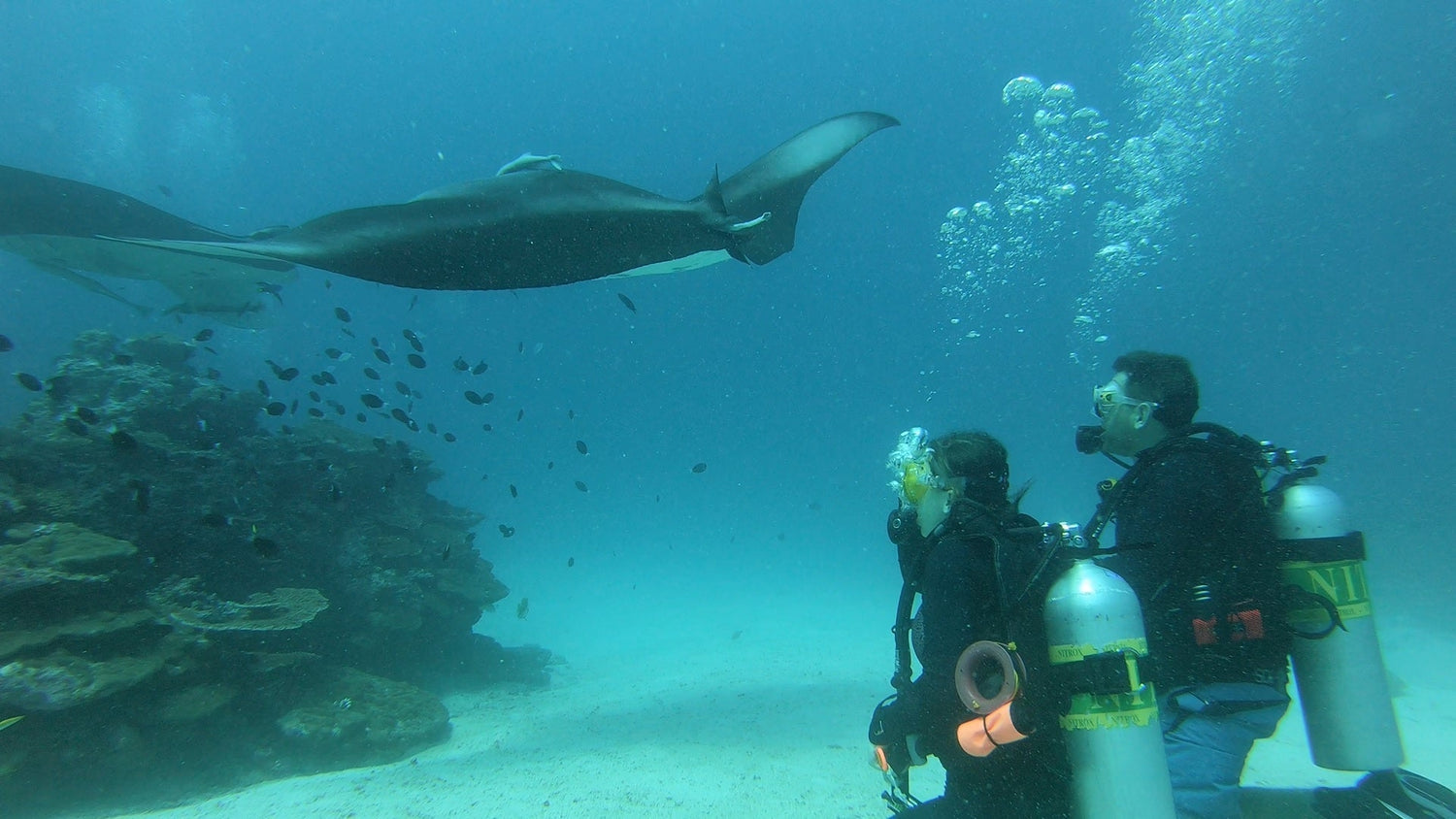
Boat Diving and Open Sea Exploration
A 12-seat diving boat takes 1.5 hours one way from the dive site to the nearest port, 3 hours round trip, and can dive up to 2 times a day at most.
Now, a portable compressor (such as the German Bauer Oceanus gasoline version, weighing 48kg, dimensions 62×41×53cm) is directly installed in the stern storage compartment.
Field tests show that it takes 15 minutes to fill a 12L cylinder (200bar) (flow rate 250L/min). A 5-person team on board dives twice in the morning and twice in the afternoon, with on-site inflation connecting the sessions in between.
Boat owner feedback: Previously, the monthly fuel cost for traveling to and from the port was $300. Now with the portable compressor, fuel costs are saved by $150, and 2 more private diving groups can be accepted.
Another liveaboard boat in the Maldives uses a lithium battery version (Bauer Lithium, 42kg), which is silent at 55dB and does not affect guests' rest. A full charge can fill 8 cylinders (2-hour battery life), suitable for short-distance atoll diving.
Remote Lakes
Flathead Lake in Montana, USA, is a popular cold-water lake dive site with no fixed inflation stations within 50km around.
Solo divers bring a gasoline engine version (Italy's Coltri MCH13, weighing 50kg, dimensions 65×43×55cm), connect a 5L fuel tank (full tank $20) at the lakeside campsite, and fill a 12L cylinder (200bar) in 12 minutes (flow rate 280L/min).
User field test: Previously, driving 3 hours to the lake with full cylinders, worrying about air leakage due to bumps on the road; now bringing empty cylinders and inflating on-site, and transporting empty cylinders is safer (the pressure resistance of empty cylinders is 3 times that of full cylinders).
A diver at a lake in British Columbia, Canada, uses a micro lithium battery version (Haskel AGD-15, 28kg), which can be carried into the mountains in a backpack. The 2-hour battery life can fill 4 cylinders, enough for two days of solo diving.
Cave Diving
Crystal cave diving in the Yucatan Peninsula, Mexico, requires light equipment due to narrow passages, but gas consumption is fast in deep diving (40m+).
Divers place a portable compressor (Coltri MCH6 single-cylinder version, 46kg, dimensions 58×38×52cm) on the platform at the cave entrance.
Field tests show that it takes 25 minutes to fill a 12L cylinder (300bar technical diving pressure) (flow rate 180L/min), and continuous operation for 2 hours can fill 4 cylinders for 2 divers to take turns diving.
Comparison with before: After each deep dive, it was necessary to climb out of the cave (10 minutes), drive 1 hour to the nearest inflation station in Tulum (15 minutes to fill 1 cylinder), taking 2.5 hours round trip, and only being able to dive once a day. Now with on-site inflation, diving 3 times a day, exploring 3 more cave chambers.
Instant Supply for Small Teams
A diving club in Cornwall, UK, has 3-5 people for weekend activities. Previously, going to a fixed inflation station (40 minutes' drive from the dive site), queuing for 20 minutes to fill 1 cylinder on weekends, and it took 2 hours for 5 people to fill their cylinders.
Now using a dual-cylinder model (Coltri MCH13, flow rate 280L/min), it takes 20 minutes to fill 4 cylinders (12L/200bar), and 8 minutes to fill the 5th cylinder alone.
Club organizer's calculation: Previously, the monthly transportation cost was $100. Now with the portable compressor, transportation costs are saved by $80, and 1 more night dive can be organized per month (there was no time before).
A club in Bavaria, Germany, uses a 220V electric drive version (Bauer Junior II, 46kg), connecting to a generator (5kW, $50/day rental) at the campsite, with noise of 65dB that does not affect picnics, and coffee can be brewed while inflating cylinders.
Emergency Backup
Workers on North Sea oil platforms dive to inspect pipelines, previously relying on platform fixed compressors (occupying a 1.5㎡ machine room), and work would stop once they failed.
Now equipped with a portable lithium battery version (Bauer Lithium 24V, 42kg), a full charge has a battery life of 2 hours to fill 8 cylinders (12L/200bar), enough for a 4-person team's half-day inspection.
Field test on Norway's Statoil platform: After the fixed machine failed, inflation was restored within 30 minutes using the portable one, avoiding downtime losses of $5000/hour.
Another Middle Eastern platform uses a gasoline engine version (Haskel T-100, 50kg), inflating in the corner of the deck, with explosion-proof design (complying with ATEX standards) to avoid oil and gas risks.
Performance Data
Inflation Speed
Single-cylinder models (such as Italy's Coltri MCH6, single-cylinder) take 25-30 minutes to fill a 12L cylinder to 200bar, with a flow rate of 150-180L/min;
Dual-cylinder models (such as Coltri MCH13, Germany's Bauer Oceanus) have a flow rate of 250-300L/min, and can fill the same specification cylinder in 12-15 minutes.
Micro-compressors (such as the US Haskel AGD-15, single-cylinder micro) have a flow rate of 80-120L/min, taking 20 minutes to fill a 6L small cylinder (200bar), and 35 minutes for a 12L cylinder.
Compared with fixed compressors (such as Bauer Mariner fixed dual-cylinder, flow rate 320L/min, filling a 12L cylinder in 10 minutes), portable machines are slower but sufficient — a small team diving 3-4 times in half a day, a single-cylinder machine takes 2 hours to fill 4 cylinders, and a dual-cylinder machine takes 1 hour, which just matches the diving rhythm.
Continuous Operation
Single-cylinder models (such as Coltri MCH6) can fill cylinders continuously at full load for ≤2 hours. Field tests show that after filling 8 cylinders (12L/200bar), the body temperature rises from 40℃ to 85℃, triggering overheating protection and automatic shutdown, requiring 30 minutes of cooling to restart.
Dual-cylinder models (such as Bauer Oceanus) have better heat dissipation, can work continuously for ≤3 hours, and shut down after filling 12 cylinders.
Gasoline engine versions have 20% shorter continuous working time than electric drive versions due to engine heat dissipation (such as the Coltri MCH13 gasoline version can work continuously for 2.5 hours).
Lithium battery versions (such as Bauer Lithium) are limited by battery heating, with power dropping by 10% after 1.5 hours of continuous operation, and forced shutdown after 2 hours.
Flow Rate
Flow rate classification of mainstream models: Micro single-cylinder (Haskel AGD-15) 80-120L/min, suitable for 1-2 person small teams;
Standard single-cylinder (Coltri MCH6, Bauer Junior II) 150-180L/min, for 2-person teams;
Dual-cylinder (Coltri MCH13, Bauer Oceanus) 250-300L/min, for 3-5 person teams;
High-performance dual-cylinder (such as Haskel T-100) can reach 350L/min, but the weight increases to 55kg (close to the portable upper limit).
Flow rate field test data comes from the 2023 evaluation of "Scuba Diving" magazine: The Bauer Oceanus dual-cylinder version fills a 12L cylinder, with a flow rate of 290L/min in the first 5 minutes, and later drops to 260L/min due to temperature rise, with an average of 275L/min.
Environmental Adaptability
Data from field tests by European and American users:
-
High temperature (>35℃): Gasoline engine versions have poor heat dissipation, with power dropping by 15% after 1 hour of continuous operation (such as the Coltri MCH13 gasoline version, flow rate drops from 280L/min to 238L/min at 35℃); lithium battery version's battery life shrinks by 30% (Bauer Lithium's full charge 2 hours → 1.4 hours).
-
Low temperature (<5℃): Oil viscosity increases, making startup difficult (requiring 5 minutes of preheating), and single-cylinder machine's flow rate drops by 10% (Coltri MCH6 drops from 150L/min to 135L/min at 0℃); lithium battery version's discharge efficiency drops by 40% (12V battery voltage drops from 12.6V to 10.8V).
-
Dust/sand and high humidity: Without a filter at the air inlet, the filter element's service life is reduced from 50 cylinders (normal) to 30 cylinders (dust/sand days); in high humidity environments (humidity >80%), the condensation drain valve needs to be opened, draining water once every 10 cylinders filled (standard configuration for Bauer models).
Stationary
Fixed compressors are the mainstream gas supply solution for diving businesses in Europe and America, with a single-machine power of 15-110kW and gas production of 200-1200L/min (12-72m³/h), 4-8 times that of portable equipment (<150L/min).
It supports continuous operation at 300bar high pressure for 72-168 hours, handling 150-600 cylinders per day on average (field test by Florida diving centers in the US).
It requires a 30-50㎡ machine room and 380-480V three-phase electricity, with a unit inflation cost of 0.3-1.5 US dollars per cylinder (40% lower than portable machines under high load).
Definition
Dimensions
The dimensions of fixed compressors vary greatly with power and configuration, and the parameters of mainstream European and American models are as follows:
-
Length: 2.5-4 meters (small 45kW models are about 2.8 meters, large 110kW models can reach 3.8 meters);
-
Width: 1.2-2 meters (including side heat dissipation holes and maintenance doors);
-
Height: 1.5-3 meters (including top air storage tank or muffler).
Example: The German Bauer Mariner 320 (75kW) has dimensions of 3.2 meters long, 1.8 meters wide, and 2.5 meters high;
The Italian Coltri MCH 16 (55kW) is 2.8 meters long, 1.5 meters wide, and 2 meters high.
The machine room needs to reserve a 0.8-1 meter maintenance channel around the equipment, so the actual occupied space is 30%-50% larger than the body.
Material Selection
The total weight of the whole machine is 1.5-5 tons (including base and accessories), and material selection focuses on load-bearing, high pressure resistance and corrosion resistance:
-
Main engine cylinder block: Made of ductile iron (such as QT500-7), with a wall thickness of 20-30mm, capable of withstanding thousands of reciprocating movements per minute under 300bar pressure (deformation <0.01mm);
-
Outer shell: Galvanized steel plate (European inland models) or 316 stainless steel (Nordic coastal models, resistant to salt spray corrosion), with a thickness of 1.5-2mm;
-
Base: I-beam welded frame, with a 10mm thick rubber shock-absorbing pad on the surface (reducing vibration transmission);
-
Air storage tank: ASME certified carbon steel or stainless steel (wall thickness 8-12mm), with a volume of 200-500 liters (such as the US Faber brand 300L tank weighs 280kg).
Case: A 110kW model driven by a US CAT engine (with engine) has a total weight of 5.2 tons and requires a 5-ton forklift for transportation.
Core Components
Core components are divided by function:
-
Compression main engine: Mostly 3-stage piston type (a few are screw type), with an intercooler after each stage of compression (reducing intake air temperature to below 40℃). For example, the Bauer KAP series compresses to 4bar in the first stage, 25bar in the second stage, and 300bar in the third stage.
-
Drive motor: Power 15-110kW, 400V three-phase asynchronous motors (Siemens/ABB brands, IE3 efficiency level) are used in Europe, and 480V motors (efficiency above 92%) are used in North America, with star-delta step-down starting (reducing power grid impact).
-
Cooling system: Divided into water-cooled and air-cooled. Water-cooled models are equipped with copper radiators, requiring external cooling water of 0.5-2L/min (water temperature <30℃, such as titanium alloy heat exchangers need to be installed when using seawater cooling in Norway); air-cooled models have external aluminum fin radiators (1.5×1m in size), equipped with 1-3kW axial flow fans (air volume 5000-10000m³/h).
-
Filtration and drying unit: Three-stage treatment. The first stage is a pre-filter (5μm particles, such as German Ultrafilter UFM-P), the second stage is an activated carbon filter (oil removal precision 0.01mg/m³), and the third stage is a molecular sieve dryer (dew point ≤-40℃, complying with EN 12021 standard). The desiccant is activated alumina, with a filling amount of 50-100kg (regeneration cycle 2000 hours).
-
Control system: PLC touch screen (such as Siemens S7-1200), displaying pressure (precision ±0.5bar), temperature (±1℃), and filter element life (countdown reminder) in real time, with automatic shutdown protection (triggered when over-temperature or over-pressure occurs).
Performance Comparison
Power and Gas Production
The single-machine power of fixed compressors is 15-110kW (45-75kW is commonly used in Europe, 55-110kW in North America), driven by high-power motors for multi-stage compression;
Portable compressors are only 2-15kW (5-10kW is mainstream), the size of a small generator.
The gas production (air output per minute) is even more disparate: fixed compressors have 200-1200L/min (12-72m³/h), for example, the German Bauer 75kW model produces 800L/min, enough to fill 4 10L cylinders (200bar) at the same time;
Portable compressors have 30-150L/min, and the US Air Liquide 10kW model only has 100L/min, taking 20 minutes to fill a 10L cylinder.
Data from the 2023 test by the US Compressed Air and Gas Institute shows that the average gas production of fixed compressors is 4-8 times that of portable ones.
Operation Time Comparison
Water-cooled fixed models (accounting for 80% of the European and American markets) can run continuously for 72-168 hours (3-7 days), controlling temperature with large radiators (such as copper water-cooled rows, 1.5×1m in size);
Two 75kW models on the Norwegian North Sea oil platform operate 8000 hours a year (22 hours a day), with only shutdown for maintenance in between.
Portable compressors rely entirely on air cooling, with slow heat dissipation, and must shut down for 1 hour of cooling after 2-4 hours of continuous operation. Field tests by Florida divers in the US: after a 10kW portable machine filled 4 cylinders (40L in total), the cylinder block temperature exceeded 80℃ and had to rest for half an hour. A 2024 PADI survey shows that failures of portable compressors due to overheating account for 35% of total failures.
Pressure Upper Limit
Mainstream models have a maximum pressure of 300-350bar (such as the Italian Coltri MCH 32 with 350bar), which can directly fill large-capacity 300bar cylinders (such as 12L tactical cylinders);
Portable compressors are limited by small pump heads, with a maximum pressure of 200-250bar (US CAT 15kW model with 250bar), and filling 300bar cylinders requires two transfers.
There is also a difference in pressure stability: the fixed PLC system has a pressure control precision of ±0.5bar, with an error of no more than 2bar when filling 200bar cylinders;
The mechanical pressure gauge of portable compressors has a precision of ±2bar, and field tests often show a deviation of 5-10bar when filling 200bar cylinders (2023 test by US Scuba Pro).
Cylinder Processing Capacity
Fixed compressors can handle 150-600 (10L/200bar cylinders). A diving center in Mallorca, Spain, uses a 75kW model to fill 400 cylinders a day (serving 50 divers);
A 50kW model of the California Fire Department in the US has 300 full cylinders stored in the air storage tank, which can be refilled in 15 minutes in emergencies.
Portable compressors can handle 20-80 cylinders. A British yacht club uses a 5kW model to fill 30 cylinders a day on weekends (serving 10 divers), and needs to rest for 2 hours after filling.
According to PADI data, when the weekly inflation demand exceeds 50 cylinders, the efficiency of fixed compressors is more than 3 times that of portable ones.

Space Requirement
Fixed type
The European and American standard machine room is ≥30㎡ (including equipment + maintenance channel). For example, the machine room of a filling station in Berlin, Germany, is 40㎡ (housing a 75kW machine + 300L air storage tank + dryer);
A diving center in Canada has a 50㎡ machine room, which is also equipped with sound insulation cotton (reducing noise by 20 decibels).
Portable type
US Florida divers place it on the yacht deck (2㎡) or in the corner of the garage (1.5㎡), no foundation is needed, and it can be lifted by 2 people when moving (5kW model weighs 180kg).
Application Scenarios
Diving Centers
The "Blue Water Dive Center" in Mallorca, Spain, installed a German Bauer Mariner 320 (75kW, gas production 800L/min), with a 30㎡ machine room (including 300L air storage tank + dryer).
In the peak season (June-September), it serves 50 divers a day, each with 2 10L cylinders (200bar). A single machine fills 400 cylinders a day, 5 times more efficient than the previous 2 10kW portable machines (80 cylinders a day).
The time to fill 1 cylinder is reduced from 20 minutes (portable machine) to 5 minutes, and the customer waiting time is reduced from 2 hours to 30 minutes.
A 2024 PADI survey shows that 80% of medium-sized diving centers in Europe (daily passenger flow >30 people) choose fixed compressors, because "no queuing in peak season" can accept 20% more orders.
Offshore Oil Platforms
The "Johan Sverdrup" oilfield in the Norwegian North Sea installed 2 Italian Coltri MCH 16 (55kW each, gas production 600L/min), with water-cooled heat dissipation (connected to the platform seawater system), operating 8000 hours a year (22 hours a day).
Gas supply target: 30-person professional diving team (ROV operators + inspectors), with 500 cylinders in stock (200bar).
Platform logs show that there were 0 gas supply interruptions due to compressor failures in 2023, completing 12 more emergency inspections than before using portable machines (3 failures a year, 4 hours of gas interruption each time).
Similar to platforms in the Gulf of Mexico in North America, US Shell uses a US CAT 110kW model (gas production 1200L/min) to supply 2 diving teams (40 people in total) at the same time, saving 80,000 US dollars in outsourced inflation costs annually.
Fire Rescue
The "Orange County Fire Authority" in California, US, installed a US Ingersoll Rand 50kW model (gas production 500L/min), equipped with a 500L air storage tank (storing 300 10L/200bar cylinders).
In 2023, it participated in 12 underwater rescues (shipwrecks, drownings), completing cylinder supply 15 minutes before each dispatch, 1 time faster than the previous portable machine (30 minutes).
Equipment parameters: water-cooled heat dissipation (connected to fire station tap water), filtration system complying with NFPA 1989 standard (dew point -40℃), annual maintenance cost 2000 US dollars (including filter elements and lubricating oil).
Similar to the Vancouver Fire Department in Canada, which uses a German Kaeser 45kW model with 200 cylinders stored in the air storage tank, achieving 0 emergency response delays in 2022.
Cylinder Filling Stations
The "Linde Gas" filling station in Berlin, Germany, installed 3 Bauer PE 680 (110kW each, gas production 1200L/min), operating in two shifts (24-hour operation).
It fills 12,000 cylinders a month (including diving cylinders and industrial high-pressure cylinders), of which diving cylinders account for 40% (4800 cylinders/month).
Process: empty cylinder scanning → three-stage filtration inflation (300bar) → quality inspection (measuring dew point and oil content) → warehousing.
The cost per cylinder is 0.8 euros (0.3 euros for electricity + 0.2 euros for consumables + 0.3 euros for labor), saving 47% compared with portable machines (1.5 euros per cylinder).
The station manager said: "Fixed compressors are like factory assembly lines, with monthly production capacity 6 times that of portable machines."
Yacht Clubs
The "Cowes Yacht Club" (Isle of Wight) in the UK installed a Coltri Super Silent 60 (60kW, gas production 700L/min), with a 25㎡ machine room (by the dock), using seawater cooling.
Member yachts carry 2-4 cylinders, and 200 cylinders are filled per week in the peak season (May-September), serving 3 times more members than portable machines (50 cylinders per week).
Club data: The fixed compressor operates 3000 hours a year, with an electricity cost of 9000 pounds, and the cost per member cylinder is 1.2 pounds (1.8 pounds for portable machines).
Similar to the "Royal Norwegian Yacht Club" in Norway, which uses a 75kW model with the air storage tank directly connected to the dock inflation station, allowing members to inflate independently (swipe card for billing).
Research Institutions
The Woods Hole Oceanographic Institution (WHOI) in the US installed a US Sauer Compressors WP 110 (110kW, gas production 1200L/min), equipped with four-stage filtration (adding HEPA filter), with a dew point of -70℃ (far exceeding EN 12021's -40℃) and oil content of 0.001mg/m³ (0.1mg/m³ for portable machines).
It is used to inflate cylinders for underwater robots (preventing sensor pollution), filling 8000 cylinders a year, with an equipment failure rate of 0.5% (5% for portable machines).
Researcher feedback: "The robot sensors have not rusted after 3 years of use, thanks to the drying system of the fixed compressor."


اترك تعليقًا
تخضع جميع التعليقات للإشراف قبل نشرها.
This site is protected by hCaptcha and the hCaptcha Privacy Policy and Terms of Service apply.