
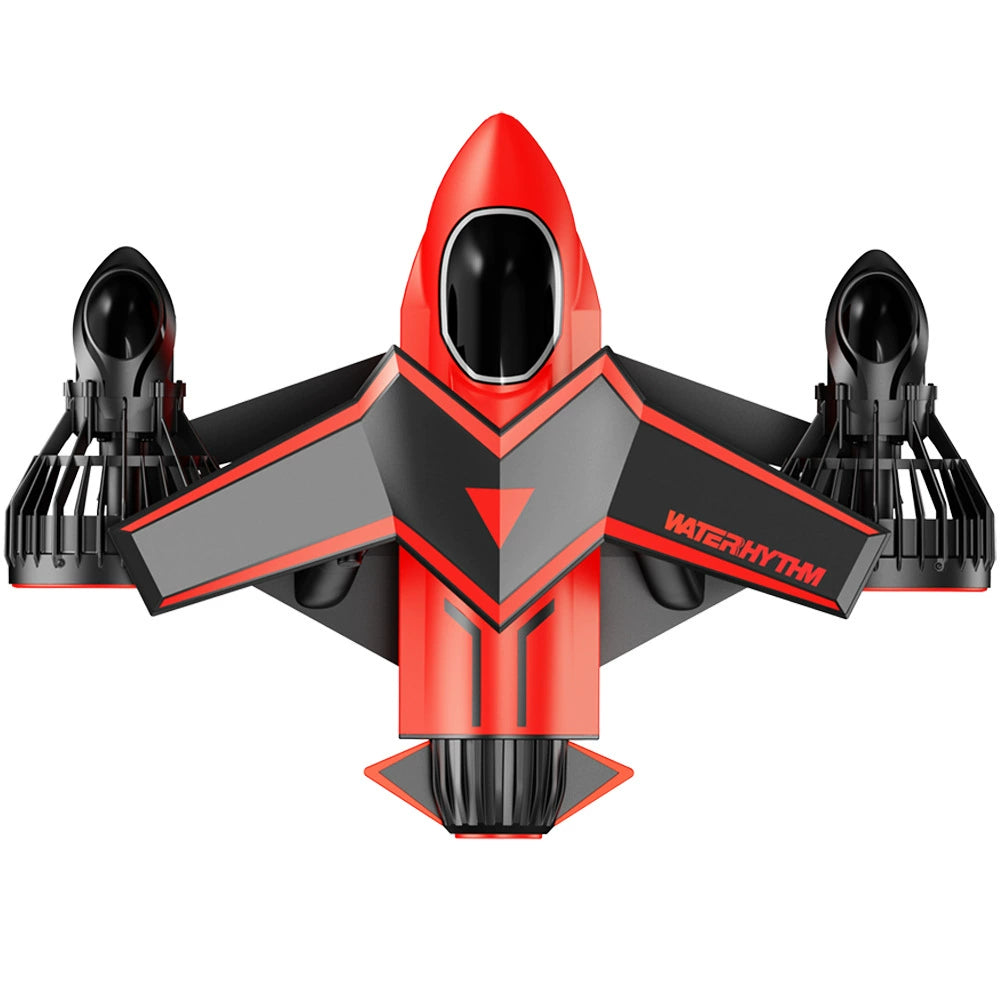
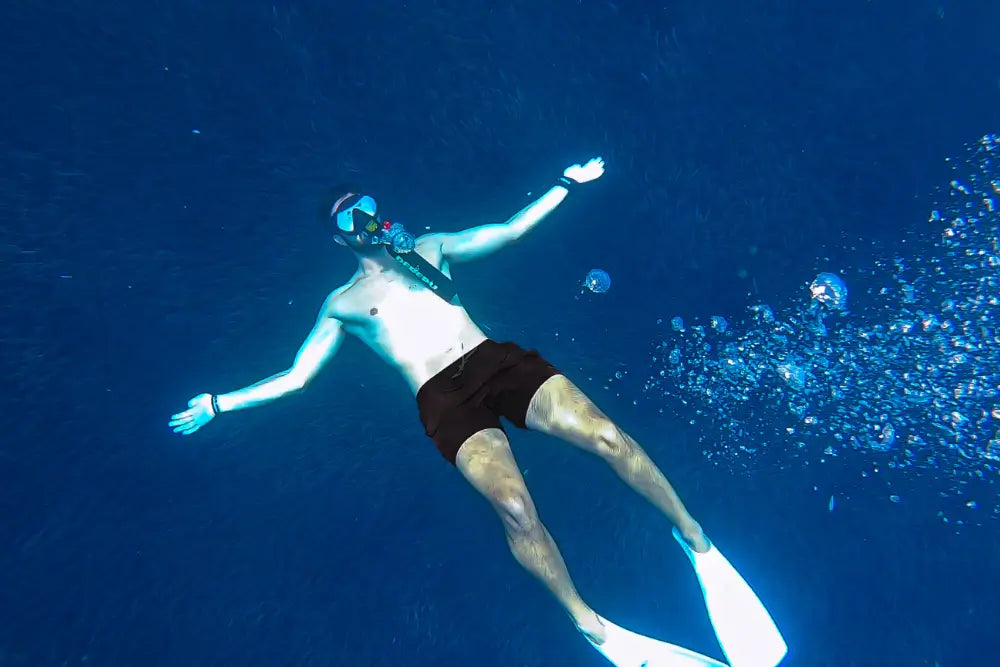
Mini scuba tanks are compact breathing gas sources purpose-built for underwater sightseeing — typically ranging from 0.3 to 1 liter in capacity, a stark contrast to conventional scuba cylinders rated at 10 liters or more. Because the available air supply is limited and the use environment is specific, comfort, air management, and site selection become the core factors that determine the overall experience quality.
Comfort
Secure Fit
Mini scuba tanks differ fundamentally from conventional cylinders in how they are worn. Because tank capacity typically ranges from 0.3 to 1.2 liters and overall weight is significantly reduced, the mounting method has been simplified from a professional harness system to an adjustable strap-style or vest-style carrier. Marine Technology Journal 2021 published research showing that for every 2-centimeter deviation in tank fit, a diver's center-of-gravity offset underwater increases by approximately 15%, directly raising physical exertion.
| Parameter | Conventional Scuba Tank | Mini Scuba Tank |
|---|---|---|
| Typical Capacity | 10-15 liters | 0.3-1.2 liters |
| Filled Weight | 14-18 kg | 1.2-2.5 kg |
| Carry Method | BCD buoyancy compensator | Single strap or vest |
| Rated Depth | 0-40 meters | 0-10 meters |
For initial fit adjustment, it is recommended to simulate underwater posture on land first — extend both arms forward and bend slightly, then observe whether the tank slides forward with arm movement. If sliding occurs, the waist buckle position is too low and the adjustment buckle should be raised by 3 to 5 centimeters. Specialized dive gear shops typically offer tank harness calibration services, using counterweight blocks to simulate underwater buoyancy conditions for precise fitting.
Adjustable straps are the key component for achieving a secure fit. Wide, padded shoulder straps distribute shoulder pressure, and adjustment buckles should operate smoothly with anti-corrosion treatment for seawater exposure. Some products use a three-point fixation structure with a separate anchor point at the chest, waist, and shoulder — theoretically keeping tank sway within 2 centimeters.
Scuba Diving International Standards Association, 2022 — Recreational diving equipment weight distribution guidelines recommend that the tank center of gravity sit 3 to 5 centimeters below the scapula.
- Confirm all adjustment buckles are locked before entering the water
- Re-adjust strap tension when switching between different thickness wetsuits
Proper fit adjustment also affects air consumption efficiency. When the tank shifts with each kick cycle, the diver unconsciously adjusts body position to compensate, which can increase air consumption by an estimated 5 to 8 percent over a full dive. In a closed-water environment with no current, this penalty may be tolerable, but in areas with even mild surge, the accumulated compensation effort adds measurable metabolic load.
Shoulder strap padding width of 5 centimeters or greater significantly reduces pressure point formation during extended sessions. Thinner straps, while lighter, concentrate pressure onto a narrower area of the deltoid muscle — most divers notice discomfort after 15 to 20 minutes with straps under 3 centimeters wide. Replacement padding is widely available from dive equipment suppliers and can be swapped without professional tools, making long-term comfort upgrades straightforward.

Mouth Feel
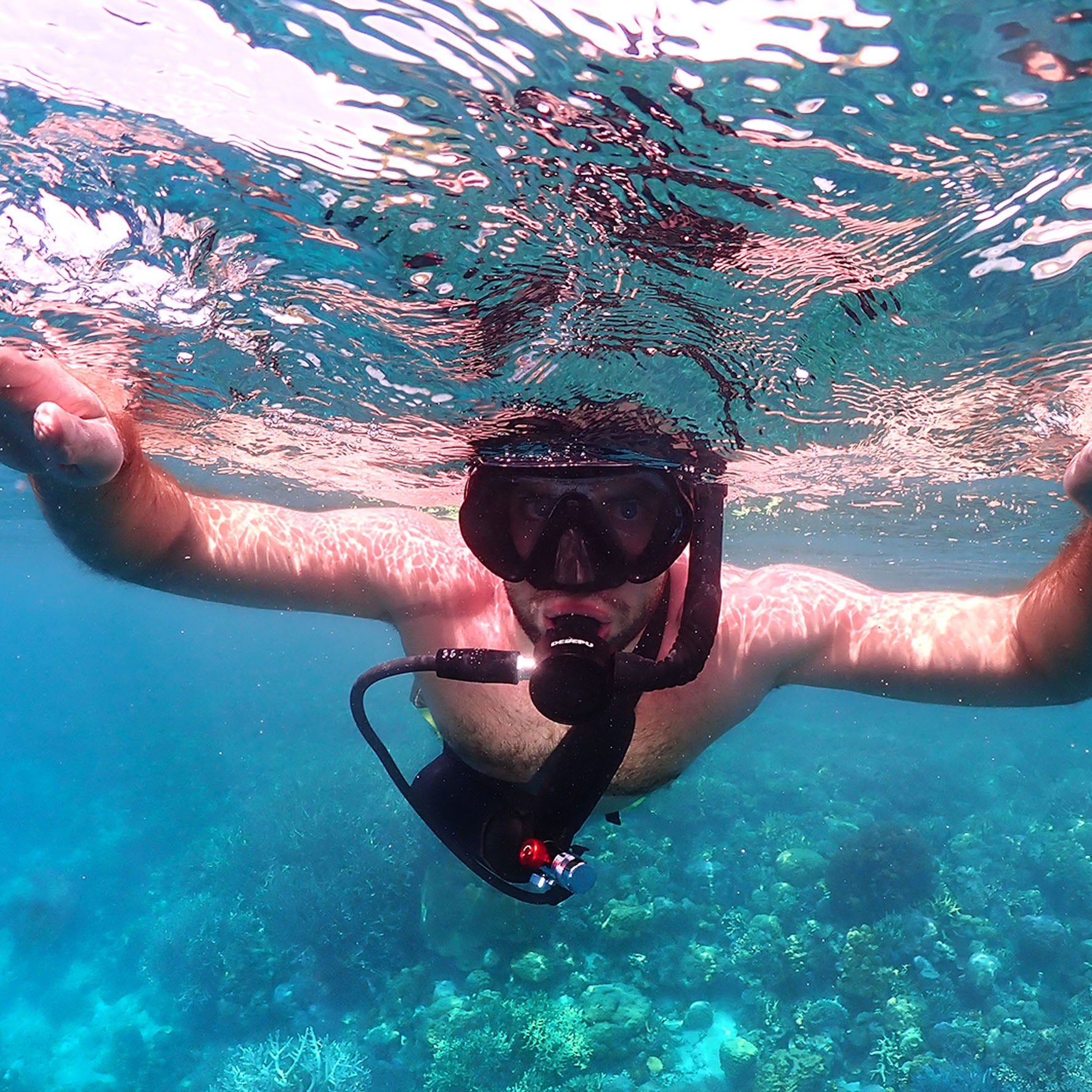
The regulator mouthpiece is the sole contact point between the diver and the tank's air supply, and its material and geometry have a significant impact on comfort during extended use. Because mini scuba tanks produce airflow resistance comparable to larger cylinders, divers often keep the mouthpiece in their mouth for 30 minutes to one hour continuously — if the material is too hard or the shape does not match human oral anatomy, temporomandibular joint fatigue becomes likely.
| Material | Shore Hardness | Water Temp Range | Service Life |
|---|---|---|---|
| Food-grade silicone | 35-45 A | 5-35°C | 2-3 years |
| Traditional rubber | 55-65 A | 10-40°C | 1-2 years |
| TPR thermoplastic rubber | 40-50 A | 0-30°C | 1.5-2 years |
Food-grade silicone is the dominant mouthpiece material in mini scuba tank products, with Shore hardness typically controlled between 35 and 45 to balance softness and durability. Compared with traditional rubber, silicone ages approximately 60% more slowly in seawater immersion, and hardening in cold winter conditions is also milder. Some premium models add anti-slip textures on the inner surface of the mouthpiece to reduce displacement caused by changes in biting force.
When selecting a mouthpiece, it is advisable to conduct a bite test at a dive shop first: keep the mouthpiece clenched for 3 minutes and observe whether jaw soreness or corner-of-mouth impressions appear. An impression width exceeding 3 millimeters or depth over 1 millimeter indicates insufficient match between the mouthpiece and oral anatomy, posing a risk of gum damage with long-term use. Silicone mouthpieces stored in a hot vehicle in summer should be inspected for deformation — if adhesion is found, discontinue use.
Diving Equipment Safety Review, 2020 — Mouthpiece material aging test: after 500 hours of immersion in simulated seawater at 3.5% salinity, traditional rubber hardness increase was 2.3 times that of silicone.
Beyond hardness, the mouthpiece channel diameter also influences breath resistance. Channels sized between 12 and 15 millimeters in inner diameter provide an optimal balance for mini tank air delivery — too narrow and breathing effort rises noticeably, too wide and the exhale resistance needed to clear spent air from the dead space becomes uncomfortable.
Mouthpiece temperature also affects perceived comfort in cold water. Silicone retains less cold than rubber, meaning in water below 15 degrees Celsius, silicone mouthpieces feel noticeably warmer on initial contact. For divers who frequently use mini tanks in cooler temperate waters, this thermal property is a meaningful differentiator between material options.
Regular inspection of the mouthpiece for surface cracks and dimensional changes extends its serviceable lifespan. Any signs of permanent compression deformation, surface crazing, or chemical staining from sunscreen or insect repellent should prompt replacement regardless of stated age — these degrade the sealing surface and can introduce leaks into the second stage demand valve.
Freedom of Movement
Underwater Tourism Journal, Vol.18, 2023 — The average single underwater sightseeing dive duration is 38 minutes, and among diver satisfaction scores for equipment freedom, the "unrestricted movement" indicator accounts for 42% of total weight.
Underwater sightseeing differs from ordinary recreational diving in that divers need to frequently turn, hover, and approach seabed rocks to observe marine life. The tank's physical presence should be minimized so it does not interfere with the viewing experience. Mini scuba tanks address this through two design approaches: capacity miniaturization and center-of-gravity centralization.
Taking a 0.5-liter aluminum cylinder as an example, its length is typically 30 to 35 centimeters, and it can be fixed vertically on the back or horizontally at the upper waist. When mounted horizontally, the cylinder axis runs parallel to the body's coronal plane, allowing the diver's pitch posture to remain unobstructed and hovering visuals closer to natural floatation. When mounted vertically, the top of the tank should not extend more than 5 centimeters above the crown of the head, otherwise there is a collision risk when passing through low rock passages.
Some mini scuba tanks are equipped with quick-release buckles, enabling single-handed emergency release of the tank attachment. This feature is particularly important when the tank catches on rocks or when a rapid ascent is needed. Release buckle pull force should be set between 15 and 25 newtons — too light and accidental release occurs during normal activity, too heavy and quick release in an emergency becomes difficult. It is recommended to check the spring return function of quick-release buckles monthly; if any sticking is detected, replace promptly.
- Horizontal mounting is suited for reef-rich nearshore environments
- Vertical carrying is suited for open-water swimming and viewing
- Check quick-release buckle spring return function monthly
Body torque — the rotational force generated when walking or turning on land — transfers differently depending on tank mounting orientation. A horizontally mounted tank introduces less rotational resistance when the diver turns, because the tank axis is already parallel to the direction of turn. A vertically mounted tank requires the diver to rotate around the cylinder, adding roughly 8 to 12 percent more torso effort per turn compared to horizontal mounting.
For divers wearing thicker wetsuits (7mm or more), the combined thickness of wetsuit and tank on the back reduces the available shoulder range of motion by approximately 15 degrees in forward elevation. This matters when raising arms overhead to navigate under overhangs — the reduced clearance increases the risk of accidentally knocking the tank against solid surfaces.
Air Management
Breathing Duration
Calculating breathing duration is the core safety indicator for mini scuba tank use. A diver's air consumption rate at rest is typically calculated at 10 to 15 liters per minute, with 12 liters per minute used as the reference baseline. A 0.5-liter filled tank at 1 atmosphere pressure provides approximately 50 liters of usable air, corresponding to approximately 4 minutes of theoretical resting breathing time.
Underwater sightseeing, however, is not a stationary activity — swimming-induced metabolic acceleration increases air consumption by 2 to 3 times. Based on field experience, the actual effective breathing duration for a 0.5-liter tank is typically 90 seconds to 3 minutes, depending on the diver's breathing rate, water depth, and water temperature. Tanks of 1 liter or larger can extend effective breathing duration to 5 to 7 minutes, though total weight increases accordingly.
Judging breathing duration should not rely solely on time — it must also be calculated in combination with tank specifications and water depth. For every 10 meters of depth increase, ambient water pressure rises by 1 atmosphere, and the air consumption rate scales proportionally, meaning actual available air volume decreases proportionally as well. Therefore, breathing duration at 5 meters depth is approximately 50% of that at the surface, and at 10 meters only 33% remains.
NAUI Worldwide Diving Statistics, 2022 — Average air consumption rate report for recreational divers: divers in the Asia-Pacific region average 14.2 liters per minute in tropical sea areas, higher than the 12.1 liters per minute in Europe and North America.
A precise method for calculating breathing duration: while breathing normally at the surface, hold your breath at the end of an inhale and time it. If the breath-hold exceeds 25 seconds, the breathing rate is within the normal range; if suffocation is felt in under 15 seconds, the breathing depth is too shallow and diaphragmatic deep-breathing practice is advised. When using a mini tank underwater, it is recommended to perform a breathing rhythm self-check every 2 minutes to ensure the overall air consumption rate stays within the safe range.
Water temperature indirectly affects breathing duration through its influence on metabolic rate. Colder water (below 15 degrees Celsius) triggers the mammalian diving reflex, which reduces heart rate and redirects blood flow to essential organs — this actually lowers air consumption in cold water by approximately 10 to 15 percent compared to temperate water of 20 to 25 degrees Celsius.
For planning purposes, a practical field calculation: multiply the tank liter capacity by the depth factor (surface = 1.0, 5 meters = 0.67, 10 meters = 0.5), then divide by the diver personal air consumption rate measured at the surface. Most adults at moderate activity level consume 15 to 20 liters per minute at the surface, providing a realistic baseline for field estimation.
Air Quantity Check
- Before entering the water, have a dive buddy mutually confirm tank pressure readings
- When diving solo, independently verify using a waterproof digital pressure gauge
- Tank pressure should reach the rated working pressure (typically 200 Bar or 300 Bar at standard conditions)
- Inspect the valve core for any leakage signs — pressure gauge reading should remain stable for 5 minutes after valve closure
The pre-descent Buddy Check is the foundation of diving safety procedures, and a key element is confirming the tank air quantity. Most recreational dive training agencies standardize the air check as three SAA steps: S — Squwba valve switch, A — Air quantity confirmation, A — Activate BCD inflation valve response. The Buddy Check should be completed at the surface and never deferred until problems arise underwater.
| Working Pressure | 200 Bar (Steel) | 200 Bar (Aluminum) | 300 Bar (Steel) |
|---|---|---|---|
| 0.5L capacity | 100 liters air | 100 liters air | 150 liters air |
| 1L capacity | 200 liters air | 200 liters air | 300 liters air |
| Suitable For | Adult beginners | Youth / Female | Adult advanced |
Digital pressure gauge readings should be verified again after entering the water, because water pressure changes may cause slight pointer drift. Some divers only discover abnormal pressure gauge readings after entering the water — risks that should have been ruled out during the pre-entry final check. It is recommended to install the pressure gauge at a position visible at the surface without needing to look down, avoiding distraction from the surrounding environment while underwater.
For divers conducting underwater sightseeing solo, it is advisable to equip an electronic wrist display with a low-pressure alarm function. When air quantity drops to 50 Bar, the alarm device will emit a sound or vibration warning, reserving sufficient air margin for the return ascent. When diving alone, the margin for error in air management is virtually zero — any misjudgment can lead to a passive situation underwater.
DAN Europe Annual Diving Safety Report, 2021 — Air quantity-related incident analysis: approximately 18% of non-fatal diving incidents are directly linked to air quantity estimation errors, with neglected air checks being the primary contributing factor.
The pressure gauge type matters for accuracy in mini tank applications. Brass-bodied analog gauges are more durable in rough handling but can suffer from internal corrosion over time, causing the needle to stick at higher readings. Digital gauges offer better precision and do not have mechanical linkage wear, but battery life must be confirmed before each dive.
A commonly overlooked check is the residual pressure indicator or tank boot fill valve. In some tank designs, air can become trapped in the boot area below the valve, creating a false high reading if the valve is opened quickly without cracking it first. The correct procedure: crack the valve open slowly and listen for a brief pressure release before fully opening — this bleeds off any boot-space pressure and gives a true tank reading.
Air Conservation
Mastering air conservation techniques can extend the effective dive duration of the same air supply by 30% to 50%. Breathing technique is the most critical factor. Chest-type rapid breathing delivers approximately 0.5 to 0.8 liters per breath, while diaphragmatic slow breathing can increase breath volume to 1.2 to 1.5 liters — more efficient gas exchange means fewer breaths per minute and lower metabolic consumption.
- Maintain a streamlined posture with head down and body horizontal
- Control breathing frequency at 8 to 12 breaths per minute, avoid rushing
- Use abdominal deep breathing rather than shallow chest breathing
- Maintain neutral buoyancy to reduce kick frequency
| Breathing Method | Volume per Breath | Breaths per Minute | Total Air per Minute |
|---|---|---|---|
| Rapid chest breathing | 0.5 L | 20 breaths | 10 L |
| Slow diaphragmatic breathing | 1.2 L | 8 breaths | 9.6 L |
| Standard at-rest breathing | 0.8 L | 12 breaths | 9.6 L |
Kicking technique also significantly affects air consumption. The frog kick has higher propulsion efficiency than the flutter kick, because frog kicks utilize the elastic resistance of water to generate thrust, whereas flutter kicks must continuously overcome fluid resistance. In a neutral buoyancy hovering state, an experienced diver using frog kick can save approximately 20% of movement air consumption compared to flutter kick. It is advisable to practice frog kick technique in shallow water first, and only enter deeper water with a mini tank for sightseeing after proficiency is achieved.
PADI Diving Knowledge, 2023 — Air consumption optimization guide: system-trained divers consume on average 27% less air than untrained divers under the same conditions, with buoyancy control accounting for approximately 60% of the total savings.
Buoyancy control has an equally important impact on air efficiency. Excessive negative buoyancy causes the body to sink, forcing up kick frequency; excessive positive buoyancy makes the body rise, requiring constant deflation to maintain depth. Both conditions significantly increase air consumption rate. Once a diver masters neutral buoyancy hovering technique, they can maintain position with virtually no additional physical exertion, reserving air volume primarily for exploration rather than for fighting buoyancy.
Mental state also influences air consumption more than most beginners realize. Anxiety triggers shallow, rapid breathing that can double or triple the surface air consumption rate within seconds. Practices such as box breathing (4-count inhale, 4-count hold, 4-count exhale, 4-count hold) have been shown to lower respiratory rate by 20 to 30 percent in recreational divers when performed consciously before and during the dive.
Regulator cracking pressure — the inhale effort required to first open the demand valve — varies between models. Regulators with a cracking pressure above 3.5 mbar require noticeably more effort on each breath start, adding to perceived breathing work. For mini tank use where every breath counts, a low-cracking-pressure second stage (ideally below 2.5 mbar) contributes meaningfully to overall air conservation.

Best Locations
Calm Waters
Calm waters deliver the best mini scuba tank experience. Water current speed has a linear effect on air consumption: a 0.3 m/s current increases swimming air consumption by approximately 50%, and a 1 m/s current can raise air consumption to 3 times the stationary rate. Enclosed freshwater environments with no sustained current flow are the preferred starting location for first-time mini tank users.
| Water Body Type | Flow Speed | Suitable Tank Capacity | Recommended Experience |
|---|---|---|---|
| Enclosed freshwater lake | 0-0.1 m/s | 0.3-0.5 L | Beginner |
| Sheltered bay | 0.1-0.3 m/s | 0.5-1 L | Intermediate |
| Open coastal nearshore | 0.3-0.8 m/s | Above 1 L | Advanced |
| Tidal channel / rapid current zone | >0.8 m/s | Not recommended | — |
Bay-type sheltered waters with sea cliffs or reef barriers can reduce surface wave action by more than 70%, and low-tide periods often create ideal still-water areas. Some nearshore marine protected areas maintain calm conditions during specific seasons with underwater visibility exceeding 10 meters — combining safety and viewing quality, these are an advanced option for mini tank underwater sightseeing.
A practical technique for assessing current presence is to observe the movement direction and speed of surface floating objects. Gently place a leaf or dive glove on the water surface — if the object moves more than 2 meters within 10 seconds, the surface current speed has exceeded the mini tank safety threshold, and entry should be postponed or an alternative area selected.
Global Dive Tourism Association, 2022 — Asia-Pacific mini scuba tank usage water body survey: enclosed freshwater environments scored 4.6 out of 5 on user satisfaction versus 3.8 out of 5 for open coastlines, with the main differences in current interference and air consumption.
- Check the local tidal table before entry, selecting a slack tide period
- Monitor wind forecasts — wind speed above Beaufort force 4 significantly strengthens currents
Seasonal thermoclines in lakes create a natural stratification where warmer surface water sits above colder deep water. During thermocline formation in late spring and summer, the density boundary between layers can create a false sense of calm at the surface while subsurface currents of 0.2 to 0.4 meters per second exist at depth. Divers unfamiliar with thermocline behavior may enter what appears to be still water only to encounter unexpected lateral movement below the surface layer.
Tidal range also affects apparent calm in coastal areas. A large tidal range (above 4 meters) creates stronger horizontal currents during tidal transitions even when wind is calm. Checking the tidal coefficient before planning a coastal dive — values above 90 indicate strong tidal movement and should prompt selection of a more sheltered site or a slack-water window within the tidal cycle.
Clear Visibility
The core value of underwater sightseeing lies in the visual experience, making water clarity the highest-weighted indicator when selecting a location. When visibility falls below 3 meters, it becomes difficult for divers to identify reef details and marine life, significantly reducing the sightseeing value; when visibility reaches 5 meters or above, the blue-toned ocean environment becomes apparent, serving as the baseline for mini tank sightseeing.
Factors affecting water visibility primarily include plankton density, sediment resuspension, and water eutrophication level. Freshwater lakes during spring algae bloom periods can have visibility drop to 0.5 meters or less, while winter low-temperature periods often reach 8 meters or more. Coastal sea areas are strongly influenced by tides and wind waves — after spring tides, water becomes turbid and visibility can drop by 50% in a short period.
| Visibility Range | Visual Experience | Suitable Tank Capacity | Notes |
|---|---|---|---|
| 1-3 meters | Hazy and unclear | Any capacity | Not recommended |
| 3-5 meters | Basically discernible | 0.3-0.5 L | Avoid kicking up bottom sediment |
| 5-10 meters | Clear and comfortable | 0.5-1 L | Suitable for sightseeing |
| >10 meters | Excellent and open | Any capacity | Advanced areas |
Another important reference indicator in water quality monitoring data is chlorophyll-a concentration. When chlorophyll-a concentration is below 5 micrograms per liter, water typically presents a blue-green hue with good visibility; when concentration exceeds 20 micrograms per liter, water turns turbid green and plankton density is too high for underwater sightseeing.
NOAA Coastal Services Center, 2021 — Water transparency measurement method: using a Secchi disk under standard conditions, the read depth and visibility have good linear correlation.
- Prioritize periods outside 2 to 3 days after rainfall, when water is relatively clear
- Morning hours before thermal stratification forms are best — bottom sediments are less likely to be lifted
Particle load in water — suspended solid matter including sediment, algae, and detritus — is the primary driver of reduced visibility, not the water itself. After storm events, runoff introduces large quantities of terrigenous sediment into coastal and lake systems, dramatically lowering visibility for 24 to 72 hours depending on particle settling rates. Sandy-bottomed sites recover faster than muddy-bottomed sites because sand particles settle at higher velocities, clearing the water column more quickly.
Underwater photographers note that 5 to 10 meter visibility is the practical minimum for capturing recognizable images of marine life. Below 3 meters, even wide-angle photography produces images dominated by backscatter — suspended particles lit by the strobe that create a hazy, low-contrast appearance. Mini tank sightseeing at sites with 5 meter or greater visibility allows for meaningful visual engagement with the underwater environment.
Safe Entry
International Association of Dive Tour Operators, 2023 — Underwater sightseeing entry and exit incident statistics: approximately 65% of accidents occur during water entry and exit phases, with main risks being surface impact injury, equipment detachment, and sudden current carry-away.
Entry method directly affects the safety foundation of subsequent underwater activities. The giant stride entry is suitable for calm environments with depth not exceeding 5 meters — the diver holds the mask and mouthpiece with both hands, enters feet-first, effectively avoiding internal organ injury from frontal torso impact against the water surface. The backward roll entry requires a certain water surface area and is not suitable for waters with rocks or boats.
In reef-rich nearshore environments, the exit location must be planned before entry, with theexit path clearly identified. If the exit reef is slippery and wave surge periods are unstable, a diver may lose support at the last moment, leading to mask detachment or tank strap loosening. It is recommended to have a support person at the exit point, or use a rope-assisted system to secure position.
For responding to sudden currents, the measure is to identify the nearest shelter position before entering the water. When current speed exceeds 0.5 meters per second, swimming back against the current is nearly impossible — drift downstream along the current to a fixed reference point and wait for rescue or exit independently. Because mini tank users have limited air volume, when encountering sudden currents, air should prioritize ascent and exit rather than fighting the current underwater.
- Inspect the seabed condition at the entry point, avoiding sharp rocks and sea urchin colonies
- Confirm that surface lifeguard personnel are present or maintain visual contact with a dive buddy throughout
- After securing the tank, gently jump in and feel whether the securing system is firm
Equipment failure during entry accounts for a significant share of diving incidents. The most common equipment issue is tank valve entanglement — the regulator second stage hose can catch on the entry point edge during giant stride entry, momentarily yanking the regulator from the mouth. A simple countermeasure is to route the hose along the inside of the arm rather than across the chest before entry, keeping it away from potential snag points.
Water entry impact injuries are particularly common with mini tanks because the reduced weight leads some users to underestimate entry speed. At the surface, a 2 kilogram mini tank decelerates differently from a 15 kilogram conventional cylinder — the lighter mass means greater acceleration during the fall and a slightly harder surface impact if entry posture is not controlled. Maintaining a streamlined vertical position with legs together through the entry plane is especially important with a mini tank.
For divers using mini scuba tanks for underwater sightseeing for the first time, it is recommended to start in enclosed calm waters and accumulate experience before entering open coastal environments. Regardless of location choice, air management and personal comfort should always remain the primary safety concerns throughout every dive, each and every time.


اترك تعليقًا
تخضع جميع التعليقات للإشراف قبل نشرها.
This site is protected by hCaptcha and the hCaptcha Privacy Policy and Terms of Service apply.