
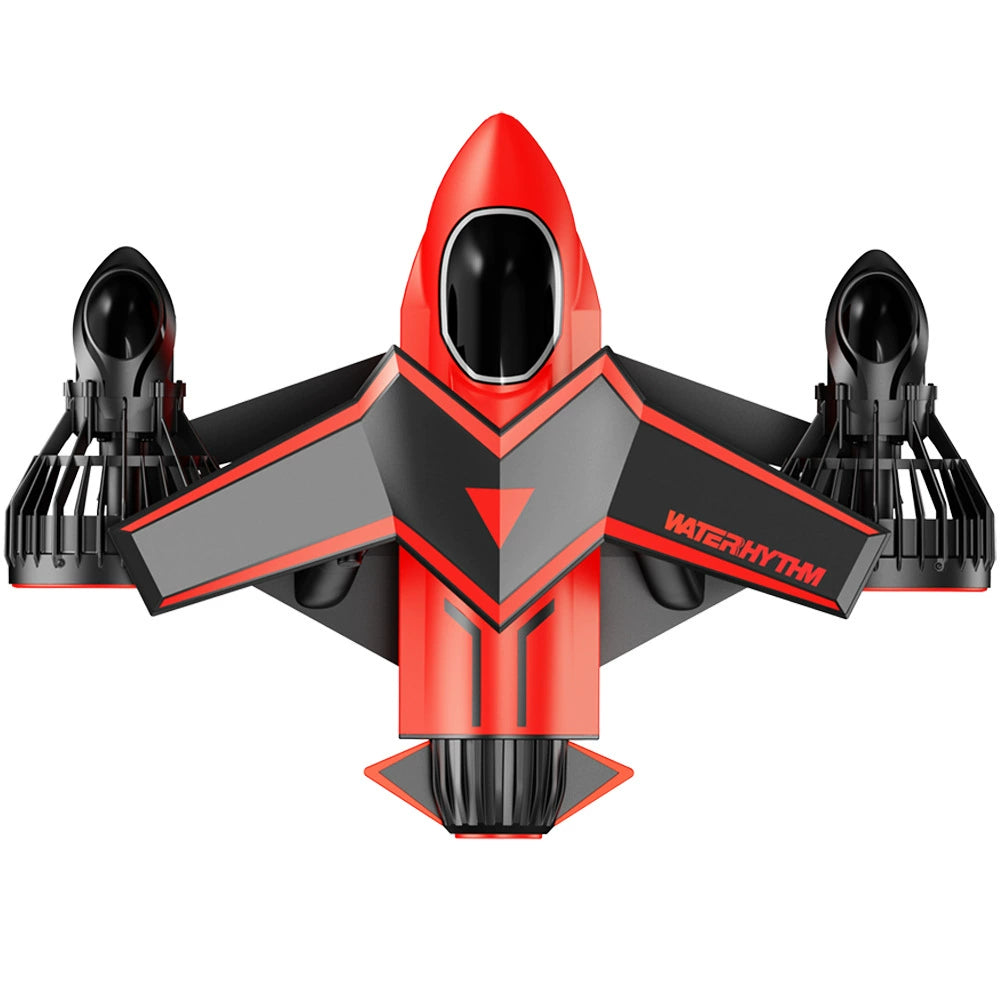

When selecting a mini scuba cylinder, 0.5L and 1L are the golden specifications that balance portability and practicality.
If you are only using it for shallow snorkeling or emergency boat bottom inspections, the 0.5L model is lightweight and burden-free, providing approximately 5-8 minutes (about 170 breaths) of underwater breathing; if you seek a more complete underwater adventure experience, the 1L model offers better value for money, with a golden duration of up to 15-20 minutes (about 340 breaths).

Underwater Duration
0.5L, 1.0L, and 2.0L cylinders store approximately 100L, 200L, and 400L of compressed air respectively at a rated pressure of 3000 PSI (200 Bar). Based on an average adult Respiratory Minute Volume (RMV) of 15-20L/min, the theoretical duration for a 0.5L specification at the surface is 5-6 minutes, but this reduces to 2.5-3 minutes at a depth of 10 meters (2 atmospheres). A 2.0L specification can typically maintain 15-20 minutes of breathing at a depth of 5 meters; specific performance is affected by fluctuations in depth, lung capacity, and ambient water temperature.
Pressure and Depth
Boyle's Law states that at a constant temperature, the volume of a gas is inversely proportional to its pressure. A diver experiences 1 standard atmosphere (1 ATA) at sea level, and for every 10 meters (33 feet) of descent, the ambient pressure increases by 1 ATA. At a depth of 10 meters, the pressure is 2 ATA; at a depth of 20 meters, the pressure is 3 ATA.
Mini scuba cylinders are typically marked with 3000 PSI, which is approximately 206.8 Bar. A 1.0-liter capacity cylinder, when filled to full pressure, stores a total of approximately 200 liters of compressed air. When breathing at the surface (1 ATA), these 200 liters of gas can last for 10 minutes at a consumption rate of 20L/min.
When descending to 10 meters (2 ATA), every breath a diver inhales is compressed to half its surface volume, causing the air density to double. A single breath with the same lung capacity consumes twice the molecular mass as at the surface. At this point, the 200-liter total gas capacity of a 1.0-liter cylinder can theoretically only maintain breathing needs for 5 minutes.
Below is a comparison of gas storage performance and estimated duration for different cylinder capacities at common diving depths:
| Depth (Meters/Feet) | Ambient Pressure (ATA) | 0.5L Cylinder (100L total gas) | 1.0L Cylinder (200L total gas) | 2.0L Cylinder (400L total gas) |
|---|---|---|---|---|
| 0m / 0ft | 1.0 | 5.0 minutes | 10.0 minutes | 20.0 minutes |
| 5m / 16ft | 1.5 | 3.3 minutes | 6.6 minutes | 13.3 minutes |
| 10m / 33ft | 2.0 | 2.5 minutes | 5.0 minutes | 10.0 minutes |
| 15m / 50ft | 2.5 | 2.0 minutes | 4.0 minutes | 8.0 minutes |
| 20m / 66ft | 3.0 | 1.6 minutes | 3.3 minutes | 6.6 minutes |
Note: Durations are calculated based on an average surface RMV of 20L/min.
The physical effect of ambient pressure not only changes gas duration; at a depth of 30 meters (4 ATA), compressed air is 4 times denser than at sea level. As gas molecules become more closely packed, the frictional resistance when passing through the second-stage regulator mouthpiece increases significantly, raising the physical exertion required for the breathing action itself.
The effective usable gas volume of a mini cylinder must subtract a safety margin. The diving industry's common 50 Bar (725 PSI) reserve principle is particularly demanding for small-volume equipment. When a 1.0-liter cylinder has 50 Bar remaining, it only contains 50 liters of air, which is only enough to maintain a steady ascent for 1.25 minutes at a depth of 10 meters.
During the initial phase of descent, the pressure gauge needle moves relatively slowly due to lower ambient pressure. Once the depth exceeds 15 meters and ambient pressure reaches above 2.5 ATA, the rate of pressure drop in the cylinder will accelerate significantly due to the increased density of exhausted air.
The table below shows the nominal pressure value (Bar) required to maintain 1 minute of breathing at different depths:
-
Surface (1 ATA): Consumes approximately 20 Bar per minute (using a 1.0L cylinder as an example)
-
10m (2 ATA): Consumes approximately 40 Bar per minute
-
20m (3 ATA): Consumes approximately 60 Bar per minute
-
30m (4 ATA): Consumes approximately 80 Bar per minute
A 2.0L aluminum alloy cylinder filled to 3000 PSI has an internal air weight of approximately 0.48 kg (based on an air density of 1.2kg/m³). As depth increases and air is consumed, the cylinder will produce a positive buoyancy shift of about 0.3 to 0.5 kg, which can interfere with stability in shallow water.
When a cylinder moves from 25°C on land to 15°C water, the internal pressure drops as the thermal motion of gas molecules weakens. This “cold shrinkage” phenomenon typically causes the pressure gauge reading to drop instantly by about 10%, from 200 Bar to around 180 Bar. In tropical or polar waters with large temperature differences, the pressure correction after entry will shorten the planned swim time by about 1 minute. Divers should use the pressure reading that stabilizes after 3 minutes in the water as the true starting gas reference.
The compression and shrinkage of tiny air bubbles within a wetsuit lead to loss of buoyancy, forcing the diver to compensate by inflating their lungs or adjusting their posture. This frequent physical adjustment triggered by depth pressure will cause the actual RMV to deviate from the baseline by more than 15%.
For larger mini cylinders like the 2.0-liter model, the restriction on gas flow by depth is relatively small. However, at extreme depths, the second-stage demand valve must overcome higher ambient static pressure. For piston-style first stages, when exceeding 20 meters depth, the pressure differential between supply pressure and ambient pressure may undergo fine adjustments due to the compression of the external spring.
| Pressure Unit Conversion Reference | PSI Value | Bar Value | MPa Value | Application Phase |
|---|---|---|---|---|
| Full Pressure | 3000 | 206.8 | 20.6 | Start of Descent |
| Normal Warning | 1500 | 103.4 | 10.3 | Preparing to Return |
| Mandatory Ascent | 725 | 50.0 | 5.0 | Safety Decompression |
| Emergency Critical | 300 | 20.7 | 2.1 | Very Low Pressure |
Although mini cylinders are not recommended for deep diving below 30 meters, the increased partial pressure of nitrogen at 4 ATA can decrease the human perception of gas consumption. At this depth pressure, divers often fail to detect the rapid depletion of gas within a mini cylinder in time.
The calculation formula $T = (P \times V) / (RMV \times ATA)$ is the only tool for assessing depth. Where P is air pressure and V is water volume. If using a 0.5-liter cylinder at 15 meters (2.5 ATA), the formula shows a total duration of only 2 minutes, not including the reserved safety margin. At 200 Bar, the volume of gas molecules themselves cannot be ignored. The intervention of this compression factor means the actual number of oxygen and nitrogen molecules stored is about 3% to 5% less than the value calculated by basic physics formulas.
Breathing Efficiency Differences
Respiratory Minute Volume (RMV) refers to the total volume of gas inhaled and exhaled by the lungs per unit of time. In a resting state at the surface, the average RMV for an adult male is 12 to 15 liters/minute, and for females, it is typically 10 to 12 liters/minute. Divers often use 15 or 20 liters/minute as a baseline reference value when calculating cylinder duration.
An individual weighing 90kg has about 30% more cellular oxygen consumption than a 60kg individual. The higher the proportion of muscle tissue, the more air per minute is required to maintain physiological functions underwater. Differences in Total Lung Capacity (TLC) cause the single depletion rate of a 0.5L cylinder to fluctuate significantly between different people.
Underwater exercise intensity is the main cause of drastic data fluctuations. Steady finning at a speed of 0.5 knots will raise the RMV to about 25 liters/minute. When encountering headcurrents over 1.2 knots, the breathing rate may instantly exceed 50 liters/minute. This increase in physical exertion can reduce the usable time of a 2.0L cylinder from 20 minutes to 8 minutes.
The following lists typical respiratory parameters under different activity intensities:
-
Static Hovering: 12 - 15 L/min, suitable for close-up reef observation.
-
Light Finning: 18 - 22 L/min, common in coral reef exploration at 3 - 5 meters depth.
-
Heavy Physical Cleaning: 35 - 45 L/min, such as using a brush to clean boat bottom fouling.
-
Panic or Emergency Ascent: 60 - 90 L/min, the limit ventilation frequency of the lungs under extreme stress.
-
Cold Shivers: 25 - 35 L/min, extra consumption generated by the body producing heat through shivering.
In 20°C (68°F) water, the human body loses heat 25 times faster than in air. For every 1 degree Celsius drop in body temperature, basal metabolic consumption increases by about 10% to 15%. Involuntary respiratory acceleration caused by cold will rapidly deplete the compressed air reserves in a mini cylinder.
Beginners typically use shallow, fast breathing, repeatedly cycling approximately 150ml of waste gas within the anatomical Dead Space. Skilled divers minimize the proportion of dead space gas through deep, long breaths. This adjustment in breathing pattern can increase the actual usage time of a 1.0L cylinder by more than 25%.
The performance of the regulator's first and second stages should not be ignored. Work of Breathing (WOB) measures the energy consumption required to overcome regulator resistance. The WOB of high-performance regulators is typically below 1.0 Joules/liter. Low-end or poorly maintained equipment can make breathing laborious, forcing the diver to consume an extra 3 - 5 liters of gas per minute.
Measured gas consumption comparison for different groups at 10 meters depth (2 ATA):
| Diver Type | Physiological Base | Habitual RMV (Surface) | 10m Depth Consumption | 2.0L Cylinder Expected Duration |
|---|---|---|---|---|
| Professional Instructor (Male) | 85kg / Muscular | 13 L/min | 26 L/min | 15.3 minutes |
| Senior Diver (Female) | 55kg / Slender | 10 L/min | 20 L/min | 20.0 minutes |
| Experience Tourist (Male) | 80kg / Tense | 25 L/min | 50 L/min | 8.0 minutes |
| Teenager (14 years old) | 45kg / Small Lung Capacity | 9 L/min | 18 L/min | 22.2 minutes |
As air density increases under high pressure, frictional force through the bronchi multiplies. At a depth of 20 meters, air density is 3 times that of the surface, and the breathing action itself consumes more physical energy.
Psychological stress stimulates the sympathetic nervous system. Elevated adrenaline levels lead to an increased heart rate, resulting in a non-linear growth in ventilation. In enclosed spaces or environments with visibility below 2 meters, RMV is often 40% higher than in open water. Maintaining a relaxed psychological state is an effective non-hardware means of sustaining mini cylinder duration.
When a 3000 PSI cylinder drops below 500 PSI, the supply pressure of some simple piston-style first stages may decrease. A slight increase in breathing resistance can induce the diver to subconsciously breathe faster. Reserving a 50 Bar (725 PSI) safety margin, in addition to safety considerations, also avoids excessive gas consumption caused by increased resistance at the end of the gas supply.
Finally, here are some detailed suggestions for improving RMV through habit changes:
-
Control Ascent Speed: Avoid a sudden surge in cardiopulmonary load caused by rapid ascent.
-
Optimize Weight Ratio: Reduce frequent finning performed to maintain buoyancy.
-
Streamlined Equipment Configuration: Lower water resistance; every 10% reduction in resistance can save about 1 - 2 L/min of gas consumption.
-
Regular Deep Breathing Practice: Control each breathing cycle to 4 - 6 seconds of inhalation and 4 - 6 seconds of exhalation.
-
Calmness Before Entry: Perform 2 minutes of resting breathing at the surface to lower the metabolic peak during the initial entry phase.
Because each person has a different tolerance for carbon dioxide buildup, individuals with high CO2 sensitivity take longer for their breathing rate to return to baseline levels after exercise.
Measured Comparison
The main mini scuba cylinders on the market come in three specifications: 0.5L, 1.0L, and 2.0L. These devices uniformly adopt the 3000 PSI (206 Bar) rated working pressure standard. The 0.5L specification cylinder stores 100 liters of compressed air at full pressure, with an empty weight of approximately 1.08 kg and a height of 36.3 cm. In a constant-temperature laboratory water test at a depth of 3 meters, if the tester maintains a breathing rate of 15 liters per minute, the cylinder can provide approximately 6.6 minutes of air supply.
When the descent depth increases to 10 meters, the ambient pressure reaches 2 ATA. The 100 liters of air in a 0.5L cylinder, under consumption at double density, sees its theoretical duration shortened to 3.3 minutes. Measured data shows that RMV fluctuations in beginner divers due to tension can further decrease this value to around 2.5 minutes. This specification has a diameter of only 5.84 cm, making it more suitable for one-handed operation for very short boat bottom checks or as a last-minute emergency escape air source.
The 1.0L specification is currently the most popular medium size, with physical parameters as follows:
-
Physical Weight: Approximately 2.15 kg (4.74 lbs) at full pressure.
-
Total Gas Storage: Holds 200 liters of compressed air at 3000 PSI pressure.
-
Bottle Length: 35.5 cm, with bottle diameter increasing to 9 cm.
-
Underwater Resistance: Compared to the 0.5L specification, cross-sectional resistance during forward movement increased by about 35%.
-
Number of Breaths: At the surface, calculated at 1.5 liters per inhalation, it can provide about 130 breaths.
In a coral reef snorkeling scenario at 5 meters depth, the 1.0L cylinder demonstrates good balance. Measured records show that experienced divers can maintain 8 to 10 minutes of continuous breathing under 1.5 ATA of pressure. Compared to the 0.5L specification, the 1.0L cylinder provides enough redundant time for divers to have sufficient psychological buffer to observe their surroundings without having to look for an ascent path immediately after diving.
The 2.0L specification belongs to the upper limit of the mini series, designed to provide a longer exploration cycle. Its empty weight reaches 3.8 kg, with a height of 42.5 cm and a diameter of 11.4 cm. The 400 liters of air stored inside can support approximately 22 minutes of breathing at 3 meters depth, and can maintain 12 to 15 minutes at 10 meters depth. Due to its larger volume, this specification usually needs to be equipped with special carrying shoulder straps to prevent center of gravity shifts during swimming.
The following is a summary of measured performance for the three specifications at different pressure nodes:
| Performance Metrics | 0.5L (Mini) | 1.0L (Standard) | 2.0L (Pro) |
|---|---|---|---|
| Full Pressure Storage (L) | 100 | 200 | 400 |
| Surface Duration (RMV=15L/min) | 6.6 minutes | 13.3 minutes | 26.6 minutes |
| 5m Depth Duration (1.5 ATA) | 4.4 minutes | 8.8 minutes | 17.7 minutes |
| 10m Depth Duration (2.0 ATA) | 3.3 minutes | 6.6 minutes | 13.3 minutes |
| Refill Cycles Required (Manual Pump) | 600 - 800 times | 1200 - 1600 times | Not recommended manual |
Measured feedback on specification performance for different materials is as follows:
-
6061 Aerospace Aluminum Alloy: Wall thickness about 6mm, strong corrosion resistance, but relatively heavy in specific gravity at 200 Bar.
-
Carbon Fiber Wrapped (Aluminum Lined): Weight reduced by 30% for the same volume, but the outer resin layer requires enhanced rinsing after saltwater immersion.
-
Burst Disc Data: Valves rated for 3000 PSI are typically equipped with a 5000 PSI burst disc to ensure pressure relief during over-temperature and over-pressure.
-
Hydrostatic Test Cycle: Regardless of specification, an expansion rate test must be performed every 5 years, with the permanent deformation rate not exceeding 5%.
For extremely small specifications like 0.5L, waste from every breath is expensive. Measurements found that the "purging action" to check if the regulator leaks before diving consumes about 1.5 liters of air, accounting for 1.5% of the total 0.5L capacity. Developing the habit of only checking the pressure gauge rather than frequent test breathing can gain about 20 extra seconds of underwater stay time for 0.5L users in measurements.
Refilling Method
The standard working pressure for mini cylinders is 3000 PSI / 200 Bar. Using an 80cf (11L) standard cylinder with a refill adapter, a 0.5L cylinder takes only 30-60 seconds; refilling a 0.5L cylinder with a 110V/220V portable high-pressure compressor takes about 10-15 minutes; if using a 3-stage high-pressure manual pump, it requires 600-900 reciprocal strokes. The refilling system must be equipped with an oil-water separator to ensure the gas meets the CGA Grade E breathing standard.
Three Refilling Solutions
Refilling from a large scuba tank (such as an 80cf/11.1L aluminum tank) via a standard YOKE or DIN (G5/8) interface is currently recognized as the most efficient solution. This operation is based on the principle of Pressure Equalization and can fill a 0.5L mini cylinder to 3000 PSI (200 Bar) within 30 to 60 seconds.
Adapters are typically equipped with braided high-pressure hoses rated for 6000 PSI and an integrated bleed valve. At the end of the operation, residual high-pressure gas in the hose must be discharged via the bleed valve; otherwise, lateral pressure as high as 200 kg/cm² will destroy the O-ring at the interface, causing seal failure.
-
Flow Control: When refilling, the valve of the large tank should be opened slowly, controlling the refill rate at 100-200 PSI per second.
-
Temperature Rise Effect: Fast gas flow generates heat; for every 1°C increase in bottle temperature, the internal pressure rises by about 0.6%.
-
Pressure Differential Limit: When the supply tank pressure drops below 2200 PSI, the mini tank will not be able to reach rated full pressure through physical equalization.
-
Filtration Precision: High-quality adapters have a built-in 40 micron (μm) sintered bronze filter element to intercept aluminum oxide microparticles from the bottom of the large tank.
| Refilling Parameter Comparison | 0.5L (3 cu ft) | 1.0L (6 cu ft) | 2.0L (12 cu ft) |
|---|---|---|---|
| Refill Time | 30 - 45 seconds | 60 - 90 seconds | 120 - 150 seconds |
| Theoretical Refills (from S80) | 15 - 20 times | 7 - 9 times | 3 - 4 times |
| Interface Standard | YOKE / DIN G5/8 | YOKE / DIN G5/8 | YOKE / DIN G5/8 |
Portable high-pressure compressors (PCP Compressors) provide independent divers the freedom from refill stations by compressing air through multi-stage pistons. Mainstream 350W DC12V models are typically driven by car lead-acid batteries or lithium power stations of 40Ah or more, with operating current stabilized at 25-30 Amperes.
These machines have a Free Air Delivery (FAD) of approximately 10-12 liters per minute, taking about 25-30 minutes to fill a 1.0L cylinder to full pressure. The machines integrate powerful fans for forced cooling of the cylinder head with high-speed airflow at 8000 RPM. When the cylinder working temperature exceeds 70°C (158°F), a built-in thermal sensor triggers automatic power-off protection to prevent internal grease from thermal decomposition and producing harmful substances.
The compressor output must be configured with a filtration system consisting of 13X molecular sieve and active carbon. The micropore diameter of the molecular sieve is approximately 10 Angstroms, which can efficiently capture water molecules in the air; active carbon is responsible for adsorbing oil mist vapor generated during compression. At 3000 PSI, if gas water content exceeds 25 mg/m³, it does not comply with EN 12021 breathing standards.
| Compressor Performance Metrics | 12V Portable Version | 110V/220V Home Version | Industrial Drive Version |
|---|---|---|---|
| Output Power | 250W - 350W | 1.5kW - 1.8kW | 2.2kW - 4kW |
| Max Pressure | 4500 PSI | 4500 PSI | 5000 PSI |
| Net Weight | 7kg - 10kg | 15kg - 25kg | 45kg+ |
High-pressure manual pumps utilize a 3-Stage or 4-stage series compression structure and are physical filling solutions completely independent of external energy. Their pump bodies are made of 304 stainless steel, and piston rods are hard-chrome treated to lower the friction coefficient. To fill a 0.5L cylinder from zero, an average adult needs to complete 600 to 900 reciprocal strokes.
-
Physical Exertion: A single refill cycle typically takes 20-30 minutes; it is suggested to use a “full body press” posture to utilize body weight for work.
-
Moisture Removal: The cyclone separator integrated into the pump base can remove about 80% of compressed condensation water.
-
Cooling Cycle: Pause for 3 minutes every 80-100 strokes to prevent thermoplastic deformation of the piston seal rings.
-
Lubrication Maintenance: Drip 2-3 drops of specialized silicone oil into the intake hole every 5 refills; petroleum-based greases are strictly forbidden.
The 18-inch high-pressure hose equipped with manual pumps usually has a stainless steel spring jacket, with its minimum burst pressure set at 12000 PSI (800 Bar). Due to the massive amount of work required for manual compression, this method is more suitable as a means for topping up 500 PSI of reserve pressure rather than being the primary refilling source for large-capacity cylinders.
In practical scenarios, for every 1000 meters increase in altitude, compressor exhaust efficiency will drop by about 10% due to lower air density. For divers who move frequently between different sea areas, auto-stop compressors with AC/DC dual voltage conversion functions offer the best investment value. These devices, through pressure sensors with accuracy up to 10 PSI, effectively avoid overfilling risks caused by operational oversight, extending the fatigue life of the aluminum alloy bottle body.
Regardless of the method used, terminal connections utilize 8mm Quick Connectors (Foster Fittings). Under a 200 Bar static load, any tiny scratch on the sealing surface will lead to gas loss of more than 5 liters per minute. Regularly lubricating 11.91mm specification end-face seal rings with Food Grade compliant silicone grease is the basis for ensuring the efficient operation of the refilling system.
Gas Quality
Compressed air quality follows CGA (Compressed Gas Association) Grade E or European EN 12021 standards, requiring an oxygen ratio in diving cylinders between 20% and 22%. Compressor-output air must undergo physical interception and chemical adsorption to control carbon monoxide (CO) content below 10 ppm (5 mg/m³) to prevent a decrease in hemoglobin's oxygen-carrying capacity in high-pressure environments.
At 3000 PSI (200 Bar) pressure, moisture content must be below 25 mg/m³ (at 20°C), otherwise residual water vapor will condense within the second-stage regulator. This condensation can cause the breathing valve to freeze when water temperature is below 10°C (50°F), resulting in continuous supply failure or valve sticking.
The upper limit for carbon dioxide (CO2) concentration in air is set at 1000 ppm, while oil mist content is strictly forbidden from exceeding 0.5 mg/m³. To achieve these metrics, portable high-pressure refill pumps usually install a three-stage filtration system: the first stage uses a centrifugal moisture separator to remove 95% of liquid water; the second stage uses 13X molecular sieve for deep adsorption of polar molecules; the third stage uses active carbon to remove volatile organic compounds.
-
13X molecular sieve has a pore size of about 10 Angstroms, specifically capturing small-diameter water molecules.
-
The surface area of active carbon particles can reach 500 to 1500 m²/g, effectively adsorbing vapor generated by compressor lubricating oil.
-
The effective lifespan of filter consumables is usually calculated by refilled volume; after every 50 to 100 liters of total refill volume, the filter adsorption capacity drops by 30%.
-
Color indicators (such as cobalt chloride) will change from blue to pink, indicating filter moisture saturation has exceeded 40%.
Maintaining the bottle structure of 0.5L to 2L mini cylinders requires strict adherence to a Visual Inspection (VIP) every 12 months. Inspectors use a 10x magnifying glass or endoscope to observe the inner walls, focusing on checking for oxidation pits deeper than 0.015 inches (0.38 mm). For 6061-T6 aluminum alloy, when white aluminum oxide powder accumulation exceeds 1/8 teaspoon, chemical cleaning or sandblasting must be performed.
The cylinder neck threads are weak points for pressure, usually following M18 x 1.5 or 3/4-14 NPSM standards. During maintenance, grease complying with Oxygen Compatible standards, such as Christo-Lube MCG 111, must be applied. Petroleum-based lubricating oils are strictly forbidden, as paraffin components may trigger spontaneous combustion or produce harmful exhaust gases in a 200 Bar high-pressure environment.
A Hydrostatic Test performed every 5 years is a legally mandatory safety inspection. The cylinder is placed in a water-filled pressure chamber and pressurized to 5/3 times the working pressure (about 5000 PSI / 345 Bar). If the permanent expansion (Total Expansion) of the bottle body exceeds 10%, the cylinder will be stamped "condemned" and taken out of use, as this represents damaged yield strength of the material.
-
Under 200 Bar pressure, the inner walls of the cylinder bear tons of total pressure; metal fatigue leads to the generation of micro-cracks.
-
After each dive, a residual pressure of about 300 to 500 PSI (20-30 Bar) must be kept in the bottle.
-
This positive pressure state prevents external moisture, salt, or sand from flowing back into the bottle body, maintaining internal dryness.
-
The storage environment should avoid high temperatures above 122°F (50°C) to prevent thermal aging of the aluminum alloy affecting tensile strength.
Maintenance of the valve system involves regular replacement of the Burst Disk, a very thin copper or nickel sheet. When internal pressure exceeds 4000 to 4500 PSI due to heat or overfilling, the burst disk physically ruptures to release gas, preventing catastrophic explosion of the bottle. It is generally recommended to replace the burst disk assembly with a new one during regulator service every two years, using a torque wrench tightened to 40-50 Nm.
For carbon fiber wrapped composite cylinders, the maintenance focus is on the integrity of the external resin layer. Once scratches deeper than 0.5 mm are found on the surface fiber bundles, or the resin shows discoloration from UV aging, the pressure must be relieved and the cylinder scrapped immediately. The upper limit of service life for such cylinders is usually 15 years, after which the term cannot be extended by any means.
Seal rings (O-rings) are small components with the highest maintenance frequency. Number 014 seal rings for YOKE interfaces and Number 112 seal rings for cylinder necks should use 90 Durometer Nitrile Rubber (NBR) or Fluororubber (Viton). In environments exposed to high concentrations of salt water, seal rings will develop micro-cracks invisible to the naked eye due to salt crystal friction every 6 months, leading to persistent tiny hissing sounds during refilling.
-
Saltwater separation maintenance: After practicing in seawater, soak the entire cylinder in 30°C to 40°C warm fresh water for 15 minutes.
-
Moisture residue will cause electrochemical corrosion of the aluminum bottle's inner walls, forming white spots about 2-5 mm in diameter.
-
The Tank Boot should be removed regularly to prevent water accumulation and oxidation corrosion between the bottom of the bottle and the plastic base.
-
During transport, cylinders should be placed horizontally and secured to avoid collisions between bottle bodies producing mechanical dents deeper than 0.2 mm.
Monitoring air quality not only extends equipment life but also prevents headaches or dizziness caused by impure air. Checking the Date of Manufacture (DOM) engraving and the most recent Hydrostatic Test stamp at the bottom of the tank before preparing for the next trip are basic operational rules for every independent diver.
Use Cases
Mainstream mini scuba cylinder specifications are 0.5L, 1L, and 2L, all with a rated pressure of 3000psi (200bar). The 0.5L model can provide approximately 57 liters of compressed air when fully loaded, supporting 5-8 minutes of breathing at 3 meters depth; the 2L model has an air capacity of about 400 liters fully loaded, supporting 20-25 minutes of underwater operation. Most devices use 6061 aluminum alloy, with dry weights ranging between 1kg and 3.8kg.
0.5L is suitable for short tasks in pools or very shallow beaches within 3 meters; 1.0L is capable of recreational snorkeling observation at a depth of 5 meters; 2.0L is the upper limit for specifications that can provide a relatively complete diving experience within 10 meters depth. When choosing, users should
Boat Maintenance
A 2.0L mini cylinder stores 400 liters of compressed air at 200bar pressure, with an ambient pressure of 1.2 atmospheres at a water depth of 2 meters. An adult male performing medium-intensity hull scrubbing consumes approximately 22-26 liters of gas per minute. The 2L specification provides a 15-18 minute continuous work window, sufficient to complete the cleaning of fouling around the propeller area of a 30-foot yacht.
Propellers entangled by 10mm diameter nylon rope or discarded fishing nets is a common sudden incident in Mediterranean docks. Using a 1L cylinder for operation at 1.5 meters depth, its 200-liter air reserve supports 8-10 minutes of underwater cutting.
Since the bottle length is only 35cm, the diver can enter narrow gaps between the rudder blade and propeller, whereas standard 12L cylinders are restricted by a 65cm bottle length in the same space.
The 6061 aerospace aluminum bottle body has a dry weight of 3.8kg, producing a negative buoyancy of around 0.8kg after entry, which helps operators stay submerged without lead weights. The integrated regulator's first stage maintains a constant output pressure of 140psi, ensuring that airflow supply remains stable when breathing rate increases due to high-intensity cutting actions. The pressure borne by every square centimeter of the bottle body is as high as 210kg, and the 5000psi threshold of the burst disc provides structural redundancy.
Replacing sacrificial anodes (zinc blocks) requires precise wrench operations, usually located 1.5 to 3 meters below the boat bottom. Bubbles generated by a 2.0L cylinder are directed out through lateral exhaust channels, preventing them from accumulating under the hull and interfering with vision.
Replacing a 1.5kg heavy zinc block at a depth of 2 meters, a skilled operator consumes about 60-80 liters of air, accounting for 20% of the 2L cylinder's total capacity.
| Maintenance Item | Suggested Cylinder Capacity | Estimated Gas Consumption (1.5-3m depth) | Tool Reference |
|---|---|---|---|
| Propeller Clearing | 1.0L / 2.0L | 150 - 250 liters | Serrated dive knife, wire cutters |
| Anode Replacement | 1.0L | 80 - 120 liters | Allen wrench, wire brush |
| Partial Hull Scrubbing | 2.0L | 300 - 380 liters | Nylon brush, scraper |
| Transducer/Sensor Check | 0.5L | 40 - 60 liters | Waterproof flashlight, wipe cloth |
Hull cleaning often involves hard scraping of barnacles, a high-energy action that raises breathing rate to 25 times per minute. A 1L cylinder at full pressure supports about 150 standard depth breaths. For sailboats over 40 feet, it is recommended to use two 2L cylinders alternately to ensure coverage of approximately 12 square meters of the area below the waterline.
Using a specialized adapter to lead gas from a 3000psi standard cylinder takes only 60 seconds to fill a 2L mini bottle to 200bar. This refilling method uses a 0.5-inch high-pressure hose connection, with temperature rise from the pressure equalization process controlled at 15-20 degrees Celsius. This efficiency ensures that when performing large-scale boat bottom maintenance lasting up to an hour, users can return to the deck every 15 minutes to switch air sources.
-
The bottle diameter is 90mm, allowing it to be inserted into specially designed arm bags or straps, freeing up both hands to operate electric underwater hull cleaners.
-
The fluorescent pressure gauge has a display precision of 100psi/division, making it possible to identify remaining pressure below 500bar even in murky harbor waters.
-
Second-stage inhalation resistance adjustment ranges from 1.2-1.5 cm of water, reducing lung fatigue during continuous underwater work.
-
A 0.5L cylinder has a full weight of 1.1kg, suitable for 3-5 minute quick clearing of side drains at 1 meter depth.
-
Food-grade silicone mouthpiece length is 5cm, maintaining a stable bite position when performing side-view observations of hull rails.
Inspecting sonar transducers or underwater camera lenses requires fine movement; in 5-degree cold water, the thermal conductivity of the aluminum alloy bottle body keeps the internal air temperature difference within 5 degrees of the environment. At 3000psi pressure, the weight of 1L of air on land is about 260 grams; this tiny change in mass does not affect neutral buoyancy adjustment underwater.
For commercial yachts over 50 feet, maintenance personnel are usually equipped with 2L specification spare bottles to handle sudden tasks like cleaning intake grilles. The internal diameter of grilles is often less than 20cm, and the tubeless design of mini cylinders eliminates the risk of being snagged by metal components. In a 3-meter deep inlet inspection, a 2L cylinder at 200bar pressure can support more than 10 rounds of short-distance shuttle probes.
-
The bottom of the cylinder is equipped with a rubber anti-slip pad, preventing lateral sliding over 15 degrees on sloped fiberglass decks.
-
The refill interface protective cap has triple-layer thread sealing, blocking chemical erosion of the check valve core by salt spray.
-
The length of a 1L cylinder is 280mm, which can be stored in standard-sized fire extinguisher brackets under yacht decks.
-
The internal piston of the regulator uses 316 stainless steel, requiring no seal ring replacement for 100 hours of continuous operation in seawater with 3.5% salinity.
During underwater inspections, observing hull cracks requires the user to be within 15cm of the hull. The mini cylinder's integrated valve structure has a total height of no more than 10cm, preventing it from striking expensive hull paint coatings. A complete inspection of rudder linkage mechanisms using a 1L cylinder takes 12 minutes, consuming about 65% of the air reserves in the cylinder, with 70bar pressure remaining as a safety buffer.
In choppy open anchorages, the 2.0L cylinder has a drag coefficient 45% lower than standard Scuba equipment with hoses. This advantage makes it easier for maintenance personnel to maintain a fixed position in the current, with oxygen consumption due to resisting flow reduced by about 5 liters per minute.
-
The check refill valve filter has a pore size of 20 microns, effectively intercepting trace moisture and dust particles in the compressed air.
-
The polyester powder coating on the cylinder surface reaches 80 microns in thickness, capable of withstanding minor bumps from underwater cleaning tools.
-
The regulator diaphragm uses tear-resistant rubber, maintaining a response speed within 0.2 seconds in environments from -10 to 50 degrees Celsius.
-
The 400 liters of air provided by a 2L cylinder still maintains about 10 minutes of safe breathing time at a depth of 10 meters (2 atmospheres).
The portability of replenishment equipment determines the frequency of maintenance work; a small 12V compressor can be connected to the yacht's starter battery. The current intensity required to fill a 1L cylinder is about 15A, completing the pressure boost cycle from 0 to 3000psi within 30 minutes.
Snorkeling & Shallow Exploration
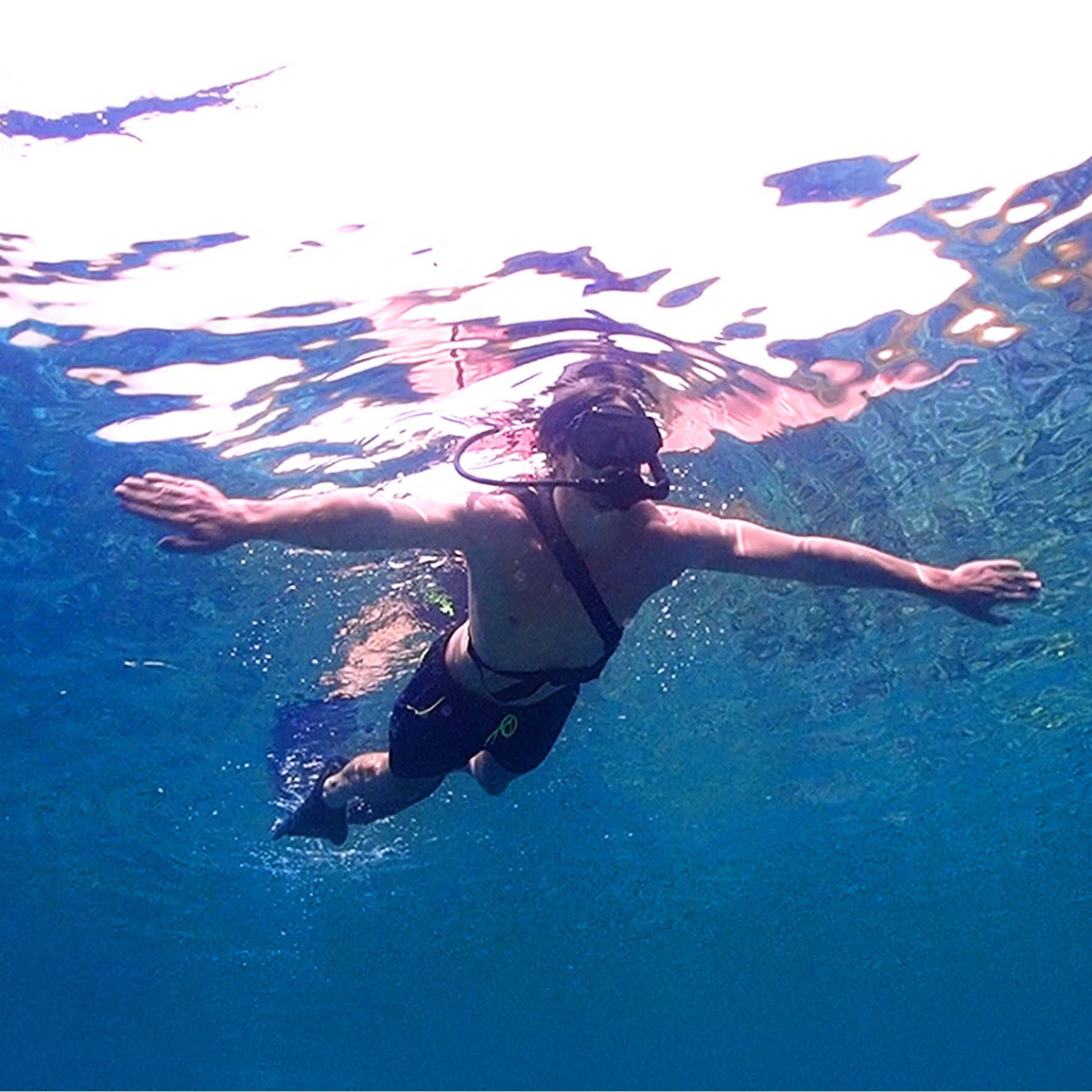
Mini cylinders in specifications from 0.5L to 2.0L, at a rated pressure of 3000psi (200bar), provide snorkelers with tools to break surface limitations. A standard 1L cylinder contains about 200 liters of compressed air when fully loaded; at a depth of 5 meters (about 1.5 atmospheres), the breathing consumption is approximately 20-25 liters per minute. This allows users to gain 8-10 minutes of extra exploration time in shallow reef areas without carrying heavy Scuba gear.
The 6061 aerospace-grade aluminum bottle wall thickness typically reaches 6mm, sufficient to resist 20MPa of internal pressure while balancing corrosion resistance. The net weight of a 1.0L cylinder is about 2.1kg, with length controlled around 35cm, producing about 0.5kg of negative buoyancy after entry.
This weight distribution can offset part of the buoyancy from a 3mm wetsuit, making it easier for snorkelers to maintain a horizontal posture during observations at 3 to 8 meter shoals.
-
The integrated second-stage reduction valve lowers 3000psi high pressure to a suitable breathing pressure of about 140psi.
-
The mouthpiece is made of food-grade silicone, 52mm wide, adapting to the oral structures of most adults to reduce jaw fatigue.
-
The fluorescent pressure gauge dial is approximately 2.5cm in diameter, providing clear residual gas readings in dimly lit caves or reef crevices.
-
The 0.5L model holds about 100 liters of air when full, providing 57-65 normal breaths at a constant depth of 3 meters.
-
The 2.0L model has a dry weight of 3.8kg and an air capacity of 400 liters, suitable for continuous underwater photography tasks over 15 minutes.
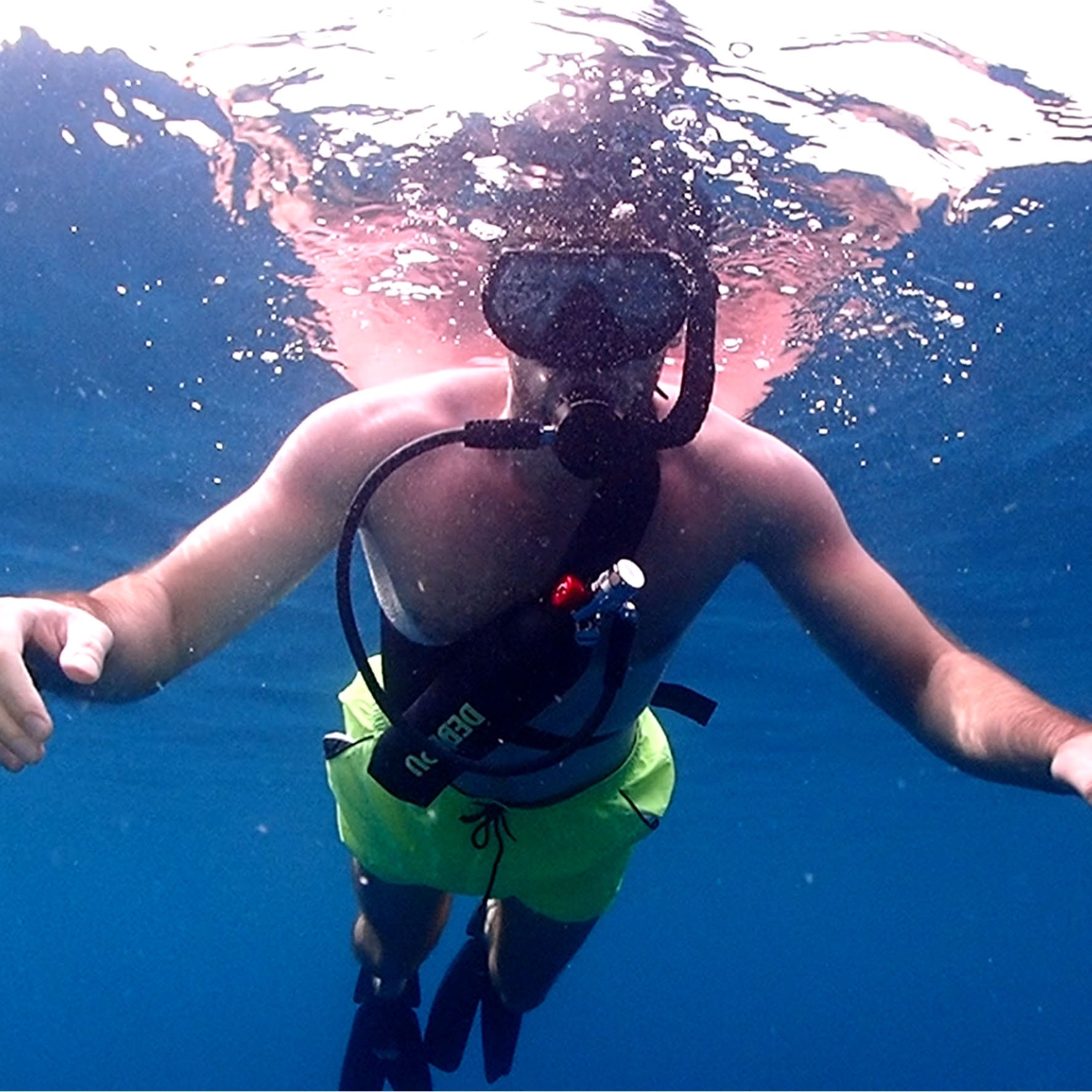
In the Florida Keys or along the Mediterranean coast, snorkelers often secure mini cylinders to their chest or side using specialized hanging bags. This fixing method ensures the regulator mouthpiece is no more than 20cm from the face, facilitating quick switching of breathing methods while observing seagrass beds or searching for crustaceans.
Compared to traditional self-contained diving (Scuba), this lightweight solution reduces equipment volume by over 70%, significantly improving transit efficiency in complex underwater terrain.
For shallow areas within 10 meters, the 2L capacity model shows stronger operational support capability, with an air volume of 400 liters. When operating at a depth of 8 meters, where ambient pressure is 1.8 atmospheres, an adult male breathes approximately 2.5 liters of compressed air per breath, with a total of about 160 breaths. This is sufficient to support a snorkeler in completing a full circuit inspection of small shipwreck remains or performing long-duration point-and-shoot time-lapse photography in coral reef crevices.
-
The surface of the aluminum alloy bottle undergoes hard anodic oxidation treatment, with film thickness typically between 25-50 microns.
-
The piston-style structure inside the regulator includes 3-5 high-strength O-rings, ensuring no gas leakage under high pressure.
-
A 1L cylinder has a displacement volume of about 1.2 liters, still providing slight positive buoyancy after the air is exhausted.
-
When refilling with an adapter, it is recommended to control the refill speed at 50bar per minute to reduce thermal loss of seals.
Visibility at 5 meters underwater is typically higher than at the surface, and mini cylinders allow snorkelers to stay at that depth for over 10 minutes to observe details. When photographing tiny organisms like seahorses or nudibranchs, divers gain a more stable body center of gravity and visual focus than with simple breath-hold diving.


اترك تعليقًا
تخضع جميع التعليقات للإشراف قبل نشرها.
This site is protected by hCaptcha and the hCaptcha Privacy Policy and Terms of Service apply.