
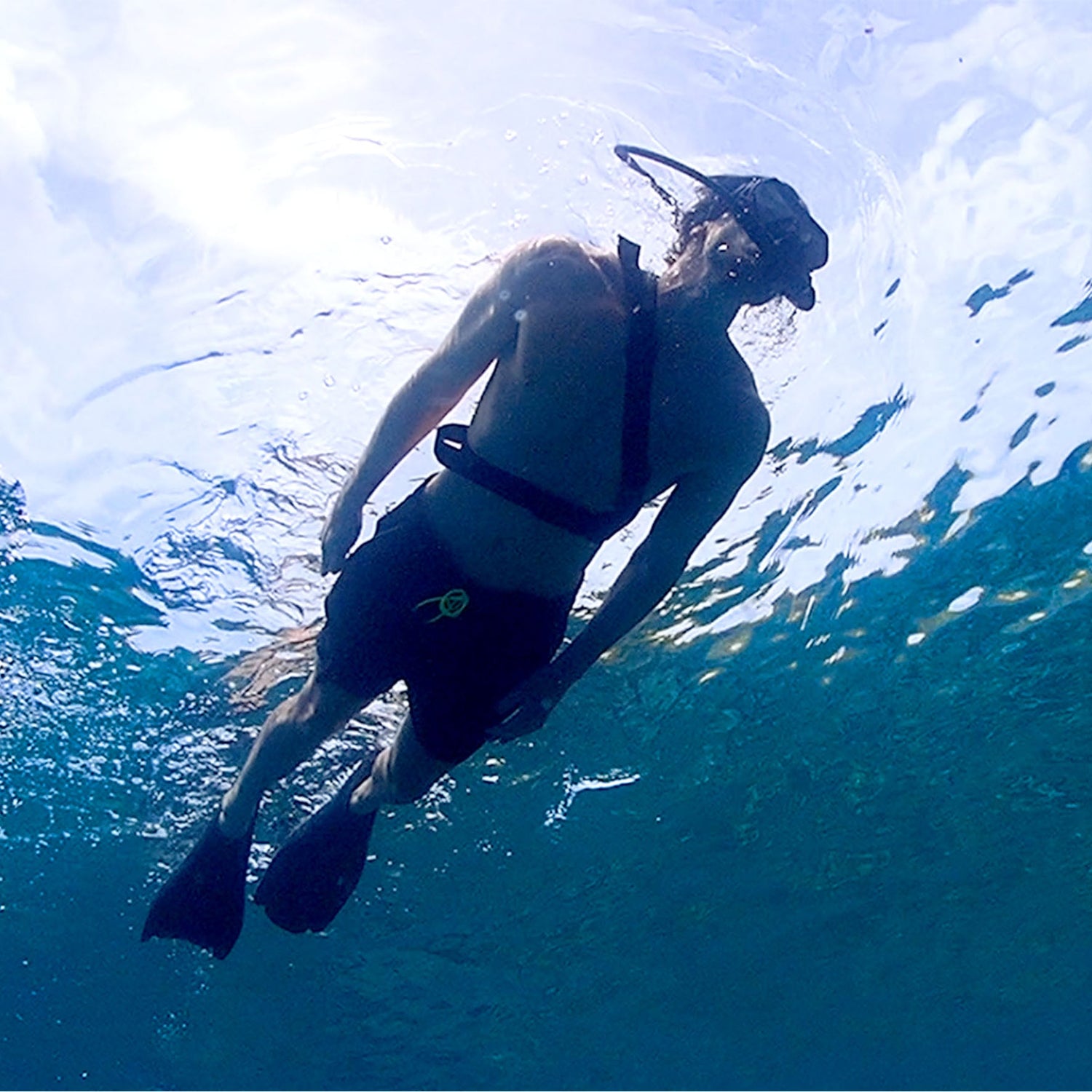
Choosing the right Skin Diving (Freediving/Snorkeling) gear depends on safety, fit, and the usage environment. First, the mask must fit your face shape with a good seal; high-quality silicone skirts can reduce leaks, and a field of vision of over 120° is recommended. The snorkel length is generally 30–40 cm, and one with a purge valve is more convenient.
Fins should be chosen based on the water area: beginners can opt for 60–70 cm medium-stiffness fins, which are more labor-saving. If diving in water temperatures below 18°C, it is recommended to wear a 2–3 mm wetsuit for warmth. The budget for a complete set of basic gear is usually between 500–1500 RMB; prioritize well-known brands and check user reviews and material certifications.

Comfort & Fit
Equipment fit is proportional to dive time and physical energy consumption. Test data shows that even a 1 mm gap between the mask skirt and the face leads to a 15% increase in local pressure; a deviation of more than 3 mm between the snorkel mouthpiece width and the diver's jaw arch (Jaw Arch) will cause masseter muscle fatigue after 20 minutes of continuous use.
In terms of material selection, medical-grade liquid silicone with a Shore A hardness in the 30-40 range has a 20% higher facial contour adaptation rate than traditional 50-hardness materials. If the fin foot pocket has a clearance of more than 0.5 cm, internal sliding during kicking will cause a loss of propulsion of more than 30%.
Mask
The ability of the mask skirt to fit the micro-undulations of the face is determined by the Shore A hardness value of the silicone. In 2026, high-end light diving masks commonly use medical-grade liquid silicone with a hardness in the 30 to 35 range. Compared to early materials with a hardness index of 50, the facial contour adaptation rate of the new material has increased by 22%.
The skirt thickness distribution is designed in a stepped decreasing arrangement. The thickness of the support area near the frame is set to 2.5 to 3.0 mm to resist the physical water pressure of the underwater environment. In the outermost edge area in contact with the skin, the thickness drops sharply to 0.5 mm.
The stepped thickness setting allows the silicone to undergo millimeter-level physical deformation when touching the diver's cheekbones and nasolabial folds, filling tiny gaps caused by facial muscle activity. The space allowance in the nose pocket area significantly affects the smoothness of underwater equalization operations.
European and American diving instructors emphasize during training that after putting on the mask, there should be a gap of about 3 to 5 mm between the tip of the nose and the front inner wall of the silicone.
The silicone in the outer nose-pinching area needs to have a mesh anti-slip texture, and the friction coefficient must reach 0.6 or higher. When diving to a depth of 10 meters (2 atmospheres), the diver needs to apply about 1.5 kg of grip strength when pinching the nose pocket. The anti-slip texture effectively prevents latex gloves with seawater or sunscreen from slipping during operation.
Light diving relies entirely on a single breath-hold; the value of the mask's internal volume is proportional to the lung's air consumption. The internal volume of minimalist designs is usually strictly limited to the range of 60 to 85 milliliters (cc).
For every 10 meters of descent, the diver needs to draw about 10 to 15 milliliters of residual air from the lungs to blow into the mask to balance negative pressure. Traditional scuba masks with volumes as high as 150 ml will consume an additional 25% of the available oxygen reserve, shortening the effective breath-hold time.
| Mask Structure Type | Lens Distance to Eyeball (mm) | Average Internal Volume (cc) | Field of Vision (degrees) |
|---|---|---|---|
| Traditional Framed Dual-Lens | 25 - 30 | 120 - 150 | 110 - 130 |
| Modern Frameless Dual-Lens | 15 - 20 | 75 - 90 | 140 - 160 |
| Extreme Frameless Single-Lens | 10 - 15 | 55 - 70 | 165 - 180 |
Frameless molding technology integrates the silicone skirt with the tempered glass. After removing the plastic outer frame with a thickness of about 8 mm, the internal lens is pushed 15 to 20 mm closer to the eyeball. Structural streamlining simultaneously cuts the total weight of a single mask to between 130 g and 150 g. Uneven tension distribution of the mask strap can cause brow bone compression headaches after diving.
The width of the split-type headband in the back of the head area should reach 30 to 35 mm. The wide strap design distributes the silicone tension across two stress points on both sides of the occipital protuberance. The gear spacing of the side buckles determines the physical precision of the fit fine-tuning.
Each tooth pitch of the high-precision micro-adjustment buckle is set to 1.5 mm, supporting bi-directional sliding adjustment while wearing gloves. The universal joint design at the buckle connection needs to have specific activity parameters:
-
Vertical range of motion: 15 degrees up and down to adapt to different skull shapes.
-
Horizontal opening angle: 45 degrees outward to reduce pulling resistance when wearing.
-
Silicone strap thickness: 3 mm in the middle section to ensure a stretch rebound rate of 98%.
The minimum safety distance between the internal lens and the brow bone is defined as 10 mm. In an environment with a water depth of 15 meters (2.5 atmospheres), the mask as a whole will sink inward by about 2 to 3 mm. The millimeter-level safety distance prevents the glass from putting hard pressure on the nerves around the eyeballs. The 3.2 mm thick ultra-white tempered glass has a light transmittance as high as 98%.
In water layers at 20 meters with high turbidity or weak light, high light transmittance can reduce visual fatigue by 18%. Low fatigue indicators help divers clearly identify the LCD data of their dive computer in low light.
Standard static inhalation test operation: Tilt the head back 15 degrees and fit the mask to the face. Inhale through the nose to create negative pressure, then stop breathing; the mask must stay firmly adsorbed on the face for 30 seconds without any headband assistance. If it falls off within 10 seconds, it indicates a clearance of more than 1 mm between the skirt curvature and the facial bones.
Changes in water temperature will alter the physical state of liquid silicone. In cold water sea areas with temperatures below 16°C, the volume contraction rate of liquid silicone is approximately 0.5%.
During the equipment selection phase, confirm that the outer skirt width has an allowance of at least 5 mm. The edge allowance prevents the silicone from shrinking due to cold and reducing the fit area, which can trigger local water seepage in deep water.
Fins
The fit of light diving fins is constrained by the 3D geometry inside the foot pocket. The width of the forefoot area of the foot pocket is typically between 95 and 110 mm, and the arch height difference is set at 15 to 25 mm. Western brands like Cressi or Mares favor narrow and long foot shapes, with Brannock Device indices often set at C or D; molds suitable for wide feet will extend the forefoot width by 5 to 8 mm.
Modern full-foot fins generally use a dual-material injection molding process. Thermoplastic Rubber (TPR) with a Shore A hardness of about 45 to 50 is injected into the instep and heel side areas. The softer material can adapt to the phenomenon of pedal capillary congestion and swelling caused by changes in underwater pressure. Polypropylene (PP) with a hardness of 85 is injected into the sole part to prevent the sole from bending more than 5 degrees when kicking.
Size matching is linearly affected by dive sock thickness and water temperature. When trying them on, an index finger should be inserted into the heel to test the clearance:
-
Tropical waters above 28°C: Wear barefoot, with a 2 mm allowance at the front.
-
Warm waters 24-28°C: Pair with 1.5-2 mm neoprene socks, increase by 0.5 EU size.
-
Cold waters 20-24°C: Pair with 3 mm dive socks, increase by 1 to 1.5 EU sizes.
-
Cold waters below 20°C: Pair with 5 mm socks, increase by 2 EU sizes, and re-test instep pressure.
The instep bears 60% of the reaction force during downward kicking. If the TPR rubber thickness at the instep is less than 3 mm, skin marks are easily produced after 400 meters of continuous kicking. Advanced models on the market will add X-shaped or V-shaped thickened fascia bands in the instep area to distribute the 3 to 5 kg of pressure generated by the downstroke to both sides of the sole.
The U-shaped opening depth of the Achilles tendon part is usually designed in the 40 to 50 mm range. An opening that is too shallow will compress the Achilles bursa, causing skin friction blisters; an opening depth exceeding 55 mm results in a heel coverage area of less than 30 square centimeters, making the fin very easy to slip off when swimming. The heel edge of the foot pocket is mostly rounded with a 1.5 mm radius to reduce the physical cutting sensation of the silicone edge on the skin.
The physical angle between the foot pocket and the fin blade will affect ankle fatigue time. Older molds have an angle of about 15 degrees, requiring ankle plantarflexion flexibility of over 160 degrees. Newer molds increase the angle to 22 to 29 degrees, so the ankle only needs to maintain a naturally relaxed 140-degree micro-flexed state during descent.
Asymmetric foot pocket designs have been adopted by several professional production lines. Molds are independently molded based on the characteristic 15 to 20-degree downward curve from the big toe to the little toe. The asymmetric cavity can eliminate the 2 to 4 mm empty cavity generated on the outside of the little toe in traditional symmetric foot pockets, improving the precision of toe control over the fin surface.
Testing gear fit in a dry environment requires fully simulating underwater movements:
-
Sit on a chair after putting them on, with toes pointed and suspended for 3 minutes.
-
Shake the ankle horizontally to observe if the heel slide exceeds 3 mm.
-
Hold the front end of the blade with your hand and pull down to feel if the pressure distribution on the instep is even.
-
Check if the front of the toes touches the inner wall of the foot pocket.
The thickness of the side ribs extending from the foot pocket to the blade will affect the bending resistance of the forefoot. If the starting thickness of the side ribs on both sides of the toes exceeds 12 mm, it will force the toe joints to be in a completely rigid state. A chamfered design with thickness decreasing to 8 mm allows the forefoot to maintain a natural deformation of about 10 degrees when kicking upward.
Some high-end product lines have begun using 100% liquid silicone to make integrated foot pockets. The elongation of liquid silicone is as high as 400%, which is 150% higher than regular TPR material. High-extensibility materials can wrap around a slightly valgus big toe or a high arch of more than 25 mm, and the physical weight at the same volume is about 45 g higher than TPR material.
The front end of a full-foot foot pocket has a drain hole with a diameter of 3 to 5 mm. Use this to empty excess internal air when putting it on to prevent a negative pressure effect underwater. When the dive depth exceeds 10 meters and water pressure increases, the residual air inside the foot pocket is compressed to half its original volume; a holeless design would cause the rubber material to shrink inward and squeeze the toes.
Physical feedback of a poor fit has a noticeable lag and often begins to appear after 15 minutes in the water:
-
Numb toes: Insufficient forefoot width or a mismatch between dive sock thickness and shoe size.
-
Plantar fascia pain: The polypropylene at the bottom of the foot pocket has a hardness below 80 and deforms under stress.
-
Swollen instep: The entrance edge lacks a curvature transition, or the TPR rubber thickness is insufficient.
-
Skinned heel: Size is more than 5 mm too large, or the Achilles opening does not fit the foot curvature.
The weight distribution ratio of a single fin should be controlled at 30% for the foot pocket and 70% for the blade. Long fins with a single total weight exceeding 800 g will increase the overall oxygen consumption of the soleus muscle in the calf. A foot pocket weight exceeding 300 g will lead to a sense of imbalance with a backward center of gravity during underwater kicking, which can easily cause local muscle cramps when swimming more than 1 km.
Snorkel
The matching of mouthpiece size with the diver's jaw arch width affects the comfort limit of long-term biting. The average width between the bilateral first molars of the mandible in adult males is 45 mm, and in females it is about 38 mm. Choosing a 100% medical-grade liquid silicone mouthpiece with thermoplastic memory function, its Shore A hardness will stabilize at around 35 in a water temperature of 20°C.
Mouthpieces with a hardness below 30 are very easy to fall off under the impact of water flow, while those above 40 will trigger Temporomandibular Joint (TMJ) pain after 20 minutes of continuous use. Western diving medical research shows that a mismatched mouthpiece forces the diver to apply a continuous biting force of up to 2.5 kg.
The thickness of the silicone side wings usually needs to be controlled between 1.5 and 2 mm. Too much thickness will rub the mucous membrane of the inner wall of the mouth, while too little will fail to provide the support to resist the resistance of the water flow. The geometric design of the tube body affects the pulling sensation on the neck muscles. A standard 3D curved tube body is set at a backward tilt angle of 15 to 25 degrees when leaving the factory, fitting the physiological curvature of the side of the human skull.
-
15-degree backward tilt: Suitable for beginners who are used to tilting their head slightly up after wearing the mask, keeping the surface line of sight clear.
-
25-degree backward tilt: Matches the hydrodynamic requirements when a freediver is in a prone position on the surface, reducing surface resistance.
-
Gap between tube and head: After wearing, it needs to be maintained in the 5 to 8 mm range; a gap greater than 10 mm will generate micro-eddies when swimming.
At a surface swimming speed of 1.5 m/s, a non-ergonomic straight tube will generate about 0.8 kg of backward drag, forcing the neck muscles to contract additionally to maintain head balance. Wet snorkels dedicated to light diving remove the top splash guard and bottom purge valve, strictly controlling the total weight between 85 and 110 g. Weight distribution affects the wearing sensation more than absolute weight.
The center of gravity is usually located in the middle of the tube, 12 to 15 cm from the bottom of the mouthpiece. When worn, this center of gravity point is below the mask strap, utilizing the lever principle to counteract the lateral thrust of surface waves on the top of the tube. Semi-dry models with a bottom purge valve have an increase in weight at the mouthpiece end of about 15 to 20 g due to the addition of valve components. The downward shift of the center of gravity will lead to a slight drooping sensation when biting, which needs to be compensated for by adjusting the position of the snorkel keeper.
The quick-release buckle slide design made of Polycarbonate (PC) allows for a micro-adjustment range of 2 to 3 cm up and down. When installing, ensure that the highest point of the snorkel is at least 7 cm above the top of the head or the waterline. The line connecting the mouthpiece and the mask strap must be parallel to the edge of the mandible. If the angle deviation exceeds 10 degrees, the silicone tube body will create a reverse folding force on one side of the mouth, causing water leakage on one side or compressing the facial skin to produce red marks.
The tube inner diameter and internal dead space volume (Dead Space) take up a significant proportion in comfort testing. Adult snorkels complying with EN 1972 European standards have an inner diameter fixed between 20 and 22 mm, providing a smooth airflow path. Designs with an inner diameter below 18 mm will lead to a sharp increase in inspiratory flow rate, triggering throat dryness and air friction noise. For tube bodies longer than 38 cm, the internal dead space volume will exceed 180 ml.
-
Dead space volume 120ml: Suitable for teenagers and women with smaller lung capacities, reducing the repeated inhalation rate of carbon dioxide in the tube.
-
Dead space volume 150ml: Standard configuration for adult males, balancing gas exchange efficiency and wave protection height.
-
Dead space volume above 180ml: Continuous breathing for 5 minutes will lead to a 12% increase in the rate of blood oxygen concentration decline.
If exhaled carbon dioxide remains in a tube cavity exceeding 180 ml, the carbon dioxide concentration in the tube will climb from the normal 0.04% to more than 3%. This will trigger physiological effects like an increased heart rate and a slight sense of choking panic, undermining the relaxed state underwater.
The bridge-shaped bite tabs inside the mouthpiece utilize an extended support surface as long as 15 mm, distributing the stress point to the premolar area. The stress area is three times larger than traditional flat tabs, and the jaw only needs to maintain a naturally closed state to be firmly connected, with muscle tension decreasing by 40%.
Travel Portability
When planning international light diving trips, equipment volume impacts checked baggage fees. The long side of a standard carry-on suitcase is usually limited to 55 cm, while regular long fins reach 85 to 100 cm. It is recommended to choose modular carbon fiber fins, weighing about 800 g per fin; once disassembled, the blade length is about 60 cm, fitting easily into a 28-inch checked suitcase.
Choose a mask with a volume of less than 100 ml, paired with a pure silicone folding snorkel that has a rolled-up diameter of only 8 cm. For destinations like the Bahamas, bring a 1.5 mm thick Yamamoto rubber wetsuit, which has a folded volume only half that of a 3 mm model. This entire gear set can be kept under 2.5 kg.
Fin Dimensions
On international flights with United Airlines or Emirates, the sum of the three dimensions for a single piece of free checked baggage is typically capped at 158 cm. The physical total length of regular integrated light diving long fins is between 85 and 100 cm, exceeding the approximately 70 cm vertical capacity inside a 28-inch polycarbonate (PC) checked suitcase.
Checking equipment as long as 100 cm as oversized baggage can incur a one-way surcharge of $150 to $200 on Delta. Choosing modular fins secured with stainless steel screws allows you to change the equipment's spatial configuration. After detaching the rubber foot pocket, the net length of a T700 grade carbon fiber blade drops to 72–78 cm.
A 28-inch suitcase with a long side of 76 cm has an internal diagonal length of about 82 cm. A 75 cm carbon fiber blade tilted at a 25-degree angle can be laid flat diagonally against the nylon lining at the bottom of the case. Independent TPR foot pockets are about 25 cm long and 10 cm wide, occupying about 5 L of space in the corners of the suitcase.
In the baggage sorting system at Heathrow, drop impacts with a single-sided force exceeding 40 kg occur nearly 100,000 times a day. Exposed carbon fiber and fiberglass blades require at least a 15 mm thick buffer layer to withstand lateral compression from mechanical arms.
Follow these physical isolation steps to pack disassembled components:
-
Stack two carbon fiber blades (75 cm long, 20 cm wide) back-to-back, sandwiching a 2 mm thick neoprene diving sock in between.
-
Insert the stacked blades into the middle of a 3 mm full wetsuit laid flat at the bottom of the case, creating a soft protective chamber 1.5 cm thick on both the top and bottom.
-
Place the 8 disassembled M5 specification stainless steel screws and 4 plastic fixing clips into a 5x5 cm self-sealing bag.
-
Stuff the metal fastener bag inside a diving boot to prevent the screws from scratching the carbon fiber surface during a 10-hour flight.
The total weight of the luggage affects the compression performance of the equipment at the bottom. Place heavy 1.5 kg stainless steel regulators or hard-shell camera housings in the other hemisphere of the suitcase. Ensure the total weight on the side with the fins does not exceed 8 kg, filling remaining gaps with cotton T-shirts or beach towels.
| Gear Component | Common Dimensions (cm) | Physical Weight (g) | Recommended Transport/Packing Method |
|---|---|---|---|
| T700 Carbon Fiber Blade | 75 x 20 x 0.2 | 300 - 350 | Laid flat diagonally in 28-inch+ checked bag |
| Natural Rubber Foot Pocket | 25 x 10 x 8 | 400 - 550 | Filling gaps at the edges of the checked bag |
| Fiberglass Integrated Fin | 90 x 22 x 15 | 800 - 1000 | Dedicated 100 cm PVC oversized gear bag |
| Travel Short Fin | 52 x 18 x 10 | 600 - 750 | 22-inch standard carry-on suitcase |
For warm 28°C coastal leisure light diving in Hawaii or Tahiti, 52 cm polypropylene (PP) short fins offer an alternative transport solution. Each fin weighs 600 g, meeting the 56x45x25 cm cabin carry-on volume requirements of British Airways.
Short fins do not require mechanical handling and stay with you in the overhead bin of a Boeing 777. Two fins placed parallel and overlapping occupy only 12% of the 40 L total internal volume of a 22-inch carry-on. The remaining space can accommodate two sets of UV-protective rash guards, a 50 ml mask box, and a 1.2 kg buoyancy vest.
Purchase a dedicated long fin backpack made of 500D PVC mesh cloth, 100 cm long and 30 cm wide. On charter flights to the Red Sea, the cargo door height of an Airbus A320 is about 1.2 m. The inside of the PVC waterproof backpack features two 5 cm wide nylon straps to tie 90 cm integrated fins to the backplate.
The 8 mm high-density EPE foam interlayer on the outside of the backpack provides puncture protection. It can hold a pair of 1.8 kg fiberglass long fins and a 1.5 mm wetsuit. The overall length exceeds standard checked dimensions, so when checking in at Miami International Airport (MIA), you must go to the Oversize Baggage counter.
Wetsuit Volume
When heading to Florida or the Bahamas for light diving in water temperatures between 26°C and 28°C, thermal clothing will occupy about 30% of your carry-on space. A standard men's size M, 1.5 mm thick Yamamoto Type 39 neoprene two-piece wetsuit has a dry physical weight of 0.85 kg. A 3 mm full wetsuit of the same size doubles in weight to 1.6 kg.
On budget airlines like Ryanair or EasyJet, carry-on weight limits are strictly set at 10 kg. In a 45 L standard 20-inch carry-on, folding a 1.6 kg 3 mm wetsuit into a 40x30x15 cm cube consumes nearly 18 L of available volume. Switching to a 0.85 kg 1.5 mm two-piece wetsuit results in a folded size of 35x25x8 cm, occupying only about 7 L of space.
The nylon or Lycra outer fabric of a wetsuit is prone to irreversible neoprene creases after multiple folds. When packing thermal gear thicker than 2 mm, the Rolling Method preserves 20% more material elasticity than the standard folding method. Find a flat surface and lay the entire wetsuit flat, back-side up.
-
Roll up the pant legs from the ankle openings, maintaining a span of about 15 cm for each roll.
-
Once the legs are rolled to the waist, fold both sleeves across toward the center line of the back.
-
Continue rolling the entire garment, including the zipper area, tightly upward along the central axis.
-
After reaching the collar, secure the cylinder with a nylon strap about 60 cm long and 5 cm wide.
A rolled 3 mm full wetsuit has an external diameter of about 18 cm and a length of about 40 cm. Stuff it into the groove between the two wheels at the bottom of a 28-inch polycarbonate (PC) checked bag. The cylindrical structure can resist approximately 15 kg of lateral compression from surrounding luggage, while also buffering internal camera gear from drop shocks on mechanical conveyor belts.
For waters over 29°C in the Red Sea or Maldives, bringing a long-sleeve Rash Guard is an excellent solution. A UPF50+ rash guard made of 82% nylon and 18% spandex weighs only 180 g when dry.
A single layer of thin UV-protective fabric, after washing, only takes 2 hours to evaporate 90% of its moisture in a 25°C ventilated indoor environment. The combination of thermal performance and quick-drying properties meets the needs of those who dive frequently every day. On international island-hopping flights, you can wash and dry it 4 hours before boarding, avoiding the need to carry damp clothing weighing up to 400 g that would add to your baggage limit.
For 5 mm Open Cell freediving wetsuits, standard rolling and laying flat cannot effectively compress the physical volume exceeding 25 L. On transoceanic American Airlines flights where the checked baggage limit is only 23 kg, you need physical force to change the spatial occupancy of 2.5 kg thermal gear.
-
Lay the completely dry 5 mm wetsuit flat into an 80x60 cm PA+PE vacuum bag.
-
Zip the double seal, leaving an exhaust hole about 5 cm long.
-
Apply body weight to the bag for 15 seconds to squeeze out 70% of the initial air.
-
Align a handheld electric pump with the valve and run it for 3 minutes until the bag is completely flat.
-
Tighten the plastic valve cap to ensure the vacuum state is maintained for over 72 hours.
Through a physical extraction process of 0.5 standard atmospheres, a stack of 5 mm wetsuits originally 15 cm thick is forced down to less than 6 cm. Total occupied volume drops from 25 L to around 10 L. You can free up 15 L of precious space in a 28-inch suitcase for 85 cm carbon fiber fins and a 50 ml mask box.
Flying to Thingvellir National Park in Iceland for 2°C cold-water diving requires carrying a 7 mm drysuit weighing up to 4 kg. The fabric structure of a drysuit includes a trilaminate waterproof breathable membrane and a neoprene thermal neck seal. Its folding method requires completely avoiding the waterproof metal zippers on the chest and back.
-
Roll up two pairs of 3 mm neoprene diving socks and stuff them into the internal gaps of the diving boots.
-
Lay flat a pair of 2 mm Amara synthetic leather diving gloves weighing about 150 g.
-
Place the flat gloves at the very bottom of the wetsuit vacuum bag to increase friction at the base of the suitcase.
-
Fold a 200 g neoprene Hood and stuff it next to the hard mask box.
Metal waterproof zippers cost over $150; any rigid bend exceeding 30 degrees can cause zipper teeth misalignment. When packing a drysuit, keep the zipper in a fully open state, and roll the suit parallel along both sides of the zipper. Wrap the zipper area with 10 mm thick EPE foam tubing to prevent loss of waterproof integrity due to compression during a 14-hour flight.
Mask Packing
Glass lenses and silicone skirts are easily damaged in checked baggage on international flights. Checked luggage to and from Heathrow or JFK typically undergoes at least 4 drop impacts on mechanical belts. Pack a 50 to 80 ml low-volume mask into an EVA polymer foam hard case with a thickness of 4 mm. The EVA hard case has a ratio of about 18x11x8 cm and can withstand instantaneous compression loads of over 30 kg.
The tempered glass of a mask is only 3 to 4 mm thick; friction with hard objects will cause irreversible scratches. Before placing it in the protective box, wrap the lenses with two layers of a 15x15 cm microfiber cleaning cloth. Do not put anti-fog spray bottles in the same box as the mask; the plastic hardness of a 15 ml anti-fog bottle cap exceeds that of the silicone skirt. Friction between the two during a 12-hour intercontinental flight can tear the silicone surface.
The placement of the hard case in the suitcase affects the overall stress state. Place the mask box between the two metal handle tracks of a 28-inch PC checked bag. Fill the gaps between the tracks with clothes or towels so that the hard case is level with the tracks. Use the metal tracks to disperse at least 60% of vertical compression force, filling the recessed space at the bottom of the case (a gap of about 20 cm).
Next, consider the packing details for the snorkel. A freediving-specific 100% pure silicone J-Tube usually has a total length of 35 to 40 cm. Pure silicone has excellent resilience in the 0.8 standard atmosphere cabin environment and can be rolled into a small volume. If the hardness grade is between Shore A 40 to 50, the silicone body can bend more than 180 degrees without creating permanent creases.
Follow these steps to turn the tube into a perfect concentric circle:
-
Starting 3 cm above the silicone mouthpiece, coil the tube body clockwise twice.
-
Roll the tube into a ring about 8 to 10 cm in diameter, ensuring there are no sharp kinks inside.
-
Secure the ring with a 2 cm wide Velcro strap.
-
Stuff the secured ring into the side gap of the mask hard case.
In addition to the mask box, the foot pockets of long fins are ideal spaces for storing silicone snorkels. European-made natural rubber foot pockets usually have an internal gap 20 to 24 cm long and 8 to 10 cm wide. Lay the coiled snorkel ring inside, then stuff in two pairs of 2 mm neoprene diving socks.
The silicone strap adjustment buckle on a frameless mask is the most fragile plastic part of the structure. In Lufthansa's damage claim records, broken mask buckles account for 25% of diving equipment damage cases. Before packing, fold the buckles inward so they lie flush against the silicone skirt. Do not let plastic buckles be exposed at the outermost stress points of the mask box; they can only withstand less than 5 kg of lateral shear force.
The cargo hold temperature of a Boeing 777 or Airbus A380 can drop to around 7°C. In low-temperature environments, silicone skirts and snorkel mouthpieces become relatively stiff. After arriving at tropical destinations like Cancun or Hawaii, open the suitcase and let the mask and snorkel sit at room temperature above 25°C for 30 minutes. Once the silicone absorbs heat, it will regain 100% of its softness, ensuring a sealed fit when worn.
When planning the packing space around the mask and snorkel, you must avoid hard items:
-
Stainless steel diving computers with metal crowns and heavy lugs.
-
High-intensity underwater flashlights with aerospace aluminum alloy housings weighing over 300 g.
-
Sharp-edged diving knives made of polished titanium alloy.
-
Aluminum water bottles or stainless steel thermos flasks with capacities over 500 ml.
-
Weight belts with rigid metal hooks and lead weights over 2 kg.
The aging of the mask strap itself can also be exacerbated during travel. Before departure, rinse off any residual salt crystals on the silicone strap with fresh water; 0.1 mm salt grains act like sandpaper when dry. Apply a very thin layer of food-grade silicone grease (about 1 to 2 g) to the strap surface. The grease isolates air oxidation, preventing the strap from cracking during weeks of storage and transport.
After reaching your destination, if you find a hard plastic mask box with a waterproof O-ring difficult to open, it is likely because air pressure changes during flight have created a vacuum inside. Apply slight pressure to the edges of the lid before opening to balance the 10 to 20 kPa pressure difference. After taking the gear out, check if the silicone skirt has developed slight deformation from the negative pressure. Soaking it in 30°C warm water for 5 minutes will restore the original curvature of the silicone.
Fog-Free Vision
In 2026, anti-fog standards for freediving masks have been comprehensively upgraded. When purchasing, look for tempered glass meeting the ANSI Z86.11 standard with a light transmittance ≥ 92%. The mask volume should be below 65ml to physically reduce air retention and lower the probability of condensation by 30%.
Mainstream brands in Europe and America (such as Cressi and Scubapro) now come pre-set with a nano-level Hydrophilic Coating, reducing the water droplet contact angle to below 10°. This prevents water films from forming, maintaining anti-fog effects for approximately 60 dives. When paired with eco-friendly anti-fog gels containing 5-8% non-ionic surfactants, a clear field of vision can be maintained for over 45 minutes during a single immersion.
Lens Materials
In the 2026 Western freediving equipment market, over 95% of mainstream masks utilize dual-layer Tempered Glass complying with ANSI Z86.11 standards. During manufacturing, the raw glass sheets must be heated in a 620℃ furnace, followed by a quenching process using high-pressure cold air.
Standardized tempered glass lenses with a thickness of 3.2mm to 4.0mm have a surface impact strength 4 to 5 times higher than ordinary annealed glass. When a diver descends to a depth of 25 meters in the Florida Keys (approx. 3.5 ATM ambient pressure), lenses of this thickness can withstand up to 85kg of static water pressure without physical deformation.
If a mask accidentally drops onto a hard yacht deck upon exiting the water and shatters, the stress layers cause the glass to break into honeycomb-shaped fragments with obtuse angles. Individual fragment areas are controlled within 0.5 square centimeters to prevent sharp edges from causing physical cuts to the cornea or facial tissues.
Conventional high-iron clear glass has a light transmittance of approximately 88% to 90% in air, which attenuates in seawater due to an increased refractive index. Currently, brands like Cressi and Scubapro utilize a Low-Iron Glass process, controlling the ferric oxide (Fe2O3) content to below 0.015%.
The de-ironing process ensures the glass cross-section no longer appears light green, allowing underwater light transmittance to climb into the 92% to 94% range. In Caribbean waters with 30-meter visibility, using ultra-white tempered glass masks improves underwater color restoration by about 12%. High-end freediving mask lenses are not limited to simple tempering; manufacturers use vacuum magnetron sputtering technology to add multiple functional coatings to the surface. The physical parameters of these layers alter the refraction and reflection paths of light underwater.
| Coating Technology Classification | Physical Thickness (nm) | Light Transmittance | UV Block Rate (UV400) | Seawater Abrasion Resistance (Cycles) |
|---|---|---|---|---|
| AR Coating (Anti-Reflective) | 120 - 150 | 97.5% - 98.2% | ≤ 15% | Approx. 300 - 400 sand friction cycles |
| Titanium Mirror Coating | 180 - 220 | 85% - 88% | ≥ 99.5% | Approx. 250 - 300 sand friction cycles |
| Color Correction (Blue Block/Red Boost) | 250 - 280 | 90% - 92% | ≥ 98% | Approx. 200 - 250 sand friction cycles |
Anti-Reflective (AR) coatings are formed by 5 to 7 layers of alternating magnesium fluoride and silicon dioxide nano-structures. This coating compresses the glare refraction of the surface environment from the original 4% to below 0.5%, reducing visual fatigue when divers observe boats from the surface. To counter the absorption of long-wavelength light (red, yellow, orange) by seawater, "Red Boost" lenses incorporate trace amounts of neodymium oxide (Nd2O3) into the formula. When diving deeper than 10 meters and red light waves are 80% absorbed by seawater, the red-boost film physically filters out parts of the blue-green spectrum.
This spectral filtering increases underwater contrast by approximately 15%, making the colors of tropical coral reefs appear more visually saturated. Titanium mirror coatings are mostly used in equatorial regions with extreme surface glare, blocking about 15% of high-frequency visible light like polarized sunglasses. Beyond tempered glass, optical-grade Polycarbonate (PC) and CR-39 resin have become mainstream alternatives for dive helmets and backup masks in recent years. The specific gravity of PC is only 1.20g/cm³, 50% lighter than the same volume of tempered glass.
The impact resistance of PC lenses has passed the ANSI Z87.1 high-velocity impact test, withstanding a 6.35mm steel ball flying at 150 feet/second. However, its Mohs hardness is only between 3 and 4, making the surface easily scratched by quartz sand particles with a diameter of 0.2mm found on beaches.
To compensate for this hardness deficiency, PC masks must be dip-coated on both sides with a 3 to 5 micron Polysiloxane hard coat before leaving the factory. This hard coat improves surface wear resistance by 3 times, though there is a physical risk of the layer peeling or delaminating after more than 100 dives in high-salinity waters like Palau.
There are strict physical boundaries for the tolerance of different materials during daily maintenance and defogging:
-
Standard tempered glass withstands 600℃ heat; a butane lighter (outer flame temp 800℃) can be held for 3 seconds for physical film-burning defogging.
-
Coated tempered glass (AR/Anti-UV) has poor heat resistance; lighter flames cause the 150nm coating to instantly carbonize and peel. Only neutral detergents should be used.
-
PC and resin lenses strictly forbid burning and toothpaste grinding; the 0.1mm calcium carbonate abrasives in toothpaste will cause permanent web-like scratches within 5 seconds.
-
Ultra-white low-iron glass has strong acid/alkali resistance and can be soaked in a 5% white vinegar solution for 10 minutes to dissolve calcium carbonate salt scales attached to the surface.
For divers with myopia or astigmatism, the market offers interchangeable Corrective Lenses based on dual-lens frames. Mainstream brands provide ready-made spherical tempered glass lenses from -1.0 to -10.0 diopters, with increments set at -0.5 diopters per step.
Due to the refractive difference between seawater and the air interface inside the mask, the imaging distance of underwater objects is reduced by about 25% compared to land. When selecting myopic lenses, the prescription should be reduced by -0.25 to -0.5 diopters from the land prescription to compensate for the slight dizziness caused by underwater physical refraction.
If a diver's astigmatism (Cylinder) exceeds -2.0 diopters, standard spherical lenses cannot correct peripheral distortion. Individual prescription data must be sent to an optical lab, where CNC custom grinding is performed using CR-39 resin blanks with an Abbe number of 58. Custom lenses are bonded to the original tempered glass of the mask using high-strength UV Glue. The glue layer thickness is controlled within 0.1mm, and its refractive index is kept at 1.52—consistent with glass—to ensure no bubbles or ghosting occur between the two materials.
Mask Volume
Mask volume refers to the volume of air enclosed between the inner side of the lens and the face, usually calculated in milliliters (ml). Currently, freediving masks on the Western market are categorized by this physical parameter into Ultra-Low Volume (below 65ml), Low Volume (65ml to 85ml), and High Volume (over 85ml).
Volume size is influenced by the physical distance from the lens to the cornea. In ultra-low volume masks, the lens is approximately 12 to 15mm from the eye, and the cross-sectional area of the silicone skirt is reduced accordingly. High-volume masks typically have a lens distance of over 20mm, resulting in a larger internal air capacity.
Pressure changes in the underwater environment; for every 10 meters of descent, ambient pressure increases by 1 atmosphere (ATM). Upon reaching 10 meters (2 ATM), the air volume inside the mask is compressed to 50% of its surface state. Divers must exhale through the nose into the mask to equalize internal pressure, preventing facial tissue capillaries from rupturing due to negative pressure (mask squeeze). The smaller the volume, the less oxygen reserve is consumed for equalization.
-
A 50ml mask requires approx. 25ml of gas at 10 meters
-
An 85ml mask requires approx. 42.5ml of gas at 10 meters
-
A 110ml mask requires approx. 55ml of gas at 10 meters
-
The required supplement doubles proportionally at 20 meters (3 ATM)
When diving deeper than 15 meters in the Red Sea or Caribbean, the available air reserve in the lungs and mouth is limited. Using a mask with a volume below 60ml can reduce the air loss for mask equalization to less than 3% of the total air capacity. Smaller air chambers also change the underwater field of vision. Light traveling through water refracts, making objects appear 25% larger and 33% closer. The closer the lens is to the eyeball, the smaller the range of physical obstruction by the frame.
Dual-lens ultra-low volume masks on the market can achieve a horizontal FOV of 110 to 120 degrees and a vertical FOV between 75 and 85 degrees. Single-lens frameless masks, by injecting silicone onto the glass edges, can compress internal space to about 80ml. Frameless designs shorten the distance between the nose tip and the lens. Since Western divers often have higher nose bridges, it is necessary to confirm a buffer space of at least 3mm between the sides of the nose and the center of the lens to prevent water pressure from pushing the lens against the nasal bone.
-
Lens distance to cornea < 15mm: Visual blind spots reduced by approx. 18%
-
Lens distance to cornea 16-20mm: Standard FOV parameter range
-
Lens distance to cornea > 20mm: Tubular vision effect increases proportionally
The frontal area of the mask changes the surface drag coefficient during swimming. Low-volume masks have a flatter profile that fits closer to the face. When descending at 1.5 meters per second, a flat-design mask generates approximately 22% less drag than a high-volume scuba mask. Reduced drag slows neck muscle fatigue. In parts of the Mediterranean or Hawaii where currents reach 0.5 meters per second, streamlined low-volume masks are less likely to be flipped by lateral currents or experience skirt leakage.
There is a causal link between volume size and the physical phenomenon of lens fogging. Human facial skin temperature is about 35℃, and in open waters ranging from 22℃ to 26℃, facial pores continuously evaporate moisture. The more air inside the mask, the greater the capacity for water vapor. Ultra-low volume masks have tiny internal air circulation spaces; when combined with pre-heating or anti-fog coatings, the lens can quickly reach thermal equilibrium with the seawater within 1 to 2 minutes of entry.
In cold waters below 20℃ (such as the California coast), masks with volumes over 85ml have a 40% higher probability of fogging than 50ml masks due to the large condensation area and slow heat exchange.
-
35℃ face vs 22℃ seawater: Highly prone to physical condensation droplets
-
Air chamber < 65ml: Fast vapor saturation, anti-fog coatings take effect quickly
-
Air chamber > 85ml: Continuous condensation, requires frequent rinsing/clearing
-
Silicone skirt thermal conductivity: 0.15-0.2 W/(m·K), insulation effect lower than glass
The structure of the Nose Pocket occupies part of the internal volume. High-quality freediving masks add anti-slip textures to the outside of the nose pocket, with silicone thickness controlled between 0.8 and 1.2mm. Extremely thin silicone nose pockets help in accurately pinching the nose for Frenzel equalization while wearing diving gloves. If the volume is too small and the nose pocket space is insufficient to accommodate the entire nose, the success rate of equalization may be limited.
Perform a dry test on land before purchasing. Press the mask lightly against the face and inhale through the nose to create negative pressure. If the mask stays on the face for over 5 seconds without a strap and the eyelashes do not touch the glass, the internal volume is a good fit. For myopic divers, volume is a consideration when customizing prescription lenses. After replacing with 3mm to 4mm thick optical lenses, the actual physical volume of the mask will further decrease by approximately 2ml to 5ml.
The increased thickness not only changes volume but also slightly shifts the refractive focus. When wearing custom prescription lenses in an ultra-low volume mask, one must adapt to an underwater visual distortion rate of approximately 5% to 8%.
Anti-Fog Materials
In 2026, the state of Hawaii, under the SB2571 amendment, strictly prohibits chemical agents containing Oxybenzone and Octinoxate from entering waters within 3 nautical miles. EU REACH regulation No 1907/2006 has lowered the detection limit for PFAS in diving consumables to 0.025mg/kg.
In Bonaire National Marine Park (BNMP) in the Caribbean, divers found using silicone-oil-based anti-fog agents before entry face a single-instance fine of up to $500.
Commercial anti-fog products complying with OECD 301B biodegradability tests naturally decompose by over 60% within 28 days in seawater. Their formulas replace old petroleum-based anionic surfactants with plant-derived Alkyl Polyglucosides (APG). The primary ingredient, deionized water, must reach a purity of 18MΩ·cm to eliminate interference from calcium and magnesium ions on the light transmittance of tempered glass lenses.
The dynamic viscosity of high-concentration gels is approximately 300 to 500 cP (centipoise) at 20℃. A single drop (approx. 0.05ml) can cover a 50 square centimeter lens area. After spreading evenly with a finger, it must sit for 15 to 30 seconds. This allows amphiphilic molecules to align on the glass surface, with hydrophilic ends facing out and hydrophobic ends firmly attached to the lens. When rinsing, simply dip quickly into seawater for 0.5 seconds and remove immediately.
-
Contact Angle Parameter: The treated lens contact angle drops from the original 45 degrees of glass to below 10 degrees.
-
Water Film Thickness: Condensed vapor cannot bead up, transforming into a flat water film 0.2 microns thick.
-
Light Refraction: The water film thickness is extremely uniform; the refractive index of light through the lens remains at 1.33, with no visual distortion detectable by the naked eye.
-
Duration: A single treatment in 28℃ tropical waters (like the Florida Keys) can maintain fog-free vision for 45 to 60 minutes.
Brands like Stream2Sea and JAWS, which meet FDA safety standards, utilize 100% recyclable sugarcane-derived bio-based HDPE (Recycle Code 2) for their 30ml bottles.
The bottle wall thickness reaches 1.2mm, preventing leaks under the 0.8 ATM negative pressure found at 30,000 feet in aircraft cabins or cargo holds. Spray products have a mechanical output precisely calibrated to 0.15ml per press.
Spray formats used on boat decks with wind speeds reaching 15 knots can suffer up to 30% loss due to drift. For ultra-low volume masks under 65ml, gel anti-fog agents are more precise, avoiding surrounding structures and preventing chemical erosion of the silicone skirt's anti-slip textures.
As an eco-friendly alternative, diluting Johnson & Johnson No More Tears baby shampoo is extremely common on North American dive boats. The standardized ratio is 1 part shampoo to 3 parts distilled water (1:3). The pH of the shampoo solution remains constant between 6.5 and 7.0, matching the acidity of human physiological tears.
-
20℃ water environment: The anti-fog effectiveness of the shampoo solution decays rapidly to 25 minutes.
-
15℃ cold water (e.g., Monterey Bay, CA): Effectiveness lasts less than 15 minutes; divers must frequently clear the mask.
-
30℃ warm water (e.g., Southern Red Sea): The liquid film consumes faster; approx. 2ml of solution is needed per dive.
The anti-fog mechanism of human saliva relies on the physical coverage of salivary amylase and mucin. After eating high-sugar foods (like energy bars), the glucose concentration in saliva rises above 0.8 mmol/L.
Saliva with excessive sugar concentrations easily attracts marine microorganisms after application. If water remains in the mask for over 10 minutes at 20 meters depth, tiny white fungal spots can form on the inner edges of the lens.
When water temperature is below 20℃, the activity of biological enzymes in saliva drops sharply. Using saliva for anti-fog in cold water typically maintains clarity for less than 8 minutes, after which the lens generates dense capillary droplets smaller than 0.5mm in diameter. Anti-fog residues must be physically removed after a diving trip. After 45 minutes of underwater activity, approx. 0.5g of sebum and dead skin cells will adhere to the inner lens and silicone crevices.
When rinsing with fresh water, use a tap with a pressure of 2.5 Bar and flush for at least 10 seconds. If using a static soak tank (like those at PADI 5-Star centers), soak for over 5 minutes. Municipal tap water with sodium hypochlorite (bleach) concentrations exceeding 0.5 ppm will accelerate anti-fog coating aging. Back at the hotel, avoid air-drying the mask in sunlight with a UV Index (UVI) greater than 8.
High-intensity UV exposure causes photochemical degradation of residual surfactants, resulting in a pale yellow haze on the tempered glass surface that is extremely difficult to remove. The relative humidity for air-drying should be kept below 60%.



اترك تعليقًا
تخضع جميع التعليقات للإشراف قبل نشرها.
This site is protected by hCaptcha and the hCaptcha Privacy Policy and Terms of Service apply.